Marcin Krasnodębski - Böcker
Visar alla böcker från författaren Marcin Krasnodębski. Handla med fri frakt och snabb leverans.
2 produkter
2 produkter
Del 24 - Studies in Philosophy, History of Ideas and Modern Societies
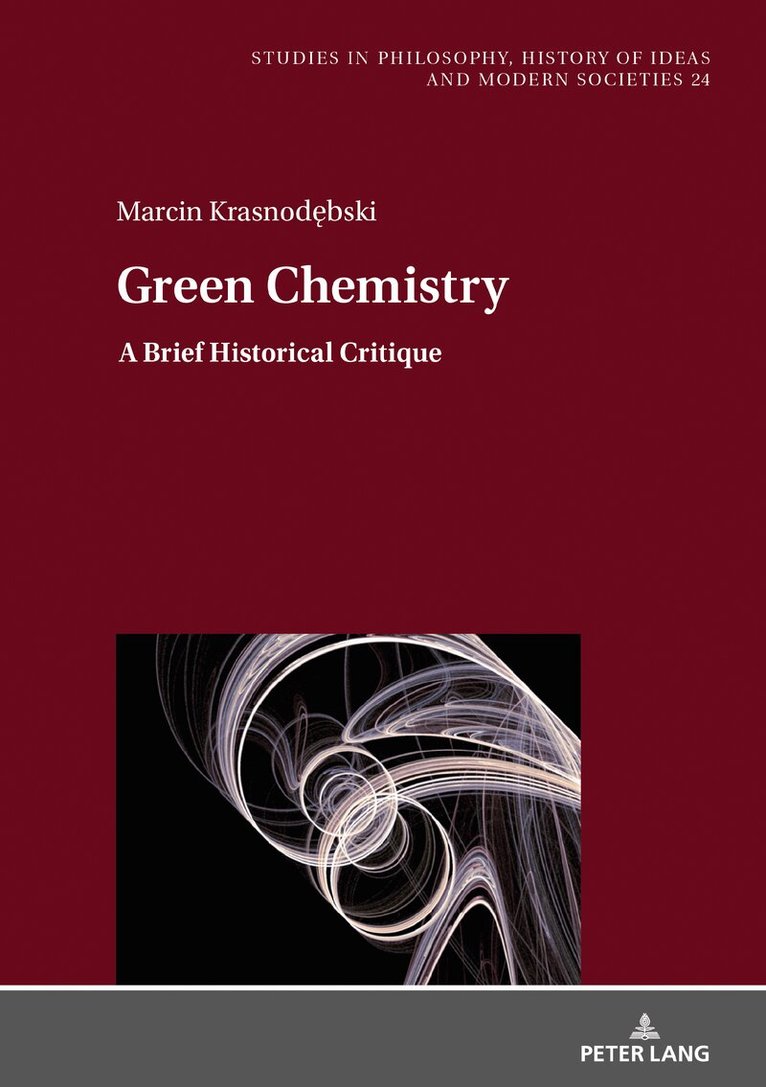
Green Chemistry
A Brief Historical Critique
Inbunden, Engelska, 2022
571 kr
Skickas inom 5-8 vardagar
In recent decades, green chemistry dominated the imagination of sustainability scholars all over the world and was embraced by leading global universities and companies. This new concept is supposed to address the environmental crisis by making chemistry safer and less polluting.And yet, under this seemingly straightforward success story hides a tangled and ambiguous reality: alternative frameworks, shoddy greenness criteria, and power struggles.This book retraces the history of the green chemistry concept and critically assesses its claims and dominant narratives about it. It is an indispensable guide for all those interested in the challenges of sustainability, whether they have background in chemistry or not. Its underlying question is: is green chemistry really that green?
Del 1 - Analysis: Historical Cases In Chemistry
Green Chemistry Avant La Lettre: The Pine Institute And Resin Chemistry In Aquitaine (1900-1970)
Inbunden, Engelska, 2024
1 765 kr
Skickas inom 3-6 vardagar
Long before the foundations of the concept of sustainability were laid down and green chemistry became a hot topic, chemists had already been looking for alternative feedstocks hoping to liberate the industry from its dependency on fossil fuels. This book examines one such story. Near the largest French forest in the southwest of the country, in Aquitaine, a network of entrepreneurs of chemists established in the early 20th century the Pine Institute. This curious institution, working at the interface of academia and industry explored new uses for pine resin. It is used to produce not only solvents, glues, and paper, but also rocket fuels. The pine resin has been one of the most versatile raw materials known to humanity.This book not only explains the success of the material itself but also of the scientific-industrial network that made it possible to exploit it sustainably over many decades. Did the Pine Institute find a recipe for making the future more sustainable in the post-oil world? It carefully examines its organisational features, relations with the local economy, as well as the core elements of resin chemistry as an independent discipline prefigurating sustainable chemistry of today.This unique book constitutes an original and pioneering work on the origins of some of the ideas that are being labeled today as green or sustainable chemistry. It establishes a bridge between two worlds, explaining in detail the history of a sustainable scientific discipline in its institutional and economic setting accounting for the complexity of the relations between stakeholders and of the knowledge circulation patterns. In other words, the book fills a gap in the emerging field of social studies of scientific sustainability.