Marco Fontani – författare
Visar alla böcker från författaren Marco Fontani. Handla med fri frakt och snabb leverans.
5 produkter
5 produkter
Inbunden, Engelska, 2014
599 kr
Skickas inom 5-8 vardagar
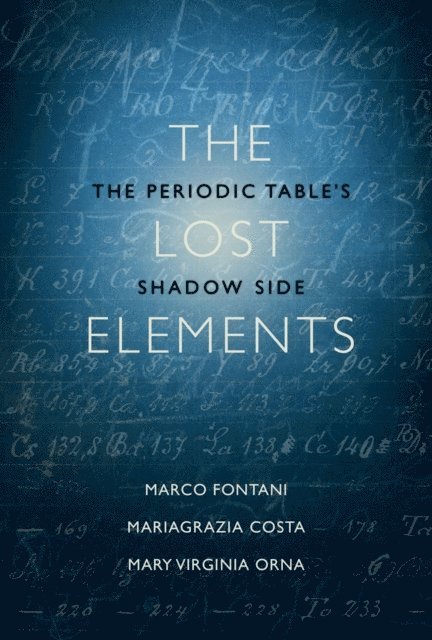
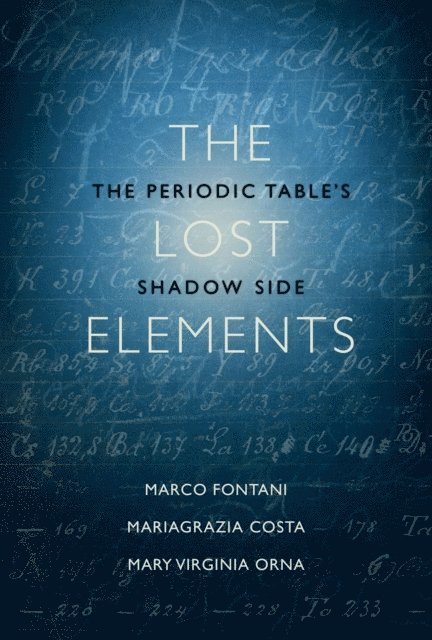
In the mid-nineteenth century, chemists came to the conclusion that elements should be organized by their atomic weights. However, the atomic weights of various elements were calculated erroneously, and chemists also observed some anomalies in the properties of other elements. Over time, it became clear that the periodic table as currently comprised contained gaps, missing elements that had yet to be discovered. A rush to discover these missing pieces followed, and a seemingly endless amount of elemental discoveries were proclaimed and brought into laboratories. It wasn't until the discovery of the atomic number in 1913 that chemists were able to begin making sense of what did and what did not belong on the periodic table, but even then, the discovery of radioactivity convoluted the definition of an element further. Throughout its formation, the periodic table has seen false entries, good-faith errors, retractions, and dead ends; in fact, there have been more elemental "discoveries" that have proven false than there are current elements on the table.The Lost Elements: The Shadow Side of Discovery collects the most notable of these instances, stretching from the nineteenth century to the present. The book tells the story of how scientists have come to understand elements, by discussing the failed theories and false discoveries that shaped the path of scientific progress. Chapters range from early chemists' stubborn refusal to disregard alchemy as legitimate practice, to the effects of the atomic number on discovery, to the switch in influence from chemists to physicists, as elements began to be artificially created in the twentieth century. Along the way, Fontani, Costa, and Orna introduce us to the key figures in the development of the periodic table as we know it. And we learn, in the end, that this development was shaped by errors and gaffs as much as by correct assumptions and scientific conclusions.
E-bok
PDF, Engelska, 2014516 kr
Läs direkt efter köp
The Periodic Table of Elements hasn''t always looked like it does now, a well-organized chart arranged by atomic number. In the mid-nineteenth century, chemists were of the belief that the elements should be sorted by atomic weight. However, the weights of many elements were calculated incorrectly, and over time it became clear that not only did the elements need rearranging, but that the periodic table contained many gaps and omissions: there were elements yet to be discovered, and the allure of finding one had scientists rushing to fill in the blanks. Supposed "discoveries" flooded laboratories, and the debate over what did and did not belong on the periodic table reached a fever pitch. With the discovery of radioactivity, the discourse only intensified. Throughout its formation, the Periodic Table of Elements has seen false entries, good-faith errors, retractions, and dead ends. In fact, there have been more falsely proclaimed elemental discoveries throughout history than there are elements on the table as we know it today.The Lost Elements: The Periodic Table''s Shadow Side collects the most notable of these instances, stretching from the nineteenth century to the present. The book tells the story of how scientists have come to understand elements, by discussing the failed theories and false discoveries that shaped the path of scientific progress. We learn of early chemists'' stubborn refusal to disregard alchemy as a legitimate practice, and of one German''s supposed discovery of an elemental metal that breathed. As elements began to be created artificially in the twentieth century, we watch the discovery climate shift to favor the physicists, rather than the chemists. Along the way, Fontani, Costa, and Orna introduce us to the key figures in the development of today''s periodic table, including Lavoisier and Mendeleev. Featuring a preface from Nobel Laureate Roald Hoffmann, The Lost Elements is an expansive history of the wrong side of chemical discovery-and reveals how these errors and gaffes have helped shape the table as much as any other form of scientific progress.
E-bok
Engelska, 2014516 kr
Läs direkt efter köp
The Periodic Table of Elements hasn''t always looked like it does now, a well-organized chart arranged by atomic number. In the mid-nineteenth century, chemists were of the belief that the elements should be sorted by atomic weight. However, the weights of many elements were calculated incorrectly, and over time it became clear that not only did the elements need rearranging, but that the periodic table contained many gaps and omissions: there were elements yet to be discovered, and the allure of finding one had scientists rushing to fill in the blanks. Supposed "discoveries" flooded laboratories, and the debate over what did and did not belong on the periodic table reached a fever pitch. With the discovery of radioactivity, the discourse only intensified. Throughout its formation, the Periodic Table of Elements has seen false entries, good-faith errors, retractions, and dead ends. In fact, there have been more falsely proclaimed elemental discoveries throughout history than there are elements on the table as we know it today.The Lost Elements: The Periodic Table''s Shadow Side collects the most notable of these instances, stretching from the nineteenth century to the present. The book tells the story of how scientists have come to understand elements, by discussing the failed theories and false discoveries that shaped the path of scientific progress. We learn of early chemists'' stubborn refusal to disregard alchemy as a legitimate practice, and of one German''s supposed discovery of an elemental metal that breathed. As elements began to be created artificially in the twentieth century, we watch the discovery climate shift to favor the physicists, rather than the chemists. Along the way, Fontani, Costa, and Orna introduce us to the key figures in the development of today''s periodic table, including Lavoisier and Mendeleev. Featuring a preface from Nobel Laureate Roald Hoffmann, The Lost Elements is an expansive history of the wrong side of chemical discovery-and reveals how these errors and gaffes have helped shape the table as much as any other form of scientific progress.
Häftad, Engelska, 2016
548 kr
Skickas inom 10-15 vardagar
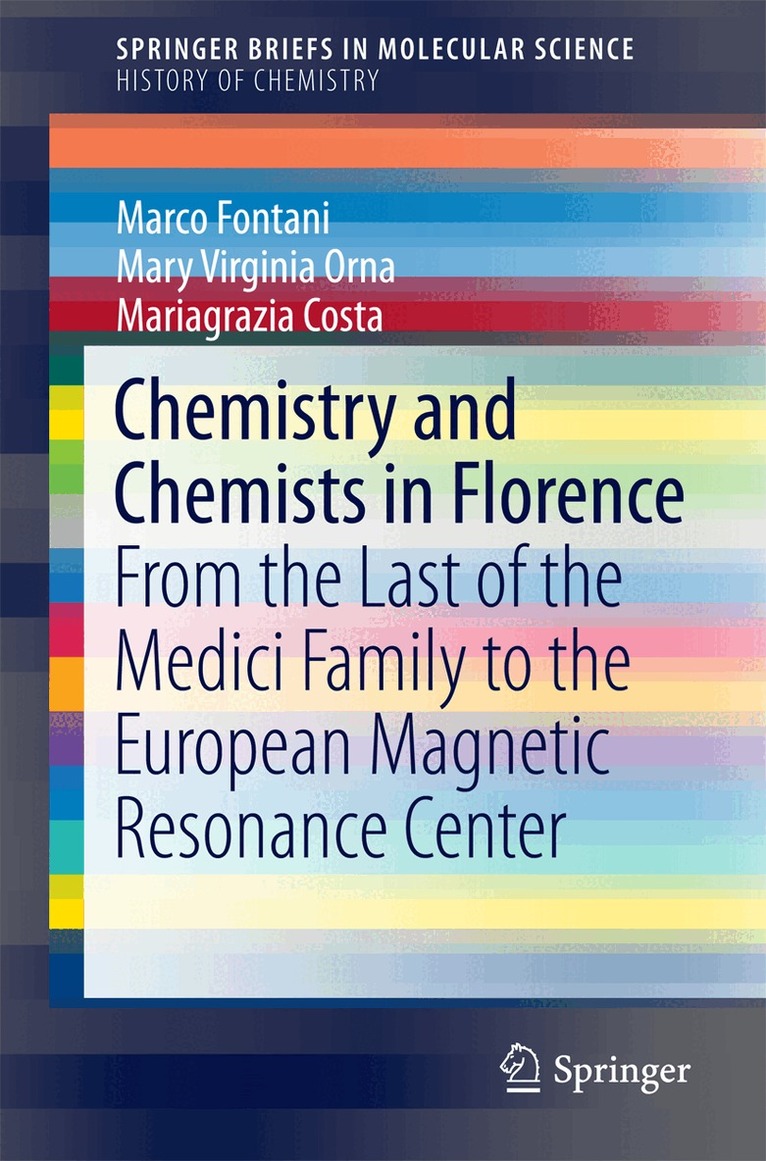
This brief offers a novel vision of the city of Florence, tracing the development of chemistry via the biographies of its most illustrious chemists. It documents not only important scientific research that came from the hands of Galileo Galilei and the physicists who followed in his footsteps, but also the growth of new disciplines such as chemistry, pharmaceutical chemistry, and biochemistry. It recounts how, in the Middle Ages, chemistry began as an applied science that served to bolster the Florentine economy, particularly in the textile dyeing industry. Later, important scientific collections founded by the ruling Medici family served as the basis of renowned museums that now house priceless artifacts and instruments. Also described in this text are the chemists such as Hugo Schiff, Angelo Angeli, and Luigi Rolla, who were active over the course of the following century and a quarter. The authors tell the story of the evolution of the Royal University of Florence, which ultimatelybecame the University of Florence. Of interest to historians and chemists, this tale is told through the lives and work of the principal actors in the university’s department of chemistry.
E-bok
PDF, Engelska, 2016708 kr
Läs direkt efter köp
This brief offers a novel vision of the city of Florence, tracing the development of chemistry via the biographies of its most illustrious chemists. It documents not only important scientific research that came from the hands of Galileo Galilei and the physicists who followed in his footsteps, but also the growth of new disciplines such as chemistry, pharmaceutical chemistry, and biochemistry. It recounts how, in the Middle Ages, chemistry began as an applied science that served to bolster the Florentine economy, particularly in the textile dyeing industry. Later, important scientific collections founded by the ruling Medici family served as the basis of renowned museums that now house priceless artifacts and instruments. Also described in this text are the chemists such as Hugo Schiff, Angelo Angeli, and Luigi Rolla, who were active over the course of the following century and a quarter. The authors tell the story of the evolution of the Royal University of Florence, which ultimatelybecame the University of Florence. Of interest to historians and chemists, this tale is told through the lives and work of the principal actors in the university’s department of chemistry.