Marcus Mietzner – författare
Visar alla böcker från författaren Marcus Mietzner. Handla med fri frakt och snabb leverans.
18 produkter
Political Resurgence of the Military in Southeast Asia
Conflict and Leadership
Inbunden, 2011
2512 kr
Lägg i varukorg
In the late 1990s, prominent scholars of civil-military relations detected a decline in the political significance of the armed forces across Southeast Asia. A decade later, however, this trend seems to have been reversed. The Thai military launched a coup in 2006, the Philippine armed forces …
Political Resurgence of the Military in Southeast Asia
Conflict and Leadership
Häftad, 2013
910 kr
Lägg i varukorg
In the late 1990s, prominent scholars of civil-military relations detected a decline in the political significance of the armed forces across Southeast Asia. A decade later, however, this trend seems to have been reversed. The Thai military launched a coup in 2006, the Philippine armed forces …
Ruling Indonesia
Jokowi's Presidency in an Age of Democratic Crisis and Great Power Competition
Häftad, 2026
504 kr
Lägg i varukorg
Joko Widodo—popularly called Jokowi—ruled Indonesia for a decade, from 2014 to 2024. The world’s fourth-largest nation and third-largest democracy, Indonesia had embarked on a messy democratic transition in the late 1990s, with the country’s ethnic and religious heterogeneity posing significant …
Ruling Indonesia
Jokowi's Presidency in an Age of Democratic Crisis and Great Power Competition
Inbunden, 2026
1608 kr
Lägg i varukorg
Joko Widodo—popularly called Jokowi—ruled Indonesia for a decade, from 2014 to 2024. The world’s fourth-largest nation and third-largest democracy, Indonesia had embarked on a messy democratic transition in the late 1990s, with the country’s ethnic and religious heterogeneity posing significant …
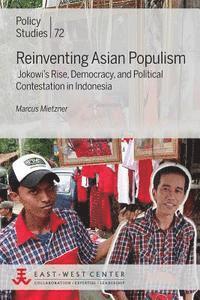
Reinventing Asian Populism: Jokowi's Rise, Democracy, and Political Contestation in Indonesia
Häftad, 2015
166 kr
Lägg i varukorg
Democratic Deconsolidation in Southeast Asia
Häftad, 2021
308 kr
Lägg i varukorg
Since the mid-2000s, the quality of democracy around the world has been in decline, and Southeast Asia is no exception. This Element analyzes the extent, patterns and drivers of democratic deconsolidation in the three Southeast Asian countries that boast the longest history of electoral democracy …
Democratic Deconsolidation in Southeast Asia
E-bok, 2021
294 kr
Lägg i varukorg
Since the mid-2000s, the quality of democracy around the world has been in decline, and Southeast Asia is no exception. This Element analyzes the extent, patterns and drivers of democratic deconsolidation in the three Southeast Asian countries that boast the longest history of electoral democracy …
Democratic Deconsolidation in Southeast Asia
E-bok, 2021
294 kr
Lägg i varukorg
Since the mid-2000s, the quality of democracy around the world has been in decline, and Southeast Asia is no exception. This Element analyzes the extent, patterns and drivers of democratic deconsolidation in the three Southeast Asian countries that boast the longest history of electoral democracy …
Political Resurgence of the Military in Southeast Asia
Conflict and Leadership
E-bok, 2012
953 kr
Lägg i varukorg
In the late 1990s, prominent scholars of civil-military relations detected a decline in the political significance of the armed forces across Southeast Asia. A decade later, however, this trend seems to have been reversed. The Thai military launched a coup in 2006, the Philippine armed forces …
Political Resurgence of the Military in Southeast Asia
Conflict and Leadership
E-bok, 2012
953 kr
Lägg i varukorg
In the late 1990s, prominent scholars of civil-military relations detected a decline in the political significance of the armed forces across Southeast Asia. A decade later, however, this trend seems to have been reversed. The Thai military launched a coup in 2006, the Philippine armed forces …
Coalitions Presidents Make
Presidential Power and Its Limits in Democratic Indonesia
Inbunden, 2023
1651 kr
Lägg i varukorg
In The Coalitions Presidents Make, Marcus Mietzner explains how Indonesia has turned its volatile post-authoritarian presidential system into one of the world's most stable. He argues that since 2004, Indonesian presidents have deployed nuanced strategies of coalition building to consolidate their …
Coalitions Presidents Make
Presidential Power and Its Limits in Democratic Indonesia
Häftad, 2023
404 kr
Lägg i varukorg
In The Coalitions Presidents Make, Marcus Mietzner explains how Indonesia has turned its volatile post-authoritarian presidential system into one of the world's most stable. He argues that since 2004, Indonesian presidents have deployed nuanced strategies of coalition building to consolidate their …
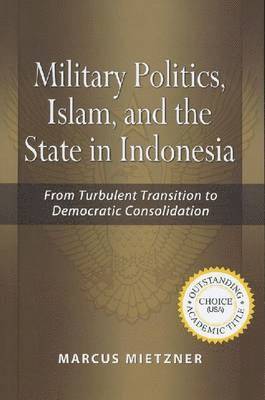
Military Politics, Islam and the State in Indonesia
From Turbulent Transition to Democratic Consolidation
Inbunden, 2008
615 kr
Lägg i varukorg
Based on a decade of research in Indonesia, this book provides an in-depth account of the military's struggle to adapt to the new democratic system after the downfall of Suharto's authoritarian regime in 1998. Unlike other studies of the Indonesian armed forces, which focus exclusively on internal …
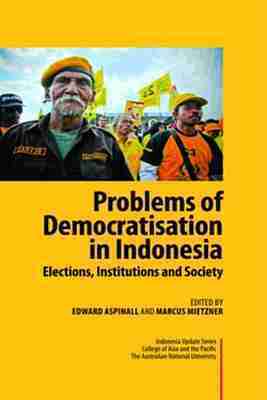
Problems of Democratisation in Indonesia
Elections, Institutions and Society
Av Edward Aspinall, Marcus Mietzner
Inbunden, 2010
459 kr
Lägg i varukorg
Alternately lauded as a democratic success story and decried as a flawed democracy, Indonesia deserves serious consideration by anyone concerned with the global state of democracy. Yet, more than ten years after the collapse of the authoritarian Suharto regime, we still know little about how the …
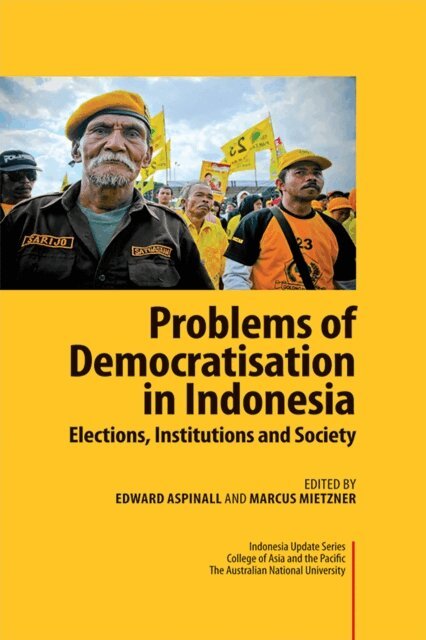
Problems of Democratisation in Indonesia
Elections, Institutions and Society
Av Marcus Mietzner, Edward Aspinall
E-bok, 2018
636 kr
Lägg i varukorg
No detailed description available for "Problems of Democratisation in Indonesia".
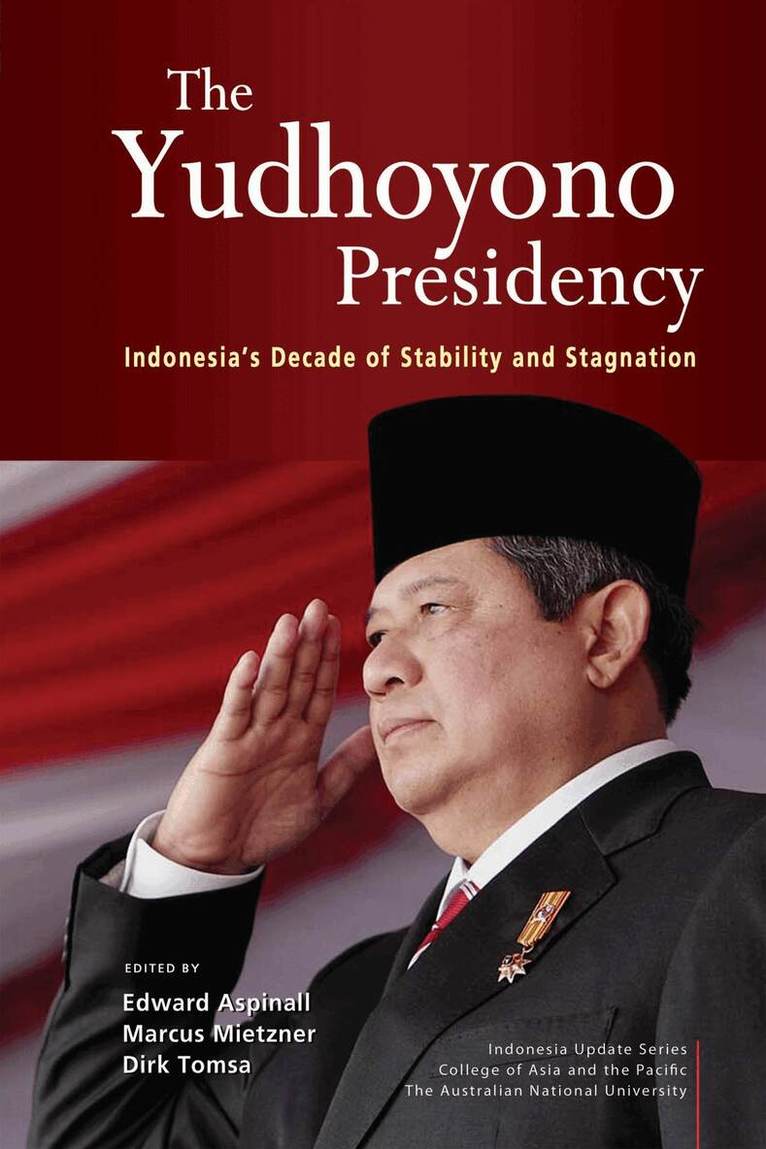
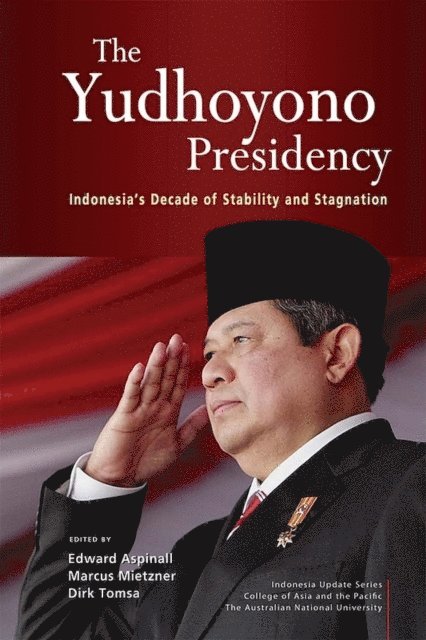
Yudhoyono Presidency
Indonesia's Decade of Stability and Stagnation
Av Edward Aspinall, Marcus Mietzner m. fl.
Inbunden, 2015
458 kr
Lägg i varukorg
The presidency of Susilo Bambang Yudhoyono (2004-14) was a watershed in Indonesia's modern democratic history. Yudhoyono was not only the first Indonesian president to be directly elected, but also the first to be democratically re-elected. Coming to office after years of turbulent transition, he …
Yudhoyono Presidency
Indonesia''s Decade of Stability and Stagnation
Av Dirk Tomsa, Marcus Mietzner m. fl.
E-bok, 2018
603 kr
Lägg i varukorg
No detailed description available for "The Yudhoyono Presidency".
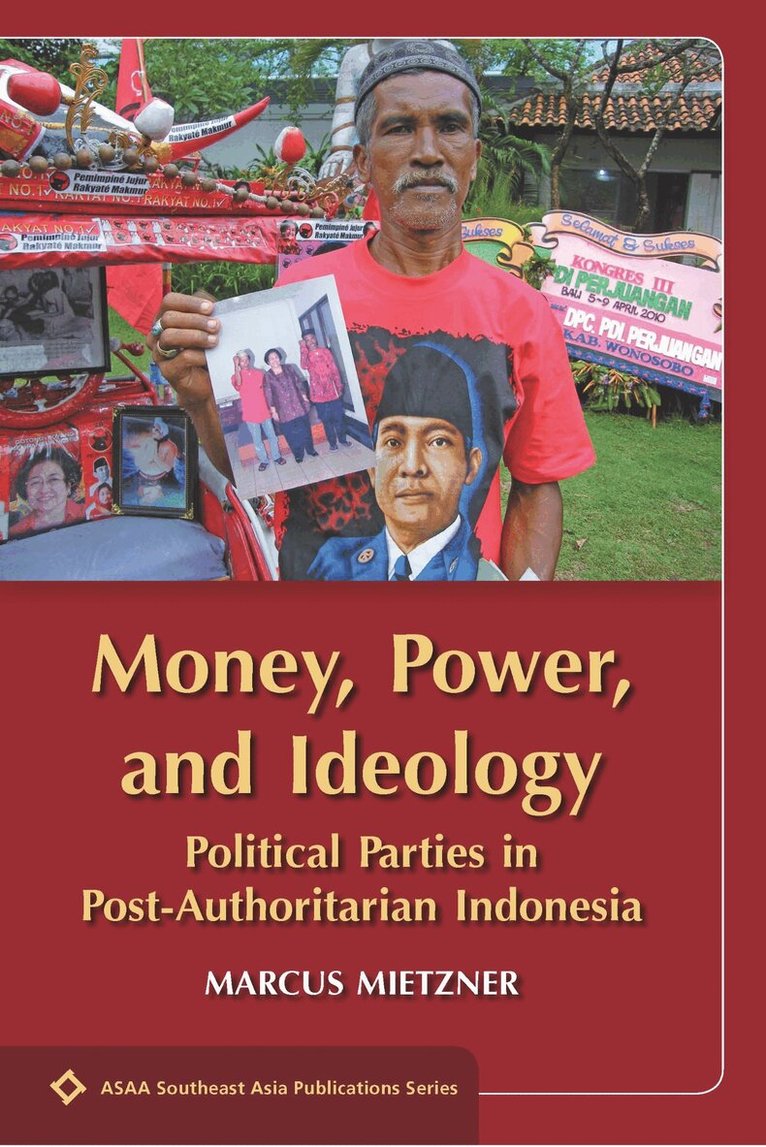
Money, Power, and Ideology
Political Parties in Post-Authoritarian Indonesia
Häftad, 2013
325 kr
Lägg i varukorg
Are political parties the weak link in Indonesia's young democracy? More pointedly, do they form a giant cartel to suck patronage resources from the state? Indonesian commentators almost invariably brand the country's parties as corrupt, self-absorbed, and elitist, while most scholars argue that …