Dirk Tomsa – författare
Visar alla böcker från författaren Dirk Tomsa. Handla med fri frakt och snabb leverans.
14 produkter
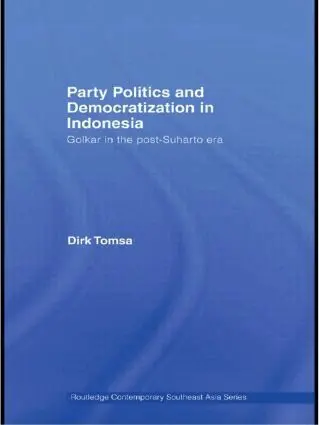
Party Politics and Democratization in Indonesia
Golkar in the post-Suharto era
Av Dirk Tomsa
Inbunden, 2008
2512 kr
Lägg i varukorg
Party Politics and Democratization in Indonesia: Golkar in the Post-Suharto Era provides the first in-depth analysis of contemporary Indonesian party politics and the first systematic explanation why Golkar is still the strongest party in Indonesia.Applying a multi-dimensional conceptual framework …
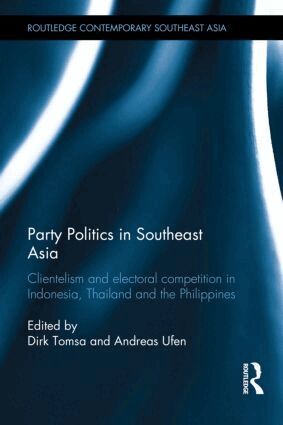
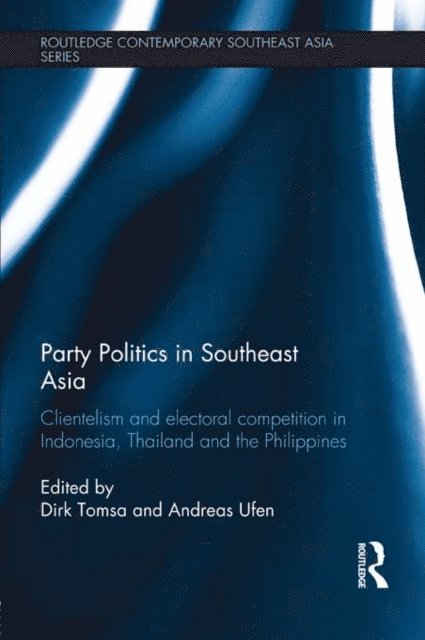
Party Politics in Southeast Asia
Clientelism and Electoral Competition in Indonesia, Thailand and the Philippines
Inbunden, 2012
2512 kr
Lägg i varukorg
Contributing to the growing discourse on political parties in Asia, this book looks at parties in Southeast Asia’s most competitive electoral democracies of Indonesia, Thailand and the Philippines. It highlights the diverse dynamics of party politics in the region and provides new insights into …
Party Politics and Democratization in Indonesia
Golkar in the post-Suharto era
Av Dirk Tomsa
Häftad, 2010
750 kr
Lägg i varukorg
Party Politics and Democratization in Indonesia: Golkar in the Post-Suharto Era provides the first in-depth analysis of contemporary Indonesian party politics and the first systematic explanation why Golkar is still the strongest party in Indonesia.Applying a multi-dimensional conceptual framework …
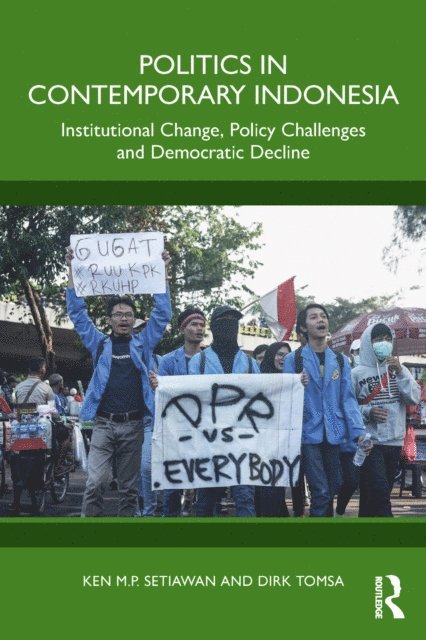
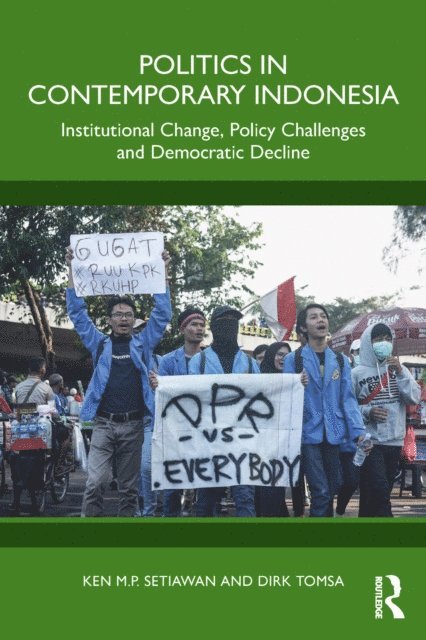
Politics in Contemporary Indonesia
Institutional Change, Policy Challenges and Democratic Decline
Av Dirk Tomsa, Ken M.P Setiawan
E-bok, 2022
727 kr
Lägg i varukorg
In Politics in Contemporary Indonesia , Ken M.P. Setiawan and Dirk Tomsa analyse the most prominent political ideas, institutions, interests and issues that shape Indonesian politics today. Guided by the overarching question whether Indonesia still deserves its famous label as a ‘model Muslim …
Politics in Contemporary Indonesia
Institutional Change, Policy Challenges and Democratic Decline
Av Dirk Tomsa, Ken M.P Setiawan
E-bok, 2022
727 kr
Lägg i varukorg
In Politics in Contemporary Indonesia , Ken M.P. Setiawan and Dirk Tomsa analyse the most prominent political ideas, institutions, interests and issues that shape Indonesian politics today. Guided by the overarching question whether Indonesia still deserves its famous label as a ‘model Muslim …
Party Politics and Democratization in Indonesia
Golkar in the post-Suharto era
Av Dirk Tomsa
E-bok, 2008
864 kr
Lägg i varukorg
Party Politics and Democratization in Indonesia: Golkar in the Post-Suharto Era provides the first in-depth analysis of contemporary Indonesian party politics and the first systematic explanation why Golkar is still the strongest party in Indonesia. Applying a multi-dimensional conceptual framework …
Party Politics and Democratization in Indonesia
Golkar in the post-Suharto era
Av Dirk Tomsa
E-bok, 2008
864 kr
Lägg i varukorg
Party Politics and Democratization in Indonesia: Golkar in the Post-Suharto Era provides the first in-depth analysis of contemporary Indonesian party politics and the first systematic explanation why Golkar is still the strongest party in Indonesia. Applying a multi-dimensional conceptual framework …
Party Politics in Southeast Asia
Clientelism and Electoral Competition in Indonesia, Thailand and the Philippines
E-bok, 2012
864 kr
Lägg i varukorg
Contributing to the growing discourse on political parties in Asia, this book looks at parties in Southeast Asia’s most competitive electoral democracies of Indonesia, Thailand and the Philippines. It highlights the diverse dynamics of party politics in the region and provides new insights into …
Party Politics in Southeast Asia
Clientelism and Electoral Competition in Indonesia, Thailand and the Philippines
E-bok, 2012
864 kr
Lägg i varukorg
Contributing to the growing discourse on political parties in Asia, this book looks at parties in Southeast Asia’s most competitive electoral democracies of Indonesia, Thailand and the Philippines. It highlights the diverse dynamics of party politics in the region and provides new insights into …
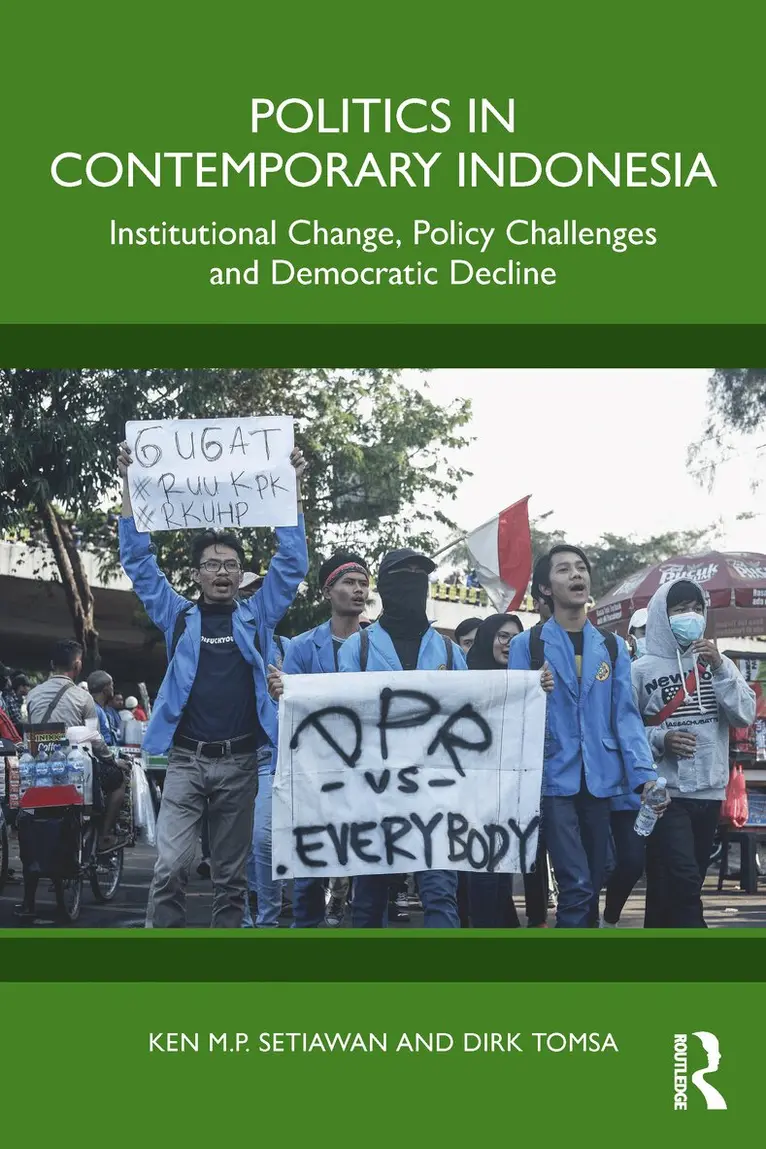
Politics in Contemporary Indonesia
Institutional Change, Policy Challenges and Democratic Decline
Av Ken M.P Setiawan, Dirk Tomsa
Inbunden, 2022
2512 kr
Lägg i varukorg
In Politics in Contemporary Indonesia, Ken M.P. Setiawan and Dirk Tomsa analyse the most prominent political ideas, institutions, interests and issues that shape Indonesian politics today. Guided by the overarching question whether Indonesia still deserves its famous label as a ‘model Muslim …
Politics in Contemporary Indonesia
Institutional Change, Policy Challenges and Democratic Decline
Av Ken M.P Setiawan, Dirk Tomsa
Häftad, 2022
619 kr
Lägg i varukorg
In Politics in Contemporary Indonesia, Ken M.P. Setiawan and Dirk Tomsa analyse the most prominent political ideas, institutions, interests and issues that shape Indonesian politics today. Guided by the overarching question whether Indonesia still deserves its famous label as a ‘model Muslim …
Party Politics in Southeast Asia
Clientelism and Electoral Competition in Indonesia, Thailand and the Philippines
Häftad, 2015
750 kr
Lägg i varukorg
Contributing to the growing discourse on political parties in Asia, this book looks at parties in Southeast Asia’s most competitive electoral democracies of Indonesia, Thailand and the Philippines. It highlights the diverse dynamics of party politics in the region and provides new insights into …
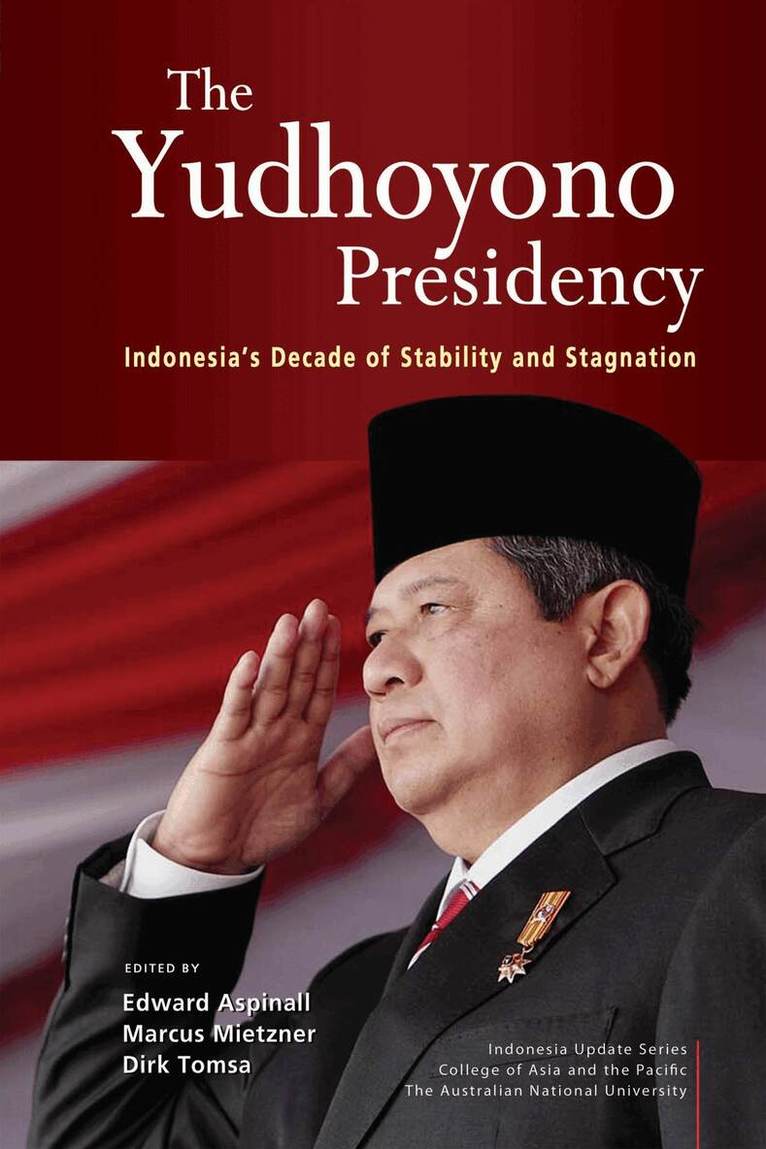
Yudhoyono Presidency
Indonesia's Decade of Stability and Stagnation
Av Edward Aspinall, Marcus Mietzner m. fl.
Inbunden, 2015
458 kr
Lägg i varukorg
The presidency of Susilo Bambang Yudhoyono (2004-14) was a watershed in Indonesia's modern democratic history. Yudhoyono was not only the first Indonesian president to be directly elected, but also the first to be democratically re-elected. Coming to office after years of turbulent transition, he …
Yudhoyono Presidency
Indonesia''s Decade of Stability and Stagnation
Av Dirk Tomsa, Marcus Mietzner m. fl.
E-bok, 2018
603 kr
Lägg i varukorg
No detailed description available for "The Yudhoyono Presidency".