Marcus Schmücker – författare
Visar alla böcker från författaren Marcus Schmücker. Handla med fri frakt och snabb leverans.
10 produkter
Temporality and Eternity
Nine Perspectives on God and Time
Av Marcus Schmücker, Michael T. Williams m. fl.
Inbunden, 2022
1245 kr
Lägg i varukorg
Is time a creation of God? How can God be considered eternal, if he is responsible for the existence of time? Is God temporal or is he timeless? The relationship between God and time has been an object of inquiry in philosophical and theological traditions around the world for centuries. This …
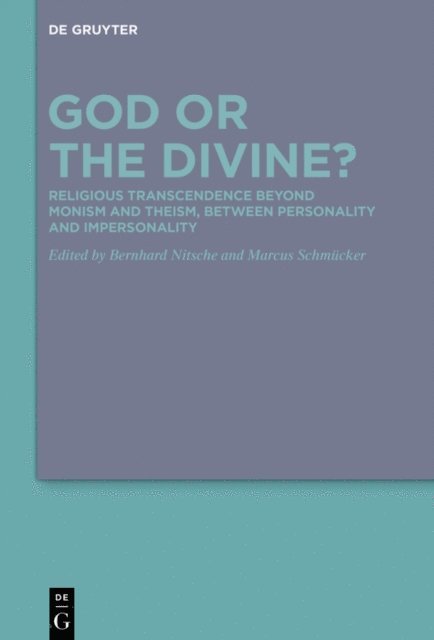
God or the Divine?
Religious Transcendence beyond Monism and Theism, between Personality and Impersonality
Av Bernhard Nitsche, Marcus Schmücker
Inbunden, 2023
1482 kr
Lägg i varukorg
Is there a language of transcendence which does not fall under the well-worn categories of monism, theism, pantheism, biblical or pagan monotheism, personal or tripersonal God, or an impersonal absolute, conceived as immanent and/or transcendent? The present set of studies from different fields of …
Temporality and Eternity
Nine Perspectives on God and Time
Av Florian Fischer, Michael T. Williams m. fl.
E-bok, 2022
1077 kr
Lägg i varukorg
Is time a creation of God? How can God be considered eternal, if he is responsible for the existence of time? Is God temporal or is he timeless? The relationship between God and time has been an object of inquiry in philosophical and theological traditions around the world for centuries. This …
Temporality and Eternity
Nine Perspectives on God and Time
Av Florian Fischer, Michael T. Williams m. fl.
E-bok, 2022
1077 kr
Lägg i varukorg
Is time a creation of God? How can God be considered eternal, if he is responsible for the existence of time? Is God temporal or is he timeless? The relationship between God and time has been an object of inquiry in philosophical and theological traditions around the world for centuries. This …
God or the Divine?
Religious Transcendence beyond Monism and Theism, between Personality and Impersonality
Av Marcus Schmucker, Bernhard Nitsche
E-bok, 2023
1298 kr
Lägg i varukorg
Is there a language of transcendence which does not fall under the well-worn categories of monism, theism, pantheism, biblical or pagan monotheism, personal or tripersonal God, or an impersonal absolute, conceived as immanent and/or transcendent? The present set of studies from different fields of …
God or the Divine?
Religious Transcendence beyond Monism and Theism, between Personality and Impersonality
Av Marcus Schmucker, Bernhard Nitsche
E-bok, 2023
1298 kr
Lägg i varukorg
Is there a language of transcendence which does not fall under the well-worn categories of monism, theism, pantheism, biblical or pagan monotheism, personal or tripersonal God, or an impersonal absolute, conceived as immanent and/or transcendent? The present set of studies from different fields of …
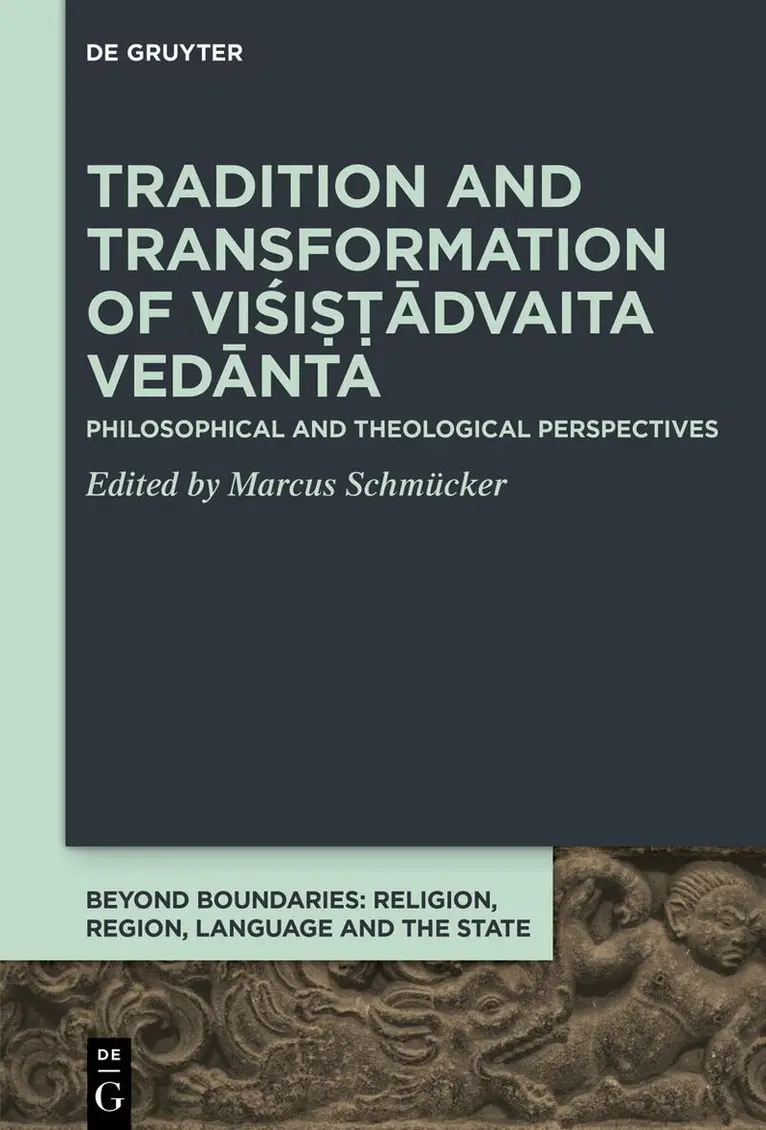
Tradition and Transformation of Viśiṣṭādvaita Vedānta
Philosophical and Theological Perspectives
Inbunden, 2027
1786 kr
Kommande
What influences the development and religious identity of a tradition like Viśiṣṭādvaita Vedānta? This volume examines the multifaceted formation of Viśiṣṭādvaita Vedānta and its interactions with other Indian philosophical and religious traditions, including Mīmāṃsā, Sāṅkhya, Yoga, Pañcarātra, and …