Margaret E Farrar - Böcker
Visar alla böcker från författaren Margaret E Farrar. Handla med fri frakt och snabb leverans.
3 produkter
3 produkter
533 kr
Skickas inom 7-10 vardagar
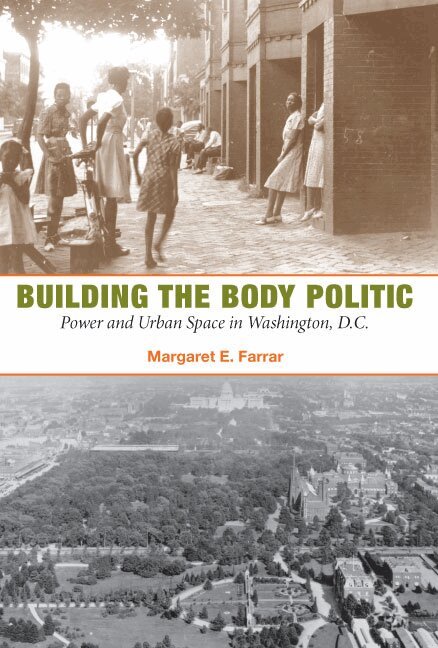
Building the Body Politic demonstrates how the language of urban planning shapes political imagination, and limits the possibilities for change available to cities and citizens. The book represents three key moments in Washington, D.C., planning history that offer rich insight into changing ideas about cities, citizens, and politics: alley and tenement reform and the Senate Park Commission Plan for re-shaping the Washington Mall (1900); urban renewal and the District of Columbia Redevelopment Act (1950-60); and the implementation of a citywide surveillance system and the Monuments and Memorials Master Plan (2001). Margaret Farrar expertly draws from political theory, cultural geography, and urban studies in her examination of the relationships among spaces, citizens, and power in the context of planning Washington.In addition to the realities of Washington’s built environment, Farrar describes the role of a capital city in a democracy. More than any other place, a principle function of the architecture and design of a capital city is to create citizens. In doing so, some groups and interests are legitimized, while others are rendered irrational, illegitimate, or often quite literally out of place. In carefully tracing shifting urban planning vocabularies over the course of the twentieth century, Farrar offers valuable insight into how power is conveyed, deployed, consolidated, and negotiated through language.
Becoming Utopia
History, Heritage, and Sustainability in the American Midwest
Inbunden, Engelska, 2026
1 110 kr
Kommande
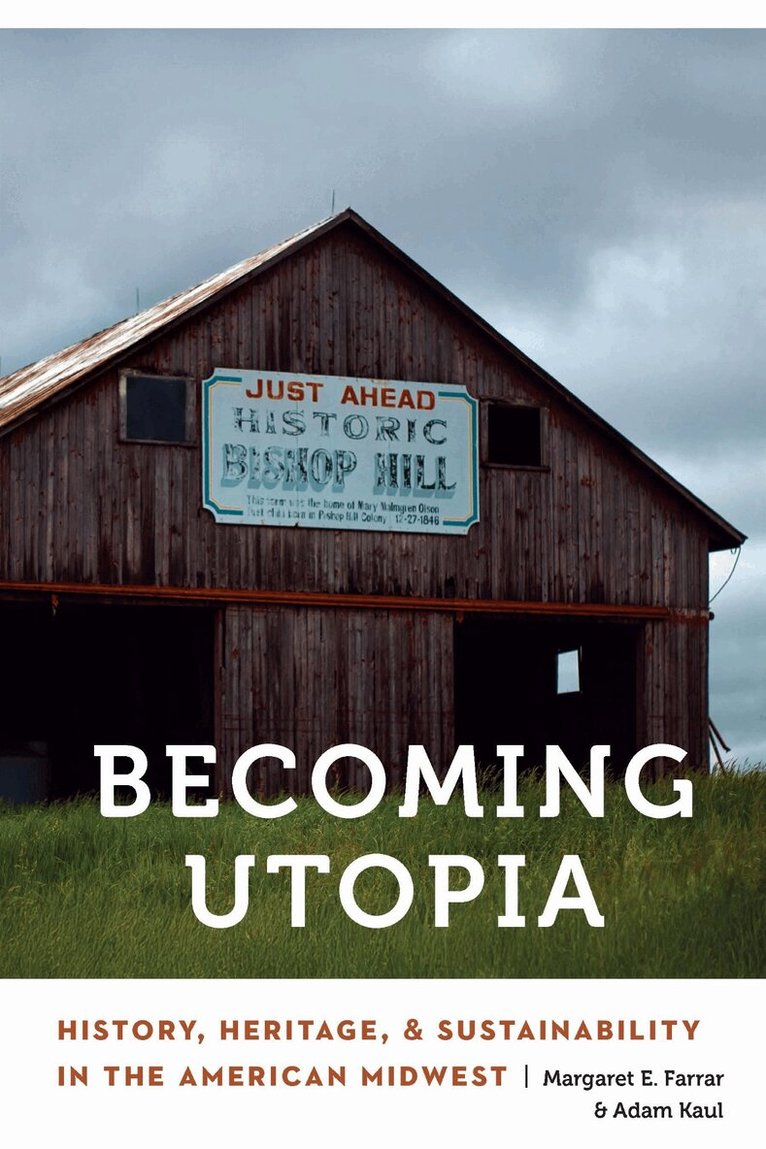
Becoming Utopia centers on the tiny community of Bishop Hill, Illinois, whose marketing materials call it "Utopia on the Prairie," home to a radical communal religious sect that emigrated from Sweden in the 1840s. Through rich textual and ethnographic analyses, Margaret E. Farrar and Adam Kaul tell the story of what happens when a small, historically significant Midwestern community negotiates the contradictory impulses of twenty-first-century place-making. At first glance, Bishop Hill is simply a small heritage tourism destination in Midwestern flyover country, but further inspection reveals it to be a complex place that mixes a deep nostalgia for the past undercut by complex origin stories of displacement and colonialism, an active historic preservation movement amid futuristic green energy technologies built by multinational corporations, and a commitment to localism in the context of omnipresent globalization.Based on fifteen years of fieldwork, Becoming Utopia is an interdisciplinary contribution to conversations about the importance and meaning of place-making, heritage-making, and sustainability (social, economic, and environmental) in the twenty-first century.
295 kr
Kommande
Becoming Utopia centers on the tiny community of Bishop Hill, Illinois, whose marketing materials call it "Utopia on the Prairie," home to a radical communal religious sect that emigrated from Sweden in the 1840s. Through rich textual and ethnographic analyses, Margaret E. Farrar and Adam Kaul tell the story of what happens when a small, historically significant Midwestern community negotiates the contradictory impulses of twenty-first-century place-making. At first glance, Bishop Hill is simply a small heritage tourism destination in Midwestern flyover country, but further inspection reveals it to be a complex place that mixes a deep nostalgia for the past undercut by complex origin stories of displacement and colonialism, an active historic preservation movement amid futuristic green energy technologies built by multinational corporations, and a commitment to localism in the context of omnipresent globalization.Based on fifteen years of fieldwork, Becoming Utopia is an interdisciplinary contribution to conversations about the importance and meaning of place-making, heritage-making, and sustainability (social, economic, and environmental) in the twenty-first century.