Margarita Calderon – författare
625 kr
Skickas inom 3-6 vardagar
"This book is certain to be an indispensable guide to planning and practice in dual language schools. It is practical, down-to-earth, and firmly based in broad experience and research."Robert Slavin, Co-DirectorCenter for Research on the Education of Students Placed at RiskJohns Hopkins University
"Calderón and Minaya-Rowe have done an excellent job of presenting relevant research along with practical examples and suggestions, all in a highly readable and user-friendly format. This volume is an indispensable tool for teachers, administrators, and parents involved with dual language programs."Liz Howard, Research AssociateCenter for Applied Linguistics, Washington, DC
"This book is an excellent resource for educators interested in developing bilingual capacity in American school children."Diane August, DirectorNational Literacy Panel on Language Minority Children and Youth
"A comprehensive compendium of dual language program implementation strategies and examples. An indispensable how-to book for school level administrators, teacher trainers, teachers, and parents."Ana Maria Olezza, Director of Bilingual ProgramsHartford Public Schools, Connecticut
"This practical book can be used as a tool to transform schools into dual-language programs that focus on the improvement of school performance and language enrichment. It is written in a very pragmatic style and provides insights and frameworks supporting a school or district's systemic reform."Anthony Amato, SuperintendentHartford Public Schools, Connecticut
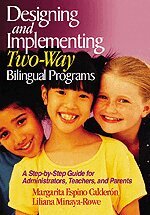
Use dual-language instruction to promote literacy in two languages!
How can you provide a bilingual learning experience that includes high levels of achievement for both English-language learners and English-dominant students? What can you do to include all students in the adventure of learning a new language? Two-way bilingual education helps children maintain their cultural language as well as learn a new language—an invaluable skill in an increasingly integrated world.
Designing and Implementing Two-Way Bilingual Programs provides essential elements to help your students gain literacy in two languages, increase cross-cultural understanding, and meet high levels of achievement in all core academic areas.
This excellent resource provides school administrators, teachers, and parents with the basic knowledge necessary for planning and implementing an effective two-way bilingual program by:
Promoting native-language literacy skills and balanced bilingualism Providing a standards-based education while promoting proficiency in two languages Helping all students gain cognitive and linguistic benefits from academic tasks that call for creativity and problem solvingThis indispensable handbook also includes strategies for building learning communities for dual-language teachers, professional development plans that meet the specific needs of dual-language programs, and tips for involving parents.
.
579 kr
Skickas inom 10-15 vardagar
388 kr
Skickas inom 10-15 vardagar
410 kr
Läs direkt efter köp
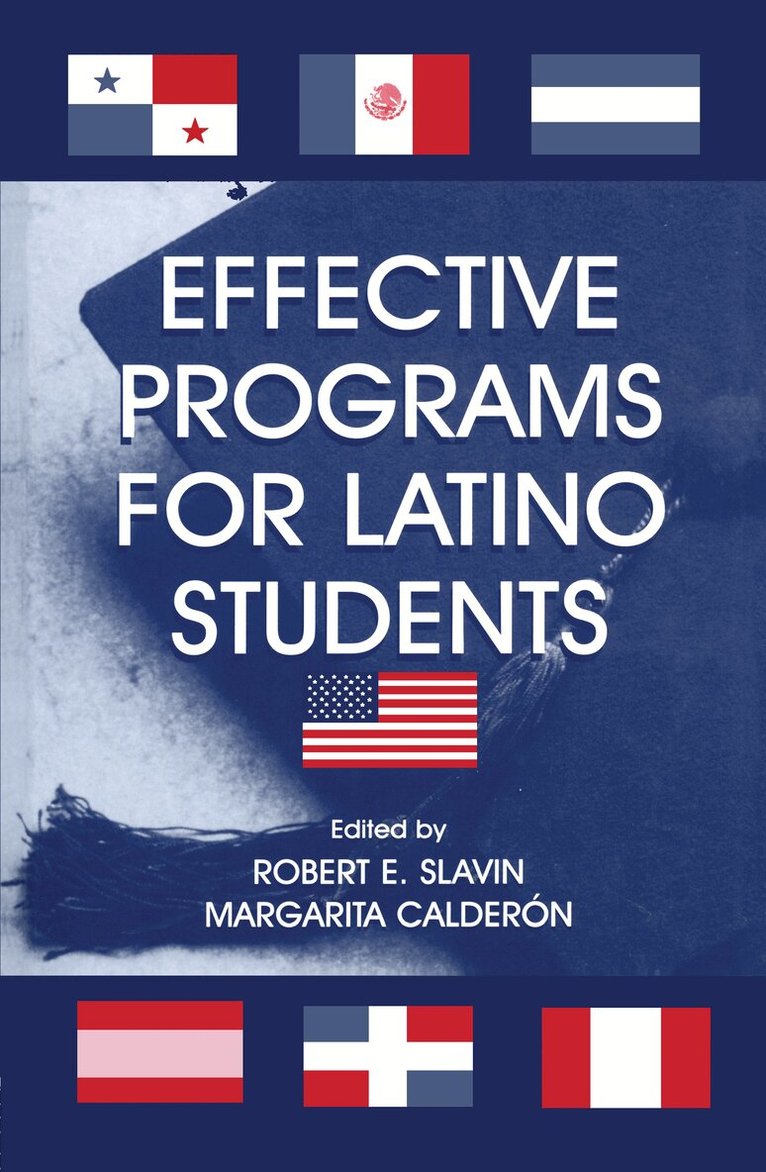
Latino (or Hispanic) children are one of the fastest-growing groups in U.S. schools today. On average, these students perform worse than Anglo students on measures of academic achievement and other measures of academic success, and their drop-out rate is high. There are schools of excellence among those serving Latino children, but the majority of these children are placed "at risk" by schools and community institutions unable to build on the cultural, personal, and linguistic strengths these children are likely to bring with them to school. Schools serving Latino students need programs based on high-quality research, capable of being replicated and adapted to local circumstances and needs. The purpose of this book is to present the current state of the art with respect to research on effective instructional programs for Latino students in elementary and secondary grades. Surprisingly, this has not been done before; there are many books on the situation of Latino students in U.S. schools, but none so far have reviewed research on the outcomes of programs designed to enhance the academic achievement of these students. The chapters represent a broad range of methodologies, from experimental to correlational to descriptive, and the solutions they propose are extremely diverse. Each examines, in its own way, programs and practices that are showing success. Together, they present a rich array of research-based effective programs that are practical, widely available, and likely to make a profound difference. What binds the chapters together is a shared belief that Latino students can succeed at the highest levels if they receive the quality of instruction they deserve, and a shared belief that reform of schools serving many Latino students is both possible and essential. This is a book filled with statistics, description, and reviews of research--but even more, it is filled with optimism about what schools for Latino students can be, and what these students will achieve. It is a highly relevant and useful resource for educators, policymakers, and researchers who want to use research to inform the decisions they make about how to help Latino students succeed in elementary and secondary schools, and beyond.
410 kr
Läs direkt efter köp
Latino (or Hispanic) children are one of the fastest-growing groups in U.S. schools today. On average, these students perform worse than Anglo students on measures of academic achievement and other measures of academic success, and their drop-out rate is high. There are schools of excellence among those serving Latino children, but the majority of these children are placed "at risk" by schools and community institutions unable to build on the cultural, personal, and linguistic strengths these children are likely to bring with them to school. Schools serving Latino students need programs based on high-quality research, capable of being replicated and adapted to local circumstances and needs. The purpose of this book is to present the current state of the art with respect to research on effective instructional programs for Latino students in elementary and secondary grades. Surprisingly, this has not been done before; there are many books on the situation of Latino students in U.S. schools, but none so far have reviewed research on the outcomes of programs designed to enhance the academic achievement of these students. The chapters represent a broad range of methodologies, from experimental to correlational to descriptive, and the solutions they propose are extremely diverse. Each examines, in its own way, programs and practices that are showing success. Together, they present a rich array of research-based effective programs that are practical, widely available, and likely to make a profound difference. What binds the chapters together is a shared belief that Latino students can succeed at the highest levels if they receive the quality of instruction they deserve, and a shared belief that reform of schools serving many Latino students is both possible and essential. This is a book filled with statistics, description, and reviews of research--but even more, it is filled with optimism about what schools for Latino students can be, and what these students will achieve. It is a highly relevant and useful resource for educators, policymakers, and researchers who want to use research to inform the decisions they make about how to help Latino students succeed in elementary and secondary schools, and beyond.
366 kr
Skickas inom 3-6 vardagar
365 kr
Läs direkt efter köp
434 kr
Läs direkt efter köp
277 kr
Skickas inom 5-8 vardagar