Margot Norris - Böcker
Visar alla böcker från författaren Margot Norris. Handla med fri frakt och snabb leverans.
9 produkter
9 produkter
198 kr
Skickas inom 7-10 vardagar
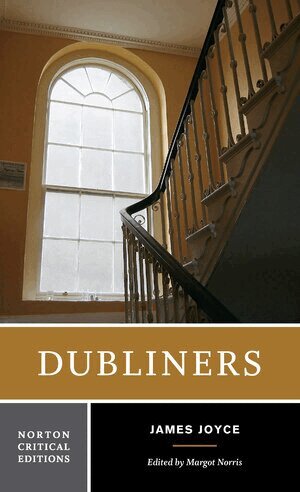
Through what Joyce described as their "style of scrupulous meanness," the stories present a direct, sometimes searing view of Dublin in the early twentieth century. The text of this Norton Critical Edition is based on renowned Joyce scholar Hans Walter Gabler’s edited text and includes his editorial notes and the introduction to his scholarly edition, which details and discusses Dubliners’ complicated publication history. "Contexts" offers a rich collection of materials that bring the stories and the Irish capital to life for twenty-first century readers, including photographs, newspaper articles and advertising, early versions of two of the stories, and a satirical poem by Joyce about his publication woes. "Criticism" brings together eight illuminating essays on the most frequently taught stories in Dubliners—"Araby," "Eveline," "After the Race," "The Boarding House," "Counterpoints," "A Painful Case," and "The Dead." Contributors include David G. Wright, Heyward Ehrlich, Margot Norris, James Fairhall, Fritz Senn, Morris Beja, Roberta Jackson, and Vincent J. Cheng.
300 kr
Skickas inom 10-15 vardagar
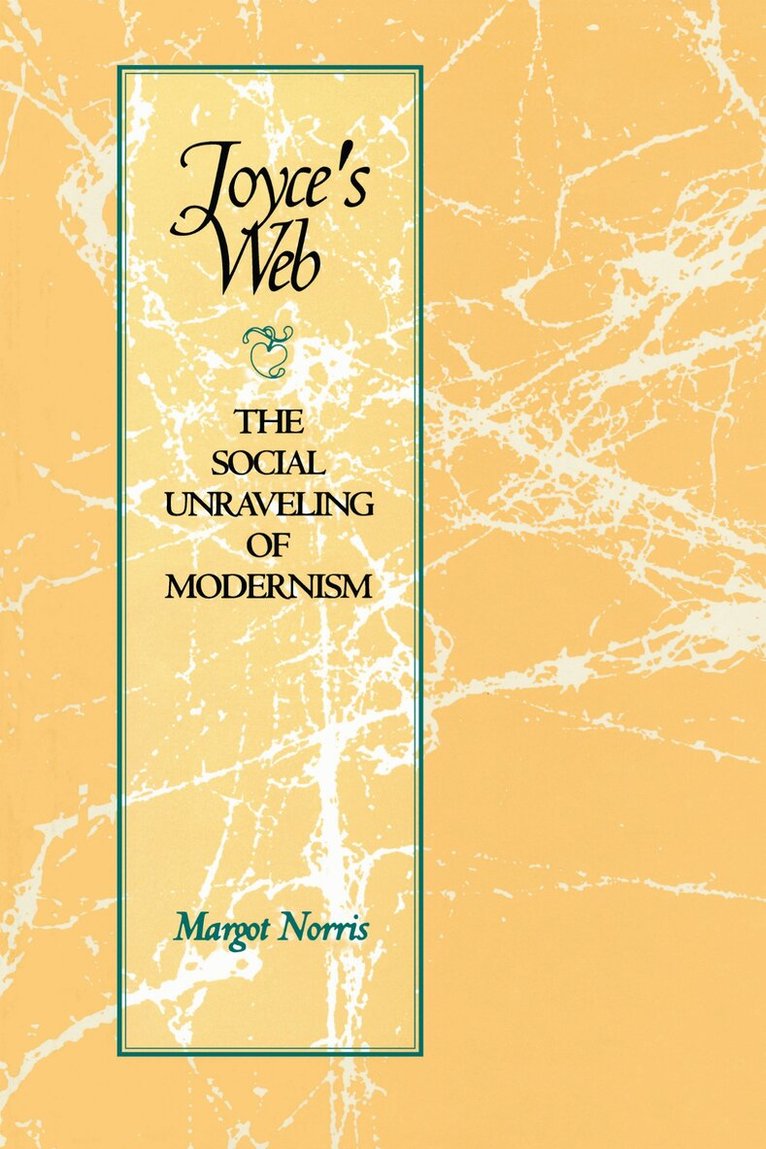
James Joyce has long been viewed as a literary modernist who helped define and uphold modernism's fundamental concepts of the artist as martyr to bourgeois sensibilities and of an idealistic faith in artistic freedom. In this revolutionary work, however, Margot Norris proposes that Joyce's art actually critiques these modernist tenets by revealing an awareness of the artist's connections to and constraints within bourgeois society.In sections organized around three mythologized and aestheticized figures in Joyce's works-artist, woman, and child-Norris' readings "unravel the web" of Joyce's early and late stories, novels, and experimental texts. She shows how Joyce's texts employ multiple mechanisms to expose their own distortions, silences, and lies and reveal connections between art and politics, and art and society.This ambitious new reading not only repositions Joyce within contemporary debates about the ideological assumptions behind modernism and postmodernism, but also urges reconsideration of the phenomenon of modernism itself. It will be of interest and importance to all literary scholars.
868 kr
Skickas inom 10-15 vardagar
Because the stories in James Joyce's Dubliners seem to function as models of fiction, they are able to stand in for fiction in general in their ability to make the operation of texts explicit and visible. Joyce's stories do this by provoking skepticism in the face of their storytelling. Their narrative unreliabilities-produced by strange gaps, omitted scenes, and misleading narrative prompts-arouse suspicion and oblige the reader to distrust how and why the story is told.As a result, one is prompted to look into what is concealed, omitted, or left unspoken, a quest that often produces interpretations in conflict with what the narrative surface suggests about characters and events. Margot Norris's strategy in her analysis of the stories in Dubliners is to refuse to take the narrative voice for granted and to assume that every authorial decision to include or exclude, or to represent in a particular way, may be read as motivated. Suspicious Readings of Joyce's Dubliners examines the text for counterindictions and draws on the social context of the writing in order to offer readings from diverse theoretical perspectives.Suspicious Readings of Joyce's Dubliners devotes a chapter to each of the fifteen stories in Dubliners and shows how each confronts the reader with an interpretive challenge and an intellectual adventure. Its readings of "An Encounter," "Two Gallants," "A Painful Case," "A Mother," "The Boarding House," and "Grace" reconceive the stories in wholly novel ways-ways that reveal Joyce's writing to be even more brilliant, more exciting, and more seriously attuned to moral and political issues than we had thought.
346 kr
Skickas inom 10-15 vardagar
568 kr
Skickas inom 7-10 vardagar
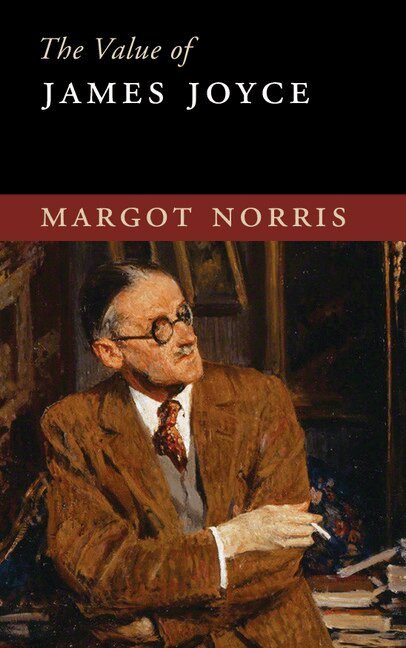
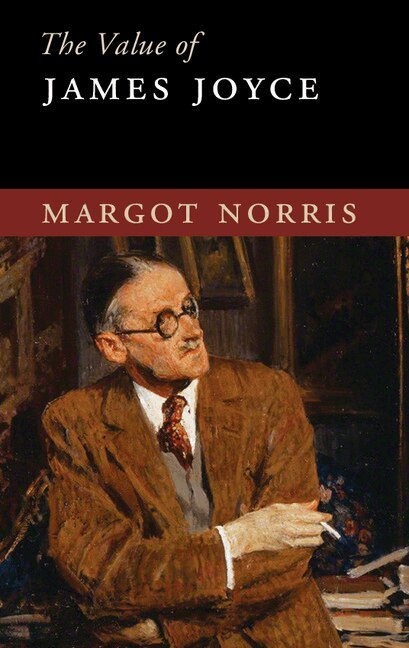
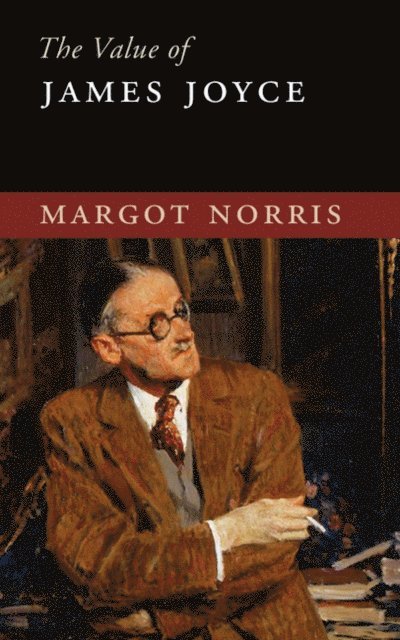
Margot Norris' The Value of James Joyce explores the writings of James Joyce from his early poetry and short stories to his final avant-garde work, Finnegans Wake. His works include some of the most difficult and challenging texts in the English literary canon without diminishing his impressive popularity beyond the scope of academia. A democratic impulse may be counted as an important feature of this paradox: that Joyce's stylistic and linguistic experiments never lose their focus on a world of characters whose everyday activities comprise the stories of life in Ireland in the late nineteenth and early twentieth century, even as some of the most famous texts are given structures derived from Ancient Greek literature. The Value of James Joyce examines not only the significance of the ostensibly ordinary but the function of natural and urban spaces, classical and popular culture, and the moods, voice, and language that give Joyce's works their widespread appeal.
370 kr
Skickas inom 7-10 vardagar
Margot Norris' The Value of James Joyce explores the writings of James Joyce from his early poetry and short stories to his final avant-garde work, Finnegans Wake. His works include some of the most difficult and challenging texts in the English literary canon without diminishing his impressive popularity beyond the scope of academia. A democratic impulse may be counted as an important feature of this paradox: that Joyce's stylistic and linguistic experiments never lose their focus on a world of characters whose everyday activities comprise the stories of life in Ireland in the late nineteenth and early twentieth century, even as some of the most famous texts are given structures derived from Ancient Greek literature. The Value of James Joyce examines not only the significance of the ostensibly ordinary but the function of natural and urban spaces, classical and popular culture, and the moods, voice, and language that give Joyce's works their widespread appeal.
471 kr
Skickas inom 5-8 vardagar
Originally published in 1977. The pioneer critics of Finnegans Wake hailed the work as a radical critique of language and civilization. Resuming their position, Margot Norris explains the book's most intractable uncertainties not as puzzles to be solved by a clever reader but as manifestations of a "chaosmos," a Freudian dream world of sexual transgression and social dissolution, of inauthentic being and empty words. Conventional moralities and restraints are under siege in this chaosmos, where precisely those desires and forbidden wishes that are barred in waking thought strive to make themselves felt. Norris demonstrates convincingly that the protean characters of Finnegans Wake are the creatures of a dreaming mind. The teleology of their universe is freedom, and in the enduring struggle between the individual's anarchic psyche and the laws that make civilization possible, it is only in dream that the psyche is triumphant. It is as dream rather than as novel that Norris reads Finnegans Wake.The lexical deviance and semantic density of the book, Norris argues, are not due to Joyce's malice, mischief, or megalomania but are essential and intrinsic to his concern to portray man's inner state of being. Because meanings are dislocated—hidden in unexpected places, multiplied and split, given over to ambiguity, plurality, and uncertainty—the Wake, Norris claims, represents a decentered universe. Its formal elements of plot, character, discourse, and language are not anchored to any single point of reference; they do not refer back to center. Only by abandoning conventional frames of reference can readers allow the work to disclose its own meanings, which are lodged in the differences and similarities of its multitudinous elements.Eschewing the close explication of much Wake criticism, the author provides a conceptual framework for the work's large structures with the help of theories and methods borrowed from Freud, Heidegger, Lacan, Levi-Strauss, and Derrida. Looking at the work without novelistic expectations of the illusion of some "key" to unlock the mystery, Norris explores Joyce's rationale for committing his last human panorama—a bit sadder than Ulysses in its concern with aging, killing, and dying—to a form and language belonging to the deconstructive forces of the twentieth century.
596 kr
Skickas inom 7-10 vardagar
Originally published in 1985. Beasts of the Modern Imagination explores a specific tradition in modern thought and art: the critique of anthropocentrism at the hands of "beasts"—writers whose works constitute animal gestures or acts of fatality. It is not a study of animal imagery, although the works that Margot Norris explores present us with apes, horses, bulls, and mice who appear in the foreground of fiction, not as the tropes of allegory or fable, but as narrators and protagonists appropriating their animality amid an anthropocentric universe. These beasts are finally the masks of the human animals who create them, and the textual strategies that bring them into being constitute another version of their struggle. The focus of this study is a small group of thinkers, writers, and artists who create as the animal—not like the animal, in imitation of the animal—but with their animality speaking. The author treats Charles Darwin as the founder of this tradition, as the naturalist whose shattering conclusions inevitably turned back on him and subordinated him, the rational man, to the very Nature he studied. Friedrich Nietzsche heeded the advice implicit in his criticism of David Strauss and used Darwinian ideas as critical tools to interrogate the status of man as a natural being. He also responded to the implications of his own animality for his writing by transforming his work into bestial acts and gestures. The third, and last, generation of these creative animals includes Franz Kafka, the Surrealist artist Max Ernst, and D. H. Lawrence. In exploring these modern philosophers of the animal and its instinctual life, the author inevitably rebiologizes them even against efforts to debiologize thinkers whose works can be studied profitably for their models of signification.
110 kr
Skickas inom 5-8 vardagar