Maria Giulia Dondero - Böcker
Visar alla böcker från författaren Maria Giulia Dondero. Handla med fri frakt och snabb leverans.
4 produkter
4 produkter
1 578 kr
Skickas inom 10-15 vardagar
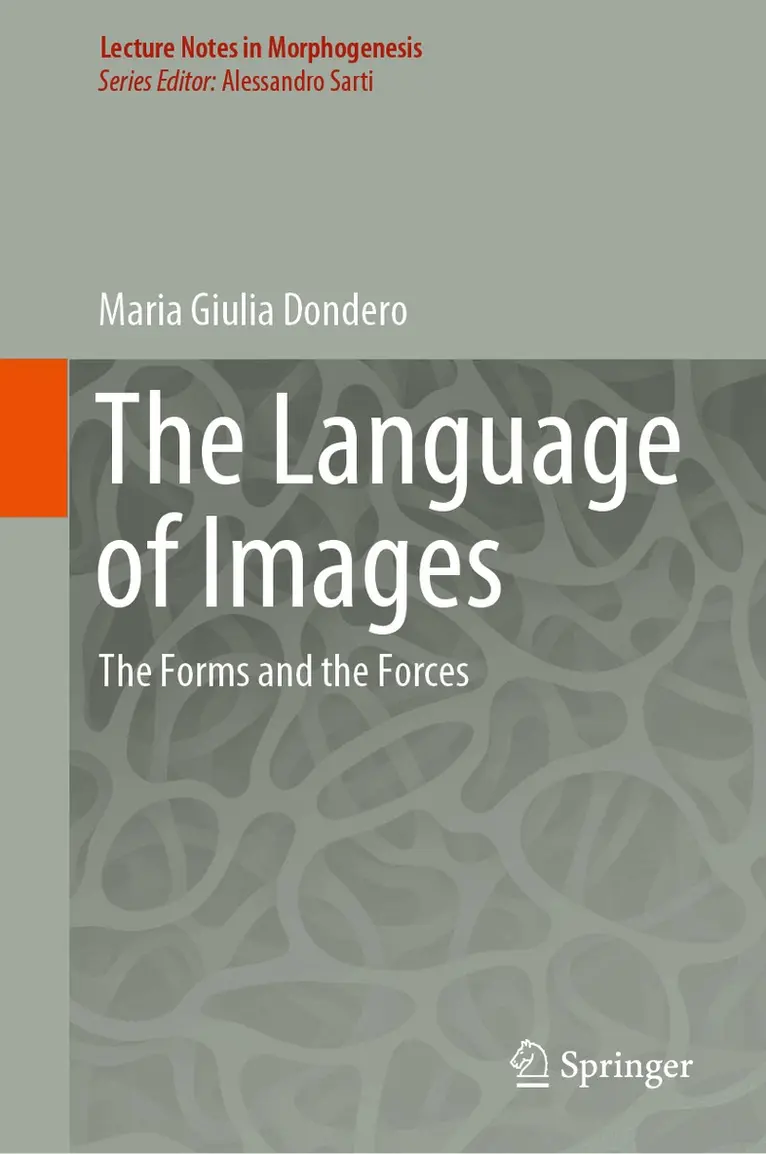
This book deals with two fundamental issues in the semiotics of the image. The first is the relationship between image and observer: how does one look at an image? To answer this question, this book sets out to transpose the theory of enunciation formulated in linguistics over to the visual field. It also aims to clarify the gains made in contemporary visual semiotics relative to the semiology of Roland Barthes and Emile Benveniste. The second issue addressed is the relation between the forces, forms and materiality of the images. How do different physical mediums (pictorial, photographic and digital) influence visual forms? How does materiality affect the generativity of forms? On the forces within the images, the book addresses the philosophical thought of Gilles Deleuze and René Thom as well as the experiment of Aby Warburg’s Atlas Mnemosyne. The theories discussed in the book are tested on a variety of corporafor analysis, including both paintings and photographs, taken from traditional as well as contemporary sources in a variety of social sectors (arts and sciences). Finally, semiotic methodology is contrasted with the computational analysis of large collections of images (Big Data), such as the “Media Visualization” analyses proposed by Lev Manovich and Cultural Analytics in the field of Computer Science to evaluate the impact of automatic analysis of visual forms on Digital Art History and more generally on the image sciences.
1 578 kr
Skickas inom 10-15 vardagar
This book deals with two fundamental issues in the semiotics of the image. The first is the relationship between image and observer: how does one look at an image? To answer this question, this book sets out to transpose the theory of enunciation formulated in linguistics over to the visual field. It also aims to clarify the gains made in contemporary visual semiotics relative to the semiology of Roland Barthes and Emile Benveniste. The second issue addressed is the relation between the forces, forms and materiality of the images. How do different physical mediums (pictorial, photographic and digital) influence visual forms? How does materiality affect the generativity of forms? On the forces within the images, the book addresses the philosophical thought of Gilles Deleuze and René Thom as well as the experiment of Aby Warburg’s Atlas Mnemosyne. The theories discussed in the book are tested on a variety of corporafor analysis, including both paintings and photographs, taken from traditional as well as contemporary sources in a variety of social sectors (arts and sciences). Finally, semiotic methodology is contrasted with the computational analysis of large collections of images (Big Data), such as the “Media Visualization” analyses proposed by Lev Manovich and Cultural Analytics in the field of Computer Science to evaluate the impact of automatic analysis of visual forms on Digital Art History and more generally on the image sciences.
1 892 kr
Skickas inom 10-15 vardagar
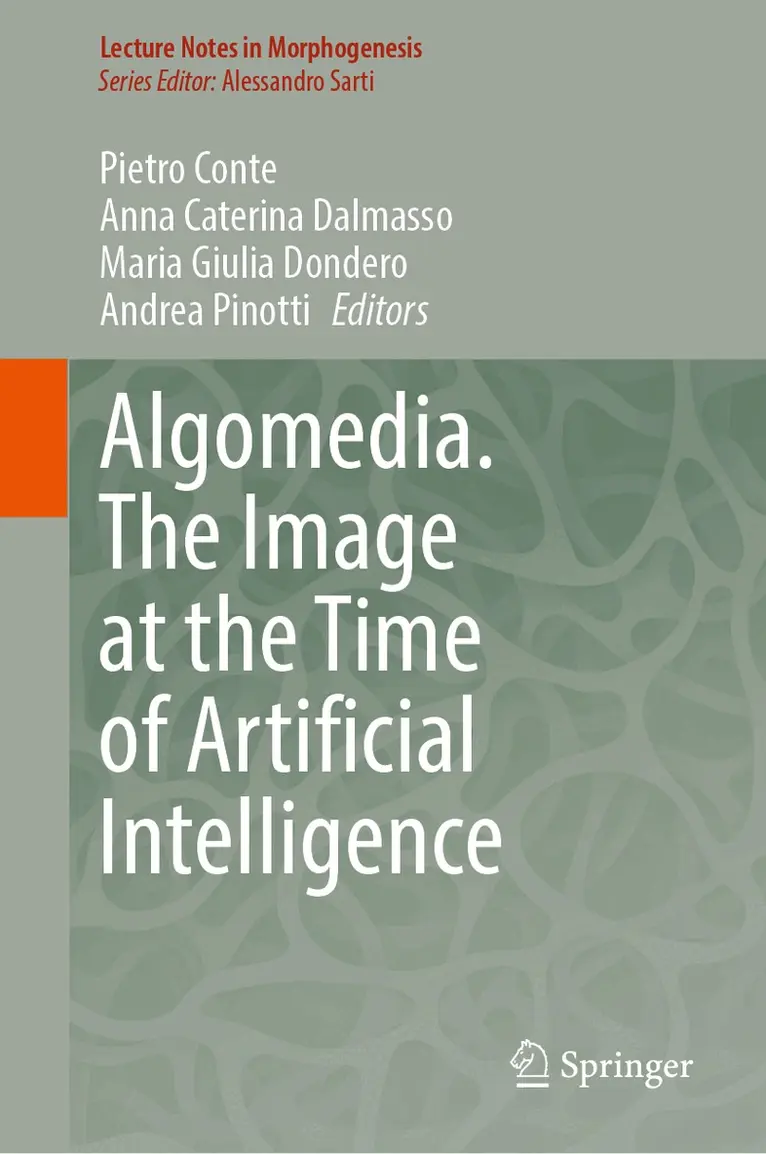
Contemporary media ecosystems are deeply entangled with algorithms, which play an increasingly pervasive role in shaping our environment and mediating our perception of reality. This book aims to provide a critical map of a rapidly evolving mediascape in which humans, machines, and data negotiate forms of agency, cultural imaginaries, and scopic regimes.In particular, the volume addresses the multiple challenges posed by algorithmic media within the domain of visual culture, and identifies a paradigmatic shift: in the age of artificial intelligence, images are no longer merely captured or represented—they are synthesized, inferred, and predicted by probabilistic models. As active agents shaping creativity and meaning-making, AI systems carry far-reaching epistemological, aesthetic, and political implications. They open new possibilities for content accessibility and participatory engagement, yet they also encode existing asymmetries. Trained on massive datasets, machine learning models often reproduce structural biases, amplify cultural and social exclusions, and perpetuate inequalities. At the same time, algorithmic systems are being subverted and reappropriated by artists and curators, transforming them into sites of resistance and experimentation for imagining alternative futures.Bringing together perspectives from computer science, semiotics, philosophy, critical theory, aesthetics, art theory, visual culture, and film and media studies, this book sets out an interdisciplinary exploration to make key concepts—such as algorithm, latent space, neural networks, generative models, and NFTs—accessible to a humanities audience, while providing a set of critical tools to interrogate both the ruptures and continuities that define this ongoing transformation.The contributions span a wide array of topics: from machine vision and facial recognition to social robots; from computational art analysis to generative AI, distributed authorship, and curatorial practices; from biometric surveillance and predictive modeling to the politics of datasets and decolonial critique; from virtual and augmented reality to posthuman imagery, digital afterlives, and AI-mediated memory.Compelling us to revisit foundational categories in media studies, this book offers an analytical framework to open a debate that is not merely about “technology’s impact” but about how algorithms have become the media themselves: veritable algomedia.
2 469 kr
Skickas inom 3-6 vardagar
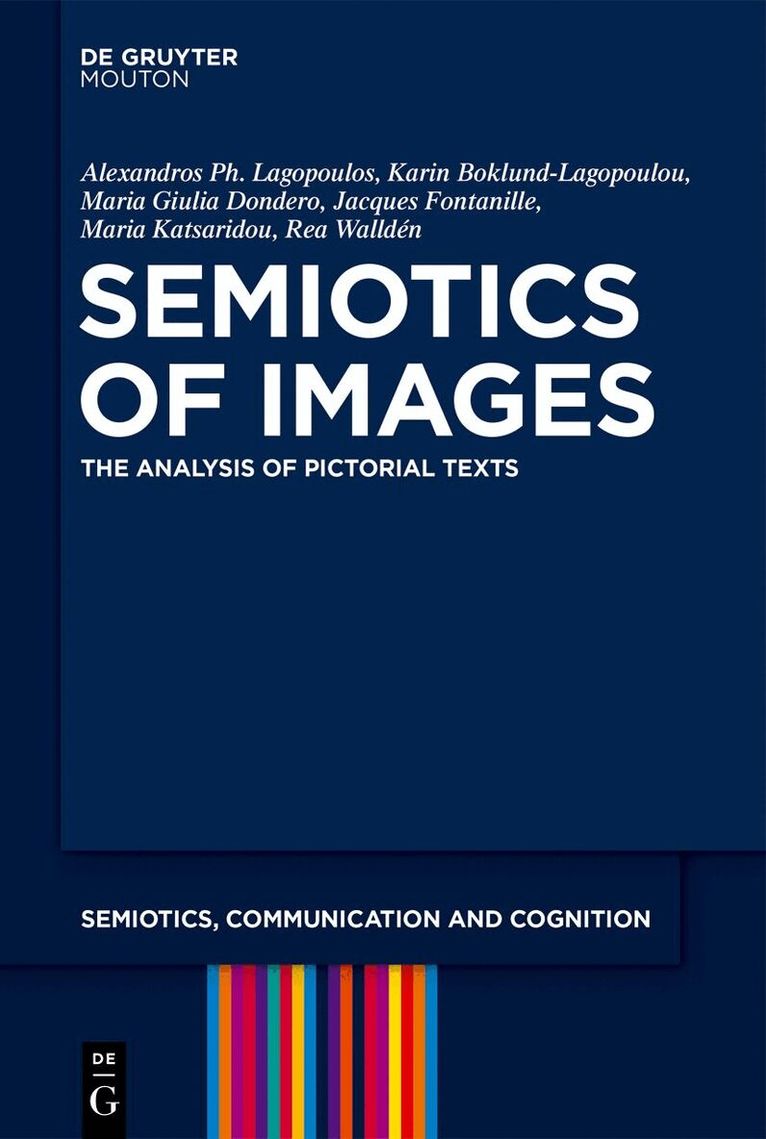
This book represents a unique collaborative effort to bring together the multiple aspects of the semiotics of images into a coherent approach based on Greimasian and post-Greimasian theory. Starting with a critical discussion of epistemological and theoretical issues and continuing with methodology and numerous examples of applied analysis, it aims to provide the educated reader with a consistent and unified theoretical framework for the semiotic study of visual cultural texts. It offers a comprehensive overview of the semiotics of static images such as painting, drawing, sculpture and photography, but also dynamic images such as cinema, animation and digital games. Readers will benefit from the special emphasis placed on the analysis of the pictorial signifier, visual syntax and the structuring of the semantic universe.