Maria Pia Lopez – författare
Visar alla böcker från författaren Maria Pia Lopez. Handla med fri frakt och snabb leverans.
4 produkter
4 produkter
Inbunden, Engelska, 2020
674 kr
Skickas inom 5-8 vardagar
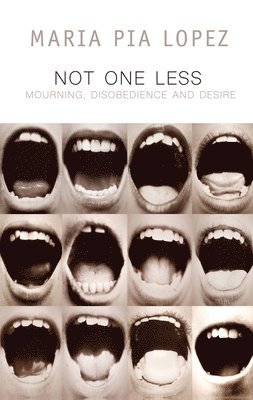
On June 3, 2015, massive women’s street demonstrations took place in many cities across Argentina to protest against femicide. Under the slogan Ni una menos, Not One (Woman) Less, thousands of women took to the streets to express their outrage at systematic violence against women, giving a face and a voice to women who might otherwise have died in silence. Maria Pia López, a founding member and active participant in the Not One Less protest, offers in this book a first-hand account of the distinctive aesthetics, characteristics and lineages of this popular feminist movement, while examining the broader issues of gender politics and violence, inequality and social justice, mourning, performance and protest that are relevant to all contemporary societies. A unique analysis of a social movement as well as a rich and original work of feminist theory and practice, this book will appeal to a wide readership concerned about gender based violence in the neoliberal contexts and what can be done to resist it.
Häftad, Engelska, 2020
212 kr
Skickas inom 5-8 vardagar
On June 3, 2015, massive women’s street demonstrations took place in many cities across Argentina to protest against femicide. Under the slogan Ni una menos, Not One (Woman) Less, thousands of women took to the streets to express their outrage at systematic violence against women, giving a face and a voice to women who might otherwise have died in silence. Maria Pia López, a founding member and active participant in the Not One Less protest, offers in this book a first-hand account of the distinctive aesthetics, characteristics and lineages of this popular feminist movement, while examining the broader issues of gender politics and violence, inequality and social justice, mourning, performance and protest that are relevant to all contemporary societies. A unique analysis of a social movement as well as a rich and original work of feminist theory and practice, this book will appeal to a wide readership concerned about gender based violence in the neoliberal contexts and what can be done to resist it.
E-bok
Engelska, 2020253 kr
Läs direkt efter köp
On June 3, 2015, massive women’s street demonstrations took place in many cities across Argentina to protest against femicide. Under the slogan Ni una menos, Not One (Woman) Less, thousands of women took to the streets to express their outrage at systematic violence against women, giving a face and a voice to women who might otherwise have died in silence. Maria Pia López, a founding member and active participant in the Not One Less protest, offers in this book a first-hand account of the distinctive aesthetics, characteristics and lineages of this popular feminist movement, while examining the broader issues of gender politics and violence, inequality and social justice, mourning, performance and protest that are relevant to all contemporary societies. A unique analysis of a social movement as well as a rich and original work of feminist theory and practice, this book will appeal to a wide readership concerned about gender based violence in the neoliberal contexts and what can be done to resist it.
E-bok
Spanska, 2021111 kr
Läs direkt efter köp
El género gauchesco tiene una edad de concepción –la dictadura– y una de escritura –la transición democrática–, pero también una edad de lectura. O de relectura, como la que hago ahora, en el contexto de la insurgencia feminista, de la irrupción de los feminismos populares y el buscado trastrocamiento de las prácticas sociales. En este contexto, la insistencia de Ludmer en referir al cuerpo y al género se convierte en guiño para (…) no procurar el acopio de una literatura de mujeres, sino confrontar con el corazón machordo de la patria, el gaucho mismo, y ahí guerrear por la interpretación.MARÍA PÍA LÓPEZ, del prólogo del libro.Este libro, publicado originalmente en 1988, analiza el uso literario de la voz y el uso económico o militar de los cuerpos; y las dos caras del don: la cara del escritor que da la voz y la cara del patrón. La lógica dual del género gauchesco es examinada aquí como lógica de la alianza entre oralidad y escritura, y entre dos culturas latinoamericanas, la cultura popular y la cultura letrada. Esa alianza no solo es literaria, es también política, social, racial y sexual. El resultado es un libro de crítica pero también algo más: un ensayo, un tratado, un libro autobiográfico y un libro político.El género gauchesco. Un tratado sobre la patria marcó un nuevo modo de leer la relación entre literatura, cuerpos y política y es, sin dudas, una obra ya clásica en la crítica latinoamericana.