Maria Ranieri – författare
Visar alla böcker från författaren Maria Ranieri. Handla med fri frakt och snabb leverans.
7 produkter
7 produkter
Häftad, Engelska, 2017
702 kr
Skickas inom 10-15 vardagar
Based on a major research project funded by the European Commission, Populism, Media and Education studies how discriminatory stereotypes are built online with a particular focus on right-wing populism. Globalization and migration have led to a new era of populism and racism in Western countries, rekindling traditional forms of discrimination through innovative means. New media platforms are being seen by populist organizations as a method to promote hate speech and unprecedented forms of proselytism. Race, gender, disability and sexual orientation are all being used to discriminate and young people are the preferred target for populist organizations and movements. This book examines how media education can help to deconstruct such hate speech and promote young people’s full participation in media-saturated societies. Drawing on rich examples from Austria, Belgium, Bulgaria, France, Italy, Slovenia, and the UK - countries characterized by different political and cultural contexts – Populism, Media and Education addresses key questions about the meaning of new populism, the nature of e-engagement, and the role of education and citizenship in the digital century. With its international and interdisciplinary approach, this book is essential reading for academics and students in the areas of education, media studies, sociology, cultural studies, political sciences, discrimination and gender studies.
Inbunden, Engelska, 2016
2 273 kr
Skickas inom 10-15 vardagar
Based on a major research project funded by the European Commission, Populism, Media and Education studies how discriminatory stereotypes are built online with a particular focus on right-wing populism. Globalization and migration have led to a new era of populism and racism in Western countries, rekindling traditional forms of discrimination through innovative means. New media platforms are being seen by populist organizations as a method to promote hate speech and unprecedented forms of proselytism. Race, gender, disability and sexual orientation are all being used to discriminate and young people are the preferred target for populist organizations and movements. This book examines how media education can help to deconstruct such hate speech and promote young people’s full participation in media-saturated societies. Drawing on rich examples from Austria, Belgium, Bulgaria, France, Italy, Slovenia, and the UK - countries characterized by different political and cultural contexts – Populism, Media and Education addresses key questions about the meaning of new populism, the nature of e-engagement, and the role of education and citizenship in the digital century. With its international and interdisciplinary approach, this book is essential reading for academics and students in the areas of education, media studies, sociology, cultural studies, political sciences, discrimination and gender studies.
Häftad, Engelska, 2016
654 kr
Skickas inom 5-8 vardagar
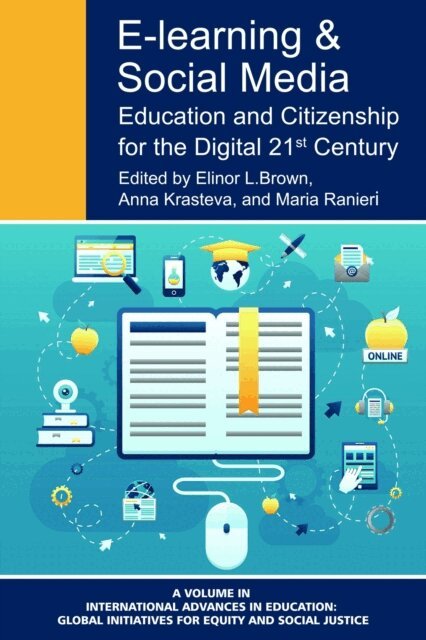
International Advances in Education: Global Initiatives for Equity and Social Justice is an international research monograph series of scholarly works that focuses primarily on empowering children, adolescents, and young adults from diverse educational, socio-cultural, linguistic, religious, racial, ethnic, and socio-economic settings to become non-exploited/non-exploitive contributing members of the global community. The series draws on the international community of investigators, academics, and community organizers that have contributed to the evidence base for developing sound educational policies, practices, and innovative programs to optimize the potential of all students. Each themed volume includes multi-disciplinary theory, research, and practice that provides an enriched understanding of the drivers of human potential via education to assist readers in exploring, adapting, and replicating innovative strategies that enable ALL students to realize their full potential.Among these strategies are the integration of digital technologies (DT) and information and communication technologies (ICT) into contemporary education platforms. However, technology must be more than just a tool to deliver content and stimulate engagement; it must become a means to broaden access to learning, advance equity, promote social justice, and encourage social inclusion. Especially reaching out to address the academic and social needs of rural, impoverished, marginalized, and displaced populations. Though the digital divide continues to hinder educational attainment for underprivileged populations, ICTs are providing significant opportunities to deliver literacy and basic skills instruction to disadvantaged segments of the global population as well as engage, motivate, and customize learning to address local needs. Nonetheless, the availability of ICT is not a deterministic process. Other societal, cultural, political and contextual factors are of fundamental importance to acceptance and integration that enables people to benefit from technology. The relationship between educational access, instructional delivery, and ICT should be considered in more complex terms. In particular, digital technologies should be viewed as instructional tools that improve access to educational opportunities, strengthen cultural resources, promote social and economic equity, and provide students with the knowledge and competencies to prepare them for a future that cannot be predicted. Therefore, developing ICT and media capabilities that instill citizenship and stewardship in today’s students is crucial to gleaning the social and cultural advantages of a contemporary global society that encourages full and equal citizenship.Citizenship education refers to two understandings of citizenship: as belonging and as engagement. The first is focused on national identity and valorizes the values of justice and democracy, as well as language and culture as the roots bridging the personality of children to the community of solidarity and shared norms. The second understanding of citizenship complements the ‘roots’ with ‘roads’, with the choices made by the individual, with the capacity to form and develop the child’s personality into the actor and author of his/her educational, professional, and life projects. The adolescent prepares to become an active, committed, and engaged citizen with the intellectual capacity for critical thinking that leads to responsible actions. Digital citizenship expresses the transformations of both belonging to and engaging in the information society and contributes to the development of generation “Y” with the aspiration to innovate and experiment, to explore the possibilities of the new digital world, to question authorities and instances of knowledge and power. Education addresses digital citizenship by opening more avenues for the intersection of Internet, imagination, and exploration.Volume 10, E-learning & Social Media: Education and Citizenship for the Digital 21st Century, addresses the use of technology in: developing and expanding educational delivery systems to reach rural populations, providing access to equitable education opportunities for disadvantaged and marginalized populations, and encouraging student civic engagement. The volume evaluates e-learning programs (distributed through the Internet, via satellite and hosted on social media) that promote equitable education for disadvantaged populations; examines the challenges and benefits of social media on student self-identity, collaboration, and academic engagement; shares promising practices associated with technology in education and e-citizenship in the 21st century, and advances the discussion on blending global citizenship education and social media that raises student awareness, accountability and social justice involvement.
Inbunden, Engelska, 2016
1 106 kr
Skickas inom 5-8 vardagar
International Advances in Education: Global Initiatives for Equity and Social Justice is an international research monograph series of scholarly works that focuses primarily on empowering children, adolescents, and young adults from diverse educational, socio-cultural, linguistic, religious, racial, ethnic, and socio-economic settings to become non-exploited/non-exploitive contributing members of the global community. The series draws on the international community of investigators, academics, and community organizers that have contributed to the evidence base for developing sound educational policies, practices, and innovative programs to optimize the potential of all students. Each themed volume includes multi-disciplinary theory, research, and practice that provides an enriched understanding of the drivers of human potential via education to assist readers in exploring, adapting, and replicating innovative strategies that enable ALL students to realize their full potential.Among these strategies are the integration of digital technologies (DT) and information and communication technologies (ICT) into contemporary education platforms. However, technology must be more than just a tool to deliver content and stimulate engagement; it must become a means to broaden access to learning, advance equity, promote social justice, and encourage social inclusion. Especially reaching out to address the academic and social needs of rural, impoverished, marginalized, and displaced populations. Though the digital divide continues to hinder educational attainment for underprivileged populations, ICTs are providing significant opportunities to deliver literacy and basic skills instruction to disadvantaged segments of the global population as well as engage, motivate, and customize learning to address local needs. Nonetheless, the availability of ICT is not a deterministic process. Other societal, cultural, political and contextual factors are of fundamental importance to acceptance and integration that enables people to benefit from technology. The relationship between educational access, instructional delivery, and ICT should be considered in more complex terms. In particular, digital technologies should be viewed as instructional tools that improve access to educational opportunities, strengthen cultural resources, promote social and economic equity, and provide students with the knowledge and competencies to prepare them for a future that cannot be predicted. Therefore, developing ICT and media capabilities that instill citizenship and stewardship in today’s students is crucial to gleaning the social and cultural advantages of a contemporary global society that encourages full and equal citizenship.Citizenship education refers to two understandings of citizenship: as belonging and as engagement. The first is focused on national identity and valorizes the values of justice and democracy, as well as language and culture as the roots bridging the personality of children to the community of solidarity and shared norms. The second understanding of citizenship complements the ‘roots’ with ‘roads’, with the choices made by the individual, with the capacity to form and develop the child’s personality into the actor and author of his/her educational, professional, and life projects. The adolescent prepares to become an active, committed, and engaged citizen with the intellectual capacity for critical thinking that leads to responsible actions. Digital citizenship expresses the transformations of both belonging to and engaging in the information society and contributes to the development of generation “Y” with the aspiration to innovate and experiment, to explore the possibilities of the new digital world, to question authorities and instances of knowledge and power. Education addresses digital citizenship by opening more avenues for the intersection of Internet, imagination, and exploration.Volume 10, E-learning & Social Media: Education and Citizenship for the Digital 21st Century, addresses the use of technology in: developing and expanding educational delivery systems to reach rural populations, providing access to equitable education opportunities for disadvantaged and marginalized populations, and encouraging student civic engagement. The volume evaluates e-learning programs (distributed through the Internet, via satellite and hosted on social media) that promote equitable education for disadvantaged populations; examines the challenges and benefits of social media on student self-identity, collaboration, and academic engagement; shares promising practices associated with technology in education and e-citizenship in the 21st century, and advances the discussion on blending global citizenship education and social media that raises student awareness, accountability and social justice involvement.
Del 1649 - Communications in Computer and Information Science
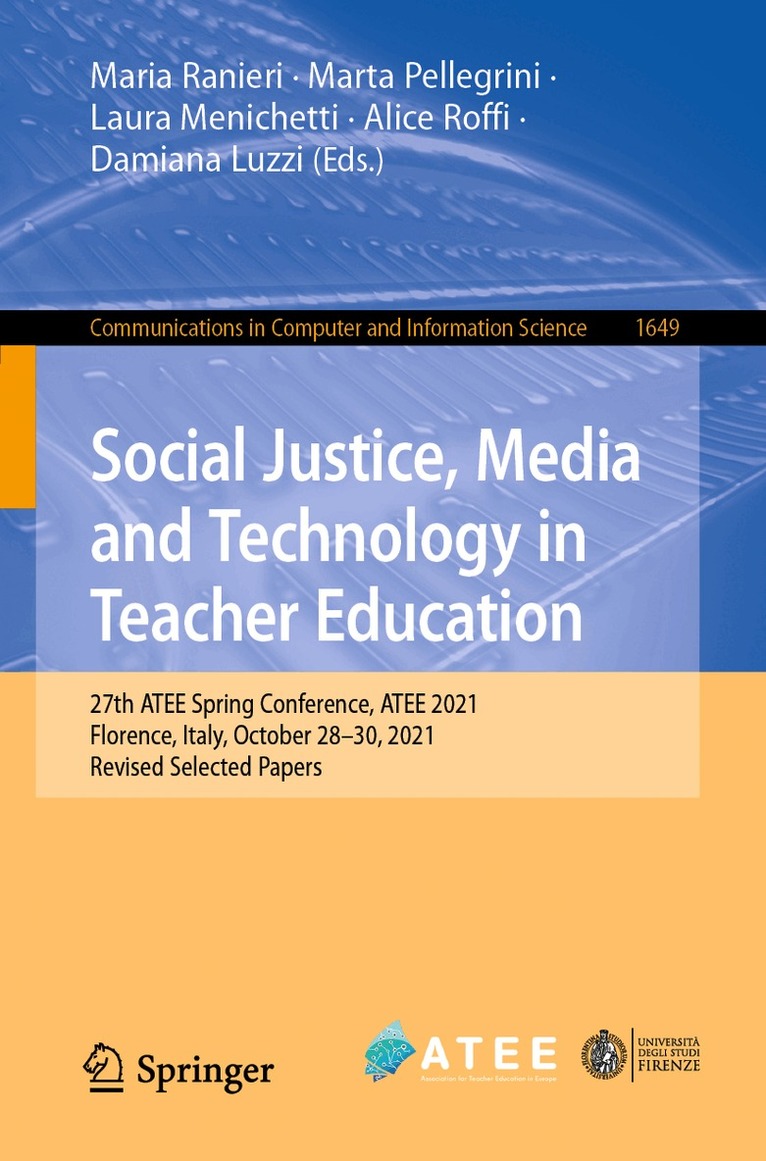
Social Justice, Media and Technology in Teacher Education
27th ATEE Spring Conference, ATEE 2021, Florence, Italy, October 28–29, 2021, Revised Selected Papers
Häftad, Engelska, 2022
782 kr
Skickas inom 10-15 vardagar
This book constitutes the refereed proceedings of the 27th ATEE Spring Conference onSocial Justice, Media and Technology, ATEE 2021, held in Florence, Italy, during October 28–30, 2021. The 19 full papers included in this book were carefully reviewed and selected from 49 submissions.
608 kr
Skickas inom 5-8 vardagar
Inbunden, Engelska, 2026
1 144 kr
Skickas inom 10-15 vardagar
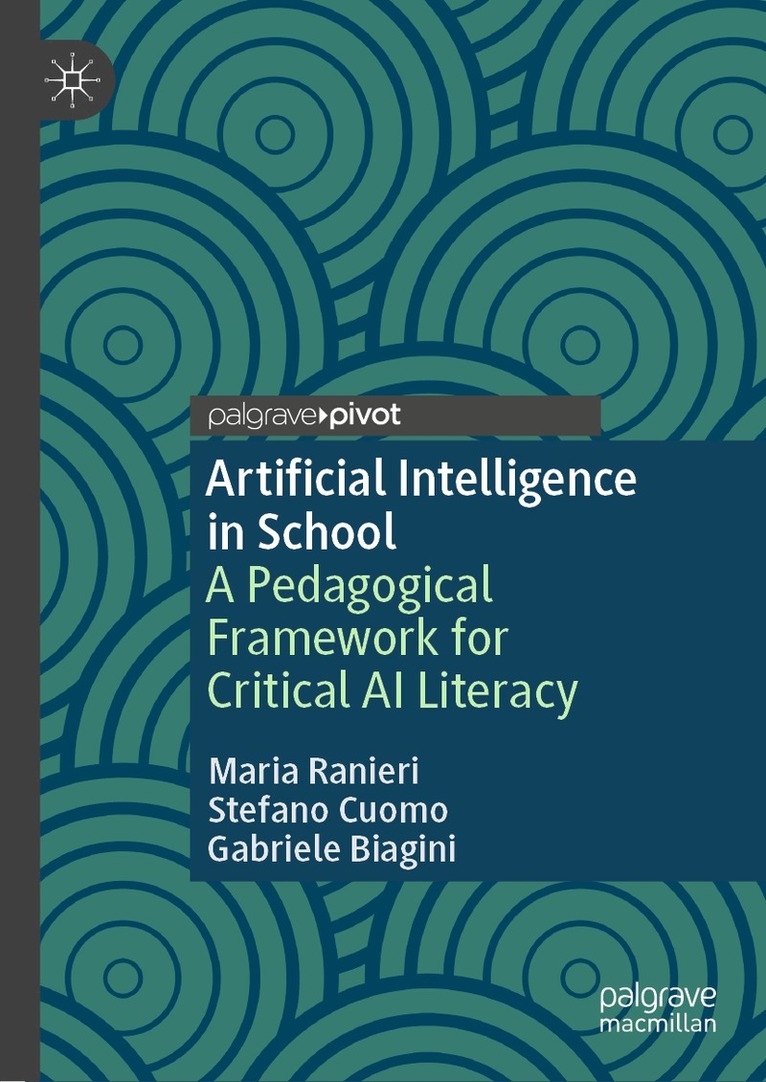
This book addresses a growing and urgent educational challenge: equipping students and educators with the knowledge and critical tools needed to understand and navigate the complex world of Artificial Intelligence (AI). Drawing on digital literacy education and the ethics of digital media, it adopts an interdisciplinary approach to combine theoretical insights with practical instructional strategies for teaching about AI. Designed with school-age learners in mind, the book includes a wide range of methodologies, such as Philosophy for Children, Inquiry-Based Learning, gamification to offer concrete, adaptable classroom activities suitable for diverse age groups and educational settings.Responding to the increasing demand from policymakers and educators for clearer guidance on AI education, the book promotes an approach grounded in awareness, inclusion, and responsibility. Structured around the four key dimensions of AI literacy (cognitive, operational, critical, and ethical), it provides a coherent and comprehensive learning pathway that extends beyond technical skills to foster critical thinking, ethical reflection, and democratic participation.Filling a significant gap in the current literature, this project delivers a practical educational toolkit for schools and teachers, supporting students not only in using AI, but also in questioning, critically evaluating, and shaping its development in alignment with human and civic values. In doing so, it contributes to the growth of informed and responsible digital citizenship.