Marie-France Auzépy – författare
Visar alla böcker från författaren Marie-France Auzépy. Handla med fri frakt och snabb leverans.
7 produkter
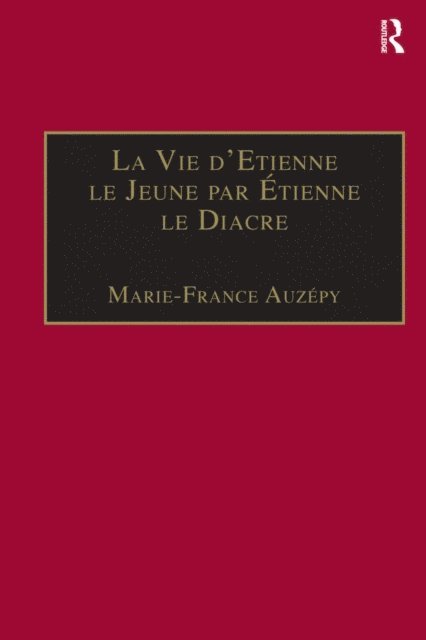
La Vie d'Etienne le Jeune par Étienne le Diacre
Introduction, édition et Traduction
Inbunden, 1997
2665 kr
Lägg i varukorg
The Life of Stephen the Younger is one of the rare sources for Byzantium in the ’Dark Ages’ and one of the key witnesses to the history of Iconoclasm. This book presents a new edition of the text, together with a French translation and commentary, and an important introduction. Stephen was a …
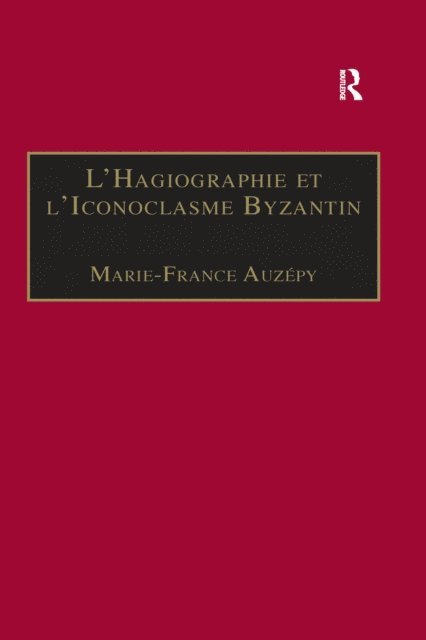
L’Hagiographie et l’Iconoclasme Byzantin
Le cas de la Vie d’Étienne le Jeune
Inbunden, 1999
774 kr
Lägg i varukorg
The period of Byzantine Iconoclasm remains in many ways a 'Dark Age'. With this volume Marie-France Auzépy continues her fundamental re-examination of one of the key sources for the time, the Life of Stephen the Younger. Previously in this series she has published a new edition, translation and …
La Vie d'Etienne le Jeune par Étienne le Diacre
Introduction, édition et Traduction
Häftad, 2016
995 kr
Lägg i varukorg
The Life of Stephen the Younger is one of the rare sources for Byzantium in the ’Dark Ages’ and one of the key witnesses to the history of Iconoclasm. This book presents a new edition of the text, together with a French translation and commentary, and an important introduction. Stephen was a …
Vie d'Etienne le Jeune par Etienne le Diacre
Introduction, edition et Traduction
E-bok, 2017
1175 kr
Lägg i varukorg
The Life of Stephen the Younger is one of the rare sources for Byzantium in the ’Dark Ages’ and one of the key witnesses to the history of Iconoclasm. This book presents a new edition of the text, together with a French translation and commentary, and an important introduction. Stephen was a …
Vie d'Etienne le Jeune par Etienne le Diacre
Introduction, edition et Traduction
E-bok, 2017
1175 kr
Lägg i varukorg
The Life of Stephen the Younger is one of the rare sources for Byzantium in the ’Dark Ages’ and one of the key witnesses to the history of Iconoclasm. This book presents a new edition of the text, together with a French translation and commentary, and an important introduction. Stephen was a …
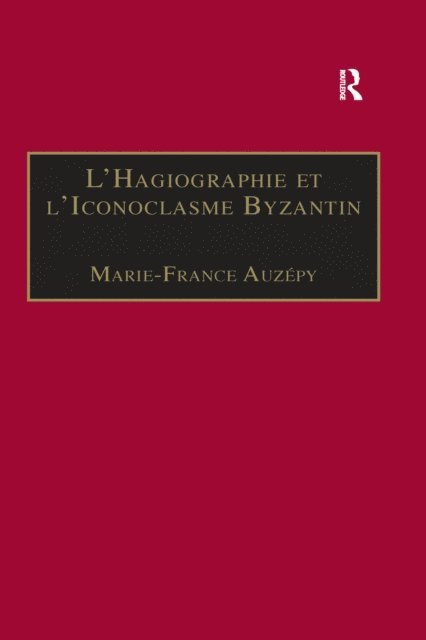
L'Hagiographie et l'Iconoclasme Byzantin
Le cas de la Vie d'Etienne le Jeune
E-bok, 2016
956 kr
Lägg i varukorg
The period of Byzantine Iconoclasm remains in many ways a ''Dark Age''. With this volume Marie-France Auzépy continues her fundamental re-examination of one of the key sources for the time, the Life of Stephen the Younger. Previously in this series she has published a new edition, translation and …
L'Hagiographie et l'Iconoclasme Byzantin
Le cas de la Vie d'Etienne le Jeune
E-bok, 2016
956 kr
Lägg i varukorg
The period of Byzantine Iconoclasm remains in many ways a ''Dark Age''. With this volume Marie-France Auzépy continues her fundamental re-examination of one of the key sources for the time, the Life of Stephen the Younger. Previously in this series she has published a new edition, translation and …