Marina Caparini – författare
2 388 kr
Skickas inom 10-15 vardagar
2 249 kr
Skickas inom 10-15 vardagar
693 kr
Skickas inom 10-15 vardagar
693 kr
Skickas inom 10-15 vardagar
2 179 kr
Skickas inom 10-15 vardagar
795 kr
Läs direkt efter köp
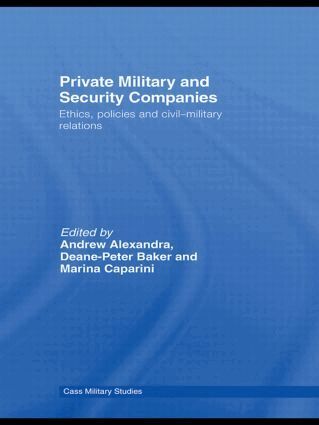
Over the past twenty years, Private Military and Security Companies (PMSCs) have become significant elements of national security arrangements, assuming many of the functions that have traditionally been undertaken by state armies. Given the centrality of control over the use of coercive force to the functioning and identity of the modern state, and to international order, these developments clearly are of great practical and conceptual interest.
This edited volume provides an interdisciplinary overview of PMSCs: what they are, why they have emerged in their current form, how they operate, their current and likely future military, political, social and economic impact, and the moral and legal constraints that do and should apply to their operation. The book focuses firstly upon normative issues raised by the development of PMSCs, and then upon state regulation and policy towards PMSCs, examining finally the impact of PMSCs on civil-military relations. It takes an innovative approach, bringing theory and empirical research into mutually illuminating contact. Includes contributions from experts in IR, political theory, international and corporate law, and economics, and also breaks important new ground by including philosophical discussions of PMSCs.
795 kr
Läs direkt efter köp
Over the past twenty years, Private Military and Security Companies (PMSCs) have become significant elements of national security arrangements, assuming many of the functions that have traditionally been undertaken by state armies. Given the centrality of control over the use of coercive force to the functioning and identity of the modern state, and to international order, these developments clearly are of great practical and conceptual interest.
This edited volume provides an interdisciplinary overview of PMSCs: what they are, why they have emerged in their current form, how they operate, their current and likely future military, political, social and economic impact, and the moral and legal constraints that do and should apply to their operation. The book focuses firstly upon normative issues raised by the development of PMSCs, and then upon state regulation and policy towards PMSCs, examining finally the impact of PMSCs on civil-military relations. It takes an innovative approach, bringing theory and empirical research into mutually illuminating contact. Includes contributions from experts in IR, political theory, international and corporate law, and economics, and also breaks important new ground by including philosophical discussions of PMSCs.
795 kr
Läs direkt efter köp
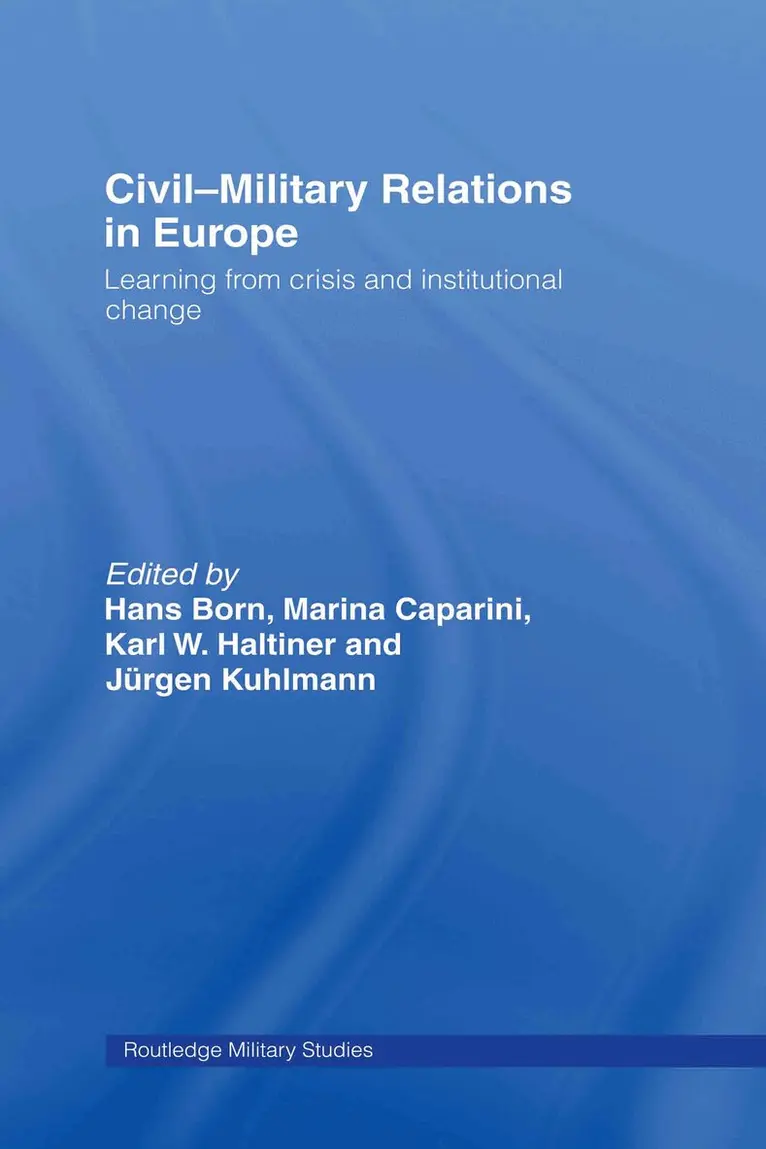
This new book illustrates how democracy cannot develop or endure unless military and security forces are under the full control of democratic institutions and all the necessary safeguards, checks and balances are in place.
The contributors show how contemporary European states manage the following issue: how does a society, primarily through its legitimate, democratically elected political leaders and their appointed officials, control the military, that same state institution that has been established for its protection and wields the monopoly of legitimate force?
Twenty-eight case studies are selected from key countries: the Czech Republic, Germany, Georgia, France, Hungary, Ireland, Israel, Macedonia, Poland, Romania, Slovenia, Serbia and Montenegro, Switzerland and the Ukraine. The key subjects of these cases vary from corruption to military incompetence, disobedience towards civilian superiors, to unauthorized strikes and accidents. The focus is on the relationship between political, civilian and military actors while identifying problems and dangers that can emerge in those relations to the detriment of effective and legitimate democratic control.
This is essential reading for students of civil-military relations, democratization, European politics and security studies in general.
795 kr
Läs direkt efter köp
This new book illustrates how democracy cannot develop or endure unless military and security forces are under the full control of democratic institutions and all the necessary safeguards, checks and balances are in place.
The contributors show how contemporary European states manage the following issue: how does a society, primarily through its legitimate, democratically elected political leaders and their appointed officials, control the military, that same state institution that has been established for its protection and wields the monopoly of legitimate force?
Twenty-eight case studies are selected from key countries: the Czech Republic, Germany, Georgia, France, Hungary, Ireland, Israel, Macedonia, Poland, Romania, Slovenia, Serbia and Montenegro, Switzerland and the Ukraine. The key subjects of these cases vary from corruption to military incompetence, disobedience towards civilian superiors, to unauthorized strikes and accidents. The focus is on the relationship between political, civilian and military actors while identifying problems and dangers that can emerge in those relations to the detriment of effective and legitimate democratic control.
This is essential reading for students of civil-military relations, democratization, European politics and security studies in general.
836 kr
Läs direkt efter köp
836 kr
Läs direkt efter köp
368 kr
Tillfälligt slut