Hans Born - Böcker
Visar alla böcker från författaren Hans Born. Handla med fri frakt och snabb leverans.
10 produkter
10 produkter
Governing the Bomb
Civilian Control and Democratic Accountability of Nuclear Weapons
Inbunden, Engelska, 2010
1 430 kr
Skickas inom 7-10 vardagar
'Go nuclear' or 'go zero'-as the international community stands at a nuclear crossroads, a number of questions demand urgent attention: How do established and emerging nuclear-armed states manage their nuclear affairs? Who commands and controls a country's nuclear forces? What effect does the balance between secrecy and openness have on larger questions of security and democracy? Governing the Bomb is grounded in the belief that the public's ability to hold nuclear-armed states accountable for the security of their weapons is contingent on proper knowledge of domestic nuclear governance. With a special emphasis on civilian control and democratic accountability, Governing the Bomb seeks to illuminate the structures and processes of nuclear weapons governance of eight nuclear-armed states: the USA, Russia, the UK, France and China as well as Israel, India and Pakistan. It examines the theoretical as well as practical functions and structures of those who possess the power to make nuclear decisions and those who have the practical means and physical opportunity to execute those decisions. While it assesses the whole spectrum of political oversight and control mechanisms in operation for each country-including the roles and requirements of the executive, the military and specialized civilian institutions-it also takes a closer look at parliamentary institutions and civil society at large. As nuclear terrorism, proliferation and disarmament vie for the top slot on the global security agenda, a comparative understanding of the various national nuclear discourses is no longer optional, but required.
Civil-Military Relations in Europe
Learning from Crisis and Institutional Change
Inbunden, Engelska, 2006
2 305 kr
Skickas inom 10-15 vardagar
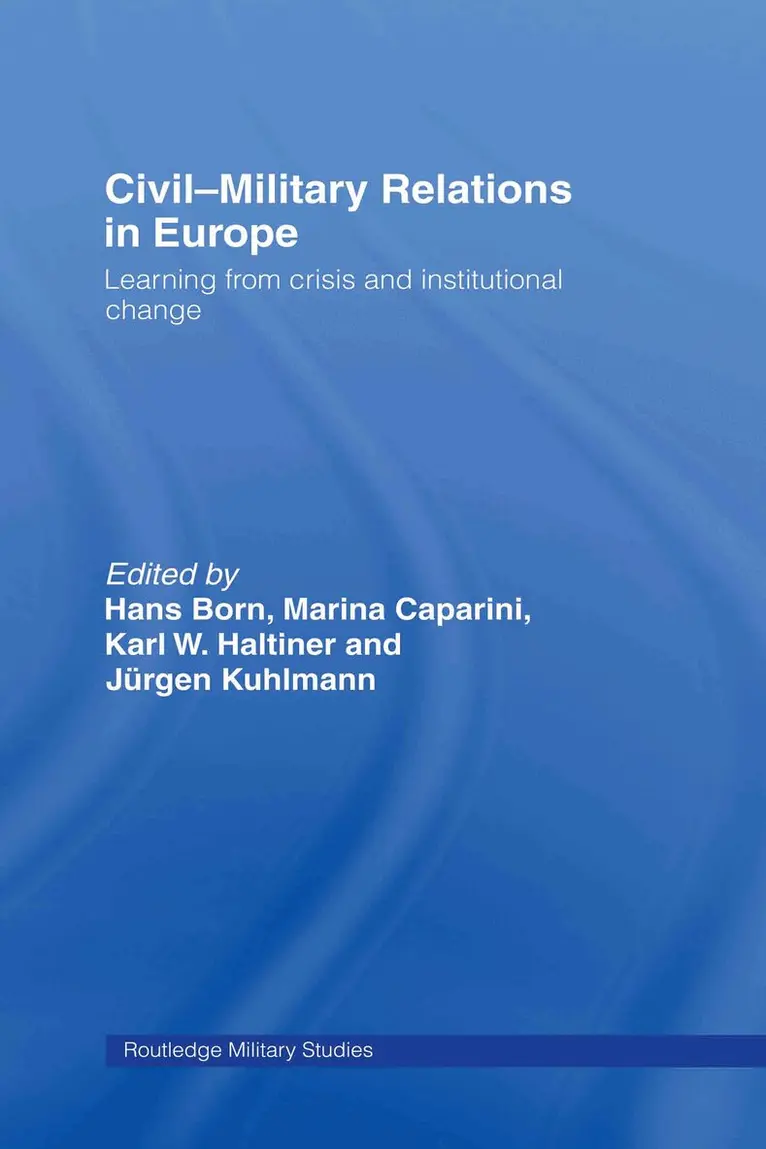
This new book illustrates how democracy cannot develop or endure unless military and security forces are under the full control of democratic institutions, and all the necessary safeguards, checks and balances are in place. The contributors show how contemporary European states manage the following issue: how does a society, primarily through its legitimate, democratically elected political leaders and their appointed officials, control the military, that same state institution that has been established for its protection and wields the monopoly of legitimate force? Twenty-eight case studies are selected from key countries: the Czech Republic, Germany, Georgia, France, Hungary, Ireland, Israel, Macedonia, Poland, Romania, Slovenia, Serbia and Montenegro, Switzerland, and the Ukraine. The key subjects of these cases vary from corruption to military incompetence, disobedience towards civilian superiors, to unauthorized strikes and accidents. The focus is on the relationship between political, civilian and military actors while identifying problems and dangers that can emerge in those relations to the detriment of effective and legitimate democratic control. This is essential reading for students of civil-military relations, democratization, European politics and security studies in general.
Civil-Military Relations in Europe
Learning from Crisis and Institutional Change
Häftad, Engelska, 2009
676 kr
Skickas inom 10-15 vardagar
This new book illustrates how democracy cannot develop or endure unless military and security forces are under the full control of democratic institutions, and all the necessary safeguards, checks and balances are in place. The contributors show how contemporary European states manage the following issue: how does a society, primarily through its legitimate, democratically elected political leaders and their appointed officials, control the military, that same state institution that has been established for its protection and wields the monopoly of legitimate force? Twenty-eight case studies are selected from key countries: the Czech Republic, Germany, Georgia, France, Hungary, Ireland, Israel, Macedonia, Poland, Romania, Slovenia, Serbia and Montenegro, Switzerland, and the Ukraine. The key subjects of these cases vary from corruption to military incompetence, disobedience towards civilian superiors, to unauthorized strikes and accidents. The focus is on the relationship between political, civilian and military actors while identifying problems and dangers that can emerge in those relations to the detriment of effective and legitimate democratic control. This is essential reading for students of civil-military relations, democratization, European politics and security studies in general.
2 121 kr
Skickas inom 10-15 vardagar
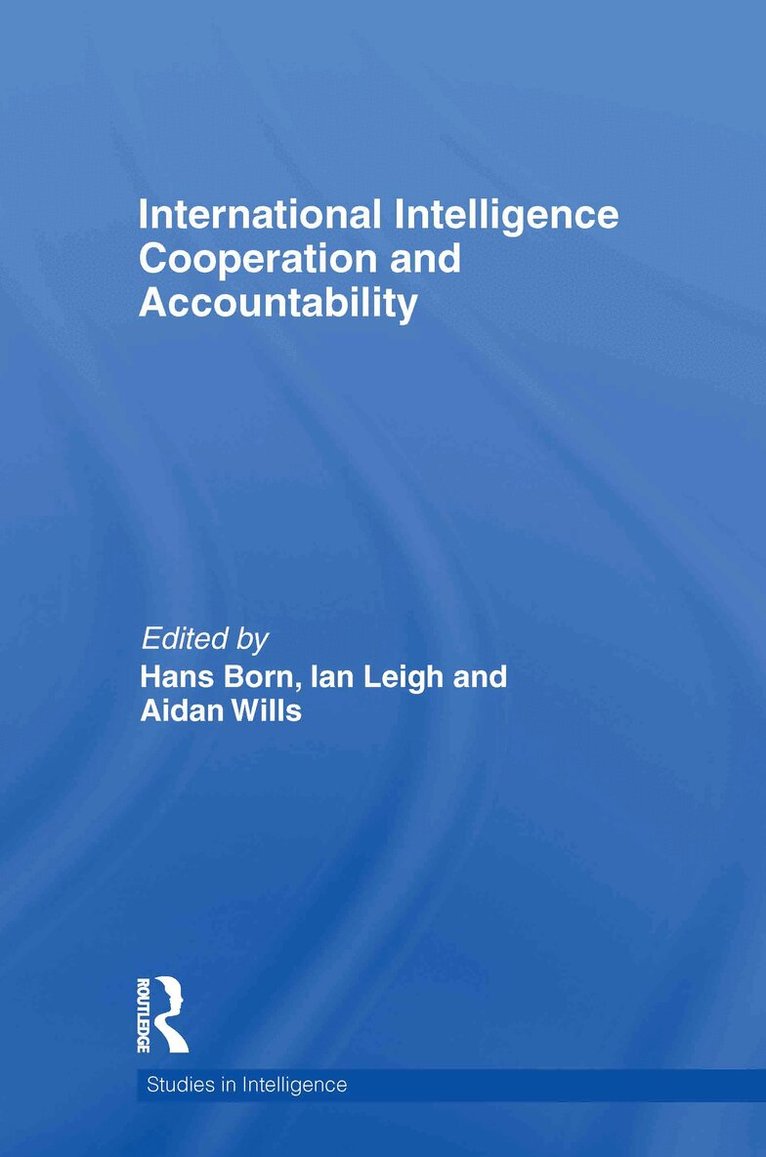
This book examines how international intelligence cooperation has come to prominence post-9/11 and introduces the main accountability, legal and human rights challenges that it poses.Since the end of the Cold War, the threats that intelligence services are tasked with confronting have become increasingly transnational in nature – organised crime, the proliferation of weapons of mass destruction and terrorism. The growth of these threats has impelled intelligence services to cooperate with contemporaries in other states to meet these challenges. While cooperation between certain Western states in some areas of intelligence operations (such as signals intelligence) is longstanding, since 9/11 there has been an exponential increase in both their scope and scale.This edited volume explores not only the challenges to accountability presented by international intelligence cooperation but also possible solutions for strengthening accountability for activities that are likely to remain fundamental to the work of intelligence services. The book will be of much interest to students of intelligence studies, security studies, international law, global governance and IR in general.
760 kr
Skickas inom 10-15 vardagar
This book examines how international intelligence cooperation has come to prominence post-9/11 and introduces the main accountability, legal and human rights challenges that it poses.Since the end of the Cold War, the threats that intelligence services are tasked with confronting have become increasingly transnational in nature – organised crime, the proliferation of weapons of mass destruction and terrorism. The growth of these threats has impelled intelligence services to cooperate with contemporaries in other states to meet these challenges. While cooperation between certain Western states in some areas of intelligence operations (such as signals intelligence) is longstanding, since 9/11 there has been an exponential increase in both their scope and scale.This edited volume explores not only the challenges to accountability presented by international intelligence cooperation but also possible solutions for strengthening accountability for activities that are likely to remain fundamental to the work of intelligence services. The book will be of much interest to students of intelligence studies, security studies, international law, global governance and IR in general.
2 103 kr
Skickas inom 10-15 vardagar
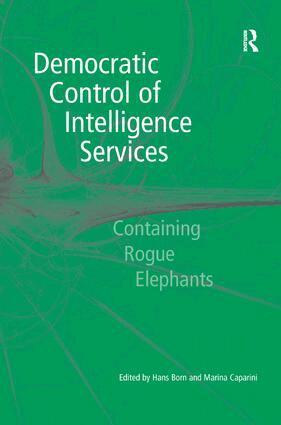
The events of September 11, 2001 sharply revived governmental and societal anxieties in many democratic countries concerning the threats posed by terrorism, organized crime, the proliferation and use of weapons of mass destruction, and other complex security threats. In many countries, public discourse of subjects traditionally considered part of social policy, such as immigration and asylum, have been securitized, while intelligence services have been granted greater resources and expanded powers. This comprehensive volume discusses the various challenges of establishing and maintaining accountable and democratically controlled intelligence services, drawing both from states with well-established democratic systems and those emerging from authoritarian systems and in transition towards democracy. It adopts a multidisciplinary and comparative approach, identifying good practices to make security services accountable to society and its democratic representatives. The volume will engage both academics and practitioners in the discussion of how to anchor these vital yet inherently difficult to control institutions within a firmly democratic framework. As such, it has clear relevance for these concerned with the control and oversight of intelligence and security issues in many countries.
4 039 kr
Kommande
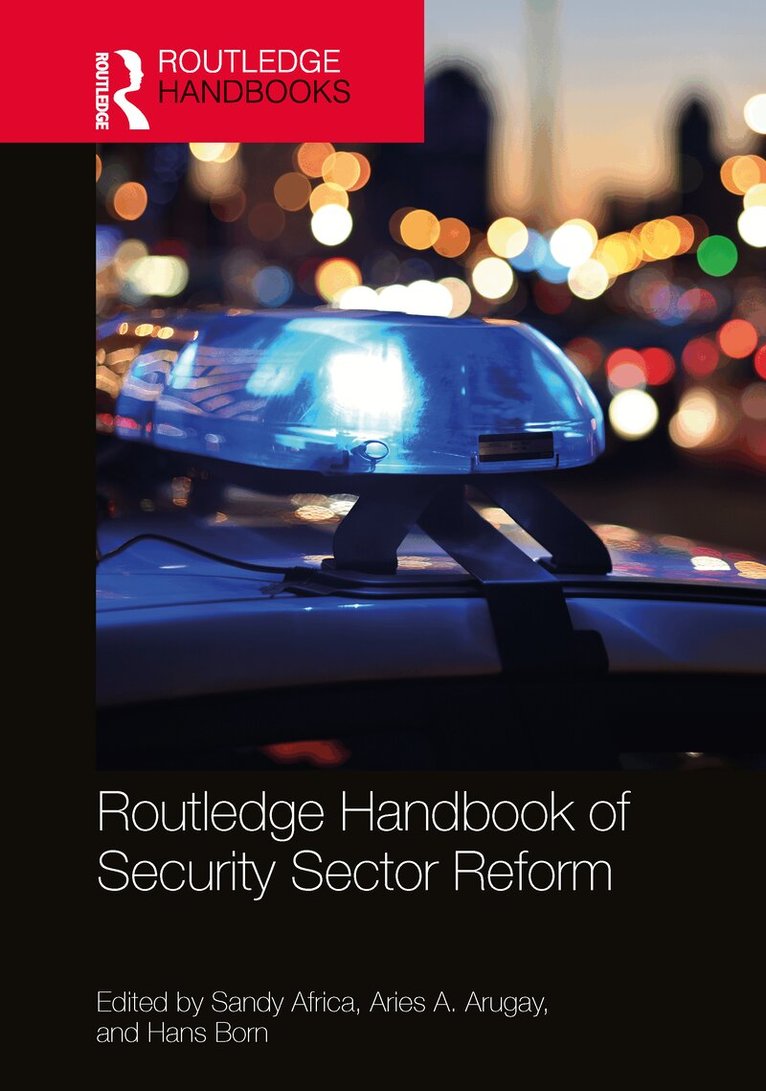
This Handbook offers a comprehensive collection of cutting-edge essays on all aspects of Security Sector Reform (SSR) by a mix of established experts and emerging scholars from diverse disciplines and geographic regions.Born out of development policy interventions by advanced states and multilateral organizations in developing countries in the early 1990s, SSR looks at the question of how security can be provided in an appropriate way that respects democracy and human rights. This volume provides an academic treatment of the contested concept of SSR, considering how it evolved and became part of mainstream security discourse in the past three decades. The Handbook is divided into six sections. The first section reviews relevant theories and concepts, and includes chapters on security sector governance, non-traditional security threats, as well as coups and climate change and coups as security threats in the traditional and nontraditional sense. The second section covers development and peacebuilding as important social, economic, and political contexts that underpin the push for SSR across countries. The third section pays attention to the international dimension of SSR, as well as how the international community has tried to grapple with the concept of local ownership to achieve sustainable SSR interventions. The fourth part examines the main actors and institutions within the security sector. The fifth section discusses cross-cutting issues and reform areas that overlap with SSR such as human rights, gender equality, and transitional justice. The sixth section combines regional overviews of the SSR landscape in different regions, such as Europe, Latin America, Middle East, and Africa, which discuss the successes, problems, and challenges of SSR.This Handbook will be of much interest to students of security sector reform, international relations, global governance, development studies and security studies, and will be a benchmark publication for practitioners in the security domain.
274 kr
Skickas inom 10-15 vardagar
Given recent experiences with terrorism, clearly even the most democratic societies have a legitimate need for secrecy. This secrecy has often been abused, however, and strong oversight systems are necessary to protect individual liberties. The assembled authors, each well known in the international community of national security scholars, bring together in one volume the rich experience of three decades of experimentation in intelligence accountability. Using a structured approach, they examine the strengths and weaknesses of the intelligence systems of Argentina, Canada, Germany, Norway, Poland, South Africa, South Korea, the United Kingdom, and the United States. While these democracies have experimented with methods to make intelligence more accountable, they all have different political systems, political cultures, legal systems, and democratic traditions, thereby presenting an exceptional opportunity to examine how intelligence accountability evolves under disparate circumstances. The contributors draw together the best practices into a framework for successful approaches to intelligence accountability, including a prescription for a model law.
1 073 kr
Skickas inom 10-15 vardagar
This volume seeks to explain why democratization and military reforms stagnate in newly democratizing countries. The contributions blend historical, ideational, cultural and structural explanatory factors to analyze the trajectories of military reform in Indonesia and Nigeria, two major regional powers that share many structural commonalities. In the tradition of the literature on security sector reform (SSR), the book not only scrutinizes executive initiatives toward military reform, but also provides ample coverage of societal actors. Findings show that while military reform is stagnating in both countries, societal forces ought to be taken into account more as major driving forces in explaining military reform. Several chapters study how legislatures, non-governmental organizations and the civilian defence epistemic community contribute to the transformation of military institutions. The last part of the book tackles another aspect rarely studied in the literature on military reform, namely, the role of militias in military reform.
1 073 kr
Skickas inom 10-15 vardagar
This volume seeks to explain why democratization and military reforms stagnate in newly democratizing countries. The contributions blend historical, ideational, cultural and structural explanatory factors to analyze the trajectories of military reform in Indonesia and Nigeria, two major regional powers that share many structural commonalities. In the tradition of the literature on security sector reform (SSR), the book not only scrutinizes executive initiatives toward military reform, but also provides ample coverage of societal actors. Findings show that while military reform is stagnating in both countries, societal forces ought to be taken into account more as major driving forces in explaining military reform. Several chapters study how legislatures, non-governmental organizations and the civilian defence epistemic community contribute to the transformation of military institutions. The last part of the book tackles another aspect rarely studied in the literature on military reform, namely, the role of militias in military reform.