Mario C. Martinez – författare
474 kr
Läs direkt efter köp
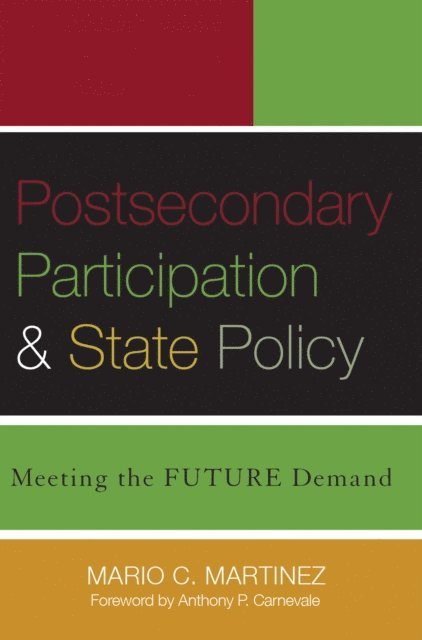
Research shows that all sectors of society, across age and racial groups, consider access to higher education as essential to achieving satisfying employment and a better quality of life. Yet there has been surprisingly little public discussion about recent major changes in higher education access and funding and no policy debate about how to respond to Americans’ growing aspirations about college.This book stimulates debate by presenting research about future demand: changing patterns of postsecondary participation and census projections over the next fifteen years, and their implications for resources and funding.The author disaggregates state data, taking into account states’ individual histories, size, age demographics, regional characteristics and priorities, to show the different policy options available. Rather advancing any particular policy, the author aims to stimulate an informed discussion about alternative strategies to meet demand and increase access. What is the college population likely to look like in 2015? What are the projected patterns for traditional and adult students? What factors will influence enrollment in private or public institutions, or two- or four-year colleges? The authors set their analyses in the context of the public and private benefits of higher education. This volume presents multiple scenarios of future enrollment, and state-by-state comparisons, that are vital for setting priorities and determining the implications of increasing access to higher education.
572 kr
Läs direkt efter köp
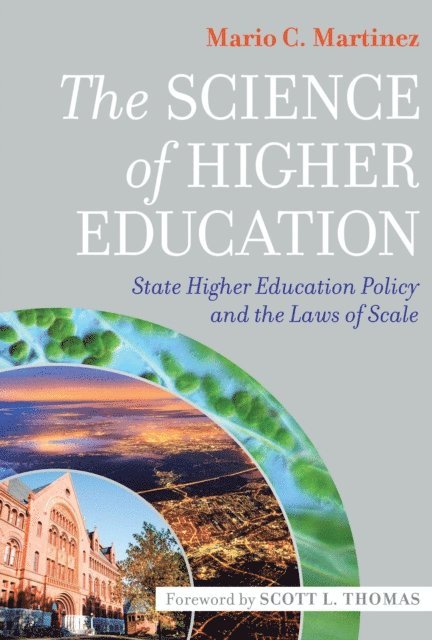
Perennial conclusions from state-by-state funding-per-student analyses of underfunding and weak state commitment have become so common that they have diluted the potency of the argument to state policymakers for more higher education funding. In addition, there has been little in the way of testing or questioning the assumptions embedded in traditional funding per student analysis and its accompanying conclusions.As state legislators balance the competing needs of education, health, transportation, and public safety budgets, they increasingly ask what return on investment (ROI) they get for the funding they provide, including from higher education. The ROI language, while potentially unsettling for its corporate-like and neoliberal connotation, will persist into the foreseeable future. We must ask questions both of adequacy (How much funding should the states provide?) and benefit (What benefits do states receive for the higher education funding they provide?). The focus on traditional funding per student analysis has remained static for over forty years, indicating the need for new ideas and methods to probe questions of adequacy and benefit.The Science of Higher Education is an introduction to a new paradigm that explores state higher education funding, enrollment, completion, and supply (the number and type of institutions in a state) through the lens of what are commonly known as power laws. Power laws explain patterns in biological systems and characteristics of cities. Like cities, state higher education systems are complex adaptive systems, so it is little surprise that power laws also explain funding, enrollment, completion, and supply.The scale relationships uncovered in the Science of Higher Education suggest the potential benefits state policymakers could derive by emphasizing enrollment, completion, or capacity policies, based on economies of scale, marginal benefits, and the return state’s get on enrollment and completion for the funding they provide.The various features of state higher education systems that conform to scale patterns do not alone provide definitive answers for appropriate funding levels, however. As this book addresses, policymakers need to take into account the macro forces, from demography to geography and the economy, that situate the system, as well the interactions between government and market actors that are at the core of every state higher education system and influence the outcomes it achieves.
490 kr
Läs direkt efter köp
Service delivery is part and parcel of every higher education professional’s job, both to improve service to students and to each other as “internal customers”. Until now higher education professionals have had to rely, for their professional development, on books and training designed for the business sector. This book is the first to specifically address the needs of higher education professionals across a wide range of administrative functions within college and university environments. It is designed for administrative staff and management, ranging from professionals working in centralized functions such as student affairs and enrollment management to those working as advisors or in career centers, whether in community colleges, four-year institutions, or for-profit institutions.Each chapter applies customer service principles to scenarios that are relevant to higher education. The book begins by engaging the reader to define service and identify the external and internal customers who are recipients of that service. It then maps customer interactions into a series of steps and offers departments and individuals a tool to maximize the customer experience. Additional chapters address customer expectations, creating a service culture on your campus, and managerial influences on staff service delivery. Creating a Service Culture in Higher Education Administration is a complementary book to the online customer service and management training resources at softskillspros.com.
474 kr
Läs direkt efter köp
Research shows that all sectors of society, across age and racial groups, consider access to higher education as essential to achieving satisfying employment and a better quality of life. Yet there has been surprisingly little public discussion about recent major changes in higher education access and funding and no policy debate about how to respond to Americans’ growing aspirations about college.This book stimulates debate by presenting research about future demand: changing patterns of postsecondary participation and census projections over the next fifteen years, and their implications for resources and funding.The author disaggregates state data, taking into account states’ individual histories, size, age demographics, regional characteristics and priorities, to show the different policy options available. Rather advancing any particular policy, the author aims to stimulate an informed discussion about alternative strategies to meet demand and increase access. What is the college population likely to look like in 2015? What are the projected patterns for traditional and adult students? What factors will influence enrollment in private or public institutions, or two- or four-year colleges? The authors set their analyses in the context of the public and private benefits of higher education. This volume presents multiple scenarios of future enrollment, and state-by-state comparisons, that are vital for setting priorities and determining the implications of increasing access to higher education.
572 kr
Läs direkt efter köp
Perennial conclusions from state-by-state funding-per-student analyses of underfunding and weak state commitment have become so common that they have diluted the potency of the argument to state policymakers for more higher education funding. In addition, there has been little in the way of testing or questioning the assumptions embedded in traditional funding per student analysis and its accompanying conclusions.As state legislators balance the competing needs of education, health, transportation, and public safety budgets, they increasingly ask what return on investment (ROI) they get for the funding they provide, including from higher education. The ROI language, while potentially unsettling for its corporate-like and neoliberal connotation, will persist into the foreseeable future. We must ask questions both of adequacy (How much funding should the states provide?) and benefit (What benefits do states receive for the higher education funding they provide?). The focus on traditional funding per student analysis has remained static for over forty years, indicating the need for new ideas and methods to probe questions of adequacy and benefit.The Science of Higher Education is an introduction to a new paradigm that explores state higher education funding, enrollment, completion, and supply (the number and type of institutions in a state) through the lens of what are commonly known as power laws. Power laws explain patterns in biological systems and characteristics of cities. Like cities, state higher education systems are complex adaptive systems, so it is little surprise that power laws also explain funding, enrollment, completion, and supply.The scale relationships uncovered in the Science of Higher Education suggest the potential benefits state policymakers could derive by emphasizing enrollment, completion, or capacity policies, based on economies of scale, marginal benefits, and the return state’s get on enrollment and completion for the funding they provide.The various features of state higher education systems that conform to scale patterns do not alone provide definitive answers for appropriate funding levels, however. As this book addresses, policymakers need to take into account the macro forces, from demography to geography and the economy, that situate the system, as well the interactions between government and market actors that are at the core of every state higher education system and influence the outcomes it achieves.
490 kr
Läs direkt efter köp
Service delivery is part and parcel of every higher education professional’s job, both to improve service to students and to each other as “internal customers”. Until now higher education professionals have had to rely, for their professional development, on books and training designed for the business sector. This book is the first to specifically address the needs of higher education professionals across a wide range of administrative functions within college and university environments. It is designed for administrative staff and management, ranging from professionals working in centralized functions such as student affairs and enrollment management to those working as advisors or in career centers, whether in community colleges, four-year institutions, or for-profit institutions.Each chapter applies customer service principles to scenarios that are relevant to higher education. The book begins by engaging the reader to define service and identify the external and internal customers who are recipients of that service. It then maps customer interactions into a series of steps and offers departments and individuals a tool to maximize the customer experience. Additional chapters address customer expectations, creating a service culture on your campus, and managerial influences on staff service delivery. Creating a Service Culture in Higher Education Administration is a complementary book to the online customer service and management training resources at softskillspros.com.
575 kr
Skickas inom 3-6 vardagar
"Would be a great 'welcome to our school' gift from principals to new teachers." Kim Truesdell, Teacher Education InstituteUniversity of Buffalo
Learn to work together toward a stronger school community!
True or false: Leaders are born, not made. Teachers are leaders in the classroom, not the school. Shatter these myths--and find a better way to maximize your school's success--by learning proven professional development skills. This indispensable guide provides straightforward concepts and applicable activities, all aimed at reinforcing your strengths and strengthening what you used to consider your weaknesses.Teachers Working Together for School Success demonstrates how to be a leader both inside and outside the classroom, and then shows you how your leadership holds the power to improve your classroom, school, district, and off-campus life. Based on the concept that today's educators must interact with each other more than ever, Martinez presents questions, activities, and suggestions to help teachers:
Exercise leadership influence in their relationships with co-workers Understand the concepts of conflict and resolution as applied to the school setting Judge how to effectively contribute to a team effort Examine their own performance and professional growthBy pooling your strengths with those of your fellow teachers, you will discover that you have all the elements necessary for organizational success.
433 kr
Skickas inom 10-15 vardagar
540 kr
Skickas inom 5-8 vardagar
1 006 kr
Skickas inom 5-8 vardagar
385 kr
Läs direkt efter köp
2 369 kr
Skickas inom 10-15 vardagar
446 kr
Skickas inom 10-15 vardagar
2 136 kr
Skickas inom 10-15 vardagar
488 kr
Skickas inom 10-15 vardagar
577 kr
Läs direkt efter köp