Mario Kolling – författare
Visar alla böcker från författaren Mario Kolling. Handla med fri frakt och snabb leverans.
6 produkter
6 produkter
E-bok
Engelska, 2018395 kr
Läs direkt efter köp
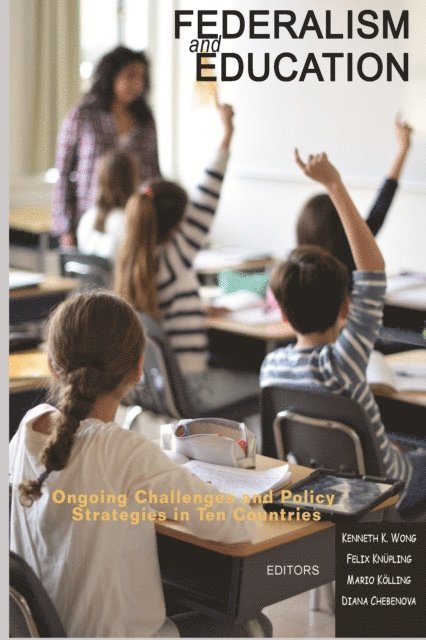
Federalism has played a central role in charting educational progress in many countries. With an evolving balance between centralization and decentralization, federalism is designed to promote accountability standards without tempering regional and local preferences. Federalism facilitates negotiations both vertically between the central authority and local entities as well as horizontally among diverse interests. Innovative educational practices are often validated by a few local entities prior to scaling up to the national level. Because of the division of revenue sources between central authority and decentralized entities, federalism encourages a certain degree of fiscal competition at the local and regional level. The balance of centralization and decentralization also varies across institutional and policy domains, such as the legislative framework for education, drafting of curricula, benchmarking for accountability, accreditation, teacher training, and administrative responsibilities at the primary, secondary, and tertiary levels.Given these critical issues in federalism and education, this volume examines ongoing challenges and policy strategies in ten countries, namely Australia, Austria, Belgium, Canada, Germany, Italy, Spain, Switzerland, United Kingdom, and the United States. These chapters and the introductory overview aim to examine how countries with federal systems of government design, govern, finance, and assure quality in their educational systems spanning from early childhood to secondary school graduation. Particular attention is given to functional division between governmental layers of the federal system as well as mechanisms of intergovernmental cooperation both vertically and horizontally. The chapters aim to draw out comparative lessons and experiences in an area of great importance to not only federal countries but also countries that are emerging toward a federal system.
E-bok
Engelska, 2018593 kr
Läs direkt efter köp
Federalism has played a central role in charting educational progress in many countries. With an evolving balance between centralization and decentralization, federalism is designed to promote accountability standards without tempering regional and local preferences. Federalism facilitates negotiations both vertically between the central authority and local entities as well as horizontally among diverse interests. Innovative educational practices are often validated by a few local entities prior to scaling up to the national level. Because of the division of revenue sources between central authority and decentralized entities, federalism encourages a certain degree of fiscal competition at the local and regional level. The balance of centralization and decentralization also varies across institutional and policy domains, such as the legislative framework for education, drafting of curricula, benchmarking for accountability, accreditation, teacher training, and administrative responsibilities at the primary, secondary, and tertiary levels.Given these critical issues in federalism and education, this volume examines ongoing challenges and policy strategies in ten countries, namely Australia, Austria, Belgium, Canada, Germany, Italy, Spain, Switzerland, United Kingdom, and the United States. These chapters and the introductory overview aim to examine how countries with federal systems of government design, govern, finance, and assure quality in their educational systems spanning from early childhood to secondary school graduation. Particular attention is given to functional division between governmental layers of the federal system as well as mechanisms of intergovernmental cooperation both vertically and horizontally. The chapters aim to draw out comparative lessons and experiences in an area of great importance to not only federal countries but also countries that are emerging toward a federal system.
E-bok
PDF, Tyska, 2020367 kr
Läs direkt efter köp
Diese bewährte Gesamtdarstellung zur wirtschaftlichen, gesellschaftlichen und politischen Entwicklung seit der Demokratisierung Spaniens liegt in einer vollkommen überarbeiteten und aktualisierten Auflage vor. Darin analysieren die Autoren u.a. die 2014 einsetzenden Veränderungen des spanischen Parteiensystems und die dramatische Zuspitzung des Konflikts um Katalonien. Kurzum: Wer zeitnahe Informationen zu einem der wichtigsten EU-Länder braucht, greift zu diesem Buch.Der Inhalt• Spanien im Profil – Geografie, Bevölkerung, Politische Geschichte und Politische Kultur• Wirtschaft – Entwicklung, (Regionale) Struktur, Staat, Weltwirtschaftliche Integration• Gesellschaft – Sozialstruktur, Bildungssystem, Arbeitsbeziehungen, Interessensgruppen, Katholische Kirche, Militär, Politische Eliten, Massenmedien• Politik – Zentralstaat, Autonome Gemeinschaften, Lokale Selbstverwaltungen, Parteiensystem, Wahlen und Volksabstimmungen, Politische Partizipation, Politikfelder (u.a. Innenpolitik, Gender- und Jugendpolitik, Umweltpolitik, Außen- und Europapolitik)Die AutorenDr. Dr. h.c. mult. Dieter Nohlen , Professor (em.) für Politikwissenschaft an der Universität Heidelberg.Dr. Mario Kölling, Assistenzprofessor am Institut für Politikwissenschaft und Verwaltung der Nationalen Universität für Fernunterricht in Madrid und Wissenschaftler der Manuel Giménez Abad Stiftung.
E-bok
PDF, Tyska, 2020678 kr
Läs direkt efter köp
Der Band befasst sich mit der Fragestellung, ob der Föderalismus in Deutschland in seiner jetzigen Form noch den Herausforderungen der Zukunft gewachsen ist, oder ob es weiterer, auch das Grundgesetz betreffender Reformen bedarf. Aufbauend auf einer Rückschau, die die einschneidenden Entwicklungen im deutschen Bundesstaat insbesondere vor dem Hintergrund bedeutender Grundgesetzreformen würdigt, folgt eine Bestandsaufnahme des aktuellen Zustands in den Bereichen Bildung, Innere Sicherheit und Integrationspolitik. Hierbei werden einerseits das Ausmaß an Wandel und Konstanz des deutschen Föderalismus ermittelt. Andererseits werden seine Leistungs- und Zukunftsfähigkeit sowie mögliche Reformbedarfe in international vergleichender Perspektive durch eine Analyse alternativer Föderalismusmodelle diskutiert.
E-bok
PDF, Spanska, 2022334 kr
Läs direkt efter köp
Estamos viviendo un tiempo de transformación global que provoca cambios fundamentales en las relaciones entre los ciudadanos y el poder. Los desafíos globales, los conflictos bélicos y las situaciones de emergencia resultados del cambio climático pueden convertirse en una nueva normalidad y todo indica que nos encontramos en una "era de crisis". Esto implica múltiples desafíos para los sistemas e instituciones democráticos. En momentos de crisis resulta esencial reforzar los instrumentos de control de nuestros sistemas democráticos. En esta obra colectiva, se da una importancia singular al Parlamento que históricamente es el protagonista del control del poder político. Numerosos autores analizan con diferentes perspectivas los mecanismos de control democrático, sus déficits y posibles mejoras.
E-bok
PDF, Spanska, 2022181 kr
Läs direkt efter köp
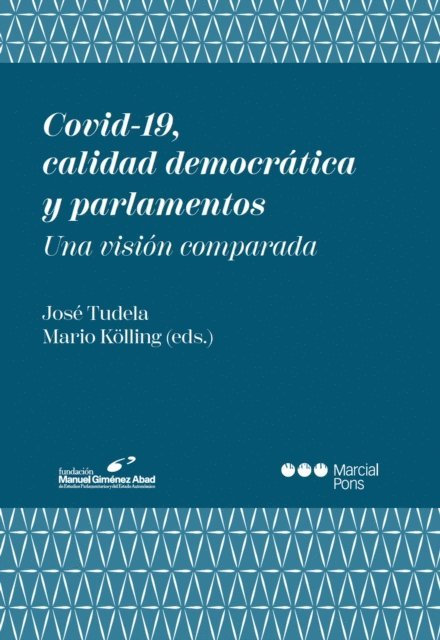
La pandemia de la Covid-19 ha supuesto para los Estados democráticos de Derecho un auténtico stress test sobre la capacidad de ofrecer respuestas rápidas, oportunas y flexibles a retos sociales y económicos sin precedentes, sin poner en peligro el equilibrio de la separación de poderes. En este contexto, prácticamente ningún ámbito de lo público o de lo privado queda al margen. La necesidad de adoptar medidas que frenaran la expansión del virus se extendió también al ámbito parlamentario. La aprobación de normas restrictivas de derechos fundamentales, la adopción de leyes para paliar los efectos de la crisis y la urgencia en adecuar el trabajo legislativo a la nueva coyuntura se convirtieron en prioridades para los parlamentos.En esta obra colectiva numerosos autores analizan con diferentes perspectivas el impacto de la Covid-19 en distintos parlamentos, estableciendo una conexión con el debate sobre la calidad democrática.