
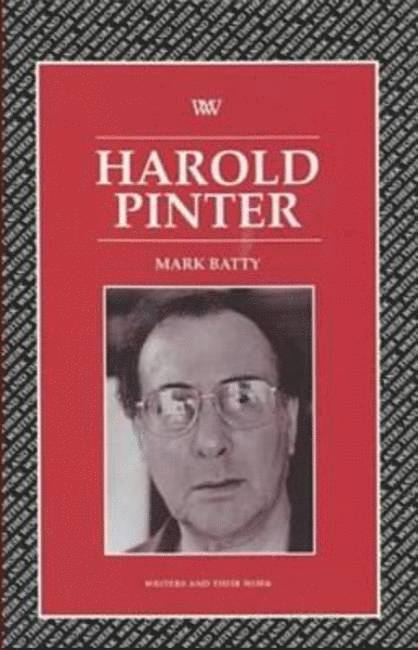
Harold Pinter is one of the most significant and widely influential living British playwrights. From his early fame as the controversial author of disconcerting, unconventional dramas in the 1960s to the sparse, provocative plays he has offered steadily through the 1980s and 1990s, he has fascinated audiences and critics alike. His work forms a cornerstone of the dramatic literature of the contemporary British stage and has been integrated into the repertories of theatres world-wide. This book offers a critical examination of his dramatic writing over four decades, from The Room (1957) to Celebration (2000), emphasising the worth of the plays as pieces written for performance, investigating their status as dramatic (as opposed to literary) texts.
Roger Blin’s career in the Arts was woven inextricably into the fabric of the Twentieth-Century French Avant-Garde. First appearing in the films of Abel Gance, Marcel Carné and Jean Cocteau, his acting career led him to a close friendship and association with Antonin Artaud, for whom he performed the function of assistant director. He championed Samuel Beckett’s En attendant Godot, otherwise rejected unanimously by the French theatrical establishment, was Jean Genet’s director of choice and was long associated with artists and practitioners as diverse as Arthur Adamov, Jean-Louis Barrault and Jacques Prévert. Marxist in outlook, Blin also sought to apply rigorous humanist principles to his art and delighted in the opportunities he enjoyed to disrupt and upturn the attitudes and complacencies of certain of his audiences. This book surveys all aspects of Blin’s artistic output to consider and clarify his motivations, his ambitions and his aesthetic preferences. In doing so, the author hopes to offer perspectives on the methodologies that Blin employed and define the influence his work and his legacy has exerted on the French and World stage.
Harold Pinter is one of the most significant and widely influential living British playwrights. From his early fame as the controversial author of disconcerting, unconventional dramas in the 1960s to the sparse, provocative plays he has offered steadily through the 1980s and 1990s, he has fascinated audiences and critics alike. His work forms a cornerstone of the dramatic literature of the contemporary British stage and has been integrated into the repertories of theatres world-wide. This book offers a critical examination of his dramatic writing over four decades, from The Room (1957) to Celebration (2000), emphasising the worth of the plays as pieces written for performance, investigating their status as dramatic (as opposed to literary) texts.
Roger Blin’s career in the Arts was woven inextricably into the fabric of the Twentieth-Century French Avant-Garde. First appearing in the films of Abel Gance, Marcel Carné and Jean Cocteau, his acting career led him to a close friendship and association with Antonin Artaud, for whom he performed the function of assistant director. He championed Samuel Beckett’s En attendant Godot, otherwise rejected unanimously by the French theatrical establishment, was Jean Genet’s director of choice and was long associated with artists and practitioners as diverse as Arthur Adamov, Jean-Louis Barrault and Jacques Prévert. Marxist in outlook, Blin also sought to apply rigorous humanist principles to his art and delighted in the opportunities he enjoyed to disrupt and upturn the attitudes and complacencies of certain of his audiences. This book surveys all aspects of Blin’s artistic output to consider and clarify his motivations, his ambitions and his aesthetic preferences. In doing so, the author hopes to offer perspectives on the methodologies that Blin employed and define the influence his work and his legacy has exerted on the French and World stage.