Mark G. Spencer - Böcker
Visar alla böcker från författaren Mark G. Spencer. Handla med fri frakt och snabb leverans.
7 produkter
7 produkter
499 kr
Skickas inom 5-8 vardagar
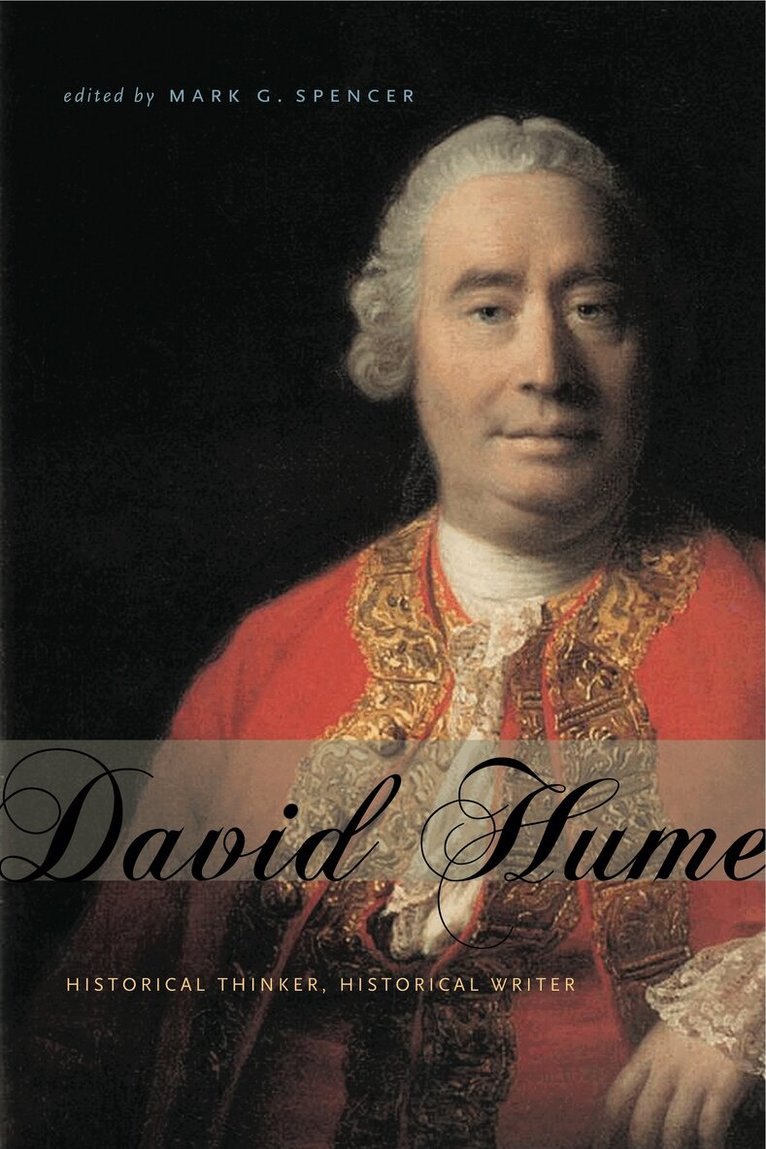
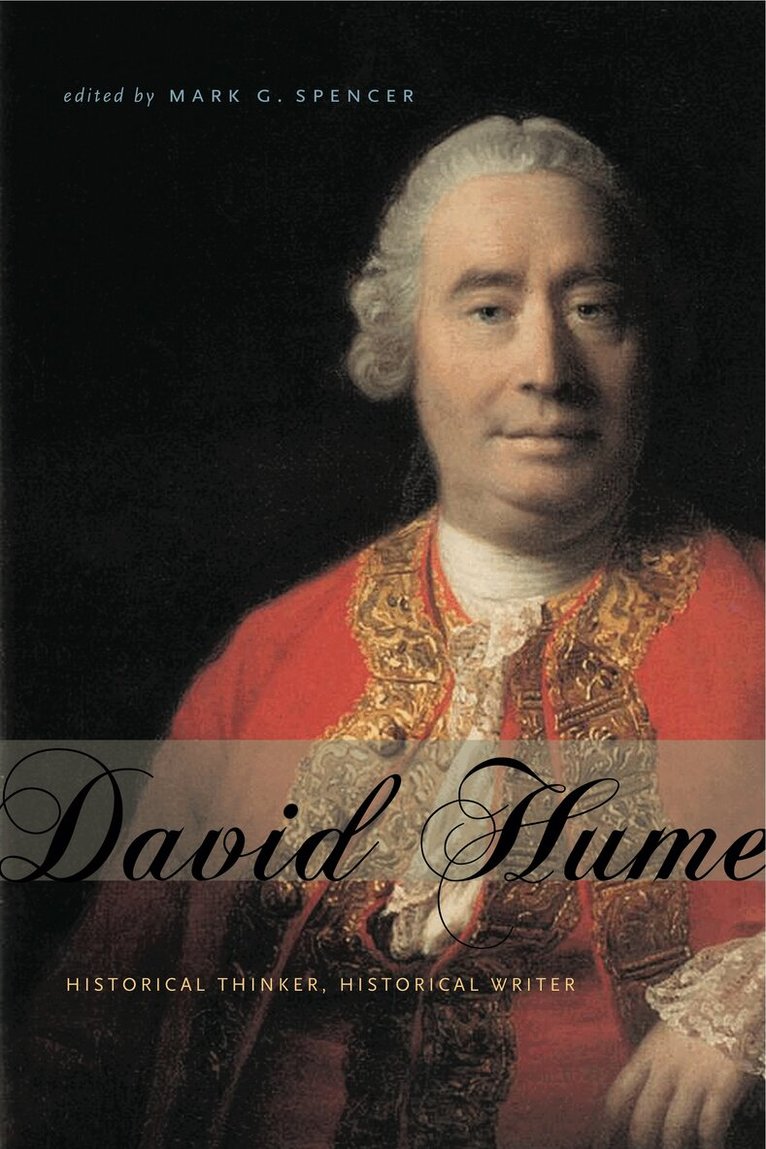
This volume provides a new and nuanced appreciation of David Hume as a historian. Gone for good are the days when one can offhandedly assert, as R. G. Collingwood once did, that Hume “deserted philosophical studies in favour of historical” ones. History and philosophy are commensurate in Hume’s thought and works from the beginning to the end. Only by recognizing this can we begin to make sense of Hume’s canon as a whole and see clearly his many contributions to fields we now recognize as the distinct disciplines of history, philosophy, political science, economics, literature, religious studies, and much else besides. Casting their individual beams of light on various nooks and crannies of Hume’s historical thought and writing, the book’s contributors illuminate the whole in a way that would not be possible from the perspective of a single-authored study.Aside from the editor, the contributors are David Allan, M. A. Box, Timothy M. Costelloe, Roger L. Emerson, Jennifer Herdt, Philip Hicks, Douglas Long, Claudia M. Schmidt, Michael Silverthorne, Jeffrey M. Suderman, Mark R. M. Towsey, and F. L. van Holthoon.
9 661 kr
Skickas inom 7-10 vardagar
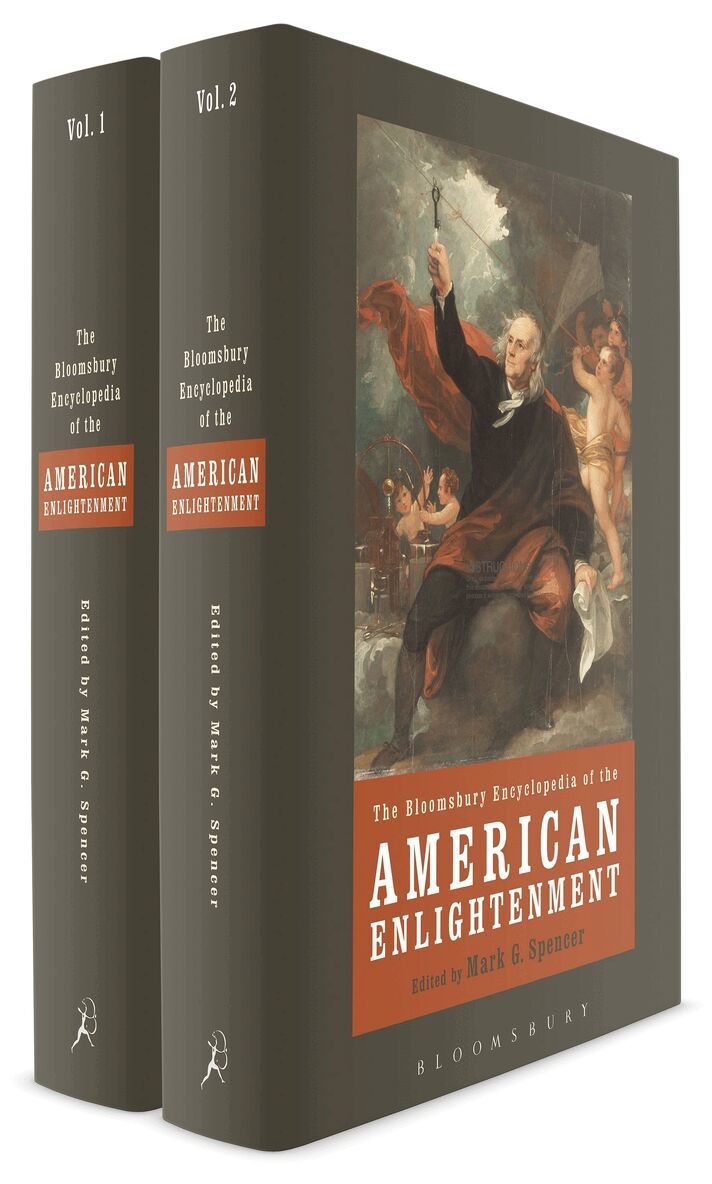
The Encyclopedia of the American Enlightenment is the first reference work on this key subject in early American history. With over 500 original essays on key American Enlightenment figures, it provides a comprehensive account to complement the intense scholarly activity that has centered on the European Enlightenment recently. There are substantial and original essays on the major American Enlightenment figures, including Benjamin Franklin, Thomas Jefferson, David Rittenhouse, Benjamin Rush, Jonathan Edwards, and many others. The collection is wide-ranging and includes many topical essays and entries on dozens of often-overlooked secondary figures, offering a fresh definition of the Enlightenment in America. It has long been known that Americans made their own contributions to the Enlightenment, most notably by putting Enlightenment ideas to work in defining the American Revolution, the United States Constitution, and the nature of the early American Republic. These volumes show that the American Enlightenment was more far reaching than even that story assumes. This remarkable work shows that the American Enlightenment constitutes the central framework for understanding the development of American history between c. 1740 and c. 1820.
595 kr
Skickas inom 10-15 vardagar
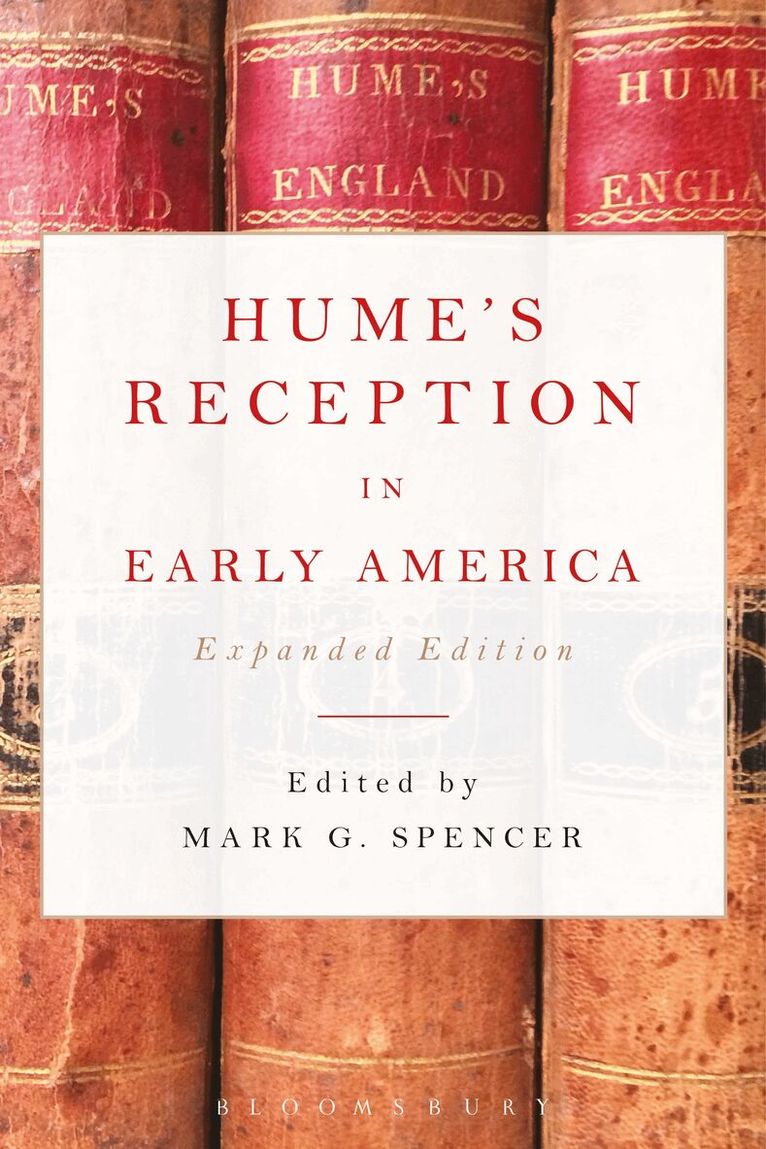
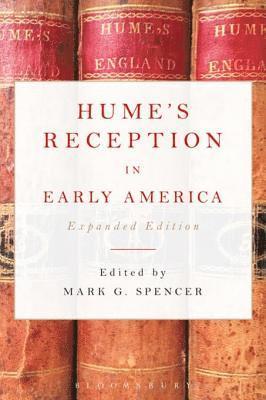
Hume's Reception in Early America: Expanded Edition brings together the original American responses to one of Britain’s greatest men of letters, David Hume. Now available as a single volume paperback, this new edition includes updated further readings suggestions and dozens of additional primary sources gathered together in a completely new concluding section.From complete pamphlets and booklets, to poems, reviews, and letters, to extracts from newspapers, religious magazines and literary and political journals, this book’s contents come from a wide variety of sources published in colonial America and the early United States between 1758 and 1850. As well as classics by Thomas Jefferson, John Adams and Alexander Hamilton, it contains scores of unknown and hard-to-locate items, many of which have not been reprinted since their original publication. These responses are divided into four parts covering Hume's Essays; his Philosophical Writings; his History of England; and his Character and Death. Each of those parts has a separate introductory essay, and every selection is introduced by a short headnote that sets the piece in its historical context and provides bibliographical references.Packed with new insights into Hume and American thought and culture, Hume's Reception in Early America reveals the relevance and impact of Hume on American political, philosophical, historical, religious, and aesthetic debates.
Del 10 - Rochester Studies in Philosophy
David Hume and Eighteenth-Century America
Inbunden, Engelska, 2005
930 kr
Tillfälligt slut
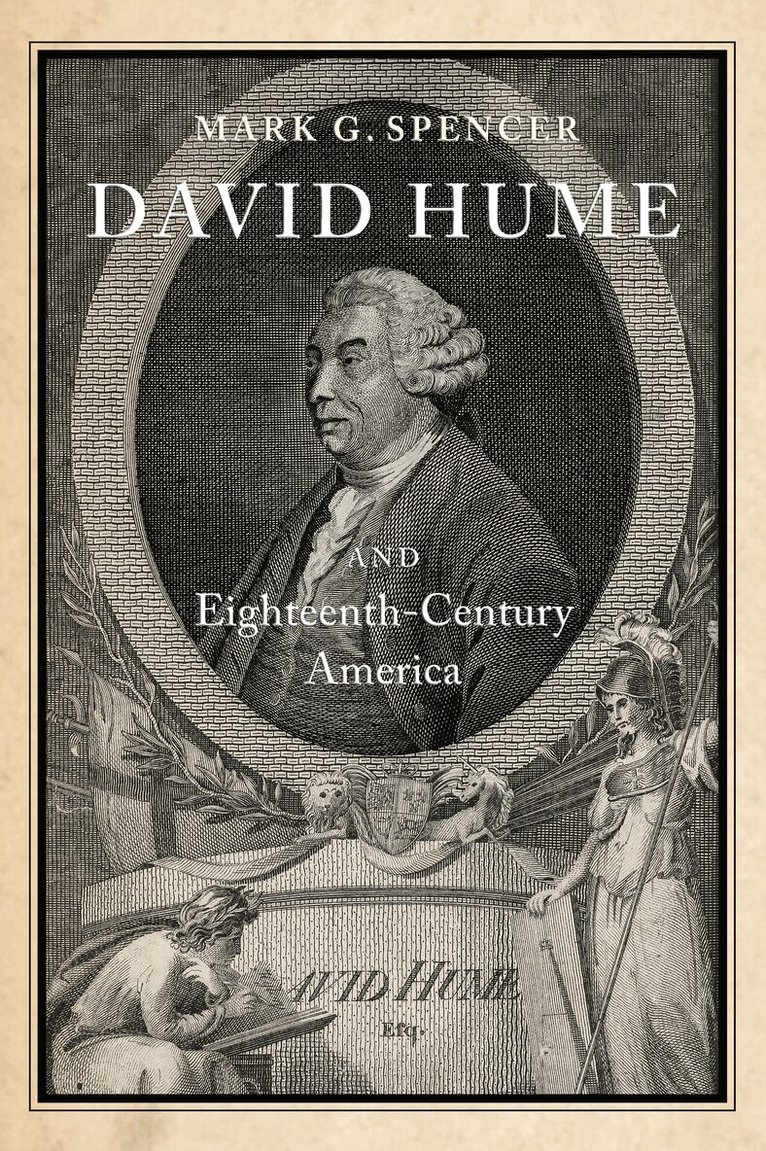
A thorough examination of the role which David Hume's writings played upon the founders of the United States.This book explores the reception of David Hume's political thought in eighteenth-century America. It presents a challenge to standard interpretations that assume Hume's thought had little influence in early America. Eighteenth-century Americans are often supposed to have ignored Hume's philosophical writings and to have rejected entirely Hume's "Tory" History of England. James Madison, if he used Hume's ideas in Federalist No. 10, it is commonly argued, thought best to do so silently -- open allegiance to Hume was a liability. Despite renewed debate about the impact of Hume's political ideas in America, existing scholarship is often narrow and highly speculative. Were Hume's works available in eighteenth-century America? If so, which works? Where? When? Who read Hume? To what avail?To answer questions of that sort, this books draws upon a wide assortment of evidence. Early American book catalogues, periodical publications, and the writings of lesser-light thinkers are used to describe Hume's impact on the social history of ideas, an essential context for understanding Hume's influence on many of the classic texts of early American political thought. Hume's Essays and Treatises on Several Subjects, was readily available, earlier, and more widely, than scholars have supposed. The History of England was read most frequentlyof all, however, and often in distinctive ways. Hume's History, which presented the British constitution as a patch-work product of chance historical developments, informed the origins of the American Revolution and Hume'ssubsequent reception through the late eighteenth century. The 326 subscribers to the first American edition of Hume's History (published in Philadelphia in 1795-96) are more representative of the History's friendlyreception in enlightened America than are its few critics. Thomas Jefferson's latter-day rejection of Hume's political thought foreshadowed Hume's falling reputation in nineteenth-century America.MARK G. SPENCER is Associate Professor of History at Brock University where he holds a Chancellor's Chair for Research Excellence. His books include Hume's Reception in Early America (2002), Utilitarians and Their Critics in America, 1789-1914 (2005),and Ulster Presbyterians in the Atlantic World (2006).
Del 10 - Rochester Studies in Philosophy
David Hume and Eighteenth-Century America
Häftad, Engelska, 2010
547 kr
Skickas inom 10-15 vardagar
A thorough examination of the influence of David Hume's work early American political thought.This book explores the reception of David Hume's political thought in eighteenth-century America. It presents a challenge to standard interpretations that assume Hume's thought had little influence in early America. Eighteenth-century Americans are often supposed to have ignored Hume's philosophical writings and to have rejected entirely Hume's "Tory" History of England. James Madison, if he used Hume's ideas in Federalist No. 10, it is commonly argued, thought best to do so silently -- open allegiance to Hume was a liability. Despite renewed debate about the impact of Hume's political ideas in America, existing scholarship is often narrow and highly speculative. WereHume's works available in eighteenth-century America? If so, which works? Where? When? Who read Hume? To what avail?To answer questions of that sort, this books draws upon a wide assortment of evidence. Early American bookcatalogues, periodical publications, and the writings of lesser-light thinkers are used to describe Hume's impact on the social history of ideas, an essential context for understanding Hume's influence on many of the classic texts of early American political thought. Hume's Essays and Treatises on Several Subjects, was readily available, earlier, and more widely, than scholars have supposed. The History of England was read most frequently ofall, however, and often in distinctive ways. Hume's History, which presented the British constitution as a patch-work product of chance historical developments, informed the origins of the American Revolution and Hume's subsequent reception through the late eighteenth century. The 326 subscribers to the first American edition of Hume's History [published in Philadelphia in 1795/96] are more representative of the History's friendly reception in enlightened America than are its few critics. Thomas Jefferson's latter-day rejection of Hume's political thought foreshadowed Hume's falling reputation in nineteenth-century America.MARK G. SPENCER is Associate Professor of History at Brock University where he holds a Chancellor's Chair for Research Excellence. His books include Hume's Reception in Early America [2002], Utilitarians and Their Critics in America, 1789-1914 [2005], andUlster Presbyterians in the Atlantic World [2006].
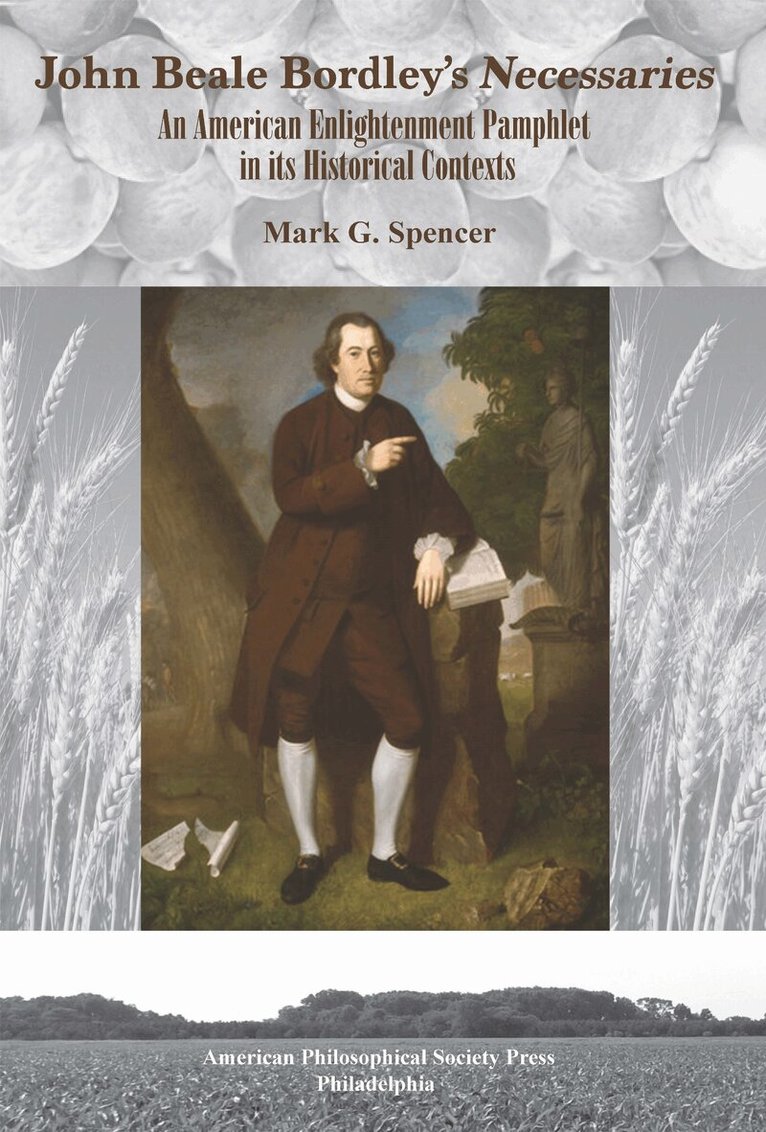
John Beale Bordley's "Necessaries"
An American Enlightenment Pamphlet in Its Historical Contexts, Transactions, American Philosophical Society (Vol. 108, Part 3)
Häftad, Engelska, 2020
366 kr
Skickas inom 10-15 vardagar
1 358 kr
Skickas inom 3-6 vardagar
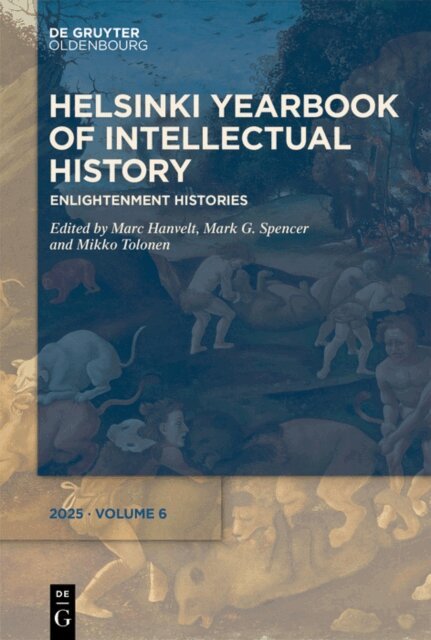
It has long been understood that histories were central to the Era of the Enlightenment. Enlightenment histories not only broke new scholarly ground, but they also circulated widely with an expanding reading audience. Some works, such as David Hume’s History of England, were both innovative and became international bestsellers. Enlightenment Histories is a collection of complementary chapters from which to explore this intriguing field. With its international group of contributors (Brazil, Canada, Finland, France, Ireland, Japan, UK, USA) this volume assembles a methodologically diverse collection of chapters ranging in their coverage from particular histories, to historiographical debates of the period, to different forms of historical writing that predominated. The discussions include the place of historical writings within the Enlightenment’s moral, philosophical, and political debates. In short, the volume highlights many distinctive features of Enlightenment histories, thereby illuminating their contemporary contexts and enduring significance.