Mark I. Lichbach – författare
Visar alla böcker från författaren Mark I. Lichbach. Handla med fri frakt och snabb leverans.
14 produkter
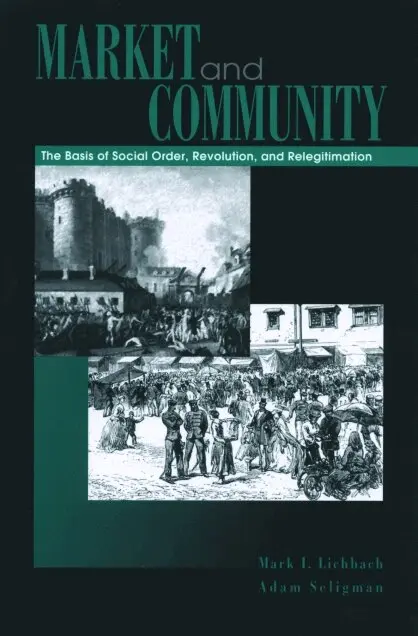
Market and Community
The Bases of Social Order, Revolution, and Relegitimation
Av Mark I. Lichbach, Adam B. Seligman
Häftad, 2000
362 kr
Lägg i varukorg
Social order results from a complex interaction of individual actions, institutional structures, and cultural norms. But just how do they relate to one another, and is any one factor predominant? The answers that social science has provided reflect the competing paradigms of the rationalist, …
Is Rational Choice Theory All of Social Science?
E-bok, 2009
719 kr
Lägg i varukorg
Advocates of rational choice theory in political science have been perceived by their critics as attempting to establish an intellectual hegemony in contemporary social science, to the detriment of alternative methods of research. The debate has gained a nonacademic audience, hitting the pages of …
Is Rational Choice Theory All of Social Science?
Häftad, 2003
472 kr
Lägg i varukorg
Advocates of rational choice theory in political science have been perceived by their critics as attempting to establish an intellectual hegemony in contemporary social science, to the detriment of alternative methods of research. The debate has gained a nonacademic audience, hitting the pages of …
Rebel's Dilemma
Häftad, 1998
504 kr
Lägg i varukorg
Since the mid 1960s, theorists have elaborated over two dozen different solutions to the collection action problem. During much of this same period, students of conflict have explored many questions about protest and rebellion. The Rebel's Dilemma examines what happens when one brings the full …
Democratic Theory and Causal Methodology in Comparative Politics
Inbunden, 2013
1237 kr
Lägg i varukorg
Barrington Moore bequeathed comparativists a problem: how to reconcile his causal claim of 'no bourgeoisie, no democracy' with his normative 'dream of a free and rational society'. Lichbach harmonizes causal methodology and normative democratic theory, illustrating their interrelationship. Using a …
Democratic Theory and Causal Methodology in Comparative Politics
E-bok, 2013
408 kr
Lägg i varukorg
Barrington Moore bequeathed comparativists a problem: how to reconcile his causal claim of ''no bourgeoisie, no democracy'' with his normative ''dream of a free and rational society''. Lichbach harmonizes causal methodology and normative democratic theory, illustrating their interrelationship. …
Democratic Theory and Causal Methodology in Comparative Politics
E-bok, 2013
408 kr
Lägg i varukorg
Barrington Moore bequeathed comparativists a problem: how to reconcile his causal claim of ''no bourgeoisie, no democracy'' with his normative ''dream of a free and rational society''. Lichbach harmonizes causal methodology and normative democratic theory, illustrating their interrelationship. …
Democratic Theory and Causal Methodology in Comparative Politics
Häftad, 2013
413 kr
Lägg i varukorg
Barrington Moore bequeathed comparativists a problem: how to reconcile his causal claim of 'no bourgeoisie, no democracy' with his normative 'dream of a free and rational society'. Lichbach harmonizes causal methodology and normative democratic theory, illustrating their interrelationship. Using a …
States and Peoples in Conflict
Transformations of Conflict Studies
Av Michael Stohl, Mark I. Lichbach m. fl.
Inbunden, 2017
2515 kr
Lägg i varukorg
This volume evaluates the state of the art in conflict studies. Original chapters by leading scholars survey theoretical and empirical research on the origins, processes, patterns, and consequences of most forms and contexts of political conflict, protest, repression, and rebellion. Contributors …
States and Peoples in Conflict
Transformations of Conflict Studies
Av Michael Stohl, Mark I. Lichbach m. fl.
Häftad, 2017
736 kr
Lägg i varukorg
This volume evaluates the state of the art in conflict studies. Original chapters by leading scholars survey theoretical and empirical research on the origins, processes, patterns, and consequences of most forms and contexts of political conflict, protest, repression, and rebellion. Contributors …
States and Peoples in Conflict
Transformations of Conflict Studies
Av Michael Stohl, Mark I. Lichbach m. fl.
E-bok, 2017
866 kr
Lägg i varukorg
This volume evaluates the state of the art in conflict studies. Original chapters by leading scholars survey theoretical and empirical research on the origins, processes, patterns, and consequences of most forms and contexts of political conflict, protest, repression, and rebellion. Contributors …
States and Peoples in Conflict
Transformations of Conflict Studies
Av Michael Stohl, Mark I. Lichbach m. fl.
E-bok, 2017
866 kr
Lägg i varukorg
This volume evaluates the state of the art in conflict studies. Original chapters by leading scholars survey theoretical and empirical research on the origins, processes, patterns, and consequences of most forms and contexts of political conflict, protest, repression, and rebellion. Contributors …
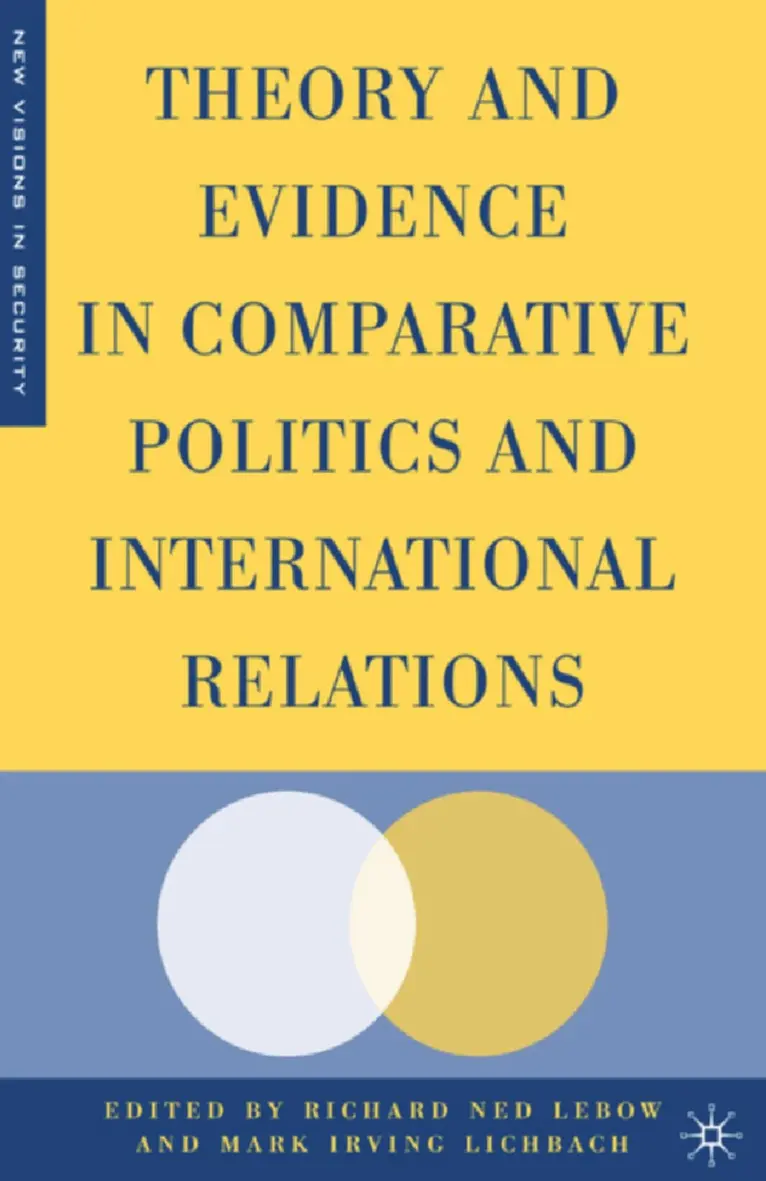
Theory and Evidence in Comparative Politics and International Relations
Av Richard Ned LeBow, Mark I. Lichbach m. fl.
Häftad, 2007
552 kr
Lägg i varukorg
This book explores the epistemology and the methodology of political knowledge and social inquiry: what can we know, and how do we know? Contributing authors offer answers, addressing the purpose and methods of research and analyzing concepts, including the relationship of theory and evidence and …
Cooperator's Dilemma
Inbunden, 1996
1230 kr
Tillfälligt slut
In The Cooperator's Dilemma, Mark Lichbach provides an up-to-date and complete evaluation of the collective-action approach. A special strength of the work is that it integrates in a unique way both game theoretic and micro- economics approaches to the collective-action problem. Prisoner's Dilemma …