Mark I. Wallace - Böcker
Visar alla böcker från författaren Mark I. Wallace. Handla med fri frakt och snabb leverans.
5 produkter
5 produkter
309 kr
Skickas inom 5-8 vardagar
334 kr
Skickas inom 7-10 vardagar
2019 NAUTILUS GOLD WINNERIn a time of rapid climate change and species extinction, what role have the world's religions played in ameliorating—or causing—the crisis we now face? Religion in general, and Christianity in particular, appears to bear a disproportionate burden for creating humankind's exploitative attitudes toward nature through unearthly theologies that divorce human beings and their spiritual yearnings from their natural origins. In this regard, Christianity has become an otherworldly religion that views the natural world as "fallen," as empty of signs of God's presence.And yet, buried deep within the Christian tradition are startling portrayals of God as the beaked and feathered Holy Spirit – the "animal God," as it were, of historic Christian witness. Through biblical readings, historical theology, continental philosophy, and personal stories of sacred nature, this book recovers the model of God in Christianity as a creaturely, avian being who signals the presence of spirit in everything, human and more-than-human alike. Mark Wallace's recovery of the bird-God of the Bible signals a deep grounding of faith in the natural world. The moral implications of nature-based Christianity are profound. All life is deserving of humans' care and protection insofar as the world is envisioned as alive with sacred animals, plants, and landscapes. From the perspective of Christian animism, the Earth is the holy place that God made and that humankind is enjoined to watch over and cherish in like manner. Saving the environment, then, is not a political issue on the left or the right of the ideological spectrum, but, rather, an innermost passion shared by all people of faith and good will in a world damaged by anthropogenic warming, massive species extinction, and the loss of arable land, potable water, and breathable air. To Wallace, this passion is inviolable and flows directly from the heart of Christian teaching that God is a carnal, fleshy reality who is promiscuously incarnated within all things, making the whole world a sacred embodiment of God's presence, and worthy of our affectionate concern. This beautifully and accessibly written book shows that "Christian animism" is not a strange oxymoron, but Christianity's natural habitat. Challenging traditional Christianity's self-definition as an other-worldly religion, Wallace paves the way for a new Earth-loving spirituality grounded in the ancient image of an animal God.
When God Was a Bird
Christianity, Animism, and the Re-Enchantment of the World
Inbunden, Engelska, 2018
1 121 kr
Skickas inom 10-15 vardagar
2019 NAUTILUS GOLD WINNERIn a time of rapid climate change and species extinction, what role have the world's religions played in ameliorating—or causing—the crisis we now face? Religion in general, and Christianity in particular, appears to bear a disproportionate burden for creating humankind's exploitative attitudes toward nature through unearthly theologies that divorce human beings and their spiritual yearnings from their natural origins. In this regard, Christianity has become an otherworldly religion that views the natural world as "fallen," as empty of signs of God's presence.And yet, buried deep within the Christian tradition are startling portrayals of God as the beaked and feathered Holy Spirit – the "animal God," as it were, of historic Christian witness. Through biblical readings, historical theology, continental philosophy, and personal stories of sacred nature, this book recovers the model of God in Christianity as a creaturely, avian being who signals the presence of spirit in everything, human and more-than-human alike. Mark Wallace's recovery of the bird-God of the Bible signals a deep grounding of faith in the natural world. The moral implications of nature-based Christianity are profound. All life is deserving of humans' care and protection insofar as the world is envisioned as alive with sacred animals, plants, and landscapes. From the perspective of Christian animism, the Earth is the holy place that God made and that humankind is enjoined to watch over and cherish in like manner. Saving the environment, then, is not a political issue on the left or the right of the ideological spectrum, but, rather, an innermost passion shared by all people of faith and good will in a world damaged by anthropogenic warming, massive species extinction, and the loss of arable land, potable water, and breathable air. To Wallace, this passion is inviolable and flows directly from the heart of Christian teaching that God is a carnal, fleshy reality who is promiscuously incarnated within all things, making the whole world a sacred embodiment of God's presence, and worthy of our affectionate concern. This beautifully and accessibly written book shows that "Christian animism" is not a strange oxymoron, but Christianity's natural habitat. Challenging traditional Christianity's self-definition as an other-worldly religion, Wallace paves the way for a new Earth-loving spirituality grounded in the ancient image of an animal God.
489 kr
Skickas inom 5-8 vardagar
1 142 kr
Skickas inom 10-15 vardagar
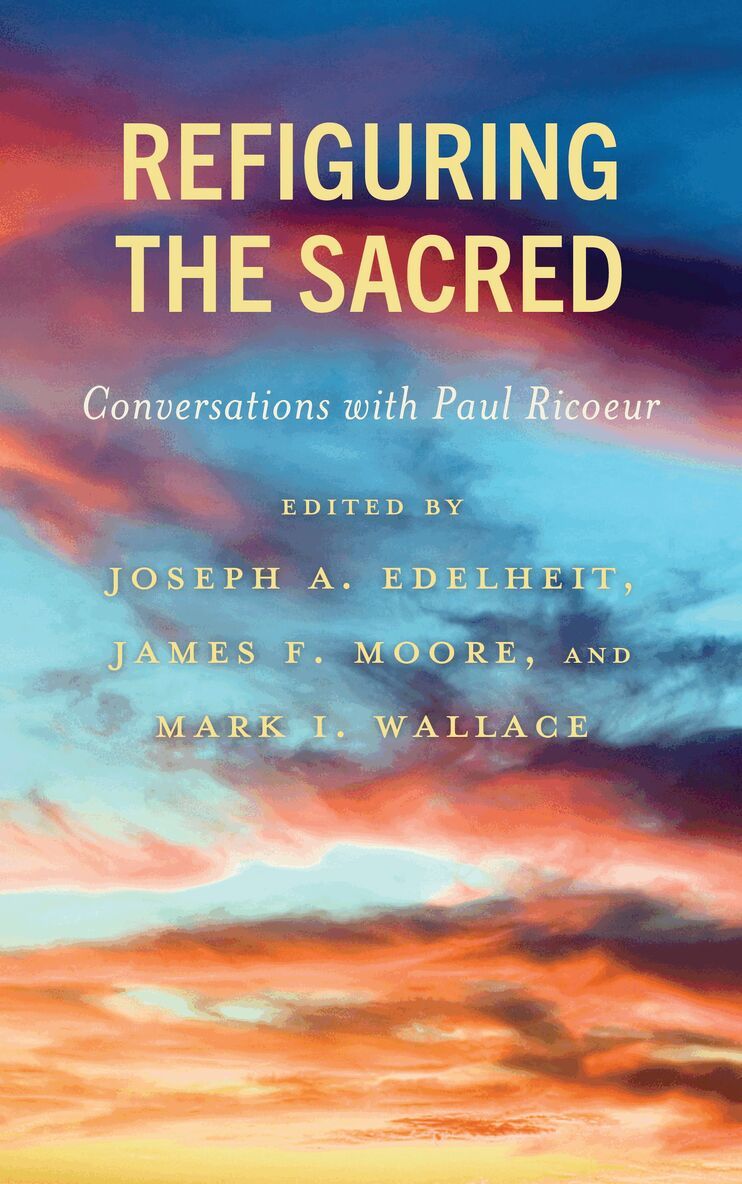
Refiguring the Sacred: Conversations with Paul Ricoeur offers perspectives on the twenty-one papers collected by Mark I. Wallace in Paul Ricoeur’s Figuring the Sacred, translated by David Pellauer; this new collection by Joseph A. Edelheit, James Moore, and Mark I. Wallace gives Ricoeur scholars an opportunity to reflect and engage on critical issues of Ricoeur’s religious ideas. Contributions by several significant Ricoeur scholars prompt questions and invite new conversations more than 15 years after Ricoeur’s death. His life-long engagement with texts illuminates his embrace of the Sacred; his significant thinking and writings on Religious imagination, Theology, the Bible, Hope, and Praxis are all ideas that beg more reading, reflection, and refiguring of our understanding of Ricoeur. Wallace brings two additional essays that could not be included in his original collection and reflects on why they are essential to our understanding of Ricoeur and the Sacred. Refiguring the Sacred also provides a model of the interfaith and multidisciplinary dialogue that were foundational to Paul Ricoeur’s scholarship.