Mark J. Jaroszeski – författare
Visar alla böcker från författaren Mark J. Jaroszeski. Handla med fri frakt och snabb leverans.
4 produkter
4 produkter
Inbunden, Engelska, 2000
1 674 kr
Skickas inom 10-15 vardagar
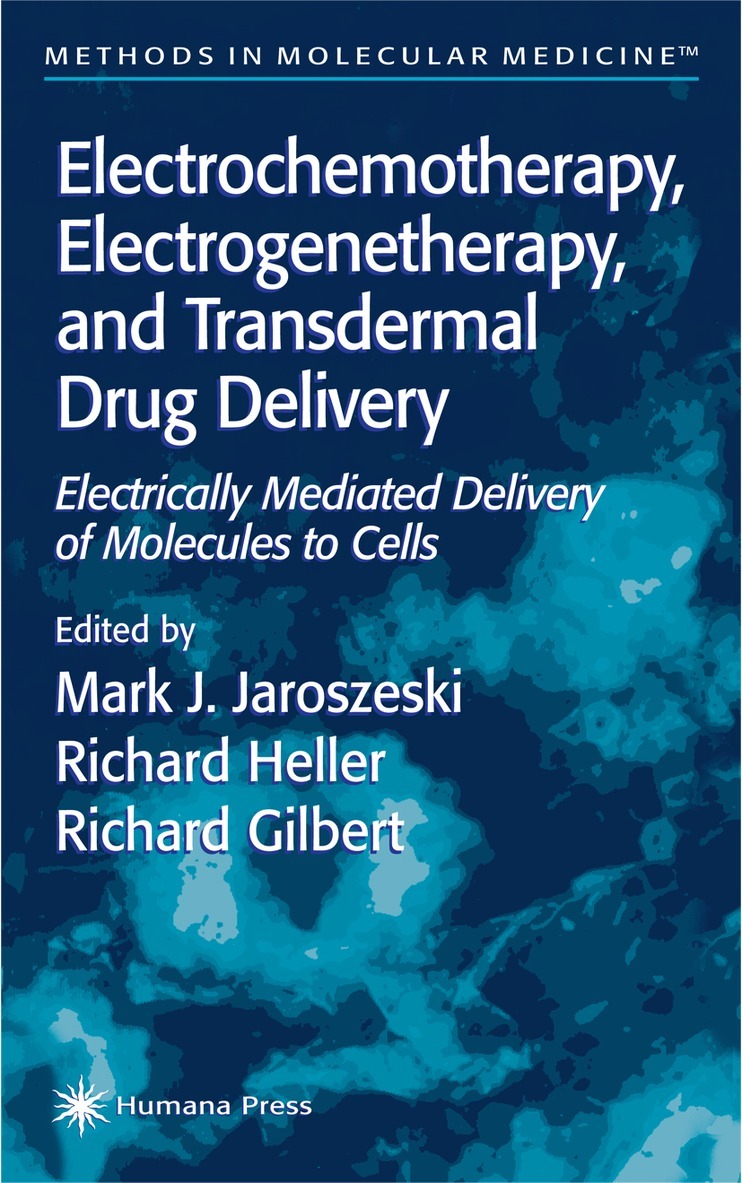
Leading experts comprehensively review all aspects of the delivery of therapeutic molecules to cells using electrical impulses - i.e., the extraordinarily promising new areas of electrogenetherapy, electrochemotherapy, and transdermal drug delivery. Their survey ranges from outlines of the basic physical principles that govern cell permeabilization by pulsed electric fields, to descriptions of the current state-of-the-art in instrumentation and electrodes, to summaries of preclinical and clinical trial results. The authors focus on drug, gene, and transdermal delivery techniques, providing detailed examples of drug delivery using electric fields from a variety of pulse generators and electrodes. Comprehensive and authoritative, Electrochemotherapy, Electrogenetherapy, and Transdermal Drug Delivery: Electrically Mediated Delivery of Molecules to Cells provides entre to an immensely practical set of in vivo electroporation techniques, including electrogenetherapy, electrochemotherapy, and transdermal drug delivery - techniques holding great promise for all those working toward better therapies for cancer, metabolic diseases, and vaccination.
E-bok
Engelska, 20081 977 kr
Läs direkt efter köp
Pulsed electric fields have been applied to living systems in vitro for a host of delivery applications since the early 1980s. It has been established that the primary effect that electrical treatment has on cells is an induced increase in the permeability of membranes to exogenous molecules. This state of increased permeability was noted to be temporary and could be induced with little or no effect on cell viability. This physical phenomenon was termed electroporation. Numerous published studies have shown that electroporation can be applied to any cell type. These studies also exploited the phenomenon to deliver drugs, DNA, antibodies, proteins, and fluorescent molecules. The use of electricity to mediate delivery of these molecule types in vitro has proven to be an invaluable research tool for biological and biomedical scientists. Many of the in vitro applications for electrically mediated delivery have tremendous potential for the treatment of human disease. For example, the ef- cient delivery of drugs and plasmid DNA has strong implications for improving standard therapies, as well as gene therapies. This potential was realized about 12 years ago when electric pulses were used to deliver drugs to tumor cells in vivo. Since then, the utility of in vivo electroporation for the delivery of m- ecules has been demonstrated through new applications that have been developed with increasing frequency each year. Electrochemotherapy, Electrogenetherapy, and Transdermal Drug Delivery: Electrically Mediated Delivery of Molecules to Cells provides review and protocol chapters that completely cover this relatively new scientific discipline.
E-bok
Engelska, 2008886 kr
Läs direkt efter köp
Flow cytometers are technically sophisticated instruments that utilize pr- ciples of physics, chemistry, engineering, digital electronics, optics, analog devices, laser technology, and biology to measure the light scattering and fluor- cent characteristics of particles. These instruments have become invaluable tools in the area of cancer research, cell biology, and clinical diagnostics for analyzing a multitude of cellular and subcellular particles. Undoubtedly, flow cytometers have become widely used because they provide a very unique means of exam- ing biological particles. Large quantities of cells/particles are individually a- lyzed, and it is typical for flow cytometers to quantitatively process thousands of individual particles in a matter of seconds. This a powerful analytic feat parti- larly if one relates it to the time required to examine several thousand individual cells using a microscope. This leaves little doubt regarding why the field of flow cytometry has advanced so rapidly since the first flow cytometers were commerically available in the 1970s. Today, flow cytometers are common in both large and small institutions. Current flow cytometers have evolved with advances in computers and microelectronics into fast and reliable instruments. The science of flow cytometry has also benefitted from rapid growth in the fields of biochemistry and immunology over the past decade. A vast array of fluorochrome-con- gated antibodies and other reagents are now commercially available for pr- ing structures and monitoring function in human cells as as in many other species.
Häftad, Engelska, 2010
1 626 kr
Skickas inom 10-15 vardagar
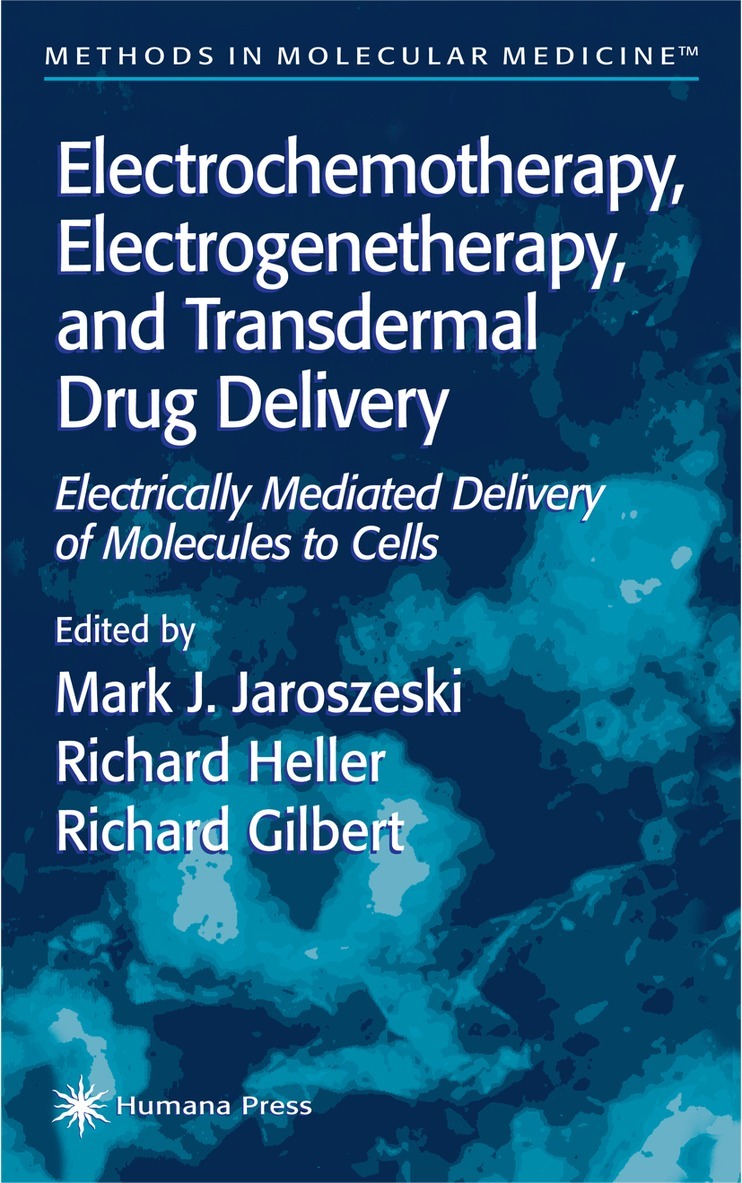
Pulsed electric fields have been applied to living systems in vitro for a host of delivery applications since the early 1980s. It has been established that the primary effect that electrical treatment has on cells is an induced increase in the permeability of membranes to exogenous molecules. This state of increased permeability was noted to be temporary and could be induced with little or no effect on cell viability. This physical phenomenon was termed electroporation. Numerous published studies have shown that electroporation can be applied to any cell type. These studies also exploited the phenomenon to deliver drugs, DNA, antibodies, proteins, and fluorescent molecules. The use of electricity to mediate delivery of these molecule types in vitro has proven to be an invaluable research tool for biological and biomedical scientists. Many of the in vitro applications for electrically mediated delivery have tremendous potential for the treatment of human disease. For example, the ef- cient delivery of drugs and plasmid DNA has strong implications for improving standard therapies, as well as gene therapies. This potential was realized about 12 years ago when electric pulses were used to deliver drugs to tumor cells in vivo. Since then, the utility of in vivo electroporation for the delivery of m- ecules has been demonstrated through new applications that have been developed with increasing frequency each year. Electrochemotherapy, Electrogenetherapy, and Transdermal Drug Delivery: Electrically Mediated Delivery of Molecules to Cells provides review and protocol chapters that completely cover this relatively new scientific discipline.