Mark Pearce – författare
Visar alla böcker från författaren Mark Pearce. Handla med fri frakt och snabb leverans.
10 produkter
10 produkter
Häftad, Engelska, 1998
1 066 kr
Skickas inom 3-6 vardagar
Del 718 - BAR International Series
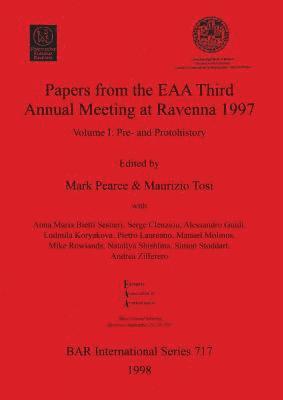
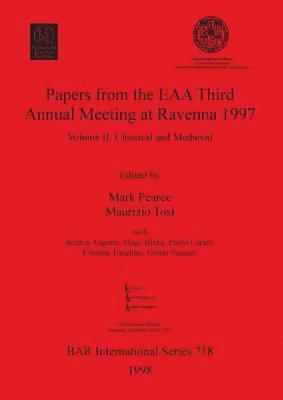
Papers from the European Association of Archaeologists Third Annual Meeting at Ravenna 1997
Volume II: Classical and Medieval
Häftad, Engelska, 1998
896 kr
Skickas inom 5-8 vardagar
Häftad, Engelska, 1998
660 kr
Skickas inom 5-8 vardagar
Del 16 - Sheffield Archaeological Monographs
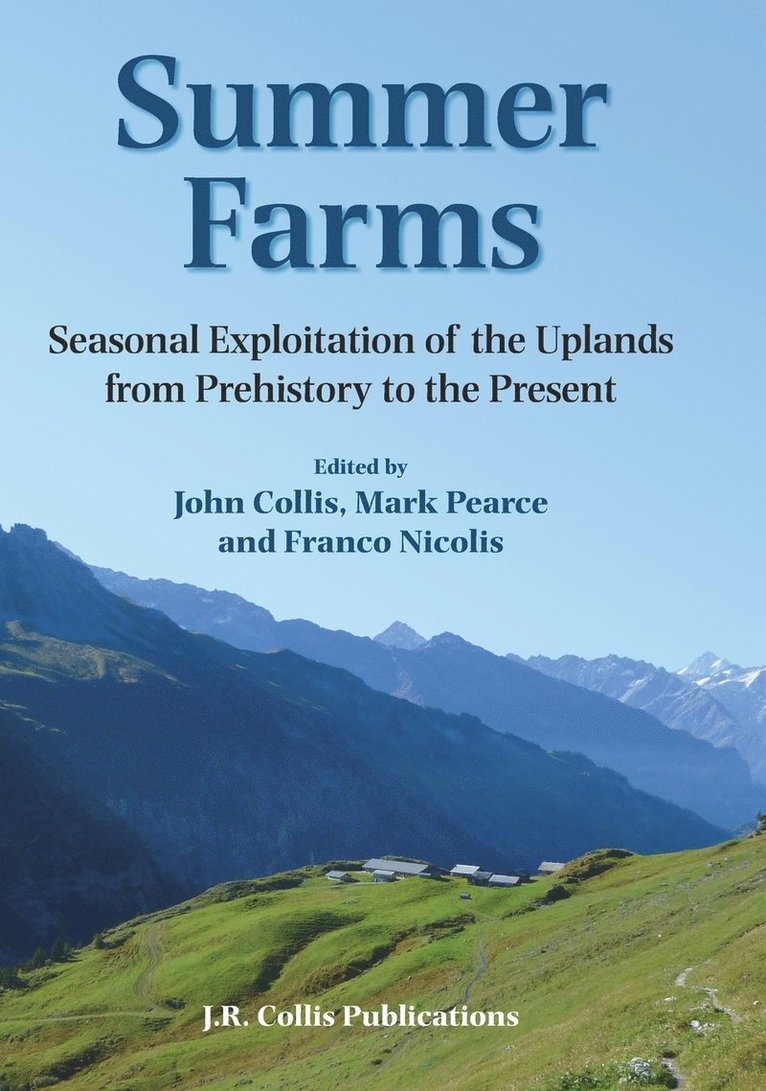
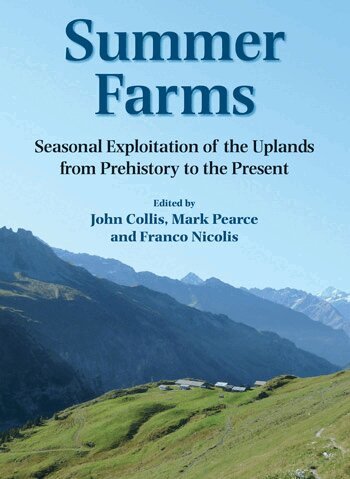
Summer Farms
Seasonal Exploitation of the Uplands from Prehistory to the Present
Inbunden, Engelska, 2016
1 587 kr
Skickas inom 5-8 vardagar
Summer farms occur throughout the world where there are rich pastures that can only be utilised for part of the year, mainly because they are under snow and ice during the winter. In Europe transhumance is often a major event when the cattle and other livestock leave their home villages and move up into the mountains, and likewise on their return. The best known sites in Europe are perhaps those found in the Alpine areas, but they occur everywhere where there are suitable highland areas to exploit. Traditionally they have been the subject of the studies of ethnographers and anthropologists, especially in the second half of the 20th century when technological and economic changes led to the gradual abandonment of the farms and to other ways of exploiting the highlands. The last of these farmers are gradually disappearing and with them the oral records and memories. Now it is archaeologists who are leading the recording of this material and also looking at the history of such farming from prehistory and from the Bronze Age with the rise in importance of 'Secondary Products' such as cheese which could be stored for use over winter.Much of the evidence can only be gathered by surface survey and by excavation, though in some cases there are good written sources which have yet to be fully exploited.This volume provides case studies, as well as brief summaries of other projects in Europe, extending from the Black Sea in the east to northern Spain and Iceland in the west, though with a concentration on the Alpine area. One thing that emerges is the very varied nature of these sites in terms of their chronology, who went to the farms, the distances travelled, and the other activities associated with transhumance such as mining. In some cases the products were primarily for the subsistence of the agricultural population, but in other cases they were traded and could produce a large amount of profit. This is the first overview of these sites in Europe written from an archaeological point of view.
Del 16 - Sheffield Archaeological Monographs
Summer Farms
Seasonal Exploitation of the Uplands from Prehistory to the Present
Häftad, Engelska, 2017
487 kr
Skickas inom 5-8 vardagar
Summer farms occur throughout the world where there are rich pastures that can only be utilised for part of the year, mainly because they are under snow and ice during the winter. In Europe transhumance is often a major event when the cattle and other livestock leave their home villages and move up into the mountains, and likewise on their return. The best known sites in Europe are perhaps those found in the Alpine areas, but they occur everywhere where there are suitable highland areas to exploit. Traditionally they have been the subject of the studies of ethnographers and anthropologists, especially in the second half of the 20th century when technological and economic changes led to the gradual abandonment of the farms and to other ways of exploiting the highlands. The last of these farmers are gradually disappearing and with them the oral records and memories. Now it is archaeologists who are leading the recording of this material and also looking at the history of such farming from prehistory and from the Bronze Age with the rise in importance of `Secondary Products’ such as cheese which could be stored for use over winter. Much of the evidence can only be gathered by surface survey and by excavation, though in some cases there are good written sources which have yet to be fully exploited. This volume provides case studies, as well as brief summaries of other projects in Europe, extending from the Black Sea in the east to northern Spain and Iceland in the west, though with a concentration on the Alpine area. One thing that emerges is the very varied nature of these sites in terms of their chronology, who went to the farms, the distances travelled, and the other activities associated with transhumance such as mining. In some cases the products were primarily for the subsistence of the agricultural population, but in other cases they were traded and could produce a large amount of profit. This is the first overview of these sites in Europe written from an archaeological point of view.
E-bok
PDF, Engelska, 2008661 kr
Läs direkt efter köp
THIS BOOK IS ABOUT FINDING, understanding, fixing, and preferably preventing bugs when creating desktop, network, and Web applications with Visual Basic (VB) .NET. It explores the power of the new cross-language and cross-component debugging tools, and shows you how to dig down into or tunnel across your entire application to find bugs at whatever level they live. With the arrival of VB .NET, many of the old debugging rules have changed. This means that some ominous storm clouds are gathering on the horizon. Well, Toto, We''re Not in Kansas Anymore Back in the personal computing Dark Ages, during a period when men were men and code was written in blood, it took some seriously hard-core work to create a viable and stable Windows application. Windows itself was still relatively imma ture and was being held back because of the lack of simple tools available for producing programs. Then in 1991 Visual Basic 1.0 and its successors (henceforth collectively referred to as VB.Classic) came riding to the rescue and changed the software development world in a dramatic way.
Häftad, Engelska, 2017
203 kr
Skickas inom 5-8 vardagar
Inbunden, Engelska, 2017
330 kr
Skickas inom 5-8 vardagar
Häftad, Engelska, 2003
414 kr
Skickas inom 10-15 vardagar
Visual Studio .NET, and more specifically, Visual Basic .NET give developers more productivity and more power to develop applications, but at the cost of a complex development environment together with a whole new set of potential bugs. Debugging VB .NET Development analyzes the new defect types that arise with VB.NET, and investigates the debugging of every type of VB.NET application together with many common debugging scenarios. Mark Pearce also shows developers how to use the powerful new .NET debugging tools to find bugs wherever they hide, even deep inside distributed applications.
E-bok
Engelska, 2021123 kr
Läs direkt efter köp
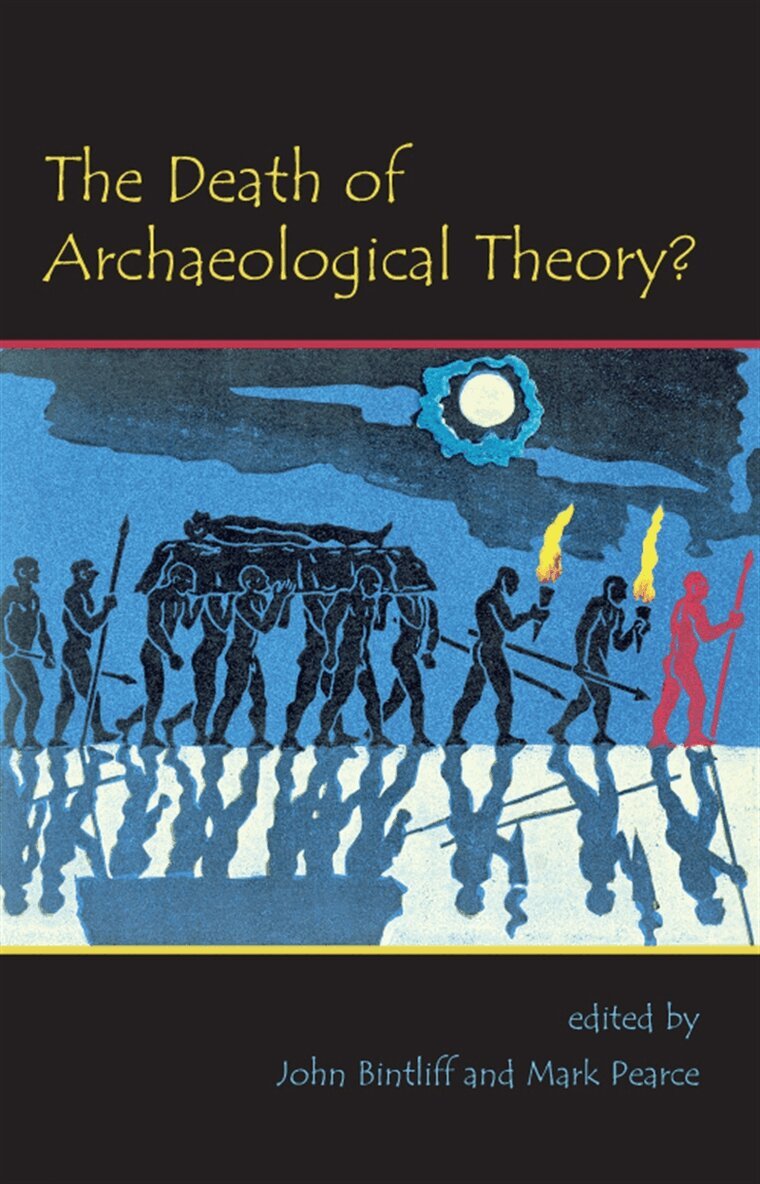
The Death of Archaeological Theory? addresses the provocative subject of whether it is time to discount the burden of somewhat dogmatic theory and ideology that has defined archaeological debate and shaped archaeology over the last 25 years. Seven chapters meet this controversial subject head on, also assessing where archaeological theory is now, and future directions. John Bintliff questions what theory is and argues that archaeologists should be freed from 'Ideopraxists', or those who preach that a single approach or model is right to the exclusion of all others. Marc Pluciennik again questions what we mean by archaeological theory and argues that the role of intellectual fashion is underestimated. He predicts pressure from outside archaeology to redirect our dominant theories towards genetic and human impact theory. Kristian Kristiansen argues that theory cannot die, but it can change direction and sees signs of a retreat from the present post-modern and post-processual cycle towards a more science based, rationalistic cycle of revived modernity. To Mark Pearce the most striking thing about the present state of archaeological theory is that there is no emerging paradigm to be discerned; he proposes that Theory is not dead, but has instead become more eclectic and nuanced. Two papers offer a different perspective from other areas of the world; Alexander Gramsch examines the issue from the German tradition and shows that in Central and Eastern Europe not only has Anglo-American Theory had limited impact, but current discussions on the future of method and theory offer a broader view of the discipline in which older traditions are seen to form the foundation. Kent Flannery and Joyce Marcus demonstrate that American archaeologists do not foresee the death of a genuinely archaeological theory (which they believe has never existed) but fear the real catastrophe would be the death of anthropological theory, because some anthropology today has become decidedly anti-scientific, rejecting not only the controlled comparison and contrast of cultures, but also the use of generalisation, both of which are crucial to theories and models and without which the longue durée will always be invisible.