Mark Reybrouck - Böcker
Visar alla böcker från författaren Mark Reybrouck. Handla med fri frakt och snabb leverans.
4 produkter
4 produkter
2 159 kr
Skickas inom 10-15 vardagar
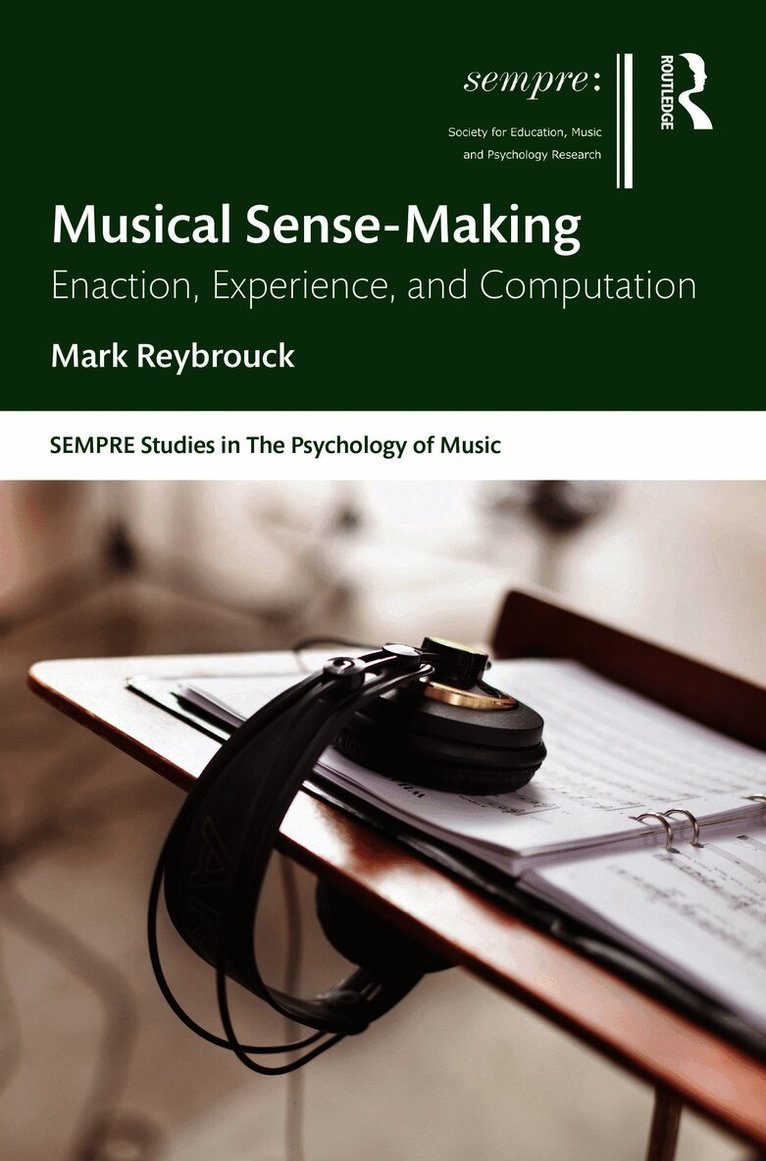
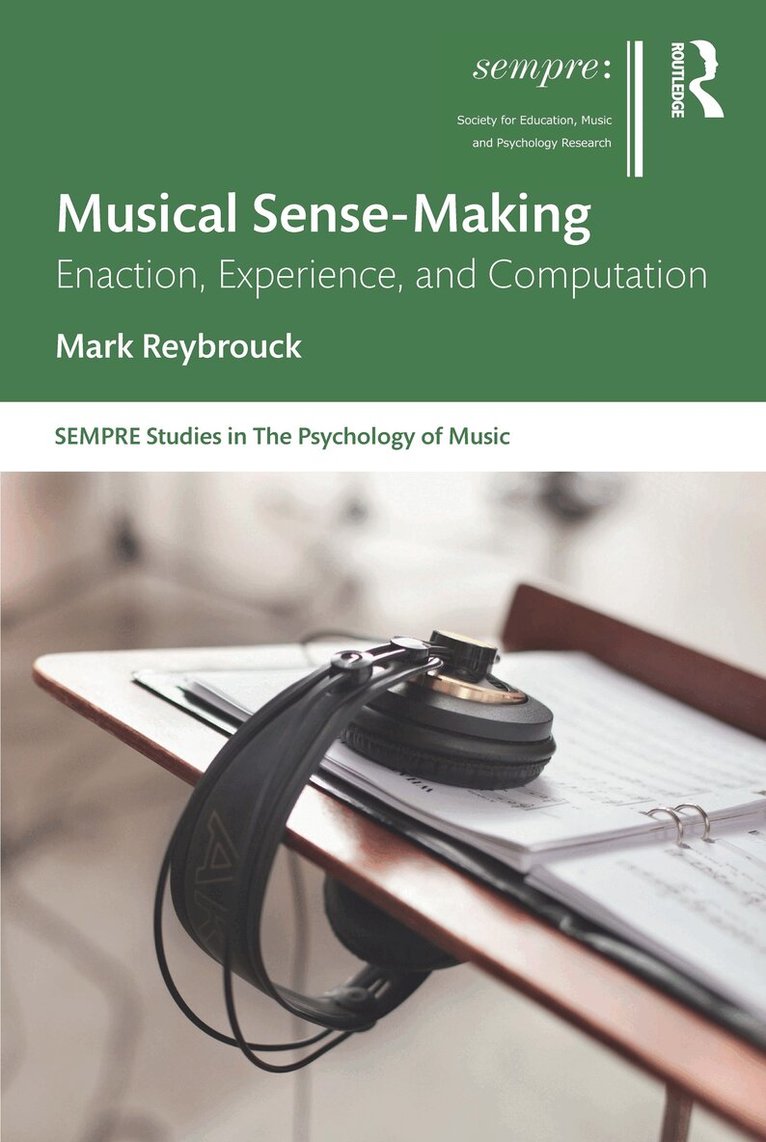
Musical Sense-Making: Enaction, Experience, and Computation broadens the scope of musical sense-making from a disembodied cognitivist approach to an experiential approach. Revolving around the definition of music as a temporal and sounding art, it argues for an interactional and experiential approach that brings together the richness of sensory experience and principles of cognitive economy.Starting from the major distinction between in-time and outside-of-time processing of the sounds, this volume provides a conceptual and operational framework for dealing with sounds in a real-time listening situation, relying heavily on the theoretical groundings of ecology, cybernetics, and systems theory, and stressing the role of epistemic interactions with the sounds. These interactions are considered from different perspectives, bringing together insights from previous theoretical groundings and more recent empirical research. The author’s findings are framed within the context of the broader field of enactive and embodied cognition, recent action and perception studies, and the emerging field of neurophenomenology and dynamical systems theory.This volume will particularly appeal to scholars and researchers interested in the intersection between music, philosophy, and/or psychology.
646 kr
Skickas inom 10-15 vardagar
Musical Sense-Making: Enaction, Experience, and Computation broadens the scope of musical sense-making from a disembodied cognitivist approach to an experiential approach. Revolving around the definition of music as a temporal and sounding art, it argues for an interactional and experiential approach that brings together the richness of sensory experience and principles of cognitive economy.Starting from the major distinction between in-time and outside-of-time processing of the sounds, this volume provides a conceptual and operational framework for dealing with sounds in a real-time listening situation, relying heavily on the theoretical groundings of ecology, cybernetics, and systems theory, and stressing the role of epistemic interactions with the sounds. These interactions are considered from different perspectives, bringing together insights from previous theoretical groundings and more recent empirical research. The author’s findings are framed within the context of the broader field of enactive and embodied cognition, recent action and perception studies, and the emerging field of neurophenomenology and dynamical systems theory.This volume will particularly appeal to scholars and researchers interested in the intersection between music, philosophy, and/or psychology.
924 kr
Skickas inom 5-8 vardagar
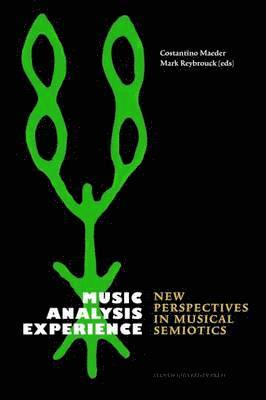
Transdisciplinary and intermedial analysis of the experience of music. Nowadays musical semiotics no longer ignores the fundamental challenges raised by cognitive sciences, ethology, or linguistics. Creation, action and experience play an increasing role in how we understand music, a sounding structure impinging upon our body, our mind, and the world we live in. Not discarding music as a closed system, an integral experience of music demands a transdisciplinary dialogue with other domains as well. Music, Analysis, Experience brings together contributions by semioticians, performers, and scholars from cognitive sciences, philosophy, and cultural studies, and deals with these fundamental questionings. Transdisciplinary and intermedial approaches to music meet musicologically oriented contributions to classical music, pop music, South American song, opera, narratology, and philosophy. This publication is GPRC-labeled (Guaranteed Peer-Reviewed Content). Contributors: Paulo Chagas (University of California, Riverside), Isaac and Zelia Chueke (Universidade Federal do Paraná, OMF/Paris-Sorbonne), Maurizio Corbella (Università degli Studi di Milano), Ian Cross (University of Cambridge), Paulo F. de Castro (CESEM/Departamento de Ciências Musicais; FCSH Universidade Nova de Lisboa), Robert S. Hatten (University of Texas at Austin), David Huron (School of Music, Ohio State University), Jamie Liddle (The Open University), Gabriele Marino (University of Turin), Dario Martinelli (Kaunas University of Technology; International Semiotics Institute), Nicolas Marty (Université Paris-Sorbonne), Maarten Nellestijn (Utrecht University), Malgorzata Pawlowska (Academy of Music in Krakow), Mônica Pedrosa de Pádua (Federal University of Minas Gerais, UFMG), Piotr Podlipniak (Adam Mickiewicz University, Poznan), Rebecca Thumpston (Keele University), Mieczyslaw Tomaszewski (Academy of Music in Krakow), Lea Maria Lucas Wierød (Aarhus University), Lawrence M. Zbikowski (University of Chicago)
1 129 kr
Skickas inom 3-6 vardagar
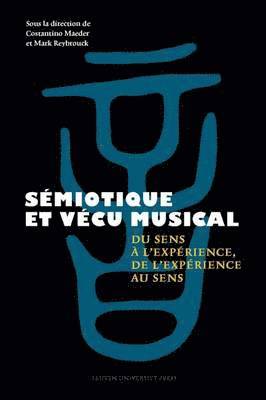
Nouvelles perspectives en sémiotique. Tout est musique, et la musique nous accompagne partout : ces lieux communs n’ont jamais été si vrais qu’aujourd’hui, au temps de l’arrosage musical continuel. Cette ubiquité, loin d’être simplement une mode, nous oblige à repenser sémiotiquement la fonction et le fonctionnement de la musique. Les essais composant Sémiotique et vécu musical montrent dans quelle direction se dirigent les recherches de nos jours. L’analyse de l’expérience musicale, par exemple, détermine la réception affective, peut provoquer l’ébranlement intérieur, transformer le temps vécu, changer et déterminer les structures de l’expérience ainsi que l’expérientialité. L’expérience musicale est profondément liée à l’incarnation et à la corporalité. Elle peut redéfinir l’horizon de compréhension, moduler les attentes, déterminer et délimiter les contenus phénoménaux. Elle est fondamentalement conditionnée par l’interaction physique avec un instrument ou encore modelée par le studio d’enregistrement. L’intelligence artificielle et l’usage de robots dans des spectacles commencent à remettre en cause nos conceptions de l’expérience musicale. Ces nouvelles perspectives développées en sémiotique s’ouvrent nécessairement et impérativement aux sciences cognitives, aux nouvelles approches de la musicologie, à la transdisciplinarité et au transmédial. Le caractère innovant du présent ouvrage qui touche la théorie, la méthodologie et l’empirisme, témoigne de la vivacité, de l’inventivité et du dynamisme qui caractérisent la sémiotique toujours jeune, curieuse et surprenante. This publication is GPRC-labeled (Guaranteed Peer-Reviewed Content). Contributors : Sylvain Brétéché (Aix-Marseille Université), Guillaume Deveney (Aix-Marseille Université), Carole Egger (Université de Strasbourg), Christine Esclapez (Aix-Marseille Université ), Márta Grabócz (Université de Strasbourg), Michel Imberty (Université de Paris X, Nanterre), Thomas Le Colleter (Université Paris-IV Sorbonne), Gabriel Manzaneque (Aix-Marseille Université), Zaven Paré (Universidade Federal do Rio de Janeiro), Isabelle Reck (Universite? de Strasbourg), Mathias Rousselot (Aix-Marseille Université)