Mark Sweeney – författare
Visar alla böcker från författaren Mark Sweeney. Handla med fri frakt och snabb leverans.
6 produkter
6 produkter
231 kr
Kommande
601 kr
Skickas inom 10-15 vardagar
Cyber Strategy: Risk-Driven Security and Resiliency provides a process and roadmap for any company to develop its unified Cybersecurity and Cyber Resiliency strategies. It demonstrates a methodology for companies to combine their disassociated efforts into one corporate plan with buy-in from senior management that will efficiently utilize resources, target high risk threats, and evaluate risk assessment methodologies and the efficacy of resultant risk mitigations. The book discusses all the steps required from conception of the plan from preplanning (mission/vision, principles, strategic objectives, new initiatives derivation), project management directives, cyber threat and vulnerability analysis, cyber risk and controls assessment to reporting and measurement techniques for plan success and overall strategic plan performance. In addition, a methodology is presented to aid in new initiative selection for the following year by identifying all relevant inputs.Tools utilized include: Key Risk Indicators (KRI) and Key Performance Indicators (KPI) National Institute of Standards and Technology (NIST) Cyber Security Framework (CSF) Target State Maturity interval mapping per initiative Comparisons of current and target state business goals and critical success factors A quantitative NIST-based risk assessment of initiative technology components Responsible, Accountable, Consulted, Informed (RACI) diagrams for Cyber Steering Committee tasks and Governance Boards’ approval processes Swimlanes, timelines, data flow diagrams (inputs, resources, outputs), progress report templates, and Gantt charts for project management The last chapter provides downloadable checklists, tables, data flow diagrams, figures, and assessment tools to help develop your company’s cybersecurity and cyber resiliency strategic plan.
1 632 kr
Skickas inom 10-15 vardagar
Cyber Strategy: Risk-Driven Security and Resiliency provides a process and roadmap for any company to develop its unified Cybersecurity and Cyber Resiliency strategies. It demonstrates a methodology for companies to combine their disassociated efforts into one corporate plan with buy-in from senior management that will efficiently utilize resources, target high risk threats, and evaluate risk assessment methodologies and the efficacy of resultant risk mitigations. The book discusses all the steps required from conception of the plan from preplanning (mission/vision, principles, strategic objectives, new initiatives derivation), project management directives, cyber threat and vulnerability analysis, cyber risk and controls assessment to reporting and measurement techniques for plan success and overall strategic plan performance. In addition, a methodology is presented to aid in new initiative selection for the following year by identifying all relevant inputs.Tools utilized include: Key Risk Indicators (KRI) and Key Performance Indicators (KPI) National Institute of Standards and Technology (NIST) Cyber Security Framework (CSF) Target State Maturity interval mapping per initiative Comparisons of current and target state business goals and critical success factors A quantitative NIST-based risk assessment of initiative technology components Responsible, Accountable, Consulted, Informed (RACI) diagrams for Cyber Steering Committee tasks and Governance Boards’ approval processes Swimlanes, timelines, data flow diagrams (inputs, resources, outputs), progress report templates, and Gantt charts for project management The last chapter provides downloadable checklists, tables, data flow diagrams, figures, and assessment tools to help develop your company’s cybersecurity and cyber resiliency strategic plan.
287 kr
Skickas inom 5-8 vardagar
1 205 kr
Skickas inom 5-8 vardagar
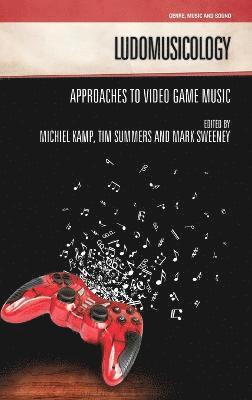
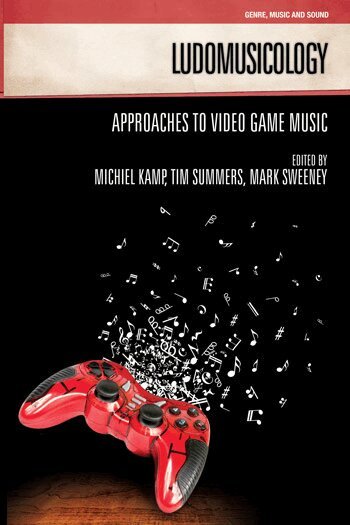
The last half-decade has seen the rapid and expansive development of video game music studies. As with any new area of study, this significant sub-discipline is still tackling fundamental questions concerning how video game music should be approached. In this volume, experts in game music provide their responses to these issues. This book suggests a variety of new approaches to the study of game music. In the course of developing ways of conceptualizing and analyzing game music it explicitly considers other critical issues including the distinction between game play and music play, how notions of diegesis are complicated by video game interactivity, the importance of cinema aesthetics in game music, the technicalities of game music production and the relationships between game music and art music traditions. This collection is accessible, yet theoretically substantial and complex. It draws upon a diverse array of perspectives and presents new research which will have a significant impact upon the way that game music is studied. The volume represents a major development in game musicology and will be indispensable for both academic researchers and students of game music.
379 kr
Skickas inom 5-8 vardagar
The last half-decade has seen the rapid and expansive development of video game music studies. As with any new area of study, this significant sub-discipline is still tackling fundamental questions concerning how video game music should be approached. In this volume, experts in game music provide their responses to these issues. This book suggests a variety of new approaches to the study of game music. In the course of developing ways of conceptualizing and analyzing game music it explicitly considers other critical issues including the distinction between game play and music play, how notions of diegesis are complicated by video game interactivity, the importance of cinema aesthetics in game music, the technicalities of game music production and the relationships between game music and art music traditions. This collection is accessible, yet theoretically substantial and complex. It draws upon a diverse array of perspectives and presents new research which will have a significant impact upon the way that game music is studied. The volume represents a major development in game musicology and will be indispensable for both academic researchers and students of game music.