Markus Fraundorfer - Böcker
Visar alla böcker från författaren Markus Fraundorfer. Handla med fri frakt och snabb leverans.
6 produkter
6 produkter
Pharmaceutical Knowledge Commons for the Most Neglected Populations in Global Health
The Drugs for Neglected Diseases initiative
Inbunden, Engelska, 2025
1 389 kr
Skickas inom 5-8 vardagar
In Pharmaceutical Knowledge Commons for the Most Neglected Populations in Global Health Fraundorfer presents an in-depth study of how the Drugs for Neglected Diseases initiative (DNDi) has reshaped the global politics of neglected tropical diseases over the past twenty years. By weaving together concepts from different academic disciplines (commons, common goods, orchestration, and healthcare innovation ecosystems) into a novel theoretical framework for the analysis of transformational change in global health, the author argues that DNDi has orchestrated pharmaceutical knowledge commons to produce novel treatments and other knowledge for neglected tropical diseases as common goods. Focusing on three neglected tropical diseases (NTDs) that have particularly affected neglected populations in the global south - Chagas disease, the leishmaniases, and sleeping sickness - this volume examines the strengths and weaknesses of DNDi's collaborative governance model and illustrates how pharmaceutical knowledge commons help conceptualize processes of innovative transformation in global health to serve the common good. The Drugs for Neglected Diseases initiative (DNDi) was created in 2003 and developed a not-for-profit approach that would put neglected patients, rather than profits, first. In the past two decades, DNDi has consolidated its alternative pharmaceutical model, showing how to develop novel treatments for a range of neglected tropical diseases and empower R&D (research and development) communities from NTD-endemic countries. Despite these achievements, DNDi's political role in global health has remained underexplored.

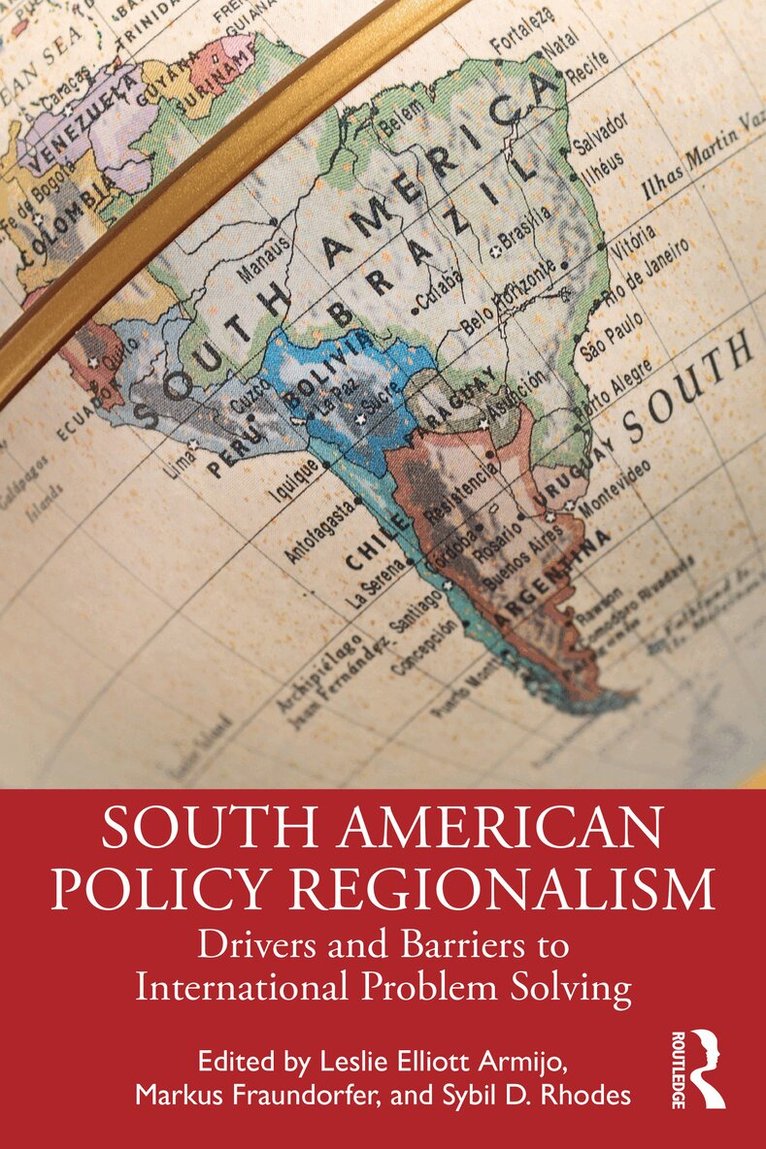
South American Policy Regionalism
Drivers and Barriers to International Problem Solving
Häftad, Engelska, 2024
574 kr
Skickas inom 10-15 vardagar
“Regional cooperation exists, but looks different in the global South than in the European Union,” claim the contributors to South American Policy Regionalism, which offers novel theory, methods, and Latin American case studies of joint governance efforts in nine international policy arenas, ranging from illegal drugs to artificial intelligence.Contrasting three major schools of thought in international relations (highlighting power, institutions, and ideas), this book introduces the idea of international policy regionalism as a framework for informed debate about international policy-sector interactions in a regional space. Beginning with a conceptual approach applicable to any world region, it includes a brief history of Western Hemisphere regionalism to aid in future cross-regional comparisons. An international group of contributors constructs rich narratives of the politics of Latin American policy sector evolution since the Cold War. Besides the aforementioned, included sectors span regional development banking, infrastructure planning, electricity distribution, migration governance, climate action, neglected tropical diseases, and food policies.This volume equips readers from various academic disciplines and the policy world to understand the relevance of core international relations theory for the analysis of policy sectors that cross national borders, both within Latin America and elsewhere, and especially throughout the global South.
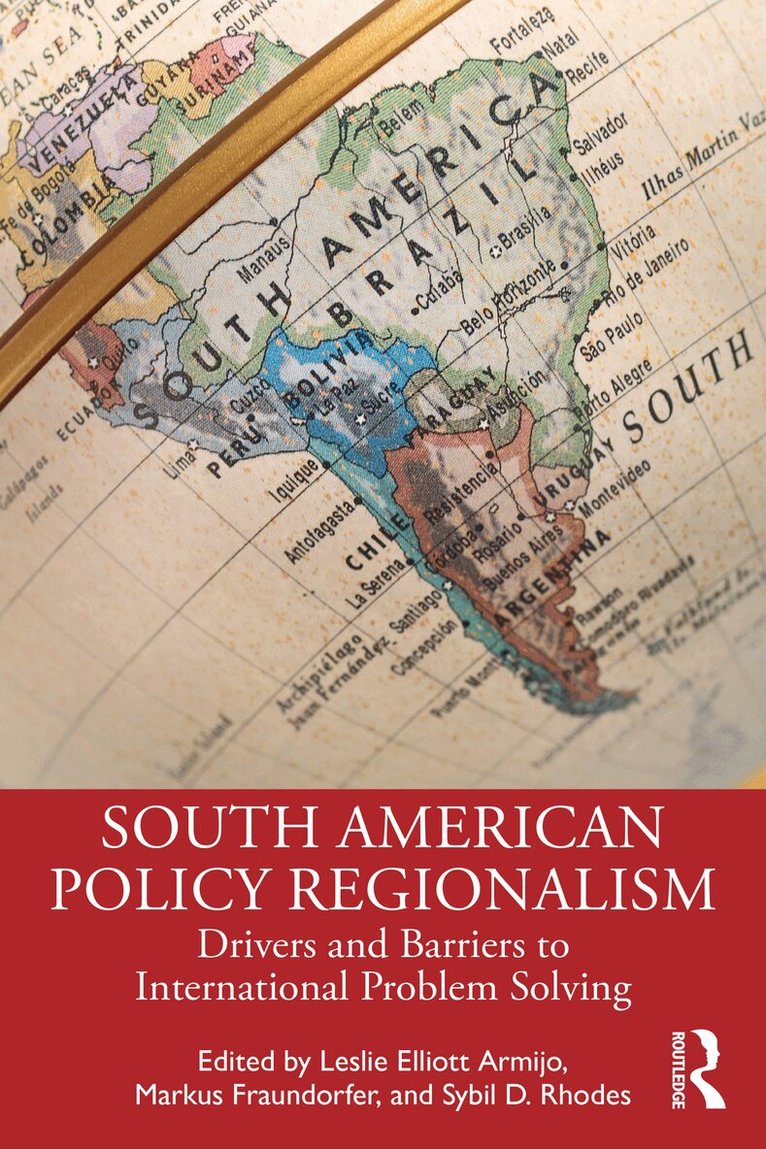
South American Policy Regionalism
Drivers and Barriers to International Problem Solving
Inbunden, Engelska, 2024
2 171 kr
Skickas inom 10-15 vardagar
“Regional cooperation exists, but looks different in the global South than in the European Union,” claim the contributors to South American Policy Regionalism, which offers novel theory, methods, and Latin American case studies of joint governance efforts in nine international policy arenas, ranging from illegal drugs to artificial intelligence.Contrasting three major schools of thought in international relations (highlighting power, institutions, and ideas), this book introduces the idea of international policy regionalism as a framework for informed debate about international policy-sector interactions in a regional space. Beginning with a conceptual approach applicable to any world region, it includes a brief history of Western Hemisphere regionalism to aid in future cross-regional comparisons. An international group of contributors constructs rich narratives of the politics of Latin American policy sector evolution since the Cold War. Besides the aforementioned, included sectors span regional development banking, infrastructure planning, electricity distribution, migration governance, climate action, neglected tropical diseases, and food policies.This volume equips readers from various academic disciplines and the policy world to understand the relevance of core international relations theory for the analysis of policy sectors that cross national borders, both within Latin America and elsewhere, and especially throughout the global South.
1 619 kr
Skickas inom 10-15 vardagar
In recent years, a growing literature has focused on how to create more effective and democratic global governance mechanisms to better tackle global challenges such as health epidemics, global hunger, Internet surveillance or the consequences of climate change. Yet there is a gap in accessible published material to reflect contributions of democratic states from the global South. Among these democracies from the global South, Brazil is a popular case for teachers and researchers looking to study global governance mechanisms. This book provides students with a framework that challenges the Western-centred views on questions of how to democratise global governance processes, arguing that developing democracies from the global South have developed serious and sustainable approaches to a more democratic global system. With chapters on Brazil’s responses to global food security, the purchase of drugs, open government initiatives and internet governance, this book opens up contemporary and novel practices of democracy for examination.
585 kr
Skickas inom 10-15 vardagar
In recent years, a growing literature has focused on how to create more effective and democratic global governance mechanisms to better tackle global challenges such as health epidemics, global hunger, Internet surveillance or the consequences of climate change. Yet there is a gap in accessible published material to reflect contributions of democratic states from the global South. Among these democracies from the global South, Brazil is a popular case for teachers and researchers looking to study global governance mechanisms. This book provides students with a framework that challenges the Western-centred views on questions of how to democratise global governance processes, arguing that developing democracies from the global South have developed serious and sustainable approaches to a more democratic global system. With chapters on Brazil’s responses to global food security, the purchase of drugs, open government initiatives and internet governance, this book opens up contemporary and novel practices of democracy for examination.
800 kr
Skickas inom 10-15 vardagar
Why has global governance largely failed to effectively tackle some of the most pressing global environmental challenges of our time?