Marsha Kinder - Böcker
Visar alla böcker från författaren Marsha Kinder. Handla med fri frakt och snabb leverans.
7 produkter
7 produkter
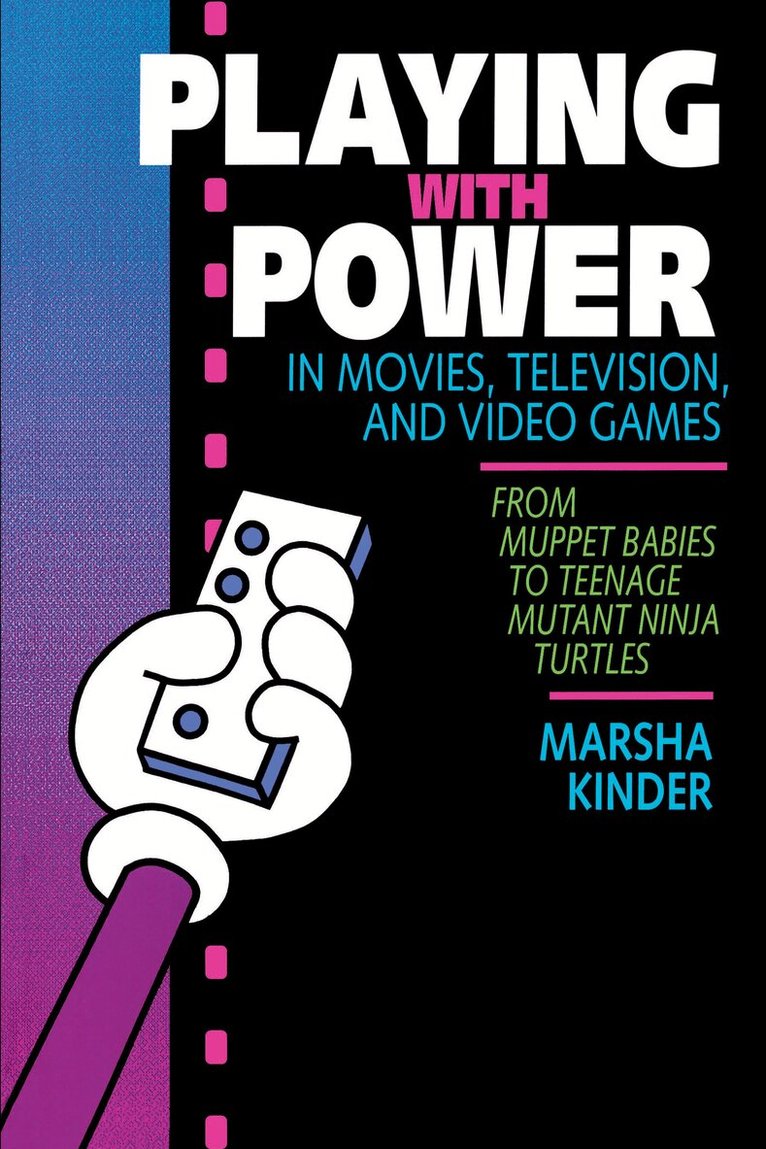
Playing with Power in Movies, Television, and Video Games
From Muppet Babies to Teenage Mutant Ninja Turtles
Häftad, Engelska, 1993
548 kr
Skickas inom 3-6 vardagar
How do children today learn to understand stories? Why do they respond so enthusiastically to home video games and to a myth like Teenage Mutant Ninja Turtles? And how are such fads related to multinational media mergers and the "new world order"? In assessing these questions, Marsha Kinder provides a brilliant new perspective on modern media.
297 kr
Skickas inom 7-10 vardagar
In this innovative synthesis of film history and cultural analysis, Marsha Kinder examines the films of such key directors as Bunuel, Saura, Erice, and Almodovar, as well as works from the popular cinema and television, exploring how they manifest political and cultural tensions related to the production of Spanish national identity within a changing global context. Concentrated on the decades from the 1950s to the 1990s, Kinder's work is broadly historical but essentially conceptual, moving backward and forward in time, drawing examples from earlier films and from works of art and literature, and providing close readings of a wide range of texts. Her questioning and internationalizing of the 'national cinema' concept and her application of contemporary critical theory - especially insights from feminism, Marxism, psychoanalysis, cultural studies, and discourse theory - distinguish "Blood Cinema" from previous film histories. The author also makes use of a variety of sources within Spain such as the commentaries on Spanish character and culture by Unamunov and others, the contemporary debate over the restructuring of Spanish television.Kinder's book moves Spanish cinema into the mainstream of film studies by demonstrating that a knowledge of its history alters and enriches our understanding of world cinema. The interactive CD-ROM is available from CINE-DISCS, 2021 Holly Hill Terrace, Los Angeles, CA 90068, (213) 876-7678.
776 kr
Skickas inom 7-10 vardagar
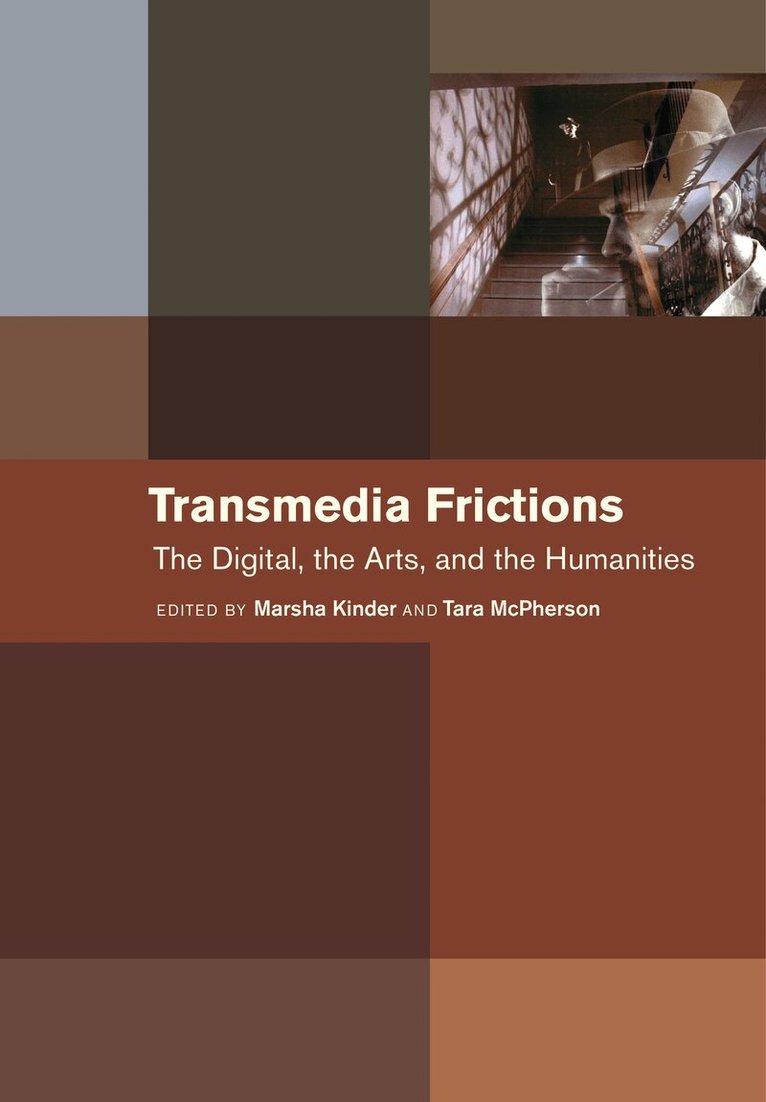
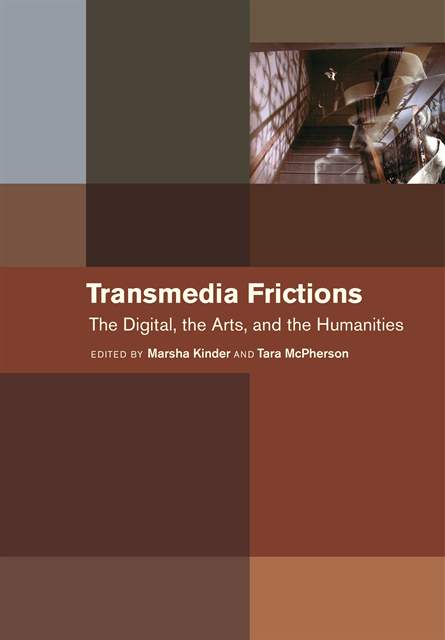
Editors Marsha Kinder and Tara McPherson present an authoritative collection of essays on the continuing debates over medium specificity and the politics of the digital arts. Comparing the term transmedia" with transnational," they show that the movement beyond specific media or nations does not invalidate those entities but makes us look more closely at the cultural specificity of each combination. In two parts, the book stages debates across essays, creating dialogues that give different narrative accounts of what is historically and ideologically at stake in medium specificity and digital politics. Each part includes a substantive introduction by one of the editors. Part 1 examines precursors, contemporary theorists, and artists who are protagonists in this discursive drama, focusing on how the transmedia frictions and continuities between old and new forms can be read most productively: N.Katherine Hayles and Lev Manovich redefine medium specificity, Edward Branigan and Yuri Tsivian explore nondigital precursors, Steve Anderson and Stephen Mamber assess contemporary archival histories, and Grahame Weinbren and Caroline Bassett defend the open-ended mobility of newly emergent media. In part 2, trios of essays address various ideologies of the digital: John Hess and Patricia R. Zimmerman, Herman Gray, and David Wade Crane redraw contours of race, space, and the margins; Eric Gordon, Cristina Venegas, and John T. Caldwell unearth database cities, portable homelands, and virtual fieldwork; and Mark B.N. Hansen, Holly Willis, and Rafael Lozano-Hemmer and Guillermo Gomez-Pena examine interactive bodies transformed by shock, gender, and color. An invaluable reference work in the field of visual media studies, Transmedia Frictions provides sound historical perspective on the social and political aspects of the interactive digital arts, demonstrating that they are never neutral or innocent.
411 kr
Skickas inom 7-10 vardagar
Editors Marsha Kinder and Tara McPherson present an authoritative collection of essays on the continuing debates over medium specificity and the politics of the digital arts. Comparing the term “transmedia” with “transnational,” they show that the movement beyond specific media or nations does not invalidate those entities but makes us look more closely at the cultural specificity of each combination. In two parts, the book stages debates across essays, creating dialogues that give different narrative accounts of what is historically and ideologically at stake in medium specificity and digital politics. Each part includes a substantive introduction by one of the editors.Part 1 examines precursors, contemporary theorists, and artists who are protagonists in this discursive drama, focusing on how the transmedia frictions and continuities between old and new forms can be read most productively: N. Katherine Hayles and Lev Manovich redefine medium specificity, Edward Branigan and Yuri Tsivian explore nondigital precursors, Steve Anderson and Stephen Mamber assess contemporary archival histories, and Grahame Weinbren and Caroline Bassett defend the open-ended mobility of newly emergent media.In part 2, trios of essays address various ideologies of the digital: John Hess and Patricia R. Zimmerman, Herman Gray, and David Wade Crane redraw contours of race, space, and the margins; Eric Gordon, Cristina Venegas, and John T. Caldwell unearth database cities, portable homelands, and virtual fieldwork; and Mark B.N. Hansen, Holly Willis, and Rafael Lozano-Hemmer and Guillermo Gómez-Peña examine interactive bodies transformed by shock, gender, and color.An invaluable reference work in the field of visual media studies, Transmedia Frictions provides sound historical perspective on the social and political aspects of the interactive digital arts, demonstrating that they are never neutral or innocent.
228 kr
Skickas inom 7-10 vardagar
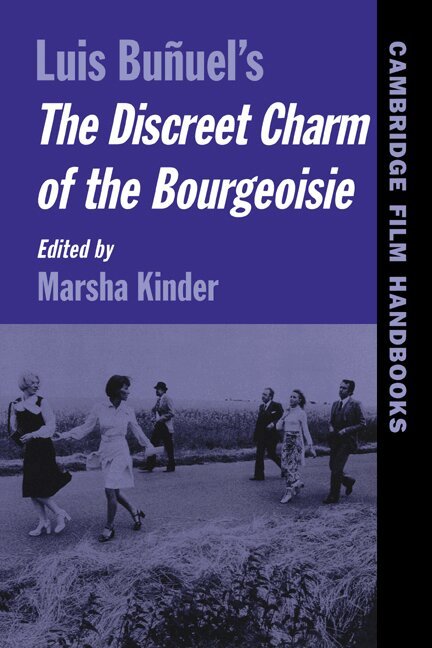
The first collection of critical essays on Luis Buñuel's 1972 Oscar-winning masterpiece, The Discreet Charm of the Bourgeoisie, this anthology brings fresh perspectives to the most sophisticated film of this director whose narrative experimentation was always ahead of its time. Combining some of the world's most distinguished scholars on Buñuel and Spanish cinema with new voices in cultural theory, this volume helps us to rethink not only The Discreet Charm of the Bourgeoisie, but also Buñuel's entire body of work. Among the topics examined are Buñuel's relationship to surrealism, the transnational (Spanish, French, Mexican, and American) nature of his work, and his dramatic and idiosyncratic rethinking of sex, narrative and gender. Also included are vintage reviews of the film, as well a selected Buñuel bibliography.
606 kr
Skickas inom 3-6 vardagar
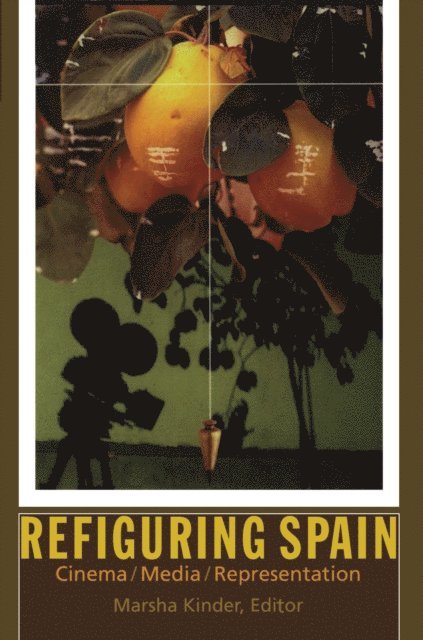
In Refiguring Spain, Marsha Kinder has gathered a collection of new essays that explore the central role played by film, television, newspapers, and art museums in redefining Spain’s national/cultural identity and its position in the world economy during the post-Franco era. By emphasizing issues of historical recuperation, gender and sexuality, and the marketing of Spain’s peaceful political transformation, the contributors demonstrate that Spanish cinema and other forms of Spanish media culture created new national stereotypes and strengthened the nation’s place in the global market and on the global stage. These essays consider a diverse array of texts, ranging from recent films by AlmodÓvar, Saura, Erice, MirÓ, Bigas Luna, GutiÉrrez AragÓn, and Eloy de la Iglesia to media coverage of the 1993 elections. Francoist cinema and other popular media are examined in light of strategies used to redefine Spain’s cultural identity. The importance of the documentary, the appropriation of Hollywood film, and the significance of gender and sexuality in Spanish cinema are also discussed, as is the discourse of the Spanish media star-whether involving film celebrities like Rita Hayworth and Antonio Banderas or historical figures such as Cervantes. The volume concludes with an investigation of larger issues of government policy in relation to film and media, including a discussion of the financing of Spanish cinema and an exploration of the political dynamics of regional television and art museums. Drawing on a wide range of critical discourses, including feminist, postcolonial, and queer theory, political economy, cultural history, and museum studies, Refiguring Spain is the first comprehensive anthology on Spanish cinema in the English language.Contributors. Peter Besas, Marvin D’Lugo, Selma Reuben Holo, Dona M. Kercher, Marsha Kinder, Jaume MartÍ-Olivella, Richard Maxwell, Hilary L. Neroni, Paul Julian Smith, Roland B. Tolentino, Stephen Tropiano, Kathleen M. Vernon, IÑaki Zabaleta
296 kr
Skickas inom 7-10 vardagar
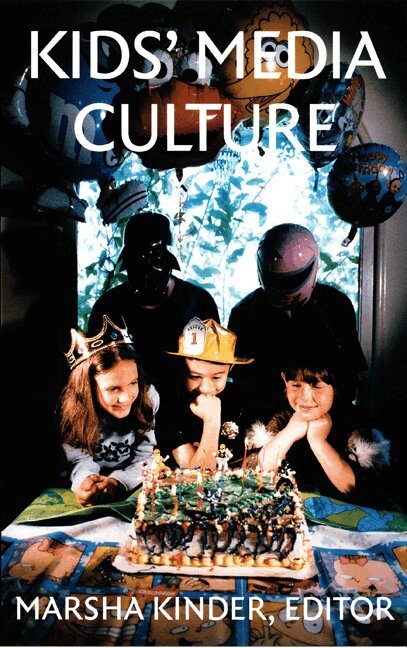
Television shows, comic strips, video games, and other forms of media directed at children are the subject of frequent and rancorous debate. In Kids’ Media Culture some of the most prominent cultural theorists of children’s media join forces with exciting new voices in the field to consider the production and consumption of media aimed at children. What’s good for kids and what’s merely exploitive? Are shows that attempt to level the socioeconomic playing field by educating children effective? The essays in this anthology tackle these questions and pose provocative new questions of their own. As part of their argument that children’s reactions to mass media are far more complex and dynamic than previously thought, contributors examine the rise of mass media in postwar America. They explore how books, cartoons, and television shows of the 1950s and 1960s-such as Lassie and Dennis the Menace-helped redefine American identity and export an image of a particularly American optimism and innocence worldwide. Other essays take up the controversies surrounding such shows as Sesame Street, My So-Called Life, and Mighty Morphin Power Rangers. After discussing the differences in how children and adults react to such programs, the collection focuses on television in schools and the ways that mass media convey messages about gender and socialization. Kids’ Media Culture makes clear that children are active, engaged participants in the media culture surrounding them. This volume will be compelling reading for those interested in television and cultural studies as well as anyone interested in children’s education and welfare.Contributors. Heather Gilmour, Sean Griffin, Heather Hendershot, Henry Jenkins, Yasmin B. Kafai, Jyotsna Kapur, Marsha Kinder, Susan Murray, Elissa Rashkin, Ellen Seiter, Lynn Spigel, Karen Orr Vered