Martin Stief – författare
Visar alla böcker från författaren Martin Stief. Handla med fri frakt och snabb leverans.
6 produkter
Geheimdienste, Politik Und Krisen Im Kalten Krieg
Av Daniela Munkel, Ronny Heidenreich m. fl.
Inbunden, 2024
270 kr
Lägg i varukorg
Die DDR im Blick der Stasi 1959
Die geheimen Berichte an die SED-Fuhrung
Av Vandenhoeck & Ruprecht, Ann-Kathrin Reichardt m. fl.
Inbunden, 2022
463 kr
Lägg i varukorg
1959: the GDR is ten years old. Economically, the party and state leadership focused primarily on expanding the chemical industry and collectivizing agriculture. However, the implementation of the chemical program decided in 1958 did not go as planned and there were massive problems with the …
Die DDR im Blick der Stasi 1983
Die geheimen Berichte an die SED-Führung
Av Vandenhoeck & Ruprecht Verlage, Mark Schiefer m. fl.
Inbunden, 2021
463 kr
Lägg i varukorg
The SED was challenged three times in 1983: the nuclear confrontation escalated globally, national bankruptcy threatened and a frustrating feeling of stagnation spread among the population. The Stasi reports document overburdened brown coal combines, heated debates on disarmament and the reception …
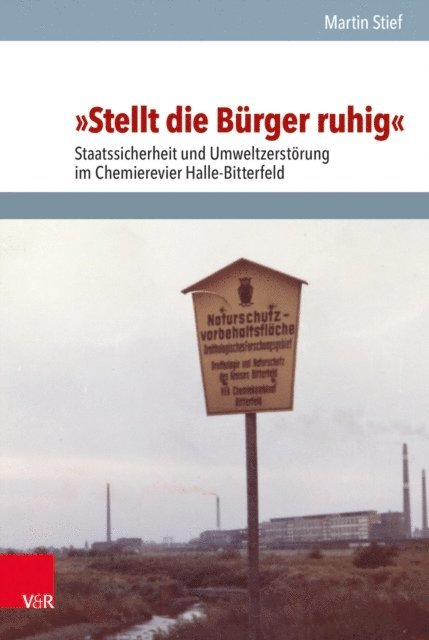
»Stellt die Bürger ruhig«
Staatssicherheit und Umweltzerstörung im Chemierevier Halle–Bitterfeld
Av Martin Stief
E-bok, 2019
407 kr
Lägg i varukorg
»Stellt die Bürger ruhig!« lautete die Devise von Wirtschaftsfunktionären und Politikern angesichts der sich zuspitzenden Umweltkonflikte im Chemierevier Halle-Bitterfeld. Die ohnehin akuten Umweltprobleme der Region wurden durch die zunehmende ökonomische Überforderung der DDR verschärft und …
Geheimdienste, Politik und Krisen im Kalten Krieg
Av Martin Stief, Ronny Heidenreich m. fl.
E-bok, 2024
236 kr
Lägg i varukorg
Die Geschichte des Kalten Krieges ist auch die Geschichte der Geheimdienste. Mit ihren Informationen und Analysen sollten sie für Sicherheit in unsicheren Zeiten sorgen. Geheimdienste wie CIA und BND oder Geheimpolizeien wie KGB und DDR-Staatssicherheit sammelten und verwerteten Informationen, die …
Die DDR im Blick der Stasi.
Die geheimen Berichte an die SED-Führung
Av Mark Schiefer, Martin Stief
Inbunden, 2019
463 kr
Tillfälligt slut
Herbst 1989 in der DDR: In den Städten gehen Tausende Menschen auf die Straße, neue politische Bewegungen und Parteien entstehen, das Politbüro tritt zurück, die Mauer fällt ein grundlegender Wandel zeichnet sich ab. Diese Ausnahmezeit steht im Zentrum der geheimen Berichterstattung der …