Martin Upham – författare
Visar alla böcker från författaren Martin Upham. Handla med fri frakt och snabb leverans.
3 produkter
3 produkter
Inbunden, Engelska, 2022
273 kr
Skickas
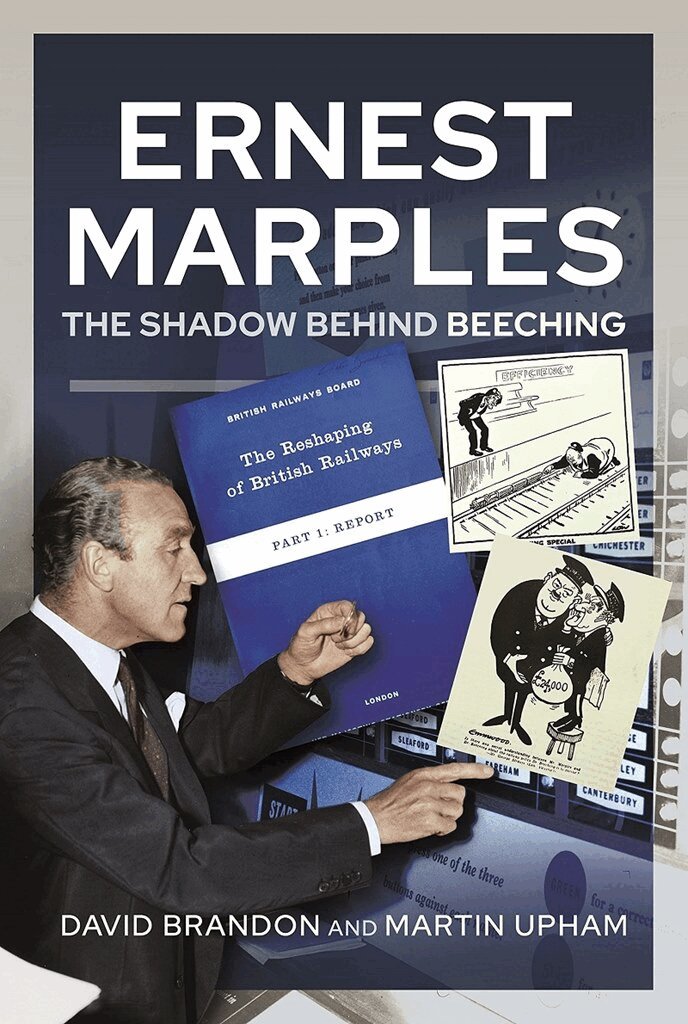
Ernest Marples revolutionised three UK government departments. At Transport (1959-1964) he appointed Dr Beeching chairman of British Railways and commissioned him to produce his infamous report, inaugurated motorways and introduced significant regulations for motorists. At Housing (1951-1954) he delivered 300,000 new houses annually and as Postmaster General (1957-1959), he reformed Post Office accounting systems and launched postcodes and Subscriber Trunk Dialling. This first biography of Marples uses newly-available archives to examine public and private transport policy, the growing power of the pro-road lobby and the identification of personal freedom with driving. Railway sentimentalism was no match for these.Marples was lucky not to be implicated in the Profumo Affair which rocked the Conservative Party but his political career was over soon afterwards. Questionable business practices caused his 1975 flight to Monaco hotly pursued by the Inland Revenue. Beeching, unhappy under a Labour government, returned to private industry although he later chaired a Royal Commission. Labour, despite promises, proved little friendlier to the railways but a more positive approach to loss-making passenger services eventually emerged under Barbara Castle.This book should appeal to those interested in Britain's railways and in mid-Twentieth Century British politics.
E-bok
Engelska, 2022161 kr
Läs direkt efter köp
This biography examines the life and career of the conservative politician who led the charge to reshape British Railways in the mid-twentieth century.Ernest Marples was one of the most influential and controversial British politicians of the mid-twentieth century. As the Minister of Transport (1959–1964) he appointed Dr. Beeching chairman of British Railways and commissioned him to produce his infamous “Beeching Report”. Earlier, as Postmaster General (1957–1959), he reformed Post Office accounting systems and launched postcodes and Subscriber Trunk Dialing.Though Marples evaded implicated in the Profumo Affair which rocked the Conservative Party, his political career was over soon afterwards. Questionable business practices, and a 1975 flight to Monaco, drew scrutiny from Inland Revenue. Beeching, unhappy under a Labour government, returned to private industry. This biography of Marples draws on newly-available archives to examine Marples’s career as well as public and private transport policy, the growing power of the pro-road lobby, and the successful campaign to identify personal freedom with driving.
E-bok
PDF, Engelska, 2022163 kr
Läs direkt efter köp
Ernest Marples revolutionised three UK government departments. At Transport (1959-1964) he appointed Dr Beeching chairman of British Railways and commissioned him to produce his infamous report, inaugurated motorways and introduced significant regulations for motorists. At Housing (1951-1954) he delivered 300,000 new houses annually and as Postmaster General (1957-1959), he reformed Post Office accounting systems and launched postcodes and Subscriber Trunk Dialling. This first biography of Marples uses newly-available archives to examine public and private transport policy, the growing power of the pro-road lobby and the identification of personal freedom with driving. Railway sentimentalism was no match for these.Marples was lucky not to be implicated in the Profumo Affair which rocked the Conservative Party but his political career was over soon afterwards. Questionable business practices caused his 1975 flight to Monaco hotly pursued by the Inland Revenue. Beeching, unhappy under a Labour government, returned to private industry although he later chaired a Royal Commission. Labour, despite promises, proved little friendlier to the railways but a more positive approach to loss-making passenger services eventually emerged under Barbara Castle.This book should appeal to those interested in Britain''s railways and in mid-Twentieth Century British politics.