Marvin M. Smith – författare
Visar alla böcker från författaren Marvin M. Smith. Handla med fri frakt och snabb leverans.
3 produkter
3 produkter
E-bok
PDF, Engelska, 2011703 kr
Läs direkt efter köp
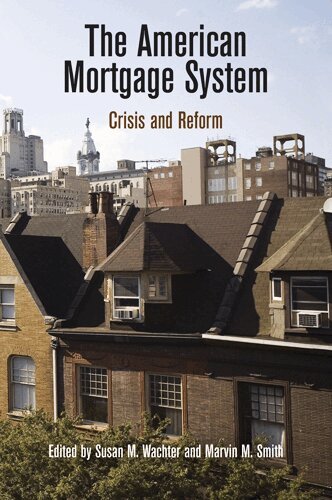
Successful home ownership requires the availability of appropriate mortgage products. In the years leading up to the collapse of the housing market, home buyers frequently accepted mortgages that were not only wrong for them but catastrophic for the economy as a whole. When the housing market bubble burst, so did a cornerstone of the American dream for many families. Restoring the promise of this dream requires an unflinching inspection of lending institutions and the right tools to repair the structures that support solid home purchases. The American Mortgage System: Crisis and Reform focuses on the causes of the housing market collapse and proposes solutions to prevent another rash of foreclosures.Edited by two leaders in the field of real estate and finance, Susan M. Wachter and Marvin M. Smith, The American Mortgage System examines key elements of the mortgage meltdown. The volume's contributors address the influence of the Community Reinvestment Act, which is often blamed for the crisis. They uncover how the government-sponsored enterprises Fannie Mae and Freddie Mac invested outside the housing market with disastrous results. They present surprising information about low-income borrowers and the strengths of local banks. This collection of thoughtful studies includes extensive analysis of loan practices and the creation of unstable mortgage securities, presenting data largely unavailable until now. More than a critique, The American Mortgage System offers solutions to the problems facing the future of American home ownership, including identifying asset price bubbles, calculating risk, and preventing discrimination in lending.Measured yet timely and by turns provocative, The American Mortgage System provides a careful assessment of a troubled but indispensable part of the economic and social structure of the United States. This book is a sound investment for economists, urban planners, and all who shape public policy.
E-bok
PDF, Engelska, 2011256 kr
Läs direkt efter köp
For much of the nation's history, the participation of blacks in the armed forces was approximately in line with their proportion in the total population. This changed during the 1970s: by 1980 one of every three Army Gls and one of every five marines were black. The reaction has been mixed.Many Americans look with approval on the growth of black participation in military service, since it often affords young blacks educational, social, and financial opportunities that constitute a bridge to a better life not otherwise available to them. But for other Americans, the opportunities are outweighed by the disproportionate imposition of the burden of defense on a segment of the population that has not enjoyed a fair share of the benefits that society confers. From this perspective, the likelihood that blacks would suffer at least a third-and perhaps a half-of the combat fatalities in the initial stages of conflict is considered immoral, unethical, or otherwise contrary to the precepts of democratic institutions.Some also worry that military forces with such a high fraction of blacks entail risks to U.S. national security. A socially unrepresentative force, it is argued, may lack the cohesion considered vital to combat effectiveness. Others fear that such a force would be unreliable if it were deployed in situations that would test the allegiance of its minority members. And some have even expressed concern that a large proportion of blacks may raise questions about the status of U.S fighting forces, as judged by the American public, the nation's allies, and its adversaries.The authors of this book examine evidence on both sides of the issue in an effort to bring objective scrutiny to bear on questions that for many years have been loaded with emotion and subjective reaction. They also discuss the implications for the military's racial composition of demographic, economic, and technological trends and the possible effects of returning to some form of conscription.
Häftad, Engelska, 1982
238 kr
Skickas inom 10-15 vardagar
For much of the nation's history, the participation of blacks in the armed forces was approximately in line with their proportion in the total population. This changed during the 1970s: by 1980 one of every three Army Gls and one of every five marines were black. The reaction has been mixed.Many Americans look with approval on the growth of black participation in military service, since it often affords young blacks educational, social, and financial opportunities that constitute a bridge to a better life not otherwise available to them. But for other Americans, the opportunities are outweighed by the disproportionate imposition of the burden of defense on a segment of the population that has not enjoyed a fair share of the benefits that society confers. From this perspective, the likelihood that blacks would suffer at least a third-and perhaps a half-of the combat fatalities in the initial stages of conflict is considered immoral, unethical, or otherwise contrary to the precepts of democratic institutions.Some also worry that military forces with such a high fraction of blacks entail risks to U.S. national security. A socially unrepresentative force, it is argued, may lack the cohesion considered vital to combat effectiveness. Others fear that such a force would be unreliable if it were deployed in situations that would test the allegiance of its minority members. And some have even expressed concern that a large proportion of blacks may raise questions about the status of U.S fighting forces, as judged by the American public, the nation's allies, and its adversaries.The authors of this book examine evidence on both sides of the issue in an effort to bring objective scrutiny to bear on questions that for many years have been loaded with emotion and subjective reaction. They also discuss the implications for the military's racial composition of demographic, economic, and technological trends and the possible effects of returning to some form of conscription.