Mary Louise Hemmeter - Böcker
Visar alla böcker från författaren Mary Louise Hemmeter. Handla med fri frakt och snabb leverans.
11 produkter
11 produkter
289 kr
Skickas inom 11-20 vardagar
APEEC is the first measurement scale designed to evaluate the use of developmentally appropriate practices in the early elementary classroom (K–3). Developed for classrooms serving both children with and without disabilities, the APEEC can be used by administrators and researchers to evaluate the degree of developmental appropriateness in inclusive and general education classrooms. It can also be used by teachers as a self-assessment tool. The book includes a carefully thought-out score sheet, which can be photocopied for use in rating classrooms.Featuring straightforward language and an easy-to-follow format, APEEC is organized under three main categories:1;Physical Environment—room arrangement, display of child products (e.g., artwork), classroom accessibility, health and safety2;Instructional Context—use of materials and computers, monitoring child progress, teacher-child language, instructional methods, integration and breadth of subjects3;Social Context—children's role in decision-making, participation of children with disabilities, social skills, diversity, transitions between activities, and family involvementThe authors used a multi-step process to develop the APEEC, including a thorough review of the relevant literature (particularly the NAEYC guidelines and early childhood special education literature); an extensive review of the scale by practitioners, researchers, and board members of professional organizations and research journals; and field testing in 69 classrooms.
568 kr
Skickas inom 7-10 vardagar
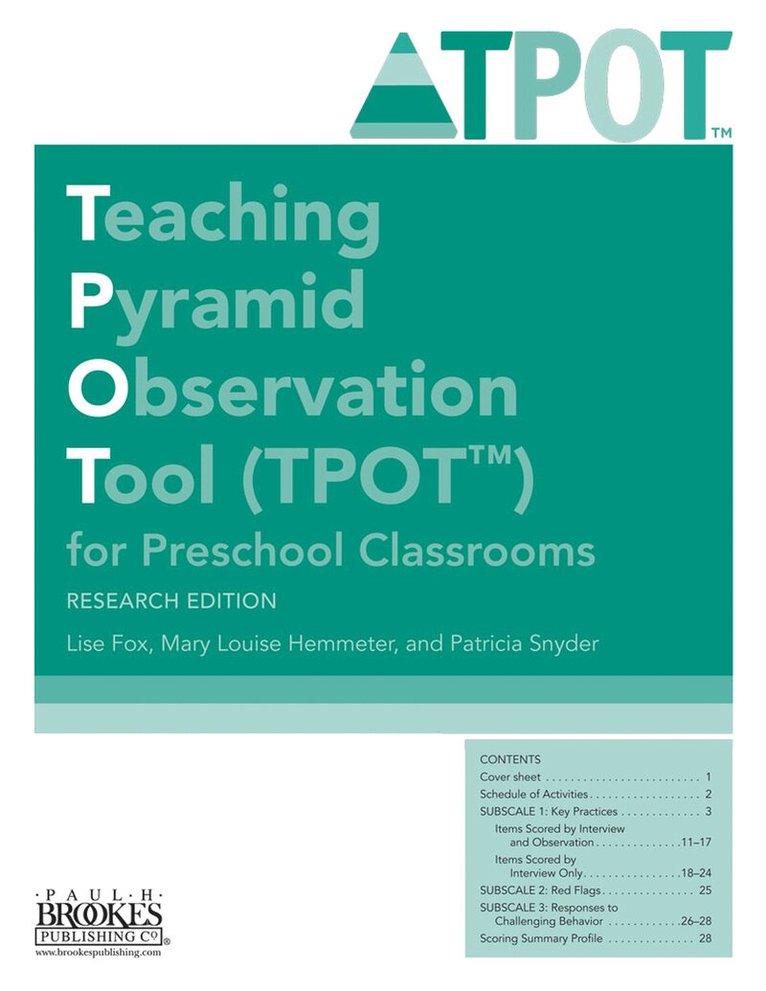
If your programme is among the thousands using the evidence-based Pyramid Model for Promoting Social Emotional Competence in Infants and Young Children, this is the one tool you need to support teachers to effectively use the practices. Developed by highly respected creators of the Pyramid Model for classrooms enrolling children 2–5 years of age, the TPOT™ is an in-depth tool that provides information on how well teachers are implementing practises related to universal, targeted, and individualised supports. A trained administrator conducts a classroom observation and teacher interview, uncovering detailed information about the quality of 14 key teaching practises, noting red flags that indicate areas for immediate support, and observing how teachers respond to challenging behaviours. TPOT™ results show which practises are being implemented successfully - and what teachers need to focus on to ensure positive social-emotional outcomes for young children.TPOT™ helps programmes:Support effective implementation of the proven PBIS-based Pyramid modelPromote social-emotional competence in young childrenImplement strategies to prevent and address challenging behaviourCompare implementation across classrooms, teachers, and programmesIdentify where teachers need extra professional development and supportGuide coaching effortsThis is the one tool you need to make sure teachers are effectively putting the evidence-based Pyramid Model for Promoting Social Emotional Competence in Infants and Young Children into practice. Learn more about TPOT.
364 kr
Skickas inom 7-10 vardagar
If your programme is among the thousands using the evidence-based Pyramid Model for Promoting Social Emotional Competence in Infants and Young Children, this is the one tool you need to support teachers to effectively use the practices. Developed by highly respected creators of the Pyramid Model for classrooms enrolling children 2–5 years of age, the TPOT™ is an in-depth tool that provides information on how well teachers are implementing practises related to universal, targeted, and individualised supports. A trained administrator conducts a classroom observation and teacher interview, uncovering detailed information about the quality of 14 key teaching practises, noting red flags that indicate areas for immediate support, and observing how teachers respond to challenging behaviors. TPOT™ results show which practises are being implemented successfully - and what teachers need to focus on to ensure positive social-emotional outcomes for young children.TPOT™ helps programmes:Support effective implementation of the proven PBIS-based Pyramid modelPromote social-emotional competence in young childrenImplement strategies to prevent and address challenging behaviourCompare implementation across classrooms, teachers, and programmesIdentify where teachers need extra professional development and supportGuide coaching effortsThis is the one tool you need to make sure teachers are effectively putting the evidence-based Pyramid Model for Promoting Social Emotional Competence in Infants and Young Children into practice. Learn more about TPOT.
925 kr
Skickas inom 7-10 vardagar
If your programme is among the thousands using the evidence-based Pyramid Model for Promoting Social Emotional Competence in Infants and Young Children, this is the one tool you need to support teachers to effectively use the practices. Developed by highly respected creators of the Pyramid Model for classrooms enrolling children 2–5 years of age, the TPOT™ is an in-depth tool that provides information on how well teachers are implementing practices related to universal, targeted, and individualized supports. A trained administrator conducts a classroom observation and teacher interview, uncovering detailed information about the quality of 14 key teaching practices, noting red flags that indicate areas for immediate support, and observing how teachers respond to challenging behaviours. TPOT™ results show which practices are being implemented successfully—and what teachers need to focus on to ensure positive social-emotional outcomes for young children.TPOT™ helps programmes:Support effective implementation of the proven PBIS-based Pyramid modelPromote social-emotional competence in young childrenImplement strategies to prevent and address challenging behaviourCompare implementation across classrooms, teachers, and programmesIdentify where teachers need extra professional development and supportGuide coaching effortsThis Set includes the TPOT™ Manual and one package of TPOT™ forms.This is the one tool you need to make sure teachers are effectively putting the evidence-based Pyramid Model for Promoting Social Emotional Competence in Infants and Young Children into practice.
466 kr
Skickas inom 7-10 vardagar
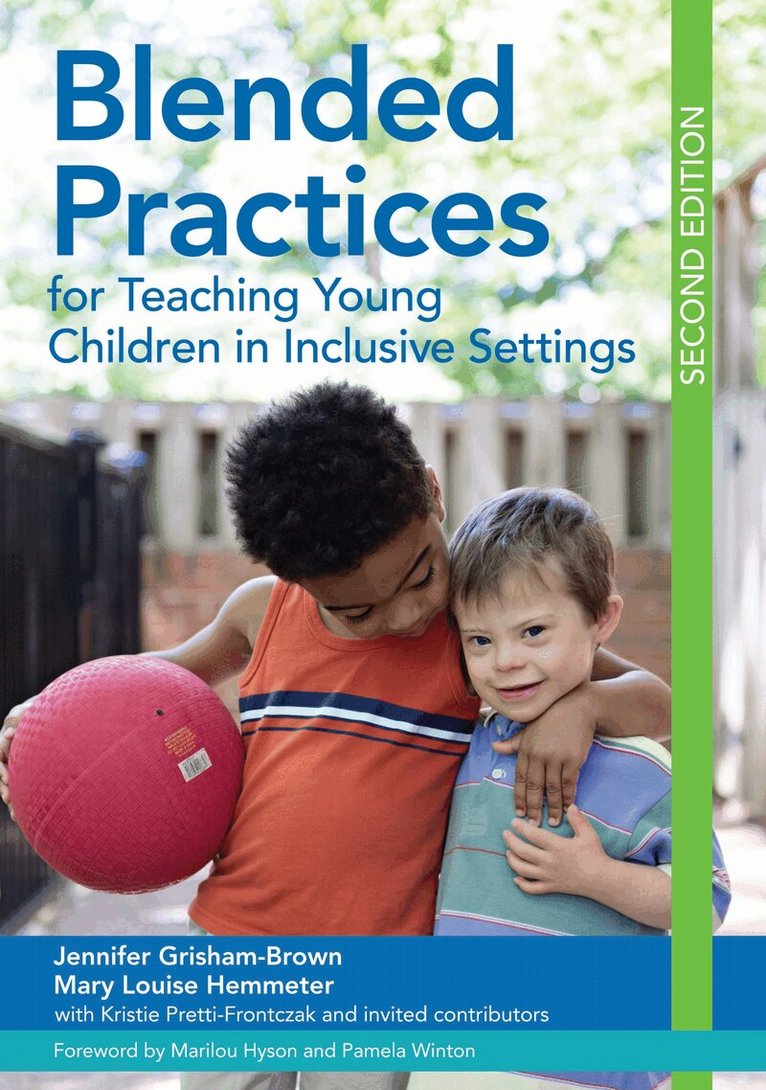
As more and more early childhood settings implement inclusive practices, teachers need to blend special and general education techniques to help all children learn. They’ll find out how with the new edition of this bestselling text, which combines today’s best practices for teaching young children with and without disabilities into one comprehensive approach. Ideal for current and future early childhood educators working with children from ages 2 to 5, this comprehensive text provides explicit guidance on developing a successful curriculum framework, working effectively with families and other team members, tailoring instruction to each child’s individual needs, and embedding learning opportunities that address all children's goals. Teachers will learn from the field’s most current research, and they’ll get a full continuum of strategies for teaching young children with diverse abilities. Practical information on authentic assessment and data-driven decision-making is also woven throughout the book.An essential reference to keep and use for years to come, this book is every early childhood educator’s guide to blending the best of special and general education, developing effective curricula, and improving outcomes for all children.WHAT’S NEWIncreased focus on how to implement multi-tiered systems of support (MTSS)New chapters on applying blended practices in specific content areas: language, literacy, social-emotional skills, and mathThe latest on state and federal funding initiatives for early childhood—and how to maintain quality practices that align with these initiativesMore guidance on determining the scope and sequence of what to teach childrenCurrent recommendations from key professional organizations like NAEYC and DEC, and their implications for teachersUSER-FRIENDLY FEATURES: Includes visual aids and sample forms, vignettes and practical examples that illustrate key concepts and guiding principles, helpful summaries for each chapter, case studies, and learning activities that challenge students to test and expand their knowledge.
Teaching Pyramid Infant-Toddler Observation Scale (TPITOS™) for Infant-Toddler Classrooms: Tool
Häftad, Engelska, 2018
364 kr
Skickas inom 7-10 vardagar
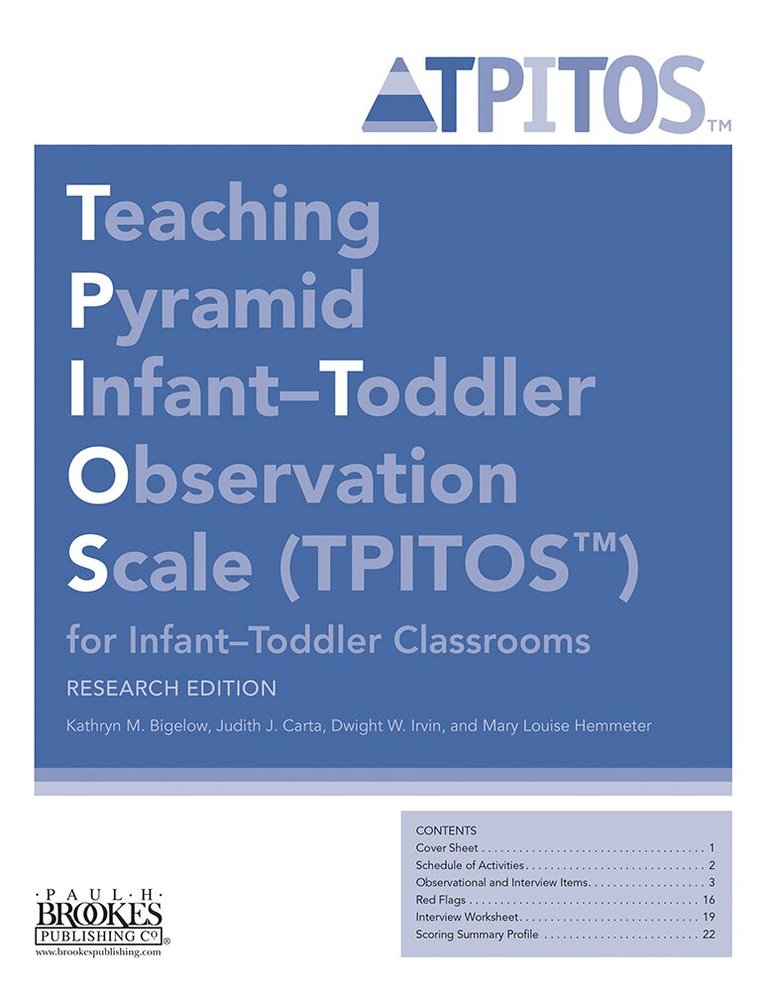
Available in packs of 5, these are the 28-page forms needed to conduct the Teaching Pyramid Infant–Toddler Observation Scale (TPITOS™) for Infant–Toddler Classrooms, observational assessment. A child's early teachers and caregivers play a vital role in supporting social-emotional development—and that's why more and more center-based infant and toddler programs are adopting the evidence-based Pyramid Model for Promoting Social Emotional Competence in Infants and Young Children. If your program is one of them, TPITOS™ is the essential tool you need to ensure that infant–toddler teachers are using the Pyramid Model practices with fidelity.Modeled after the Teaching Pyramid Observation Tool (TPOT™) for Preschool Classrooms, TPITOS is for early childhood settings caring for infants and toddlers from birth to 3 years of age. Focusing on teacher practices and classroom environment variables, TPITOS measures how well your program's staff is fostering responsive, nurturing relationships with children and promoting strong social-emotional development in their earliest years.How It Works :A trained TPITOS administrator conducts a 2-hour classroom observation, followed by an interview with the teacher being observed. The observer completes three types of items: 1) Observational Items (practices and environmental factors noted during the observation), 2) Interview Items (practices scored based on the teacher’s responses during the interview), and 3) Red Flags (practices that are not consistent with the Pyramid Model). Results of TPITOS show your program which Pyramid Model practices are being implemented effectively—and what teachers need to focus on to ensure positive social-emotional outcomes for infants and toddlers.
Teaching Pyramid Infant-Toddler Observation Scale (TPITOS™) for Infant-Toddler Classrooms
Manual
Häftad, Engelska, 2018
568 kr
Skickas inom 7-10 vardagar
A child's early teachers and caregivers play a vital role in supporting social-emotional development—and that's why more and more center-based infant and toddler programs are adopting the evidence-based Pyramid Model for Promoting Social Emotional Competence in Infants and Young Children. If your program is one of them, TPITOS™ is the essential tool you need to ensure that infant–toddler teachers are using the Pyramid Model practices with fidelity.Modeled after the Teaching Pyramid Observation Tool (TPOT™) for Preschool Classrooms, TPITOS is for early childhood settings caring for infants and toddlers from birth to 3 years of age. Focusing on teacher practices and classroom environment variables, TPITOS measures how well your program's staff is fostering responsive, nurturing relationships with children and promoting strong social-emotional development in their earliest years.How It Works :A trained TPITOS administrator conducts a 2-hour classroom observation, followed by an interview with the teacher being observed. The observer completes three types of items: 1) Observational Items (practices and environmental factors noted during the observation), 2) Interview Items (practices scored based on the teacher’s responses during the interview), and 3) Red Flags (practices that are not consistent with the Pyramid Model). Results of TPITOS show your program which Pyramid Model practices are being implemented effectively—and what teachers need to focus on to ensure positive social-emotional outcomes for infants and toddlers.
Teaching Pyramid Infant-Toddler Observation Scale (TPITOS™) for Infant-Toddler Classrooms: Set
Häftad, Engelska, 2018
925 kr
Skickas inom 7-10 vardagar
A child's early teachers and caregivers play a vital role in supporting social-emotional development—and that's why more and more center-based infant and toddler programs are adopting the evidence-based Pyramid Model for Promoting Social Emotional Competence in Infants and Young Children. If your program is one of them, TPITOS™ is the essential tool you need to ensure that infant–toddler teachers are using the Pyramid Model practices with fidelity.Modeled after the Teaching Pyramid Observation Tool (TPOT™) for Preschool Classrooms, TPITOS is for early childhood settings caring for infants and toddlers from birth to 3 years of age. Focusing on teacher practices and classroom environment variables, TPITOS measures how well your program's staff is fostering responsive, nurturing relationships with children and promoting strong social-emotional development in their earliest years.How It Works :A trained TPITOS administrator conducts a 2-hour classroom observation, followed by an interview with the teacher being observed. The observer completes three types of items: 1) Observational Items (practices and environmental factors noted during the observation), 2) Interview Items (practices scored based on the teacher’s responses during the interview), and 3) Red Flags (practices that are not consistent with the Pyramid Model). Results of TPITOS show your program which Pyramid Model practices are being implemented effectively—and what teachers need to focus on to ensure positive social-emotional outcomes for infants and toddlers.
Essentials of Practice-Based Coaching
Supporting Effective Practices in Early Childhood
Häftad, Engelska, 2021
466 kr
Skickas inom 7-10 vardagar
Widely adopted across the U.S. and around the world, Practice-Based Coaching (PBC) is a research?based coaching framework for supporting early childhood practitioners' use of evidence?informed teaching practices. This book—created by the respected developers of the PBC framework—is the first to offer a comprehensive introduction to this popular coaching approach and practical guidance on how to implement it with fidelity.Ideal for use in professional development, this research?to?practice resource gives readers an in?depth overview of the Practice?Based Coaching framework and a complete guide to implementing its three key components: shared goals and action planning, focused observation, and reflection and feedback. To help professionals implement PBC with fidelity, they'll get case stories, tip boxes, reflection questions, and 30+ downloadable supporting resources, including coaching data collection forms, checklists, and organizational templates. The definitive resource on PBC, this essential guide will help programs and coaches prepare every early childhood practitioner to master today's recommended practices—and nurture the learning and healthy development of infants, toddlers, and preschoolers.LEARN HOW TO:Develop collaborative partnerships between coach and coacheeWrite effective goals and action plansPut five essential coaching strategies into practiceConduct practice?focused strengths and needs assessmentsObserve the coachee's practices and collect data about coaching efforts and effectsMake data?based decisionsGive supportive and constructive feedbackEmploy web?based platforms and coaching apps to support PBCWHY PBC?Meets the Head Start Performance Standards' definition of a research?based, coordinated coaching strategy, which all programs are required to use.Supports the Pyramid Model: PBC is recognized as an effective professional development approach for implementing the social, emotional, and behavioral practices of the popular Pyramid Model.Supports embedded intervention and instruction: PBC has been shown to be an effective professional development approach for implementing embedded intervention and instruction practices.Practice-ready: PBC is a practice?ready coaching framework that has been used with a variety of effective early childhood practices.Flexible for today's programs: PBC can be implemented in person or virtually using video recordings.Proven effective: PBC is supported by evidence that it changes or enhances practices and has related effects on child and family outcomes.
517 kr
Skickas inom 7-10 vardagar
For more than a decade, the widely used Pyramid Model for Promoting Social Emotional Competence in Infants and Young Children has been helping early educators use research‐based practices to boost social‐emotional development. Now there’s a practical guide that makes it easier than ever to implement this highly effective framework in preschool classrooms.Created by the Pyramid Model developers and experts with extensive training experience, this is the first book to provide a comprehensive, step‐by‐step overview of the Pyramid Model for children ages 2–5. Early childhood educators will get a complete overview of the framework, plus in‐depth guidance, evidence‐based strategies, and helpful checklists for implementing all tiers of the Pyramid Model: universal, targeted, and individualized.Ideal for use in teacher trainings, preservice methods courses, and individual professional development, Unpacking the Pyramid Model will give current and future educators the foundational skills they need to promote positive behavior and build all young children’s social‐emotional competence.Learn how to use the Pyramid Model to: Construct a positive classroom environment that supports access and engagement for all studentsDevelop predictable schedules and routines that maximize participation and learningClearly define and teach behavior expectations and rulesDeliver intentional, explicit instruction in social‐emotional competenceSupport smooth and streamlined transitions that prevent challenging behaviorCreate a culture of friendship and actively teach children friendship skillsTeach children about emotions and help them develop a “feeling vocabularyâ€Give children the skills they need to solve interpersonal problems appropriatelyProvide individualized support for children with persistent challenging behavior
Unpacking the Infant-Toddler Pyramid Model
A Practical Guide for Teachers and Providers
Häftad, Engelska, 2024
517 kr
Skickas inom 7-10 vardagar
The highly anticipated follow-up to Unpacking the Pyramid Model, this one-of-a-kind book is the first to provide a comprehensive, step-by-step overview of the widely used Pyramid Model Practices for infants and toddlers from birth to three. With this accessible training guide, teachers and providers will use research-based practices to meet the unique needs of infants and toddlers—and boost their social-emotional development in the critical first years of life.Created by the Pyramid Model developers and experts with extensive training experience, this book gives readers a complete introduction to the framework, plus in-depth guidance, evidence-based practices, and helpful checklists for implementing all levels of the Pyramid Model: universal, targeted, and individualized. Teachers and providers will learn how to:Address their own well-being to prepare for their important workBuild positive partnerships with families and colleaguesDevelop predictable and responsive schedules, routines, and transitionsPromote children’s social skills and emotional competenciesSupport children’s active engagement with their environment and peersCreate an anti-racist and inclusive early care environmentMeet the needs of young children who have experienced traumaUnderstand, prevent, and effectively respond to challenging behaviorProvide individualized support for children with persistent needs related to social-emotional developmentand behaviorUse data to monitor Pyramid Model practice implementation and effectsIdeal for use in preservice and inservice training, this book will expertly prepare infant–toddler teachers and providers to give the youngest children a strong foundation of social-emotional competence.Practical Materials: Checklists of Effective Practices for each main topic covered; tools for observation, planning, and reflection; vignettes and photos illustrating classroom examples.