Masayuki Murata – författare
Visar alla böcker från författaren Masayuki Murata. Handla med fri frakt och snabb leverans.
5 produkter
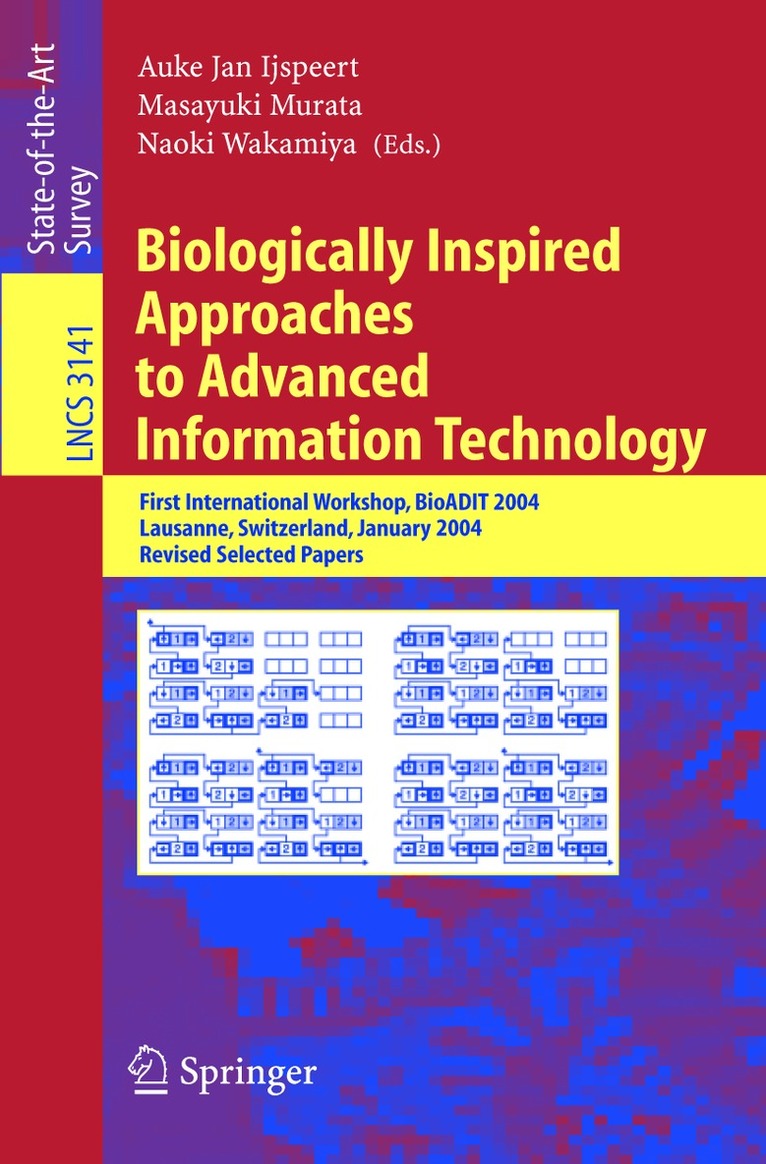
Biologically Inspired Approaches to Advanced Information Technology
First International Workshop, BioADIT 2004, Lausanne, Switzerland, January 29-30, 2004. Revised Selected Papers
Av A. J. Ijspeert, Auke Jan Ijspeert m. fl.
Häftad, 2004
568 kr
Lägg i varukorg
The evolution of the Internet has led us to the new era of the information infrastructure. As the information systems operating on the Internet are getting larger and more complicated, it is clear that the traditional approaches based on centralized mechanisms are no longer meaningful. One typical …
Biologically Inspired Approaches to Advanced Information Technology
First International Workshop, BioADIT 2004, Lausanne, Switzerland, January 29-30, 2004. Revised Selected Papers
Av Naoki Wakamiya, Masayuki Murata m. fl.
E-bok, 2004
755 kr
Lägg i varukorg
The evolution of the Internet has led us to the new era of the information infrastructure. As the information systems operating on the Internet are getting larger and more complicated, it is clear that the traditional approaches based on centralized mechanisms are no longer meaningful. One typical …
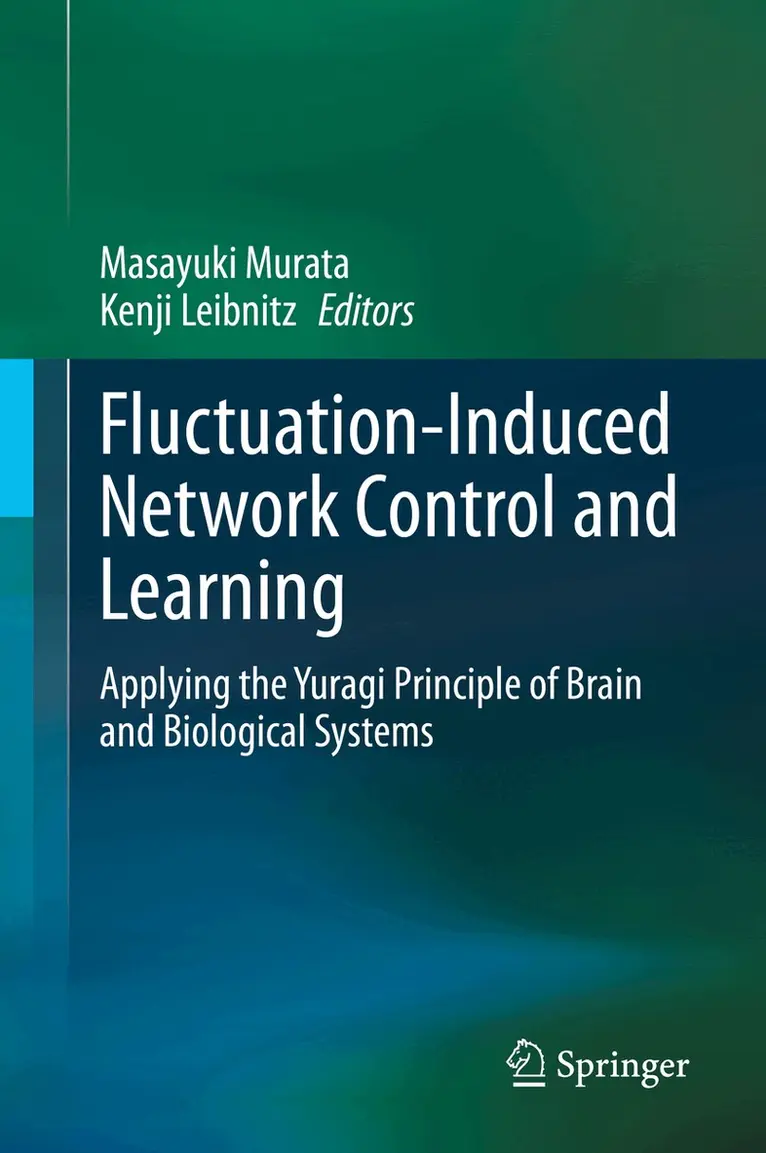
Fluctuation-Induced Network Control and Learning
Applying the Yuragi Principle of Brain and Biological Systems
Av Masayuki Murata, Kenji Leibnitz
Inbunden, 2021
1423 kr
Lägg i varukorg
From theory to application, this book presents research on biologically and brain-inspired networking and machine learning based on Yuragi, which is the Japanese term describing the noise or fluctuations that are inherently used to control the dynamics of a system. The Yuragi mechanism can be found …
Fluctuation-Induced Network Control and Learning
Applying the Yuragi Principle of Brain and Biological Systems
Av Kenji Leibnitz, Masayuki Murata
E-bok, 2021
1728 kr
Lägg i varukorg
From theory to application, this book presents research on biologically and brain-inspired networking and machine learning based on Yuragi, which is the Japanese term describing the noise or fluctuations that are inherently used to control the dynamics of a system. The Yuragi mechanism can be found …
Fluctuation-Induced Network Control and Learning
Applying the Yuragi Principle of Brain and Biological Systems
Av Masayuki Murata, Kenji Leibnitz
Häftad, 2022
1423 kr
Lägg i varukorg
From theory to application, this book presents research on biologically and brain-inspired networking and machine learning based on Yuragi, which is the Japanese term describing the noise or fluctuations that are inherently used to control the dynamics of a system. The Yuragi mechanism can be found …