Massimo Piattelli-Palmarini – författare
Visar alla böcker från författaren Massimo Piattelli-Palmarini. Handla med fri frakt och snabb leverans.
10 produkter
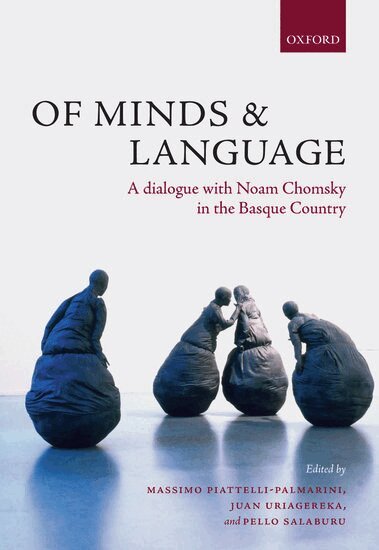
Of Minds and Language
A Dialogue with Noam Chomsky in the Basque Country
Av Pello Salaburu, Juan Uriagereka m. fl.
E-bok, 2009
394 kr
Lägg i varukorg
This book presents a state-of-the-art account of what we know and would like to know about language, mind, and brain. Chapters by leading researchers in linguistics, psycholinguistics, language acquisition, cognitive neuroscience, comparative cognitive psychology, and evolutionary biology are …
Of Minds and Language
A Dialogue with Noam Chomsky in the Basque Country
Av Pello Salaburu, Juan Uriagereka m. fl.
E-bok, 2009
252 kr
Lägg i varukorg
This book presents a state-of-the-art account of what we know and would like to know about language, mind, and brain. Chapters by leading researchers in linguistics, psycholinguistics, language acquisition, cognitive neuroscience, comparative cognitive psychology, and evolutionary biology are …
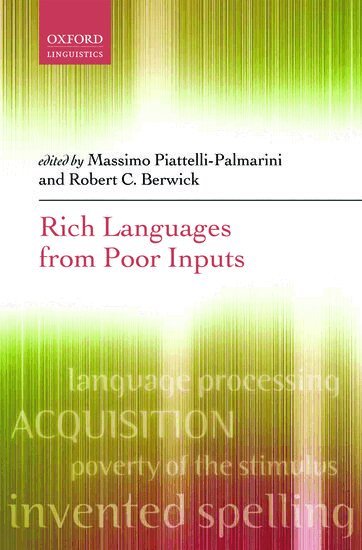
Rich Languages From Poor Inputs
Av Robert C. Berwick, Massimo Piattelli-Palmarini
E-bok, 2012
460 kr
Lägg i varukorg
This book addresses one of the most famous and controversial arguments in the study of language and mind, the Poverty of the Stimulus. Presented by Chomsky in 1968, the argument holds that children do not receive enough evidence to infer the existence of core aspects of language, such as the …
Rich Languages From Poor Inputs
Av Piattelli-Palmarini, Massimo Piattelli-Palmarini m. fl.
Häftad, 2015
696 kr
Lägg i varukorg
This book addresses one of the most famous and controversial arguments in the study of language and mind, the Poverty of the Stimulus. Presented by Chomsky in 1968, the argument holds that children do not receive enough evidence to infer the existence of core aspects of language, such as the …
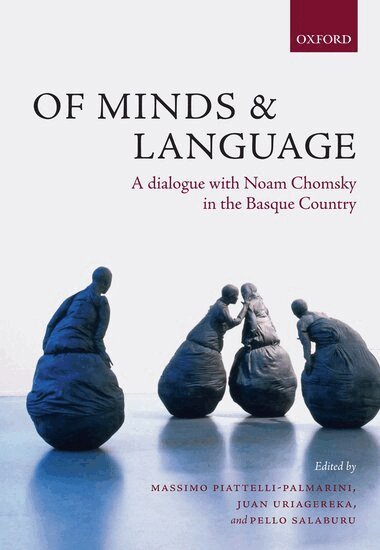
Of Minds and Language
A Dialogue with Noam Chomsky in the Basque Country
Av Massimo Piattelli-Palmarini, Juan Uriagereka m. fl.
Inbunden, 2009
1358 kr
Lägg i varukorg
This book presents a state-of-the-art account of what we know and would like to know about language, mind, and brain. Chapters by leading researchers in linguistics, psycholinguistics, language acquisition, cognitive neuroscience, comparative cognitive psychology, and evolutionary biology are …
Of Minds and Language
A Dialogue with Noam Chomsky in the Basque Country
Av Massimo Piattelli-Palmarini, Juan Uriagereka m. fl.
Häftad, 2010
401 kr
Lägg i varukorg
This book presents a state-of-the-art account of what we know and would like to know about language, mind, and brain. Chapters by leading researchers in linguistics, psycholinguistics, language acquisition, cognitive neuroscience, comparative cognitive psychology, and evolutionary biology are …
Rich Languages From Poor Inputs
Av Massimo Piattelli-Palmarini, Robert C. Berwick
Inbunden, 2012
2419 kr
Lägg i varukorg
This book addresses one of the most famous and controversial arguments in the study of language and mind, the Poverty of the Stimulus. Presented by Chomsky in 1968, the argument holds that children do not receive enough evidence to infer the existence of core aspects of language, such as the …
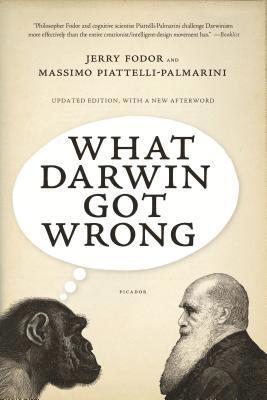
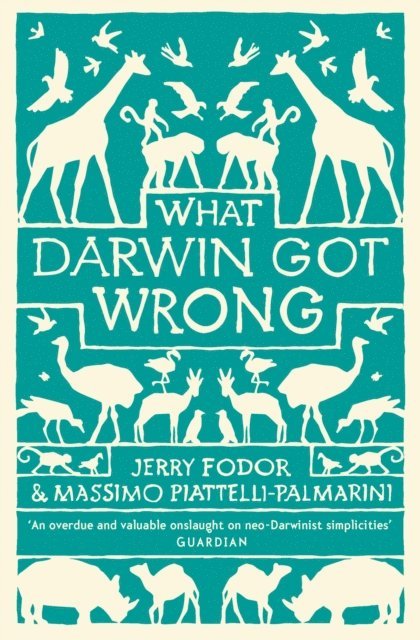
What Darwin Got Wrong
Av Jerry Fodor, Massimo Piattelli-Palmarini
Häftad, 2011
1,0 utav 5 stjärnor. Totalt antal röster: (1)
285 kr
Lägg i varukorg
What Darwin Got Wrong
Av Jerry Fodor, Massimo Piattelli-Palmarini
E-bok, 2011
129 kr
Lägg i varukorg
Jerry Fodor and Massimo Piatelli-Palmarini, a distinguished philosopher and scientist working in tandem, reveal major flaws at the heart of Darwinian evolutionary theory. They do not deny Darwin''s status as an outstanding scientist but question the inferences he drew from his observations. …
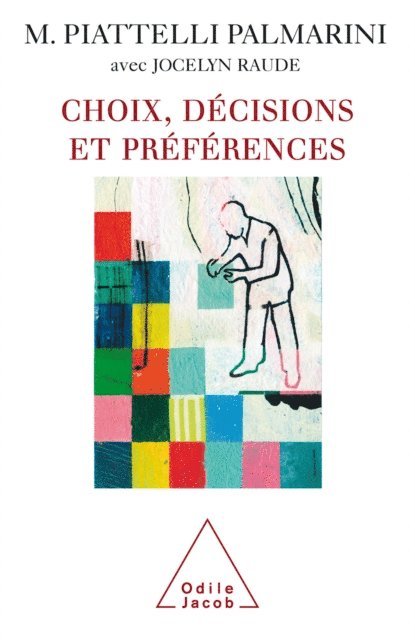
Choix, décisions et préférences
Av Jocelyn Raude, Massimo Piattelli Palmarini
E-bok, 2006
155 kr
Lägg i varukorg
Comment prenons-nous des décisions ? Qu’est-ce qui influence notre raisonnement, nos jugements, nos valeurs ? La psychologie des préférences et du raisonnement, la psycho-économie, la théorie de la décision et l’étude du jugement, au croisement de diverses disciplines, ont accompli d’immenses …