Mathias Nebel – författare
Visar alla böcker från författaren Mathias Nebel. Handla med fri frakt och snabb leverans.
9 produkter
9 produkter
Inbunden, Engelska, 2006
1 086 kr
Skickas inom 10-15 vardagar
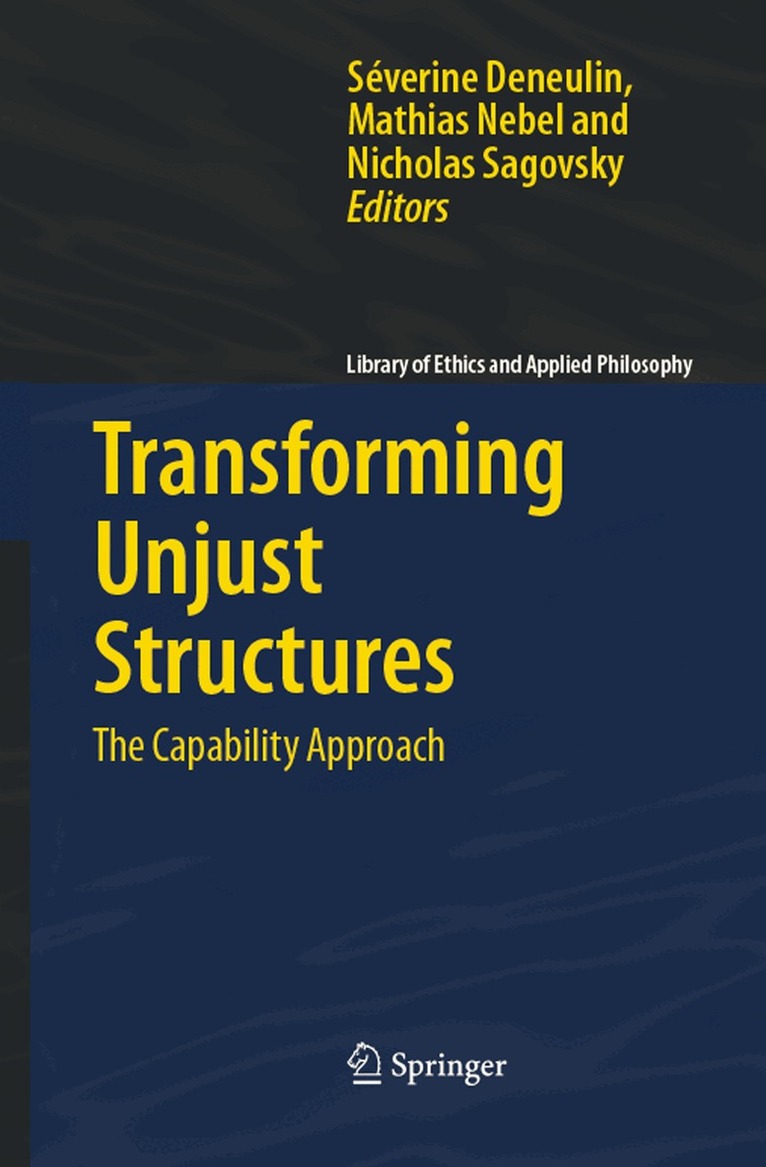
SÉVERINE DENEULIN, MATHIAS NEBEL AND NICHOLAS SAGOVSKY TRANSFORMING UNJUST STRUCTURES The Capability Approach THE CAPABILITY APPROACH Structural injustice has traditionally been the concern of two major academic disciplines: economics and philosophy. The dominant model of economics has long been that of neo-classical economics. For neo-classical economists, human we- being is to be assessed by the availability of disposable income or according to goods consumed; it is measured by the levels of utility achieved in the consumption of commodities. Social order is fashioned by the ways consumers maximise their 1 well-being and enterprises maximise their profits. A core assumption is that all 2 commodities are commensurable: they can all be measured according to a single 3 numerical covering value, which is their price. Within this neo-classical paradigm, justice is achieved when the utility level of someone cannot be increased without 4 another person seeing his or her utility level decrease. The dominant paradigm of neo-classical economics was strongly challenged when development and welfare economist Amartya Sen received the Nobel Prize for Economics in 1998. His work offered an alternative to the neo-classical evaluation of human well-being in the utility/commodity space. The underlining philosophical intuition behind Sen’s work is that the standard of living lies in the living and not in the consumption of commodities. In searching for an alternative measure of human well-being, Sen devised his capability approach.
E-bok
PDF, Engelska, 20061 416 kr
Läs direkt efter köp
SÉVERINE DENEULIN, MATHIAS NEBEL AND NICHOLAS SAGOVSKY TRANSFORMING UNJUST STRUCTURES The Capability Approach THE CAPABILITY APPROACH Structural injustice has traditionally been the concern of two major academic disciplines: economics and philosophy. The dominant model of economics has long been that of neo-classical economics. For neo-classical economists, human we- being is to be assessed by the availability of disposable income or according to goods consumed; it is measured by the levels of utility achieved in the consumption of commodities. Social order is fashioned by the ways consumers maximise their 1 well-being and enterprises maximise their profits. A core assumption is that all 2 commodities are commensurable: they can all be measured according to a single 3 numerical covering value, which is their price. Within this neo-classical paradigm, justice is achieved when the utility level of someone cannot be increased without 4 another person seeing his or her utility level decrease. The dominant paradigm of neo-classical economics was strongly challenged when development and welfare economist Amartya Sen received the Nobel Prize for Economics in 1998. His work offered an alternative to the neo-classical evaluation of human well-being in the utility/commodity space. The underlining philosophical intuition behind Sen’s work is that the standard of living lies in the living and not in the consumption of commodities. In searching for an alternative measure of human well-being, Sen devised his capability approach.
Häftad, Engelska, 2022
471 kr
Skickas inom 5-8 vardagar
Inbunden, Engelska, 2022
629 kr
Skickas inom 5-8 vardagar
279 kr
Skickas inom 3-6 vardagar
E-bok
PDF, Engelska, 2018442 kr
Läs direkt efter köp
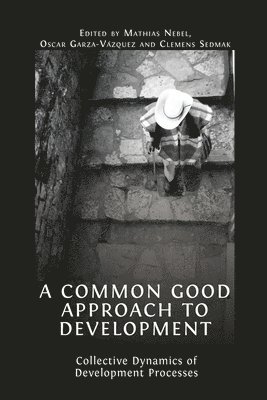
Das Buch thematisiert die aktuelle Debatte darüber, ob sich die Politik nur mit Fragen nach Gerechtigkeit, Rechtstaatlichkeit und Toleranz auseinandersetzen oder sich einem teleologischen Konzept wie dem Gemeinwohl öffnen muss. Lange Zeit als das zentrale Merkmal des öffentlichen Raumes betrachtet, wurde das Gemeinwohl während des 20. Jahrhunderts allmählich beiseitegeschoben. Doch angesichts einer zweifelhaften Globalisierung und der Grenzen des politischen Liberalismus rückt das Gemeinwohl wieder in den Vordergrund. Dieser Band versammelt Theologen, Ökonomen und Philosophen, um die Relevanz des Konzepts für die Herausforderungen unserer Zeit zu untersuchen. Es wird auf unterschiedliche Weise und aus verschiedenen Disziplinen argumentiert, dass das Gemeinwohl eine Form der Grammatik ist, die den öffentlichen Raum prägt. Es ist kein geschlossenes Konzept, sondern eine Dialektik, die Gesellschaften und die Menschheit zu einer menschlicheren Integration antreibt. Als solches ist das Gemeinwohl eine Hoffnung - die Hoffnung, dass das eigene Wohl und das Wohl der anderen letztlich nicht einander entgegenstehen, sondern sich gegenseitig bereichern und ergänzen.
E-bok
Spanska, 2023159 kr
Läs direkt efter köp
Para la patrística, Cristo representa el nuevo koinon o «bien común» de la humanidad, por el cual esta es redimida y unificada en su naturaleza. El desarrollo de esta noción en el ámbito eclesial, litúrgico, económico y político será de una importancia capital para el devenir de la filosofía política occidental en los siglos posteriores.Este libro, resultado de un proyecto de investigación internacional llevada a cabo por 7 autores, estudia las aportaciones particulares de los Padres de la Iglesia sobre la síntesis teológica de la noción de bien común. Sin esta referencia al trabajo patrístico, el análisis del tema entre los autores escolásticos se vería singularmente empobrecido. La originalidad y profundidad de la reformulación patrística del tema político del bien común es de capital importancia para la teología política actual y su diálogo con el liberalismo político.
Del 19 - Library of Ethics and Applied Philosophy
Transforming Unjust Structures
The Capability Approach
Häftad, Engelska, 2010
1 091 kr
Skickas inom 10-15 vardagar
SÉVERINE DENEULIN, MATHIAS NEBEL AND NICHOLAS SAGOVSKY TRANSFORMING UNJUST STRUCTURES The Capability Approach THE CAPABILITY APPROACH Structural injustice has traditionally been the concern of two major academic disciplines: economics and philosophy. The dominant model of economics has long been that of neo-classical economics. For neo-classical economists, human we- being is to be assessed by the availability of disposable income or according to goods consumed; it is measured by the levels of utility achieved in the consumption of commodities. Social order is fashioned by the ways consumers maximise their 1 well-being and enterprises maximise their profits. A core assumption is that all 2 commodities are commensurable: they can all be measured according to a single 3 numerical covering value, which is their price. Within this neo-classical paradigm, justice is achieved when the utility level of someone cannot be increased without 4 another person seeing his or her utility level decrease. The dominant paradigm of neo-classical economics was strongly challenged when development and welfare economist Amartya Sen received the Nobel Prize for Economics in 1998. His work offered an alternative to the neo-classical evaluation of human well-being in the utility/commodity space. The underlining philosophical intuition behind Sen’s work is that the standard of living lies in the living and not in the consumption of commodities. In searching for an alternative measure of human well-being, Sen devised his capability approach.
E-bok
Engelska, 202278 kr
Läs direkt efter köp
What framework can guide Christian engagement with major economic, social and political issues in public life in 21st century Europe?What other schools of thought exist apart from Catholic Social Teaching and Christian Democracy?Sallux has collaborated with the Jubilee Centre in Cambridge over several years to apply a new framework, agenda and strategy for Christian social reform, called Relational Thinking. It starts with the Christian belief that human beings are created by a relational God to form relational societies – the contemporary application of the ancient adage to ''love our neighbour as ourselves''.This book is a compilation of fi ve reports, two of which discuss the overall concept of Relational Thinking, while the others demonstrate how it can be applied to three contemporary issues: the need for monetary reform, the challenges of artifi cial intelligence and the ethics of remuneration. You can fi nd other examples of issues being analysed from a relational perspective, from business to city transformation.Deeply biblical, Relational Thinking builds bridges through the language of relationships to connect Christians with people of other faiths or none, and o er a fresh approach to Europe''s greatest public policy challenges today.