Matt Carlson – författare
1 376 kr
Skickas inom 7-10 vardagar
355 kr
Skickas inom 5-8 vardagar
275 kr
Läs direkt efter köp
275 kr
Läs direkt efter köp
916 kr
Kommande
274 kr
Kommande
1 108 kr
Skickas inom 5-8 vardagar
278 kr
Skickas inom 5-8 vardagar
297 kr
Skickas inom 5-8 vardagar
349 kr
Läs direkt efter köp
2 151 kr
Skickas inom 10-15 vardagar
629 kr
Skickas inom 10-15 vardagar
2 220 kr
Skickas inom 10-15 vardagar
682 kr
Läs direkt efter köp
This book explores ways in which the increasingly ‘measurable’ news audience has had an impact on journalistic practices, in an era when digital platforms provide real-time, individualizable, quantitative data about audience consumption practices.
Considering the combination of digital technology that makes measurable journalism possible, the contributors to this volume examine the work of various actors involved in aspects of measurable journalism both inside and outside the newsroom and confront the normative implications of the data-centric trends of measurable journalism. Including examples from across the globe, the book balances hopes for increased engagement or impact with fears that economic prioritization will hurt journalism’s standing in the public sphere.
This book will be of interest to those studying journalistic practices in the modern world, as well as those studying media consumption and emerging digital technologies. This book was originally published as a special issue of Digital Journalism.
682 kr
Läs direkt efter köp
This book explores ways in which the increasingly ‘measurable’ news audience has had an impact on journalistic practices, in an era when digital platforms provide real-time, individualizable, quantitative data about audience consumption practices.
Considering the combination of digital technology that makes measurable journalism possible, the contributors to this volume examine the work of various actors involved in aspects of measurable journalism both inside and outside the newsroom and confront the normative implications of the data-centric trends of measurable journalism. Including examples from across the globe, the book balances hopes for increased engagement or impact with fears that economic prioritization will hurt journalism’s standing in the public sphere.
This book will be of interest to those studying journalistic practices in the modern world, as well as those studying media consumption and emerging digital technologies. This book was originally published as a special issue of Digital Journalism.
584 kr
Skickas inom 10-15 vardagar
730 kr
Läs direkt efter köp
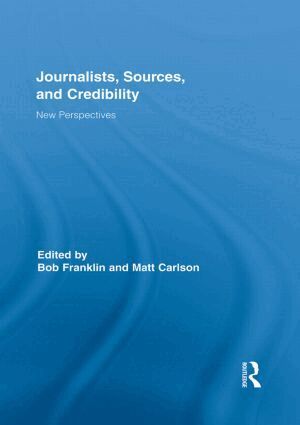
This volume revisits what we know about the relationship between journalists and their sources. By asking new questions, employing novel methodologies, and confronting sweeping changes to journalism and media, the contributors reinvigorate the conversation about who gets to speak through the news. It challenges established thinking about how journalists use sources, how sources influence journalists, and how these patterns relate to the power to represent the world to news audiences.
Useful to both newcomers and scholars familiar with the topic, the chapters bring together leading journalism scholars from across the globe. Through a variety of methods, including surveys, interviews, content analysis, case studies and newsroom observations, the chapters shed light on attitudes and practices in the United States, United Kingdom, Germany, Australia, Sweden, Belgium and Israel.
Special attention is paid to the changing context of newswork. Shrinking newsgathering resources coupled with a growth in public relations activities have altered the source-journalist dynamic in recent years. At the same time, the rise of networked digital technologies has altered the barriers between journalists and news consumers, leading to unique forms of news with different approaches to sourcing. As the media world continues to change, this volume offers a timely reevaluation of news sources.
730 kr
Läs direkt efter köp
This volume revisits what we know about the relationship between journalists and their sources. By asking new questions, employing novel methodologies, and confronting sweeping changes to journalism and media, the contributors reinvigorate the conversation about who gets to speak through the news. It challenges established thinking about how journalists use sources, how sources influence journalists, and how these patterns relate to the power to represent the world to news audiences.
Useful to both newcomers and scholars familiar with the topic, the chapters bring together leading journalism scholars from across the globe. Through a variety of methods, including surveys, interviews, content analysis, case studies and newsroom observations, the chapters shed light on attitudes and practices in the United States, United Kingdom, Germany, Australia, Sweden, Belgium and Israel.
Special attention is paid to the changing context of newswork. Shrinking newsgathering resources coupled with a growth in public relations activities have altered the source-journalist dynamic in recent years. At the same time, the rise of networked digital technologies has altered the barriers between journalists and news consumers, leading to unique forms of news with different approaches to sourcing. As the media world continues to change, this volume offers a timely reevaluation of news sources.
2 151 kr
Skickas inom 10-15 vardagar
685 kr
Skickas inom 10-15 vardagar
795 kr
Läs direkt efter köp
The concept of boundaries has become a central theme in the study of journalism. In recent years, the decline of legacy news organizations and the rise of new interactive media tools have thrust such questions as "what is journalism" and "who is a journalist" into the limelight.
Struggles over journalism are often struggles over boundaries. These symbolic contests for control over definition also mark a material struggle over resources. In short: boundaries have consequences. Yet there is a lack of conceptual cohesiveness in what scholars mean by the term "boundaries" or in how we should think about specific boundaries of journalism.
This book addresses boundaries head-on by bringing together a global array of authors asking similar questions about boundaries and journalism from a diverse range of perspectives, methodologies, and theoretical backgrounds.
Boundaries of Journalism assembles the most current research on this topic in one place, thus providing a touchstone for future research within communication, media and journalism studies on journalism and its boundaries.
795 kr
Läs direkt efter köp
The concept of boundaries has become a central theme in the study of journalism. In recent years, the decline of legacy news organizations and the rise of new interactive media tools have thrust such questions as "what is journalism" and "who is a journalist" into the limelight.
Struggles over journalism are often struggles over boundaries. These symbolic contests for control over definition also mark a material struggle over resources. In short: boundaries have consequences. Yet there is a lack of conceptual cohesiveness in what scholars mean by the term "boundaries" or in how we should think about specific boundaries of journalism.
This book addresses boundaries head-on by bringing together a global array of authors asking similar questions about boundaries and journalism from a diverse range of perspectives, methodologies, and theoretical backgrounds.
Boundaries of Journalism assembles the most current research on this topic in one place, thus providing a touchstone for future research within communication, media and journalism studies on journalism and its boundaries.