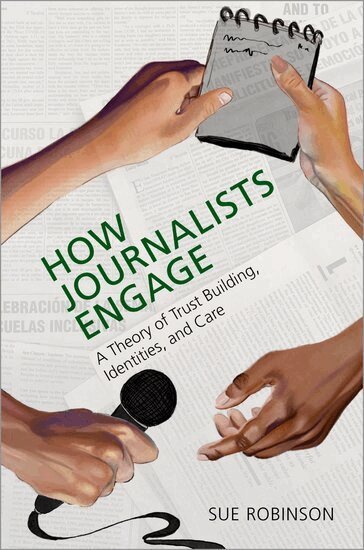
Sue Robinson – författare
1 376 kr
Skickas inom 7-10 vardagar
355 kr
Skickas inom 5-8 vardagar
275 kr
Läs direkt efter köp
275 kr
Läs direkt efter köp
998 kr
Skickas inom 7-10 vardagar
293 kr
Skickas inom 5-8 vardagar
229 kr
Läs direkt efter köp
229 kr
Läs direkt efter köp
43 kr
Läs direkt efter köp
382 kr
Läs direkt efter köp
382 kr
Läs direkt efter köp
317 kr
Skickas inom 7-10 vardagar
1 357 kr
Skickas inom 7-10 vardagar
699 kr
Skickas inom 10-15 vardagar
2 220 kr
Skickas inom 10-15 vardagar
785 kr
Läs direkt efter köp
This edited volume documents the changes taking place in local community practices globally. Digital technologies and globalization have forced evolutions in how we go about producing and consuming journalism, and these essays empirically and theoretically advance the scholarly conversations about those trends. What does it mean to serve the information needs of a community in a digitized social world where so many of our ties – weak and strong – are at least partially maintained in virtual worlds? With authors and data from all over the world, this work celebrates a fundamental connectedness to citizens and their community and renews the emphasis on home as a mandate for any locally focused news organization. The contributions to this volume explore the "flows" within both digital spaces and geographic places that are an important foreground to any conversation about what is community today. Several terms are coined and explored in the volume, including "geosocial journalism" and "reciprocal journalism" that account for the essentiality of information sharing in global public realms to inspire feelings of community belonging. Other chapters include a review of Patch.com – one of the largest grassroots, digital platforms for journalism – a survey of how Norwegian community media organizations are adapting to digital worlds, how Swedish citizen sites operate, and the ethics of community journalists to advocate for their citizenry regarding digital matters. Venturing towards both optimism and dismay, the collection argues that understandings of communal borders have expanded. So even if journalists cannot reach the current locals (such as in Africa as one chapter relates) or globally transient locals, digital technologies can help relocate fractured community into a less problematic, virtual space. This requires commitment on the part of both journalists and citizens to preserve those connections, utilize those technologies, and exercise those fundamental principles of community journalism that go back more than half a century.
This book was originally published as a special issue of Journalism Practice.
785 kr
Läs direkt efter köp
This edited volume documents the changes taking place in local community practices globally. Digital technologies and globalization have forced evolutions in how we go about producing and consuming journalism, and these essays empirically and theoretically advance the scholarly conversations about those trends. What does it mean to serve the information needs of a community in a digitized social world where so many of our ties – weak and strong – are at least partially maintained in virtual worlds? With authors and data from all over the world, this work celebrates a fundamental connectedness to citizens and their community and renews the emphasis on home as a mandate for any locally focused news organization. The contributions to this volume explore the "flows" within both digital spaces and geographic places that are an important foreground to any conversation about what is community today. Several terms are coined and explored in the volume, including "geosocial journalism" and "reciprocal journalism" that account for the essentiality of information sharing in global public realms to inspire feelings of community belonging. Other chapters include a review of Patch.com – one of the largest grassroots, digital platforms for journalism – a survey of how Norwegian community media organizations are adapting to digital worlds, how Swedish citizen sites operate, and the ethics of community journalists to advocate for their citizenry regarding digital matters. Venturing towards both optimism and dismay, the collection argues that understandings of communal borders have expanded. So even if journalists cannot reach the current locals (such as in Africa as one chapter relates) or globally transient locals, digital technologies can help relocate fractured community into a less problematic, virtual space. This requires commitment on the part of both journalists and citizens to preserve those connections, utilize those technologies, and exercise those fundamental principles of community journalism that go back more than half a century.
This book was originally published as a special issue of Journalism Practice.
430 kr
Skickas inom 10-15 vardagar
1 462 kr
Skickas inom 10-15 vardagar
454 kr
Läs direkt efter köp
454 kr
Läs direkt efter köp
568 kr
Läs direkt efter köp
568 kr
Läs direkt efter köp
2 388 kr
Skickas inom 10-15 vardagar
536 kr
Skickas inom 10-15 vardagar
87 kr
Skickas
600 kr
Kommande