Matt Ziegler – författare
Visar alla böcker från författaren Matt Ziegler. Handla med fri frakt och snabb leverans.
4 produkter
4 produkter
E-bok
Engelska, 2022698 kr
Läs direkt efter köp
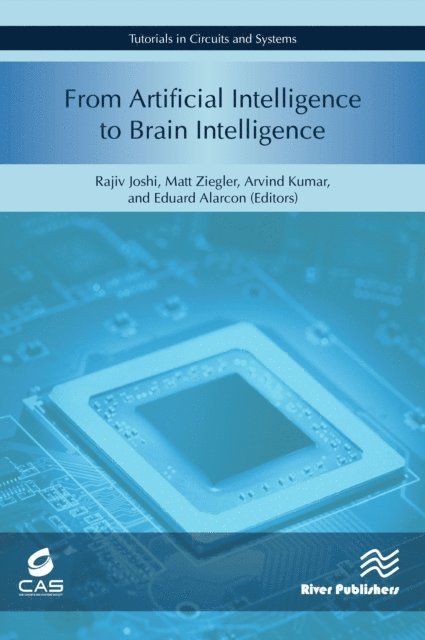
Research in Artificial Intelligence (AI) is not new, it has been around since 1950’s. AI resurfaced at that time while Moore’s law was on an aggressive path of scaling, with the transformation of NMOS and later bipolar technology to CMOS for high performance, low power as well as low cost applications.Several breakthroughs in the electronics industry helped to push Moore’s law in chip miniaturization along with increased computing power (parallel and distributed processing) and memory bandwidth. Once this paradigm shift occurred it naturally opened doors for AI as it required big data manipulations, and thus AI could thrive again. AI has already shown success in industries such as finance, marketing, health care, transportation, gaming, education and the defence and space, to name but a few.The human brain amazingly has a memory in the order of millions of digital bits, however it cannot compete with machines for data crunching and speed. Thus tomorrow’s world will be a World of Wonders of Artificial Intelligence (WOW- AI), to compensate the computational limitations of human beings. In short, AI research and applications will continue to grow with the development of software, algorithms and hardware accelerators.To continue the development of AI, an advanced AI Compute Symposium was launched with the sponsorship of IBM, IEEE CAS and EDS, from which this book came. Overall, the book covers two broad topics: general AI advances, and applications to neuromorphic computing.
E-bok
PDF, Engelska, 2022698 kr
Läs direkt efter köp
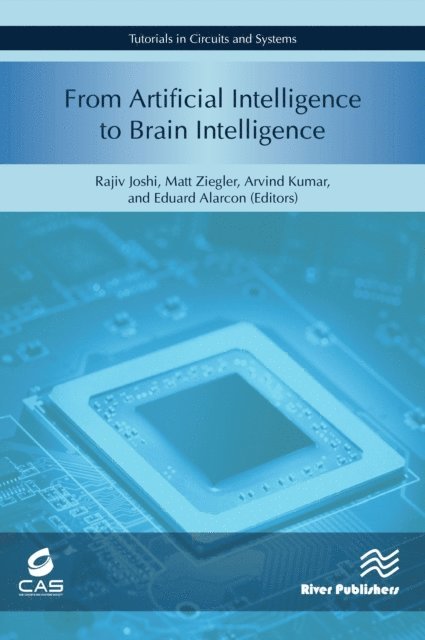
Research in Artificial Intelligence (AI) is not new, it has been around since 1950’s. AI resurfaced at that time while Moore’s law was on an aggressive path of scaling, with the transformation of NMOS and later bipolar technology to CMOS for high performance, low power as well as low cost applications.Several breakthroughs in the electronics industry helped to push Moore’s law in chip miniaturization along with increased computing power (parallel and distributed processing) and memory bandwidth. Once this paradigm shift occurred it naturally opened doors for AI as it required big data manipulations, and thus AI could thrive again. AI has already shown success in industries such as finance, marketing, health care, transportation, gaming, education and the defence and space, to name but a few.The human brain amazingly has a memory in the order of millions of digital bits, however it cannot compete with machines for data crunching and speed. Thus tomorrow’s world will be a World of Wonders of Artificial Intelligence (WOW- AI), to compensate the computational limitations of human beings. In short, AI research and applications will continue to grow with the development of software, algorithms and hardware accelerators.To continue the development of AI, an advanced AI Compute Symposium was launched with the sponsorship of IBM, IEEE CAS and EDS, from which this book came. Overall, the book covers two broad topics: general AI advances, and applications to neuromorphic computing.
Häftad, Engelska, 2024
609 kr
Skickas inom 10-15 vardagar
Research in Artificial Intelligence (AI) is not new, it has been around since 1950’s. AI resurfaced at that time while Moore’s law was on an aggressive path of scaling, with the transformation of NMOS and later bipolar technology to CMOS for high performance, low power as well as low cost applications.Several breakthroughs in the electronics industry helped to push Moore’s law in chip miniaturization along with increased computing power (parallel and distributed processing) and memory bandwidth. Once this paradigm shift occurred it naturally opened doors for AI as it required big data manipulations, and thus AI could thrive again. AI has already shown success in industries such as finance, marketing, health care, transportation, gaming, education and the defence and space, to name but a few.The human brain amazingly has a memory in the order of millions of digital bits, however it cannot compete with machines for data crunching and speed. Thus tomorrow’s world will be a World of Wonders of Artificial Intelligence (WOW- AI), to compensate the computational limitations of human beings. In short, AI research and applications will continue to grow with the development of software, algorithms and hardware accelerators.To continue the development of AI, an advanced AI Compute Symposium was launched with the sponsorship of IBM, IEEE CAS and EDS, from which this book came. Overall, the book covers two broad topics: general AI advances, and applications to neuromorphic computing.
Inbunden, Engelska, 2020
1 359 kr
Skickas inom 5-8 vardagar
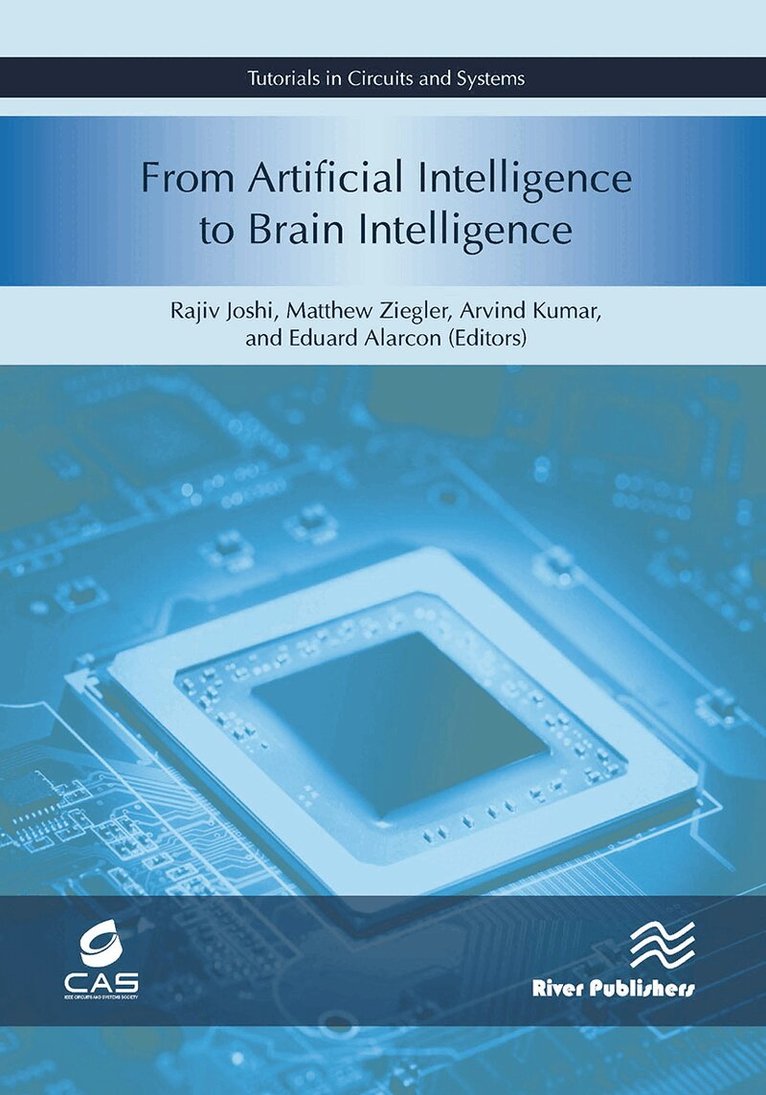
Research in Artificial Intelligence (AI) is not new, it has been around since 1950’s. AI resurfaced at that time while Moore’s law was on an aggressive path of scaling, with the transformation of NMOS and later bipolar technology to CMOS for high performance, low power as well as low cost applications.Several breakthroughs in the electronics industry helped to push Moore’s law in chip miniaturization along with increased computing power (parallel and distributed processing) and memory bandwidth. Once this paradigm shift occurred it naturally opened doors for AI as it required big data manipulations, and thus AI could thrive again. AI has already shown success in industries such as finance, marketing, health care, transportation, gaming, education and the defence and space, to name but a few.The human brain amazingly has a memory in the order of millions of digital bits, however it cannot compete with machines for data crunching and speed. Thus tomorrow’s world will be a World of Wonders of Artificial Intelligence (WOW- AI), to compensate the computational limitations of human beings. In short, AI research and applications will continue to grow with the development of software, algorithms and hardware accelerators.To continue the development of AI, an advanced AI Compute Symposium was launched with the sponsorship of IBM, IEEE CAS and EDS, from which this book came. Overall, the book covers two broad topics: general AI advances, and applications to neuromorphic computing.