Matthew Bernstein - Böcker
Visar alla böcker från författaren Matthew Bernstein. Handla med fri frakt och snabb leverans.
9 produkter
9 produkter
306 kr
Skickas inom 10-15 vardagar
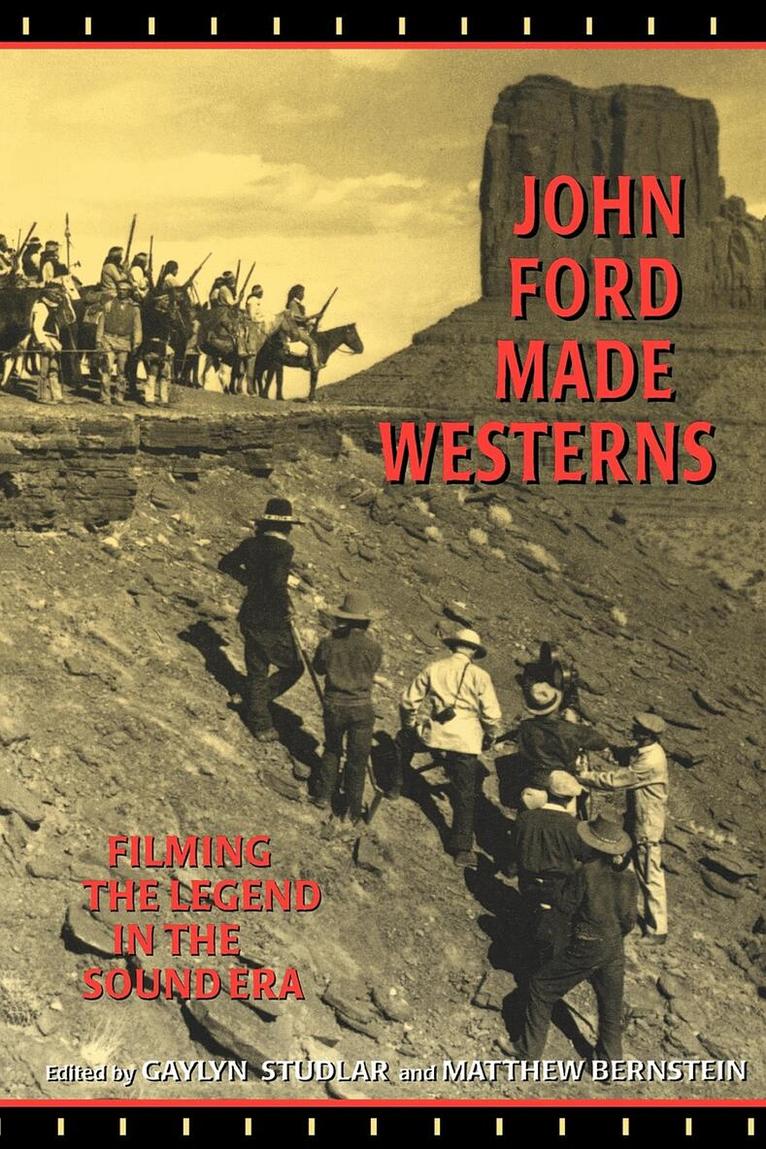
Fresh perspectives on some of the most influential films of John Ford.The Western is arguably the most popular and enduring form in cinematic history, and the acknowledged master of that genre was John Ford. His Westerns, including The Searchers, Stagecoach, and The Man Who Shot Liberty Valance, have had an enormous influence on contemporary U.S. films, from Star Wars to Taxi Driver.In John Ford Made Westerns, nine major essays by prominent scholars of Hollywood film situate the sound-era Westerns of John Ford within contemporary critical contexts and regard them from fresh perspectives. These range from examining Ford's relation to other art forms (most notably literature, painting, and music) to exploring the development of the director's reputation as a director of Westerns. While giving attention to film style and structure, the volume also treats the ways in which these much-loved films engage with notions of masculinity and gender roles, capitalism and community, as well as racial, sexual, and national identity.Contributors include Charles Ramirez Berg, Matthew Bernstein, Edward Buscombe, Joan Dagle, Barry Keith Grant, Kathryn Kalinak, Peter Lehman, Charles J. Maland, Gaylyn Studlar, and Robin Wood.ContentsPart IIntroduction, Gaylyn Studlar & Matthew Bernstein"'Shall We Gather at the River?': The Late Films of John Ford," Robin Wood"Sacred Duties, Poetic Passions: John Ford and Issue of Femininity in the Western," Gaylyn Studlar"The Margin as Center: The Multicultural Dynamics of John Ford's Westerns," Charles Ramirez Berg"Linear Patterns and Ethnic Encounters in the Ford Western," Joan Dagle"How the West Wasn't Won: the Repression of Capitalism in John Ford's Westerns," Peter Lehman"Painting the Legend: Frederic Remington and the Western," Edward Buscombe"'The Sound of Many Voices': Music in John Ford's Westerns," Kathryn Kalinak"John Ford and James Fenimore Cooper: Two Rode Together," Barry Keith Grant"From Aesthete to Pappy: The Evolution of John Ford's Public Reputation," Charles J. MalandPart II—DossierEmanuel Eisenberg, "John Ford: Fighting Irish," New Theater, April 1936Frank S. Nugent, "Hollywood's Favorite Rebel," Saturday Evening Post, July 23, 1949John Ford, "John Wayne—My Pal," Hollywood, no. 237 (March 17, 1951), translated from the Italian by Gloria MontiBill Libby, "The Old Wrangler Rides Again," Cosmopolitan, March 1964"About John Ford," Action 8.8 (Nov.-Dec. 1973)
384 kr
Skickas inom 7-10 vardagar
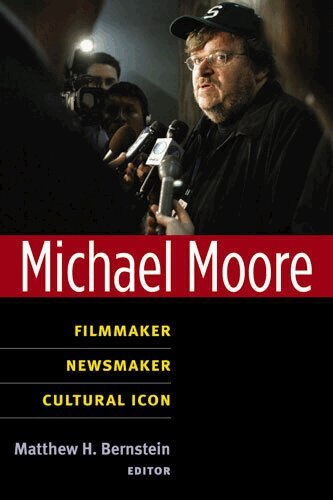
For more than twenty years, Michael Moore has transformed himself from a marginal filmmaker into a cultural icon, unofficial spokesperson for liberals and the Left. American conservatives constantly use him for target practice and target. Book author, film director, television personality, and Web presence, Moore is now a one-man cultural phenomenon. Although Michael Moore is a constant presence on the media landscape, this is the first volume to focus on the Moore phenomenom. It explores Moore's work in film and elsewhere, bringing diverse perspectives on his activities and status as voice of liberal America and the disenfranchised working class. Topics examined include the disjunction between Moore's celebrity status and everyman, middle-western persona, his self-mocking ironic sensibility, his tendency to diagnose American social and political problems in terms of class rather than gender, his reception abroad, and his uneasy relationship with the conventions of documentary filmmaking. The contributors are leading scholars and film critics, including Paul Arthur, Cary Elza, Jeffrey P. Jones, Douglas Kellner, Richard Kilborn, William Luhr, Charles Musser, Richard R. Ness, Miles Orvell, Richard Porton, Sergio Rizzo, Christopher Sharrett, Gaylyn Studlar, and David Teztlaff. The volume features both assessments of Moore's work in general and close analyses of his most successful films. The result is a definitive assessment of Moore's career to date.Matthew Bernstein is Professor and Chair of Film Studies at Emory University. He is author of Walter Wanger: Hollywood Independent.
594 kr
Skickas inom 5-8 vardagar
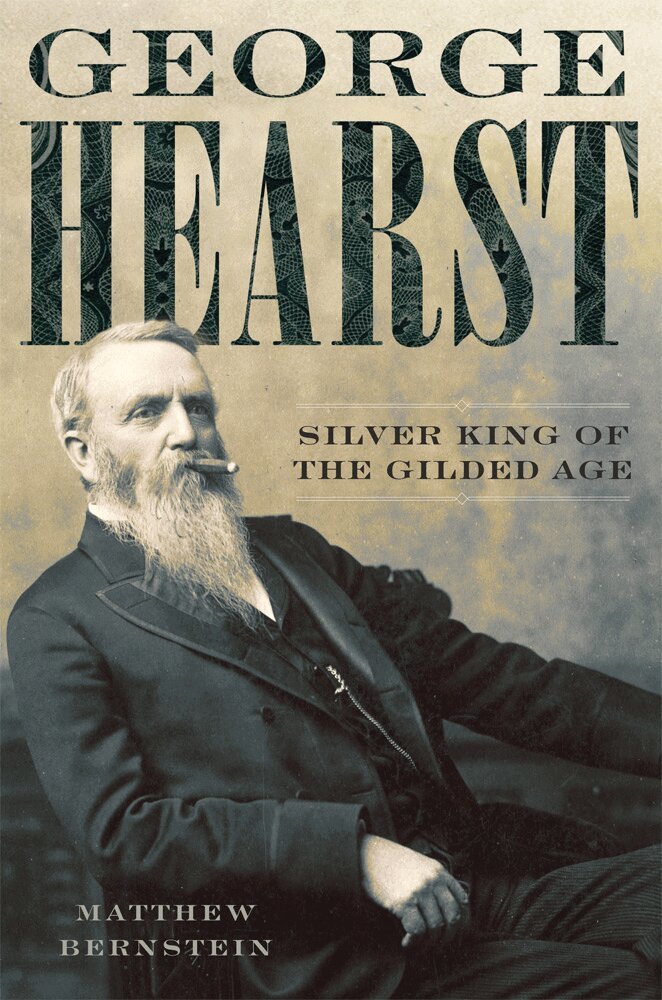
Rising from a Missouri boyhood and meager prospecting success to owning the most productive copper, silver, and gold mines in the world and being elected a United States senator, George Hearst (1820-91) spent decades veering between the heights of prosperity and the depths of financial ruin. In George Hearst: Silver King of the Gilded Age, Matthew Bernstein captures Hearst’s ascent, casting light on his actions during the Civil War, his tempestuous marriage to his cousin Phoebe, his role as disciplinarian and doting father to future media magnate William Randolph Hearst, and his devious methods of building the greatest mining empire in the West.Whether driving a pack of mules laden with silver from the Comstock Lode to San Francisco, bribing jurors in Pioche and Deadwood, or unearthing bonanzas in Utah and Montana Territories, Hearst’s cunning, energy, and industry were always evident, along with occasional glimmers of the villainy ascribed to him in the television series Deadwood.In this first full-length biography, George Hearst emerges in all his human dimensions and historical significance-an ambitious, complex, flawed, and quintessentially American character.
261 kr
Skickas inom 5-8 vardagar
Rising from a Missouri boyhood and meager prospecting success to owning the most productive copper, silver, and gold mines in the world and being elected a United States senator, George Hearst (1820-91) spent decades veering between the heights of prosperity and the depths of financial ruin. In George Hearst: Silver King of the Gilded Age, Matthew Bernstein captures Hearst’s ascent, casting light on his actions during the Civil War, his tempestuous marriage to his cousin Phoebe, his role as disciplinarian and doting father to future media magnate William Randolph Hearst, and his devious methods of building the greatest mining empire in the West.Whether driving a pack of mules laden with silver from the Comstock Lode to San Francisco, bribing jurors in Pioche and Deadwood, or unearthing bonanzas in Utah and Montana Territories, Hearst’s cunning, energy, and industry were always evident, along with occasional glimmers of the villainy ascribed to him in the television series Deadwood.In this first full-length biography, George Hearst emerges in all his human dimensions and historical significance-an ambitious, complex, flawed, and quintessentially American character.
402 kr
Skickas inom 7-10 vardagar
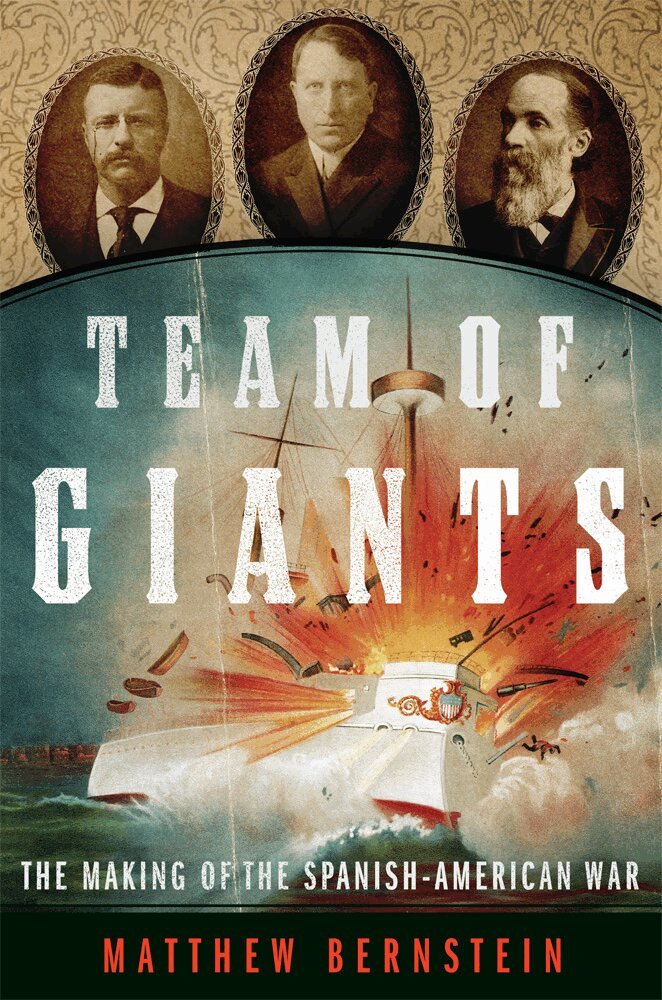
If not for an unlikely alliance among a bespectacled cowboy, a former Confederate general, and a millionaire newspaper publisher, the Spanish-American War might never have been. How these three outsize characters—Theodore Roosevelt, Joseph “Fighting Joe” Wheeler, and William Randolph Hearst—helped ignite the war that established the United States’ offshore empire is the rousing tale that Matthew Bernstein tells in Team of Giants.From his days as a Dakota deputy sheriff, Theodore Roosevelt had dreamed of leading a cowboy regiment into battle. With a little help from his friends, in 1898 he got his wish. While Roosevelt raised the Rough Riders in San Antonio, Congressman Wheeler delivered bellicose speeches from the US Capitol, and Hearst pulled out all the stops in the San Francisco Examiner and New York Journal. With the destruction of the USS Maine in Havana Harbor and President William McKinley’s call for war, the two greatest star reporters of the era, rivals Richard Harding Davis and Stephen Crane, headed for Cuba to do their part. In Bernstein’s sweeping history, these towering figures come to life as they set in motion events that would put a period on the Civil War era, transform the global media landscape, and alter geopolitics for the twentieth century—with the plight of the Cuban people serving as a backdrop for a world-class contest of wills and wiles.A stirring narrative built on rigorous research, Team of Giants is a fresh account of the role the martial ambitions of these men played in a war that would launch the American Century and set each man on the path to his own place in history.
306 kr
Skickas inom 10-15 vardagar
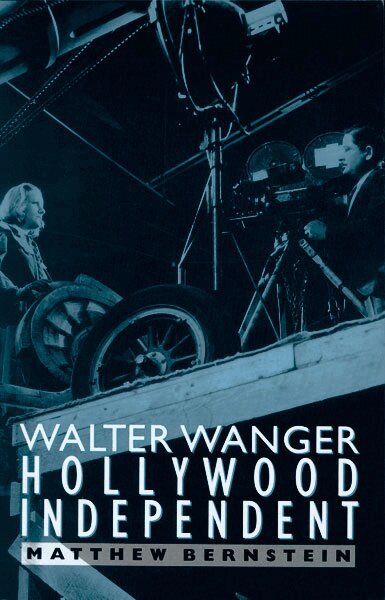
A portrait of the trailblazing film producer whose career spanned five decades.The long, colorful career of Walter Wanger (1894-1968) is one of Hollywood’s greatest untold stories. An intellectual and a socially conscious movie executive who produced provocative message movies and glittering romantic melodramas, Wanger’s career started at Paramount studios in the 1920s and led him to work at virtually every major studio as either a contract producer or an independent. He produced a series of American film classics, including Queen Christina, Stagecoach, Foreign Correspondent, and Invasion of the Body Snatchers, as well as a few notable flops, such as Cleopatra. This comprehensive biography brings to life a distinctive film personality and offers a new appreciation of the role of the producer in the history of American cinema.
394 kr
Skickas inom 5-8 vardagar
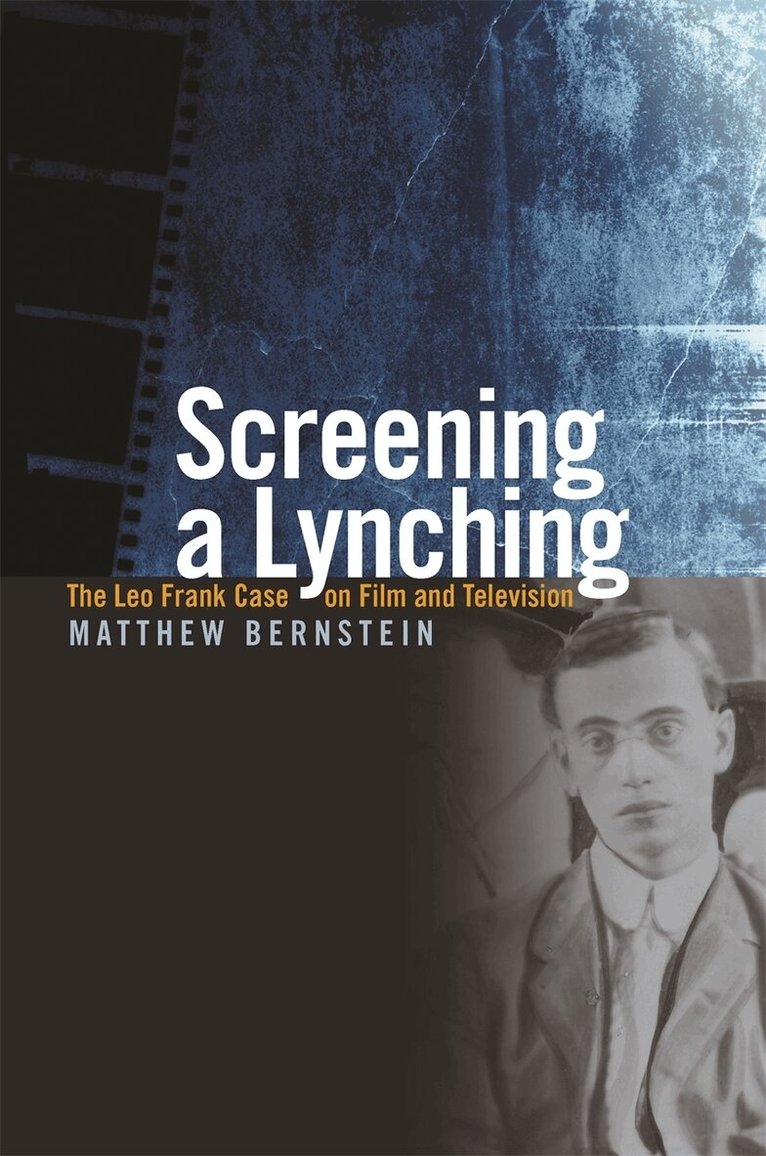
The Leo Frank case of 1913 was one of the most sensational trials of the early twentieth century, capturing international attention. Frank, a northern Jewish factory supervisor in Atlanta, was convicted for the murder of Mary Phagan, a young laborer native to the South, largely on the perjured testimony of an African American janitor. The trial was both a murder mystery and a courtroom drama marked by lurid sexual speculation and overt racism. The subsequent lynching of Frank in 1915 by an angry mob only made the story more irresistible to historians, playwrights, novelists, musicians, and filmmakers for decades to come.Matthew H. Bernstein is the first scholar to examine the feature films and television programs produced in response to the trial and lynching of Leo Frank. He considers the four major surviving American texts: Oscar Micheaux's film Murder in Harlem (1936), Mervyn LeRoy's film They Won't Forget (1937), the Profiles in Courage television episode "John M. Slaton" (1964), and the two-part NBC miniseries The Murder of Mary Phagan (1988). Bernstein explains that complex issues like racism, anti-Semitism, class resentment, and sectionalism were at once irresistibly compelling and painfully difficult to portray in the mass media. Exploring the cultural and industrial contexts in which the works were produced, Bernstein considers how they succeeded or failed in representing the case's many facets. Film and television shows can provide worthy interpretations of history, Bernstein argues, even when they depart from the historical record.Screening a Lynching is an engrossing meditation on how film and television represented a traumatic and tragic episode in American history-one that continues to fascinate people to this day.
2 054 kr
Kommande
443 kr
Skickas inom 11-20 vardagar