Matthew Whittle – författare
2 264 kr
Skickas inom 10-15 vardagar
604 kr
Skickas inom 10-15 vardagar
690 kr
Läs direkt efter köp
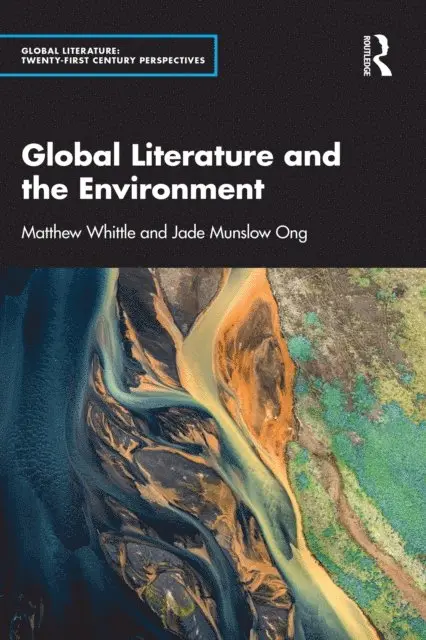
Global Literature and the Environment analyses literatures from across the world that connect readers to the localized impacts of the climate and ecological emergencies. The book contextualizes ecological breakdown within the history of imperialist-capitalism, exploring how literature helps us to imagine and create a habitable and just world for all forms of life.
The four chapters are organised according to the elements of the climate system that are at risk. ‘Earth’ examines Caribbean, American, South African, and British literatures that explore how dominant human groups have exploited soils, minerals, metals, and oil in pursuit of economic aims. ‘Water’ engages with poetic representations of, and responses to, extraction, pollution, and global warming in the fresh- and saltwaters of Nigeria and the icescapes of Alaska. ‘Air’ analyses prose and poetry that depicts atmospheric pollution caused by gas flaring in the Niger Delta and the production of pesticides in India. ‘Life’ attends to the ways in which literature contextualizes the drivers of, and proposed solutions to, mass species extinction across North America, Africa, Australasia, and Aotearoa New Zealand.
This accessible and engaging book explores novels, plays and poetry by writers including Octavia Butler, C.L.R. James, dg nanouk okpik, Ken Saro-Wiwa, Imbolo Mbue, Indra Sinha, Witi Ihimaera, J.M. Coetzee, and Henrietta Rose-Innes, amongst many others. It introduces readers to the concept of the Anthropocene alongside perspectives that challenge the assumption that the climate crisis is caused by an undifferentiated humanity. In doing so, the book draws on, and combines, a range of theoretical approaches, including postcolonialism, Indigenous studies, ecocriticism, cultural materialism, and animal studies.
690 kr
Läs direkt efter köp
Global Literature and the Environment analyses literatures from across the world that connect readers to the localized impacts of the climate and ecological emergencies. The book contextualizes ecological breakdown within the history of imperialist-capitalism, exploring how literature helps us to imagine and create a habitable and just world for all forms of life.
The four chapters are organised according to the elements of the climate system that are at risk. ‘Earth’ examines Caribbean, American, South African, and British literatures that explore how dominant human groups have exploited soils, minerals, metals, and oil in pursuit of economic aims. ‘Water’ engages with poetic representations of, and responses to, extraction, pollution, and global warming in the fresh- and saltwaters of Nigeria and the icescapes of Alaska. ‘Air’ analyses prose and poetry that depicts atmospheric pollution caused by gas flaring in the Niger Delta and the production of pesticides in India. ‘Life’ attends to the ways in which literature contextualizes the drivers of, and proposed solutions to, mass species extinction across North America, Africa, Australasia, and Aotearoa New Zealand.
This accessible and engaging book explores novels, plays and poetry by writers including Octavia Butler, C.L.R. James, dg nanouk okpik, Ken Saro-Wiwa, Imbolo Mbue, Indra Sinha, Witi Ihimaera, J.M. Coetzee, and Henrietta Rose-Innes, amongst many others. It introduces readers to the concept of the Anthropocene alongside perspectives that challenge the assumption that the climate crisis is caused by an undifferentiated humanity. In doing so, the book draws on, and combines, a range of theoretical approaches, including postcolonialism, Indigenous studies, ecocriticism, cultural materialism, and animal studies.
880 kr
Skickas inom 10-15 vardagar
790 kr
Läs direkt efter köp
This book examines literary texts by British colonial servant and settler writers, including Anthony Burgess, Graham Greene, William Golding, and Alan Sillitoe, who depicted the impact of decolonization in the newly independent colonies and at home in Britain. The end of the British Empire was one of the most significant and transformative events in twentieth-century history, marking the beginning of a new world order and having an indelible impact on British culture and society. Literary responses to this moment by those from within Britain offer an enlightening (and often overlooked) exploration of the influence of decolonization on received notions of “race” and class, while also prefiguring conceptions of multiculturalism. As Matthew Whittle argues in this sweeping study, these works not only view decolonization within its global context (alongside the aftermath of the Second World War, the rise of America, and mass immigration) but often propose a solution to imperial decline through cultural renewal.
631 kr
Skickas inom 10-15 vardagar