Matthias B. Lehmann - Böcker
Visar alla böcker från författaren Matthias B. Lehmann. Handla med fri frakt och snabb leverans.
7 produkter
7 produkter
847 kr
Skickas inom 7-10 vardagar
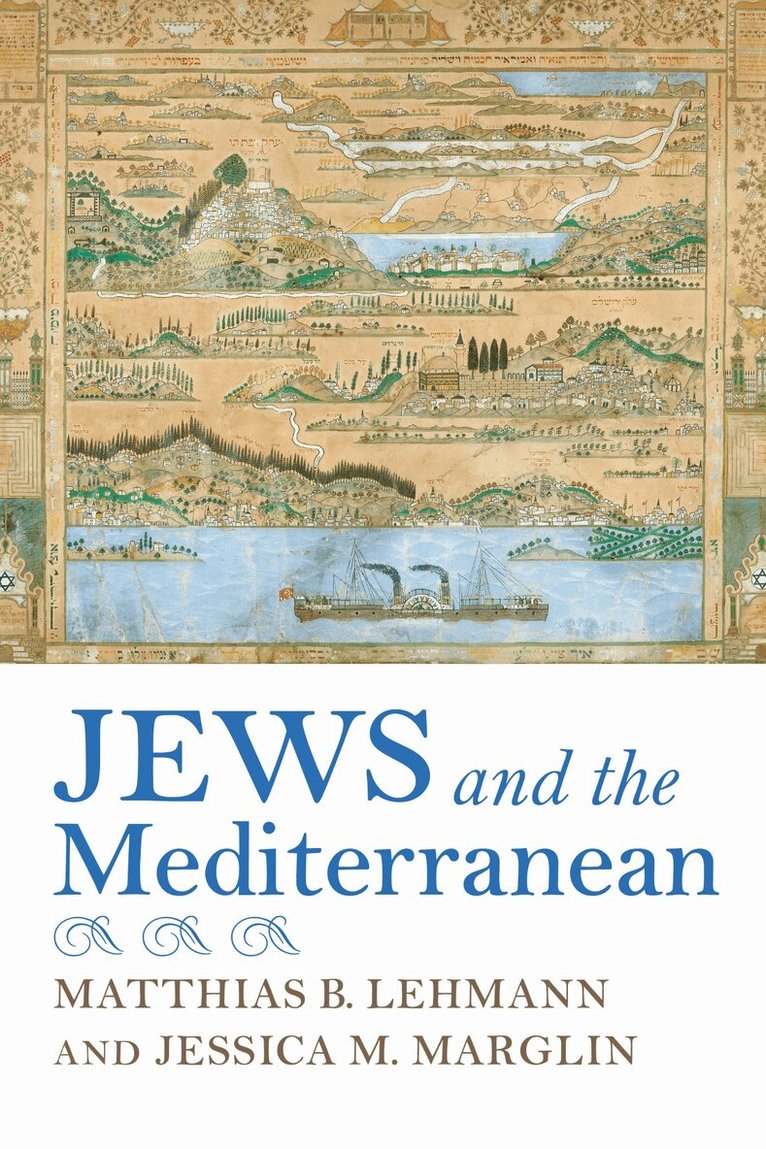
What does an understanding of Jewish history contribute to the study of the Mediterranean, and what can Mediterranean studies contribute to our knowledge of Jewish history? Jews and the Mediterranean considers the historical potency and uniqueness of what happens when Sephardi, Mizrahi, and Ashkenazi Jews meet in the Mediterranean region. By focusing on the specificity of the Jewish experience, the essays gathered in this volume emphasize human agency and culture over the length of Mediterranean history. This collection draws attention to what made Jewish people distinctive and warns against facile notions of Mediterranean connectivity, diversity, fluidity, and hybridity, presenting a new assessment of the Jewish experience in the Mediterranean.
309 kr
Skickas inom 7-10 vardagar
What does an understanding of Jewish history contribute to the study of the Mediterranean, and what can Mediterranean studies contribute to our knowledge of Jewish history? Jews and the Mediterranean considers the historical potency and uniqueness of what happens when Sephardi, Mizrahi, and Ashkenazi Jews meet in the Mediterranean region. By focusing on the specificity of the Jewish experience, the essays gathered in this volume emphasize human agency and culture over the length of Mediterranean history. This collection draws attention to what made Jewish people distinctive and warns against facile notions of Mediterranean connectivity, diversity, fluidity, and hybridity, presenting a new assessment of the Jewish experience in the Mediterranean.
486 kr
Skickas inom 10-15 vardagar
In this pathbreaking book, Matthias B. Lehmann explores Ottoman Sephardic culture in an era of change through a close study of popularized rabbinic texts written in Ladino, the vernacular language of the Ottoman Jews. This vernacular literature, standing at the crossroads of rabbinic elite and popular cultures and of Hebrew and Ladino discourses, sheds valuable light on the modernization of Sephardic Jewry in the Eastern Mediterranean in the 19th century. By helping to form a Ladino reading public and imparting shape to its values, the authors of this literature negotiated between perpetuating rabbinic tradition and addressing the challenges of modernity. The book offers close readings of works that examine issues such as social inequality, exile and diaspora, gender, secularization, and the clash between scientific and rabbinic knowledge. Ladino Rabbinic Literature and Ottoman Sephardic Culture will be welcomed by scholars of Sephardic as well as European Jewish history, culture, and religion.
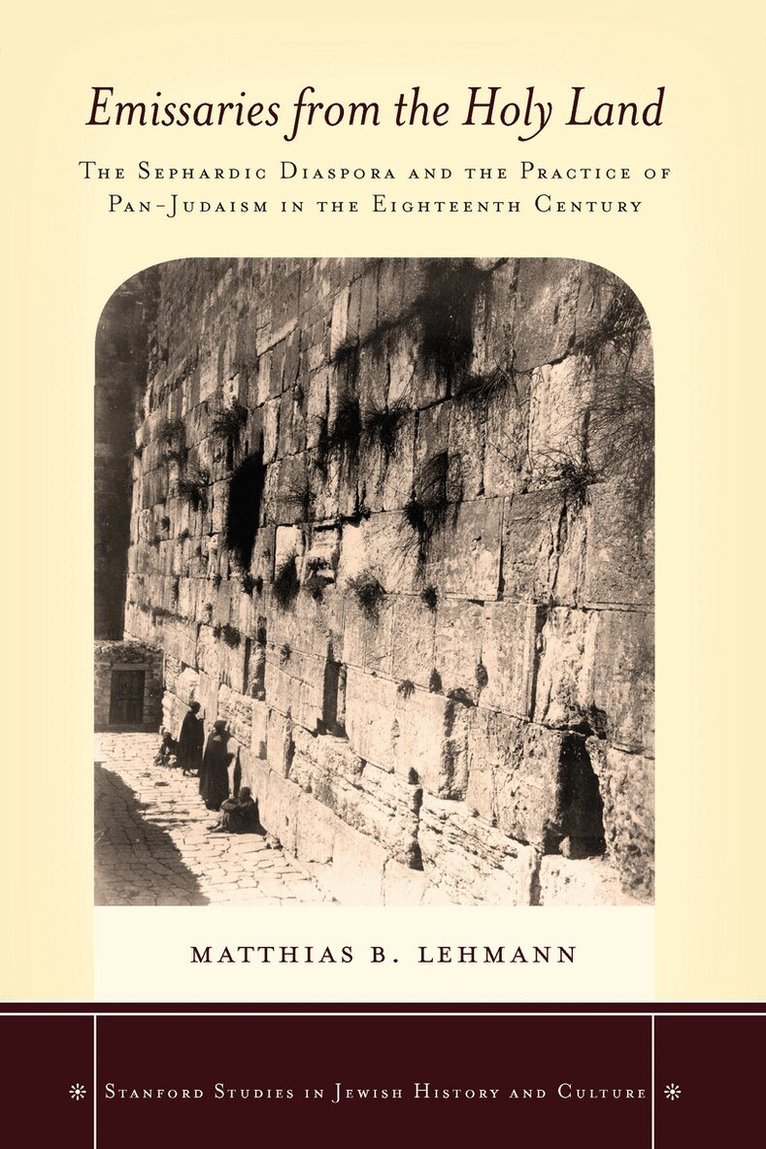
Emissaries from the Holy Land
The Sephardic Diaspora and the Practice of Pan-Judaism in the Eighteenth Century
Inbunden, Engelska, 2014
833 kr
Skickas inom 10-15 vardagar
For Jews in every corner of the world, the Holy Land has always been central. But that conviction was put to the test in the eighteenth century when Jewish leaders in Palestine and their allies in Istanbul sent rabbinic emissaries on global fundraising missions. From the shores of the Mediterranean to the port cities of the Atlantic seaboard, from the Caribbean to India, these emmissaries solicited donations for the impoverished of Israel's homeland. Emissaries from the Holy Land explores how this eighteenth century philanthropic network was organized and how relations of trust and solidarity were built across vast geographic differences. It looks at how the emissaries and their supporters understood the relationship between the Jewish Diaspora and the Land of Israel, and it shows how cross-cultural encounters and competing claims for financial support involving Sephardic, Ashkenazi, and North African emissaries and communities contributed to the transformation of Jewish identity from 1720 to 1820.Solidarity among Jews and the centrality of the Holy Land in traditional Jewish society are often taken for granted. Lehmann challenges such assumptions and provides a critical, historical perspective on the question of how Jews in the early modern period encountered one another, how they related to Jerusalem and the land of Israel, and how the early modern period changed perceptions of Jewish unity and solidarity. Based on original archival research as well as multiple little-known and rarely studied sources, Emissaries from the Holy Land offers a fresh perspective on early modern Jewish society and culture and the relationship between the Jewish Diaspora and Palestine in the eighteenth century.
400 kr
Skickas inom 3-6 vardagar
A sweeping biography that opens a window onto the gilded age of Jewish philanthropy.Baron Maurice de Hirsch was one of the emblematic figures of the nineteenth century. Above all, he was the most influential Jewish philanthropist of his time. Today Hirsch is less well known than the Rothschilds, or his gentile counterpart Andrew Carnegie, yet he was, to his contemporaries, the very embodiment of the gilded age of Jewish philanthropy. Hirsch's life provides a singular entry point for understanding Jewish philanthropy and politics in the late nineteenth century, a period when, as now, private benefactors played an outsize role in shaping the collective fate of Jewish communities.Hirsch's vast fortune derived from his role in creating the first rail line linking Western Europe with the Ottoman Empire, what came to be known as the Orient Express. Socializing with the likes of the Austrian crown prince Rudolph and "Bertie," Prince of Wales, Hirsch rose to the pinnacle of European aristocratic society, but also found himself the frequent target of vicious antisemitism. This was an era when what it meant to be Jewish—and what it meant to be European—were undergoing dramatic changes. Baron Hirsch was at the center of these historic shifts.While in his time Baron Hirsch was the subject of widespread praise, enraged political commentary, and conspiracy theories alike, his legacy is often overlooked. Responding to the crisis wrought by the mass departure of Jews from the Russian Empire at the turn of the century, Hirsch established the Jewish Colonization Association, with the goal of creating a refuge for the Jews in Argentina. When Theodor Herzl, the founder of Zionism, advertised his plan to create a Jewish state (not without inspiration from Hirsch), he still wondered whether to do so in Palestine or in Argentina—and left the question open. In The Baron, Matthias Lehmann tells the story of this remarkable figure whose life and legacy provide a key to understanding the forces that shaped modern Jewish history.
208 kr
Kommande
147 kr
Skickas inom 3-6 vardagar