Matthias Finkbeiner - Böcker
Visar alla böcker från författaren Matthias Finkbeiner. Handla med fri frakt och snabb leverans.
6 produkter
6 produkter
459 kr
Skickas inom 3-6 vardagar
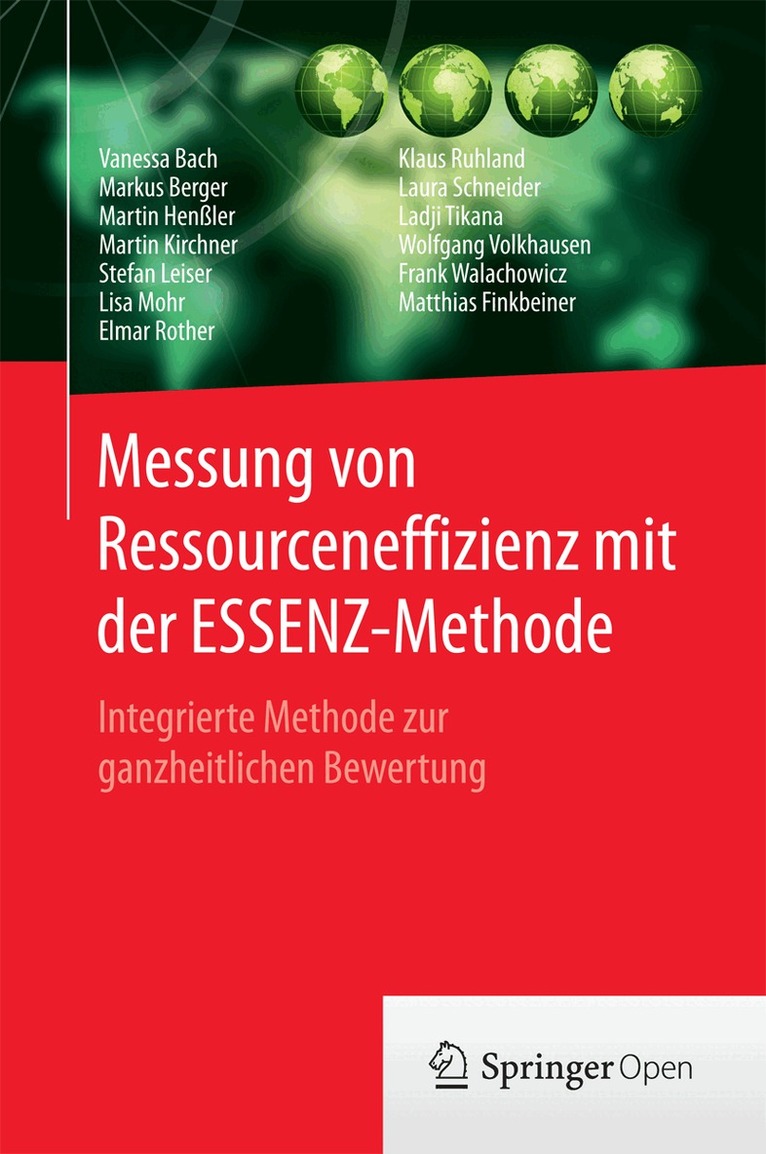
Messung von Ressourceneffizienz mit der ESSENZ-Methode
Integrierte Methode zur ganzheitlichen Bewertung
Inbunden, Tyska, 2016
536 kr
Skickas inom 10-15 vardagar
Eine belastbare Methodezu entwickeln, um den Ressourceneinsatz zu bewerten, ist das Ziel diesesBuches. Notwendig ist dies, da das starke Wirtschaftswachstum der letztenJahrzehnte zu einer intensiven Beanspruchung natürlicher Ressourcen geführthat. Mit ihrer steigenden Nutzung gehen auch zusätzliche Belastungen der Umweltsowie Restriktionen der Verfügbarkeit von Ressourcen einher. Aus diesen Gründenist ein effizienter Einsatz von Ressourcen als wichtiger Beitrag zu einernachhaltigen Entwicklung erforderlich. Die ESSENZ-Methode (Integrierte Methodezur ganzheitlichen Berechnung/Messung von Ressourceneffizienz) wurde in einerKooperation der Technischen Universität Berlin mit den IndustriepartnernDaimler AG, Deutsches Kupferinstitut Berufsverband e. V., Evonik Industries AG,Siemens AG, ThyssenKrupp Steel Europe AG und Wissenschaftlicher Gerätebau Dr.Ing. Herbert Knauer GmbH entwickelt. Sie unterstützt die umfassende Messung undBewertung von Ressourceneffizienz innerhalb der vier Dimensionen„Verfügbarkeit“, „Gesellschaftliche Akzeptanz“, „Umweltauswirkungen“ und„Nutzen“. Um diese vier Dimensionen wissenschaftlichabzubilden, werden 21 anwendbare Indikatoren entwickelt und vorgestellt.Die ESSENZ-Methode kannsowohl für die Analyse und Optimierung eines einzelnen Produktes als auch für denVergleich mehrerer Produktalternativen verwendet werden. Ihre Anwendbarkeit istfür Metalle, und fossile Rohstoffe bereitserprobt.
2 121 kr
Skickas inom 10-15 vardagar
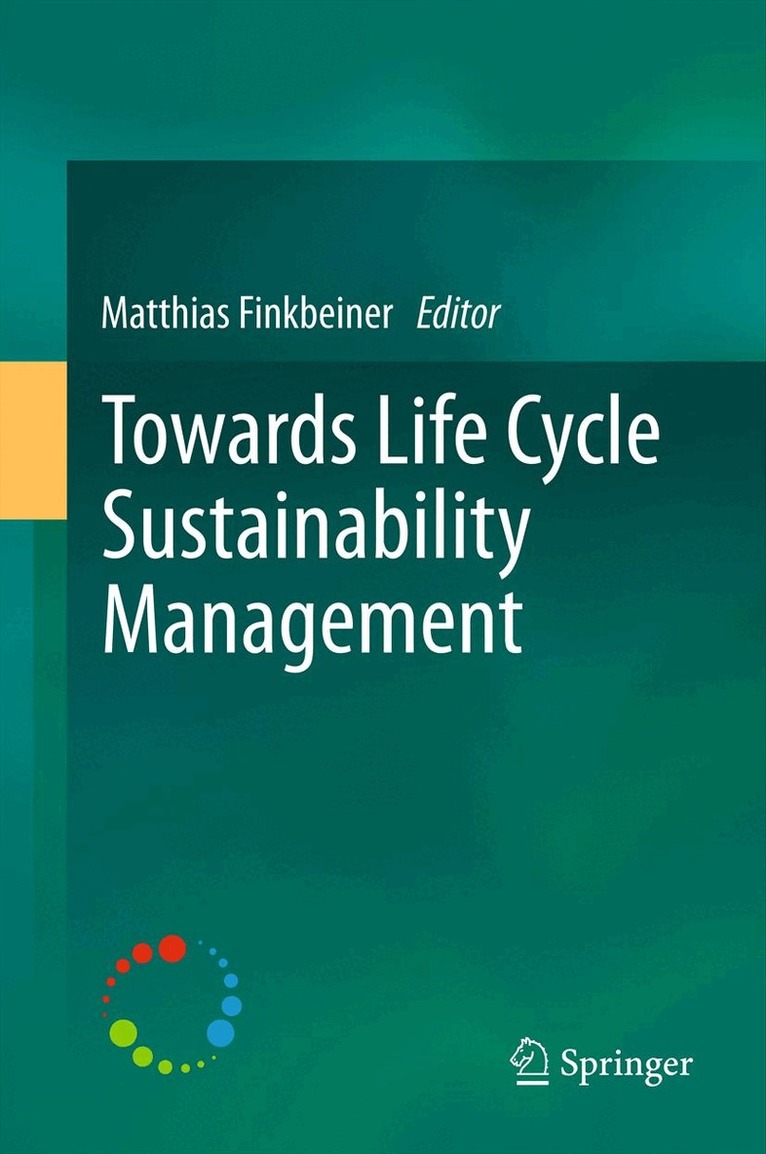
This book is a selection of the most relevant contributions to the LCM 2011 conference in Berlin. The material explores scientific and practical solutions to incorporating life cycle approaches into strategic and operational decision making. There are several sections addressing methodological topics such as LCSM approaches, methods and tools, while more application-oriented sections deal with the implementation of these approaches in relevant industrial sectors including agriculture and food, packaging, energy, electronics and ICT, and mobility.
2 121 kr
Skickas inom 10-15 vardagar
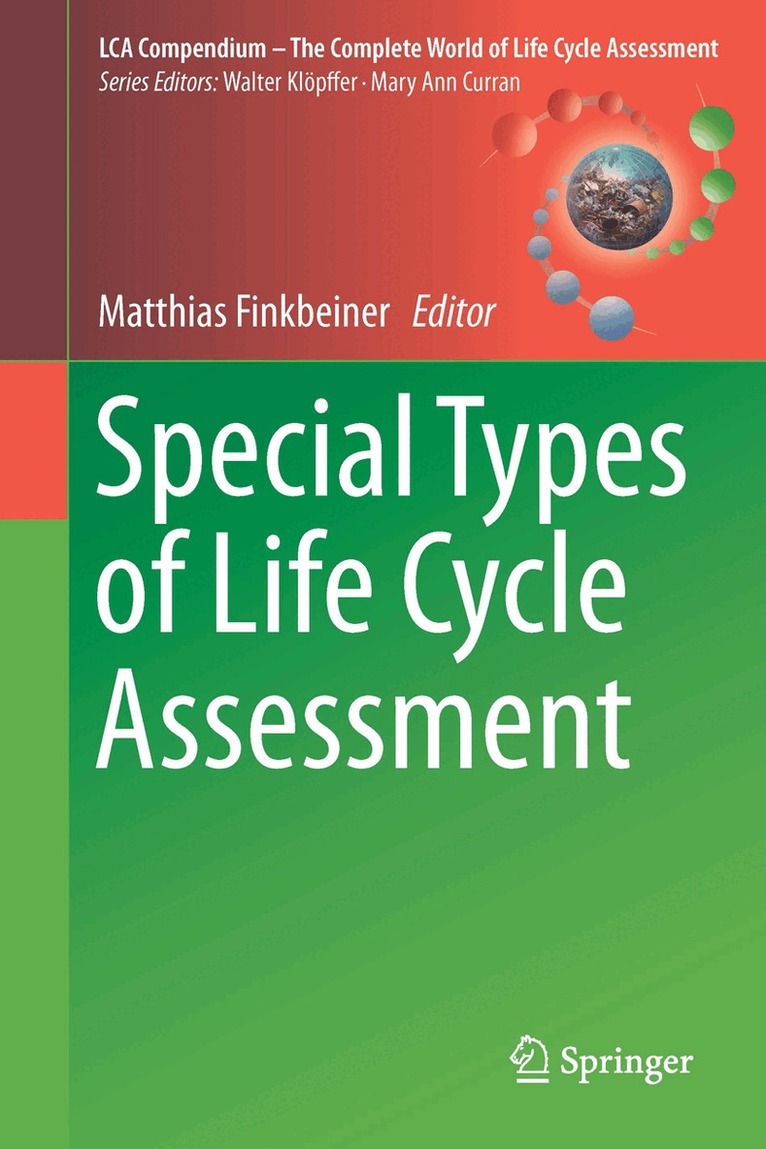
This book presents specialised methods and tools built on classical LCA. In the first book-length overview, their importance for the further growth and application of LCA is demonstrated for some of the most prominent species of this emerging trend: Carbon footprinting; Water footprinting; Eco-efficiency assessment; Resource efficiency assessment; Input-output and hybrid LCA; Material flow analysis; Organizational LCA.Carbon footprinting was a huge driver for the market expansion of simplified LCA. The discussions led to an ample proliferation of different guidelines and standards including ISO/TS 14067 on Carbon Footprint of Product. Atsushi Inaba (Kogakuin University, Tokyo, Japan) and his eight co-authors provide an up-to-date status of Carbon Footprint of Products. The increasing relevance of Water Footprinting and the diverse methods were the drivers to develop the ISO 14046 as international water footprint standard. Markus Berger (Technische Universität Berlin, Germany), Stephan Pfister (ETH Zurich, Switzerland) and Masaharu Motoshita (Agency of Industrial Science and Technology, Tsukuba, Japan) present a status of water resources and demands from a global and regional perspective. A core part is the discussion and comparison of the different water footprint methods, databases and tools. Peter Saling from BASF SE in Ludwigshafen, Germany, broadens the perspective towards Eco-efficiency Assessment. He describes the BASF-specific type of eco-efficiency analysis plus adaptions like the so-called SEEBALANCE and AgBalance applications. Laura Schneider, Vanessa Bach and Matthias Finkbeiner (Technische Universität Berlin, Germany) address multi-dimensional LCA perspectives in the form of Resource Efficiency Assessment. Research needs and proposed methodological developments for abiotic resource efficiency assessment, and especially for the less developed area of biotic resources, are discussed.The fundamentals ofInput-output and Hybrid LCA are covered by Shinichiro Nakamura (Waseda University, Tokyo, Japan) and Keisuke Nansai (National Institute for Environmental Studies, Tsukuba, Japan). The concepts of environmentally extended IO, different types of hybrid IO-LCA and the waste model are introduced. David Laner and Helmut Rechberger (Vienna University of Technology, Austria) present the basic terms and procedures of Material Flow Analysismethodology. The combination of MFA and LCA is discussed as a promising approach for environmental decision support. Julia Martínez-Blanco (Technische Universität Berlin, Germany; now at Inèdit, Barcelona, Spain), Atsushi Inaba (Kogakuin University, Tokyo, Japan) and Matthias Finkbeiner (Technische Universität Berlin, Germany) introduce a recent development which could develop a new trend, namely the LCA of Organizations.
2 121 kr
Skickas inom 10-15 vardagar
This book is a selection of the most relevant contributions to the LCM 2011 conference in Berlin. The material explores scientific and practical solutions to incorporating life cycle approaches into strategic and operational decision making. There are several sections addressing methodological topics such as LCSM approaches, methods and tools, while more application-oriented sections deal with the implementation of these approaches in relevant industrial sectors including agriculture and food, packaging, energy, electronics and ICT, and mobility.
2 121 kr
Skickas inom 10-15 vardagar
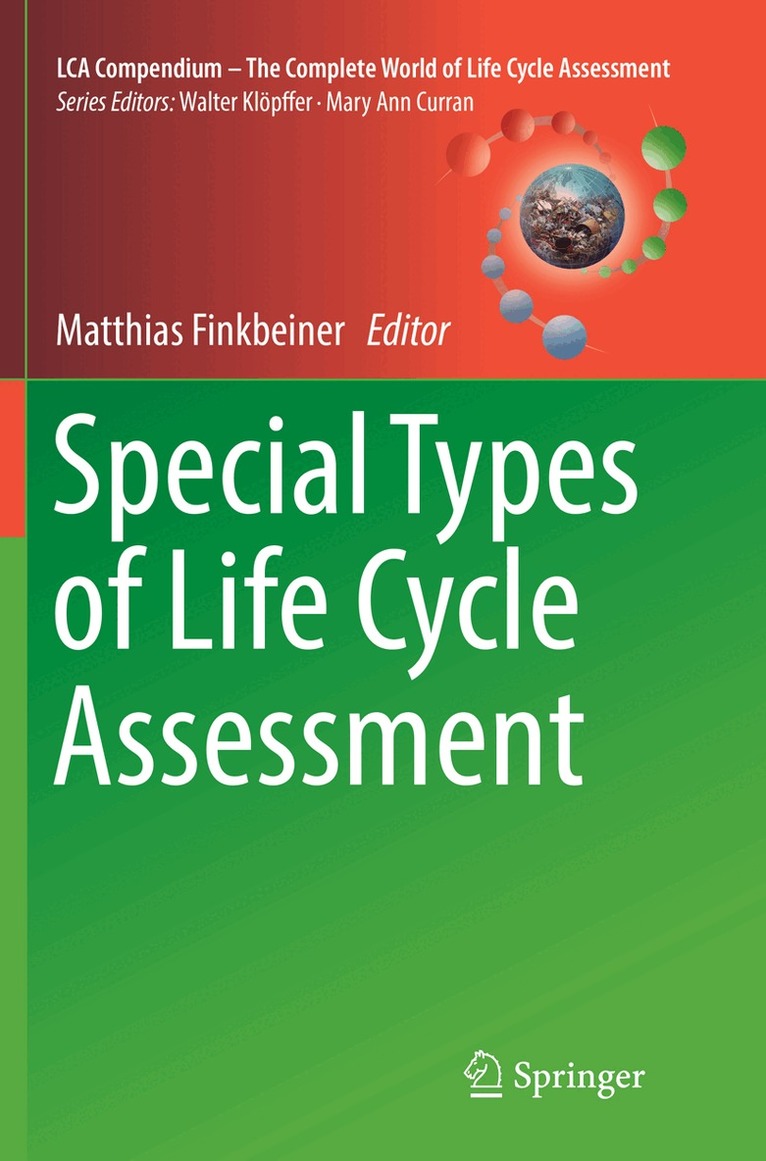
This book presents specialised methods and tools built on classical LCA. In the first book-length overview, their importance for the further growth and application of LCA is demonstrated for some of the most prominent species of this emerging trend: Carbon footprinting; Water footprinting; Eco-efficiency assessment; Resource efficiency assessment; Input-output and hybrid LCA; Material flow analysis; Organizational LCA.Carbon footprinting was a huge driver for the market expansion of simplified LCA. The discussions led to an ample proliferation of different guidelines and standards including ISO/TS 14067 on Carbon Footprint of Product. Atsushi Inaba (Kogakuin University, Tokyo, Japan) and his eight co-authors provide an up-to-date status of Carbon Footprint of Products. The increasing relevance of Water Footprinting and the diverse methods were the drivers to develop the ISO 14046 as international water footprint standard. Markus Berger (Technische Universität Berlin, Germany), Stephan Pfister (ETH Zurich, Switzerland) and Masaharu Motoshita (Agency of Industrial Science and Technology, Tsukuba, Japan) present a status of water resources and demands from a global and regional perspective. A core part is the discussion and comparison of the different water footprint methods, databases and tools. Peter Saling from BASF SE in Ludwigshafen, Germany, broadens the perspective towards Eco-efficiency Assessment. He describes the BASF-specific type of eco-efficiency analysis plus adaptions like the so-called SEEBALANCE and AgBalance applications. Laura Schneider, Vanessa Bach and Matthias Finkbeiner (Technische Universität Berlin, Germany) address multi-dimensional LCA perspectives in the form of Resource Efficiency Assessment. Research needs and proposed methodological developments for abiotic resource efficiency assessment, and especially for the less developed area of biotic resources, are discussed.The fundamentals ofInput-output and Hybrid LCA are covered by Shinichiro Nakamura (Waseda University, Tokyo, Japan) and Keisuke Nansai (National Institute for Environmental Studies, Tsukuba, Japan). The concepts of environmentally extended IO, different types of hybrid IO-LCA and the waste model are introduced. David Laner and Helmut Rechberger (Vienna University of Technology, Austria) present the basic terms and procedures of Material Flow Analysismethodology. The combination of MFA and LCA is discussed as a promising approach for environmental decision support. Julia Martínez-Blanco (Technische Universität Berlin, Germany; now at Inèdit, Barcelona, Spain), Atsushi Inaba (Kogakuin University, Tokyo, Japan) and Matthias Finkbeiner (Technische Universität Berlin, Germany) introduce a recent development which could develop a new trend, namely the LCA of Organizations.