Matthias Schemmel – författare
Visar alla böcker från författaren Matthias Schemmel. Handla med fri frakt och snabb leverans.
11 produkter
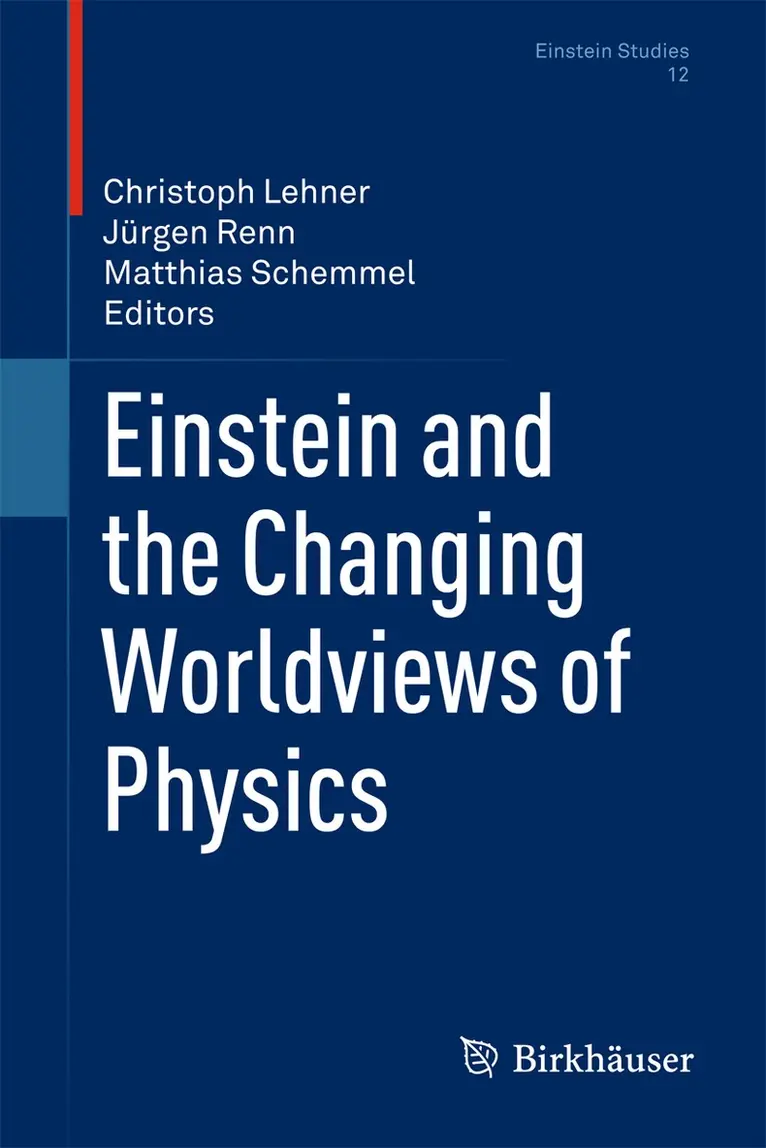
Einstein and the Changing Worldviews of Physics
Av Christoph Lehner, Jürgen Renn m. fl.
Inbunden, 2011
1094 kr
Lägg i varukorg
This volume reviews conceptual conflicts at the foundations of physics now and in the past century. The focus is on the conditions and consequences of Einstein’s pathbreaking achievements that sealed the decline of the classical notions of space, time, radiation, and matter, and resulted in the …
Einstein and the Changing Worldviews of Physics
Av Matthias Schemmel, Jurgen Renn m. fl.
E-bok, 2012
1459 kr
Lägg i varukorg
This volume reviews conceptual conflicts at the foundations of physics now and in the past century. The focus is on the conditions and consequences of Einstein’s pathbreaking achievements that sealed the decline of the classical notions of space, time, radiation, and matter, and resulted in the …
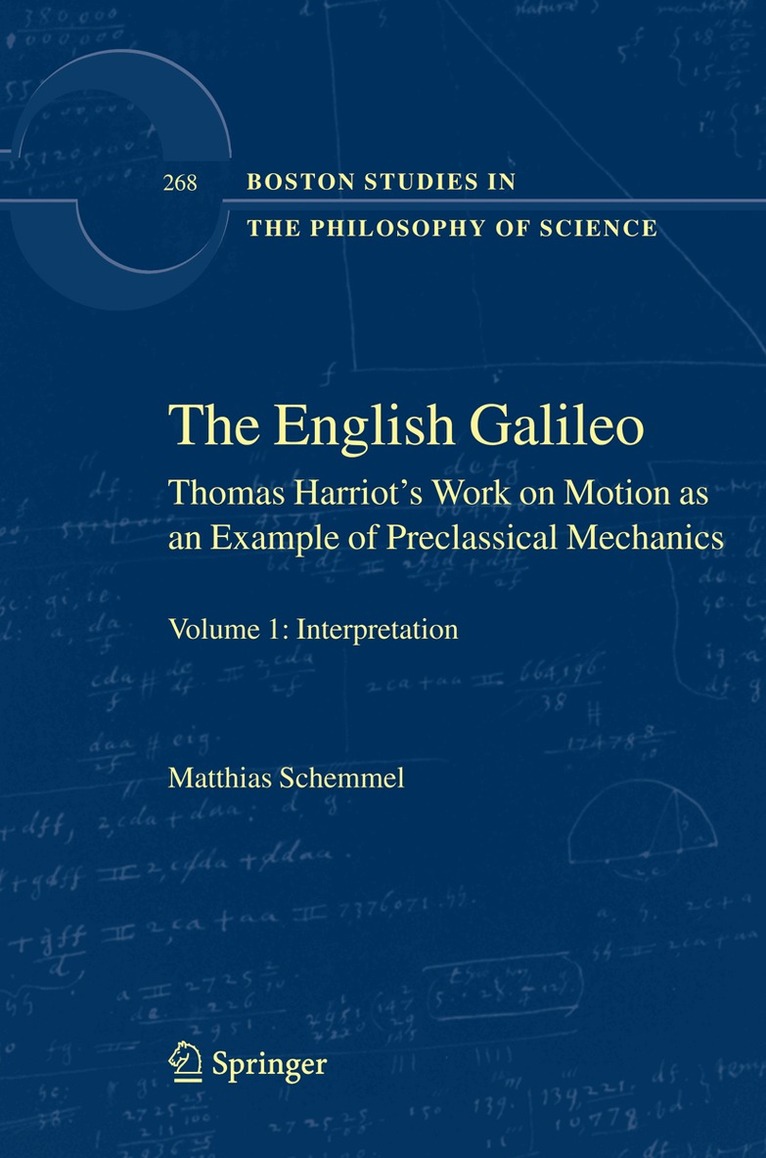
English Galileo
Thomas Harriot's Work on Motion as an Example of Preclassical Mechanics
2008
2574 kr
Lägg i varukorg
The English Galileo—the title of this book draws on the extraordinary prominence of Galileo Galilei in the historiography of the early modern Scienti?c Revolution. At the same time it questions the uniqueness of Galileo (not as a person, of course, but as an early modern phenomenon) by proclaiming …
English Galileo
Thomas Harriot''s Work on Motion as an Example of Preclassical Mechanics
E-bok, 2008
2798 kr
Lägg i varukorg
The English Galileo—the title of this book draws on the extraordinary prominence of Galileo Galilei in the historiography of the early modern Scienti?c Revolution. At the same time it questions the uniqueness of Galileo (not as a person, of course, but as an early modern phenomenon) by proclaiming …
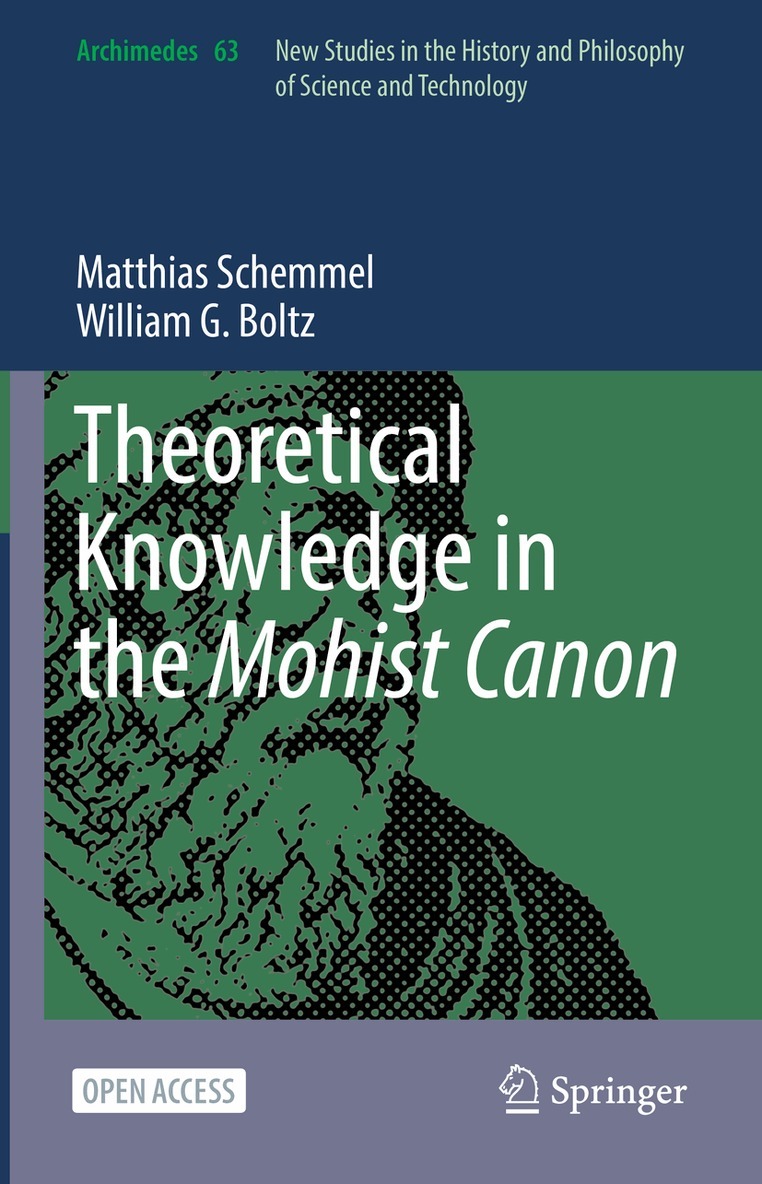
Theoretical Knowledge in the Mohist Canon
Av Matthias Schemmel, William G. Boltz
Inbunden, 2023
551 kr
Lägg i varukorg
This open access book presents a new translation, interpretation and analysis of selected passages from the so-called Mohist Canon, a Chinese text from ca. 300 BCE, and discusses the role of the text in the world history of science, arguing that it represents an early emergence of theoretical, …
Theoretical Knowledge in the Mohist Canon
Av Matthias Schemmel, William G. Boltz
2023
667 kr
Lägg i varukorg
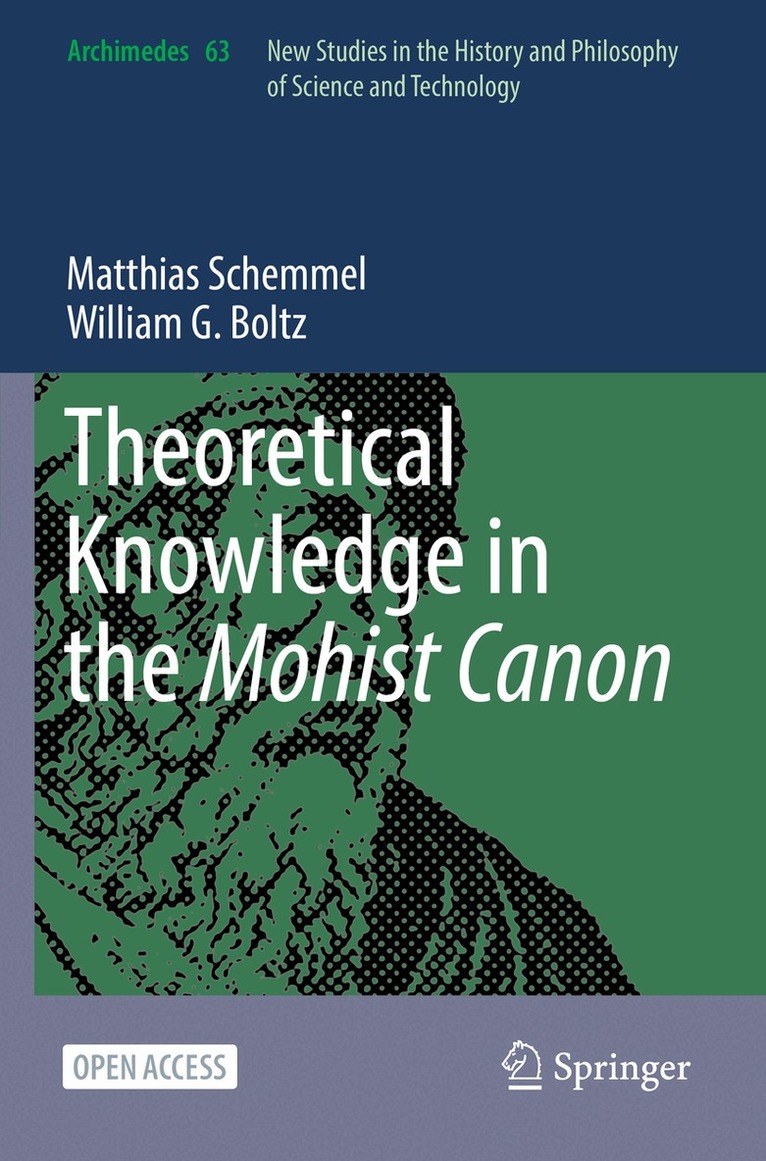
Theoretical Knowledge in the Mohist Canon
Av Matthias Schemmel, William G. Boltz
Häftad, 2022
442 kr
Lägg i varukorg
This open access book presents a new translation, interpretation and analysis of selected passages from the so-called Mohist Canon, a Chinese text from ca. 300 BCE, and discusses the role of the text in the world history of science, arguing that it represents an early emergence of theoretical, …
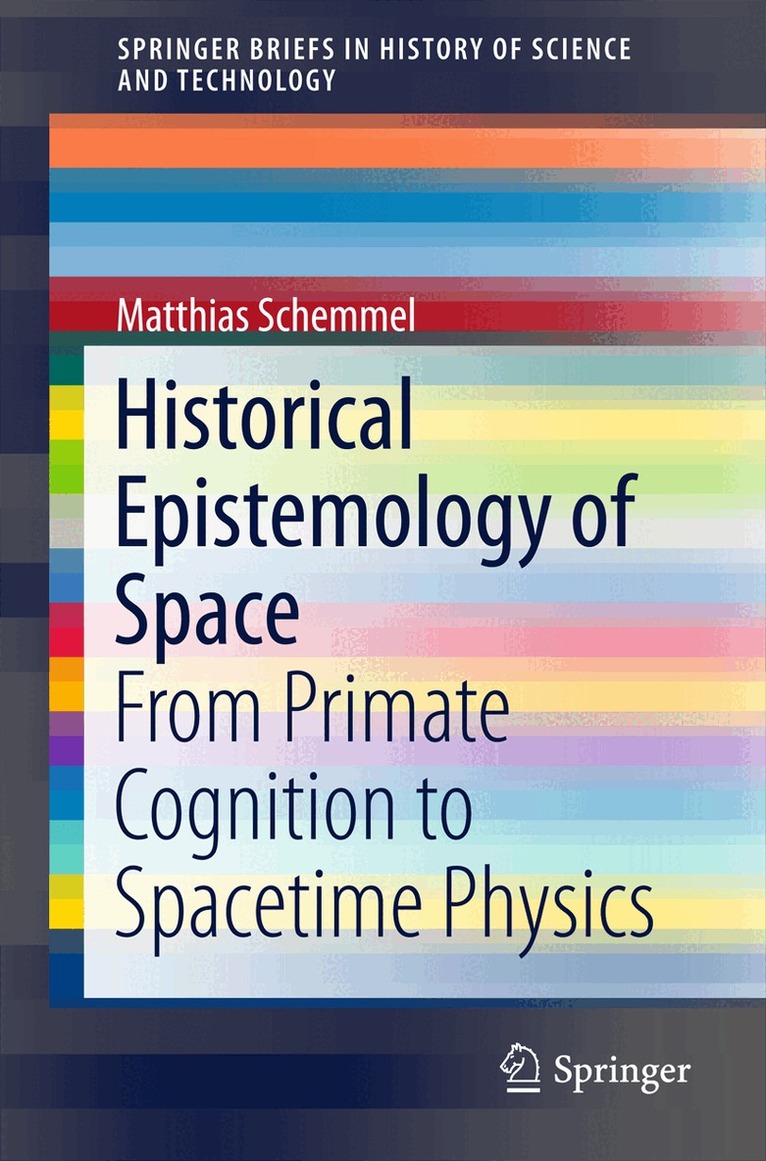
Historical Epistemology of Space
From Primate Cognition to Spacetime Physics
Häftad, 2015
551 kr
Lägg i varukorg
This monograph investigates the development of human spatial knowledge by analyzing its elementary structures and studying how it is further shaped by various societal conditions. By taking a thoroughly historical perspective on knowledge and integrating results from various disciplines, this work …
Historical Epistemology of Space
From Primate Cognition to Spacetime Physics
E-bok, 2015
734 kr
Lägg i varukorg
This monograph investigates the development of human spatial knowledge by analyzing its elementary structures and studying how it is further shaped by various societal conditions. By taking a thoroughly historical perspective on knowledge and integrating results from various disciplines, this work …
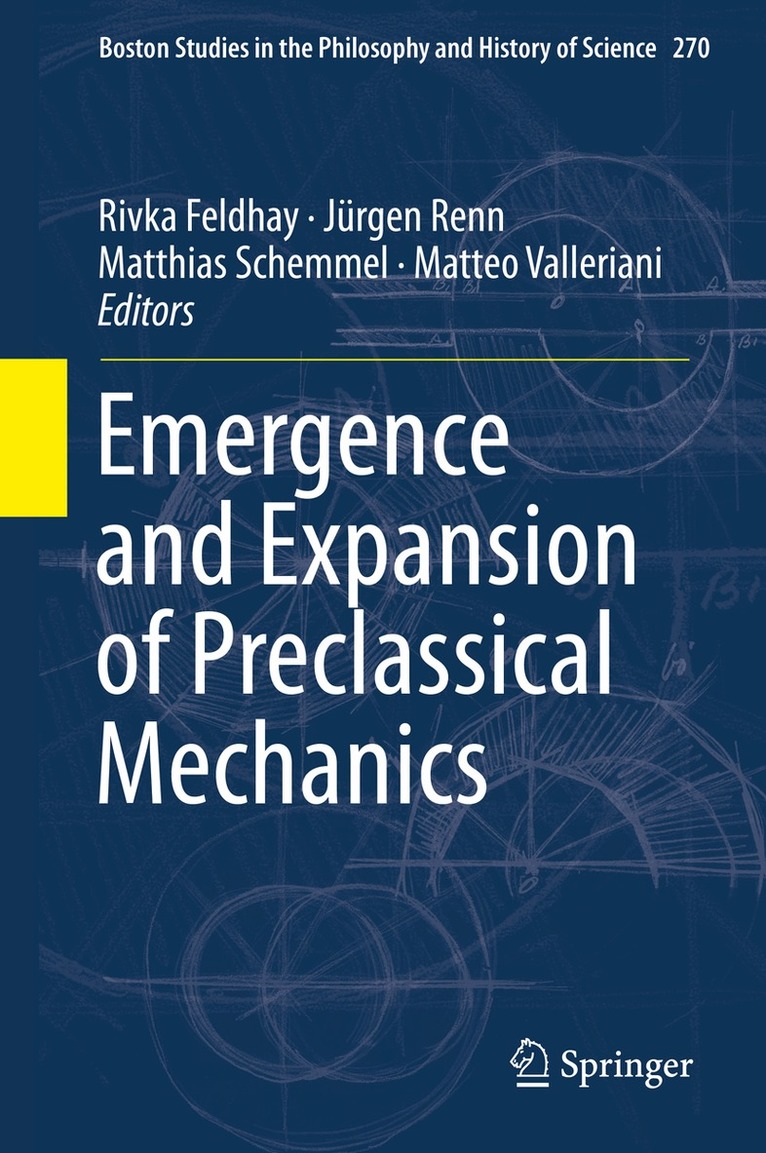
Emergence and Expansion of Preclassical Mechanics
Av Rivka Feldhay, Jürgen Renn m. fl.
Inbunden, 2018
1530 kr
Lägg i varukorg
This book is divided into two sections. The first section is concerned with the emergence and expansion of a form of mechanical knowledge defined by us as pre-classical mechanics. The definition purports to the period roughly between the 15th and the 17th century, before classical mechanics was …
Emergence and Expansion of Preclassical Mechanics
Av Matteo Valleriani, Matthias Schemmel m. fl.
E-bok, 2018
1948 kr
Lägg i varukorg
This book is divided into two sections. The first section is concerned with the emergence and expansion of a form of mechanical knowledge defined by us as pre-classical mechanics. The definition purports to the period roughly between the 15th and the 17th century, before classical mechanics was …