Mauri Caterina Mauri – författare
Visar alla böcker från författaren Mauri Caterina Mauri. Handla med fri frakt och snabb leverans.
2 produkter
2 produkter
E-bok
Engelska, 20211 384 kr
Läs direkt efter köp
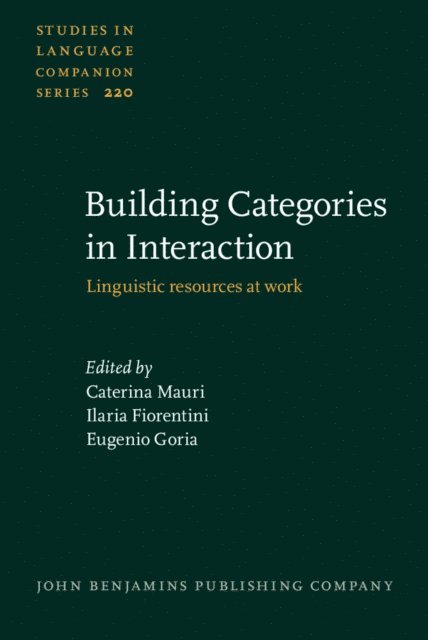
This book addresses the topic of linguistic categorization from a novel perspective. While most of the early research has focused on how linguistic systems reflect some pre-existing ways of categorizing experience, the contributions included in this volume seek to understand how linguistic resources of various nature (prosodic cues, affixes, constructions, discourse markers, ...) can be 'put to work' in order to actively build categories in discourse and in interaction, to achieve social goals. This question is addressed in different ways by researchers from different subfields of linguistics, including psycholinguistics, conversation analysis, linguistic typology and discourse pragmatics, and a major point of innovation is represented in fact by the interdisciplinary nature of the volume and in the systematic search for converging evidence.
E-bok
PDF, Engelska, 20131 305 kr
Läs direkt efter köp
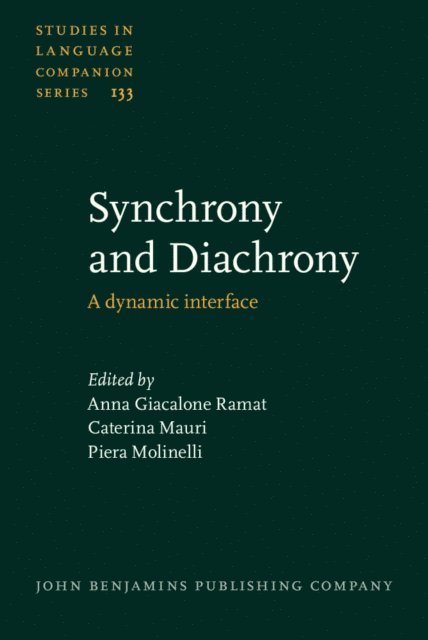
The focus of this volume is on the relation between synchrony and diachrony. It is examined in the light of the most recent theories of language change and linguistic variation. What has traditionally been treated as a dichotomy is now seen rather in terms of a dynamic interface. The contributions to this volume aim at exploring the most adequate tools to describe and understand the manifestations of this dynamic interface. Thorough analyses are offered on hot topics of the current linguistic debate, which are all involved in the analysis of the synchrony-diachrony interface: gradualness of change, synchronic variation and gradience, constructional approaches to grammaticalization, the role of contact-induced transfer in language change, analogy. Case studies are discussed from a variety of languages and dialects including English, Welsh, Latin, Italian and Italian dialects, Dutch, Swedish, German and German dialects, Hungarian. This volume is of great interest to a broad audience within linguistics, including historical linguistics, typology, pragmatics, and areal linguistics.