330 kr
Skickas inom 10-15 vardagar
330 kr
Skickas inom 10-15 vardagar
280 kr
Skickas inom 11-20 vardagar
343 kr
Tillfälligt slut
137 kr
Tillfälligt slut
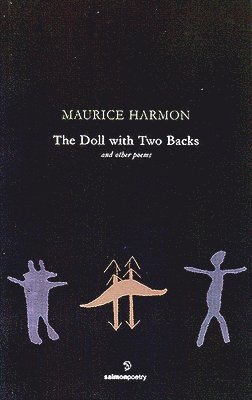
Within memories of colonial invasion and tribal breakdown, The Doll with Two Backs tells the story of failed friendship between a Native American girl and a visiting Irish academic.In a many-layered work echoing with literary and historical allusions the 'Prelude' sounds the motifs of myths of origin, religious beliefs and oral narrative, while the main movement, 'Broken Lights, Broken Lances', explores these issues in more detail. Failure, the recurrent trope, is sounded in images of tribal collapse, in the mixture of hope and elegy attending the relationship between teacher and student and in the failure of the imagination to absorb the deposits of myth and story. It is in keeping with this failure that the friendship ends. In the stillness that ensues the poet-teacher searches for understanding. An answer may be found in the work itself. A poem about the conjunction of dissimilar forces is a metaphor for the task of the imagination: to make sense of disorder, to bring harmony to the "broken lights" of tradition. Well-crafted, graceful lyrics in Part Two deal with persistence and failure, the cruelties and fears of childhood, the joys and disappointments of love, the strength of memory.Maurice Harmon, Emeritus Professor of Anglo-Irish Literature at University College Dublin, is a distinguished critic, biographer, editor, literary historian, and poet. He edited the ground-breaking anthology Irish Poetry After Yeats. His Selected Essays (2006) contains articles on William Carleton, Mary Lavin, John Montague, and contemporary Irish poetry. A study of Thomas Kinsella as poet and translator, Thomas Kinsella: Designing for the Exact Needs, was published in March 2008. His poetry collections include The Last Regatta (2000), The Doll with Two Backs and Other Poems (2004) and The Mischievous Boy and Other Poems (2008).
137 kr
Tillfälligt slut
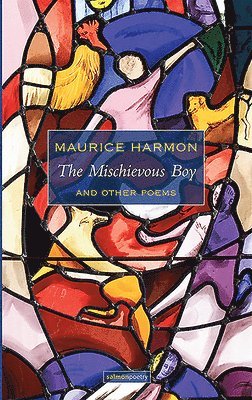
In this far-reaching collection Maurice Harmon extends the examination of modern Irish life that he began twenty years ago. the mischievous boy exposes the conditions of life in Ireland through various manifestations - in James Joyce, Thomas Kinsella, and William Carleton. The transformed nature of Irish society is projected in the satirical 'A Vision of Ireland in the Twenty-first Century'. In a style of luminous simplicity Maurice Harmon gives us elegies, love poems and humorous asides, delicate evocations of love and loss, considerations of misunderstanding between fathers and sons, a discussion of the attraction between men and women against the stark background of wife-murder, and portrait poems of greedy politicians. Childhood innocence and zest for living are celebrated in the title poem that serves as a foil for the discoveries of pain, deceit, and uncertainty in later experience. In the concluding section, he considers human experience in Egypt, the Middle East, America and Japan.Maurice Harmon, Emeritus Professor of Anglo-Irish Literature at University College Dublin, is a distinguished critic, biographer, editor, literary historian, and poet. He has written studies of several Irish writers, including Seán O'Faoláin, Austin Clarke, and Thomas Kinsella and edited the ground-breaking anthology Irish Poetry After Yeats. His Selected Essays (2006) contains articles on William Carleton, Mary Lavin, John Montague, and contemporary Irish poetry. A study of Thomas Kinsella as poet and translator, Thomas Kinsella: Designing for the Exact Needs, was published in March 2008. His poetry collections include The Last Regatta (2000) and The Doll with Two Backs and Other Poems (2004). The title poem of The Mischievous Boy has been set to music by Derek Ball and is the subject of a stained glass window by Phyllis Burke.
135 kr
Tillfälligt slut
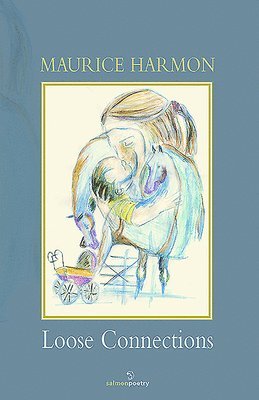
Following his acclaimed When Love is Not Enough: New & Selected Poems, this new collection sees Maurice Harmon re-examining one life's loose connections: departure to boarding school, family separations, an extra-marital affair, sexual pleasure and sexual abuse, misunderstandings between fathers and sons. Evil is encountered in the home, the church and the doctor's surgery – offset by the beauty of a woman in a Dublin café, flowers in Achill, horses in the field, a snow-capped mountain.
"Harmon displays an ability to combine tenderness and pathos with a fiercely unsentimental honesty."Paul Perry, The Irish TimesMaurice Harmon, former Emeritus Professor of Anglo-Irish Literature at University College Dublin, is a distinguished poet and literary historian. He has written studies of William Carleton, Mary Lavin, Seán O'Faolain, Austin Clarke, Thomas Kinsella, John F. Deane, Peter Fallon and Dennis O'Driscoll. He edited the pioneering anthology Irish Poetry After Yeats (Little, Brown, 1988). His Salmon poetry collections include The Last Regatta (2001), The Doll with Two Backs (2004), The Mischievous Boy (2008) and When Love is Not Enough: New & Selected Poems (2010). His Dialogue of the Ancients of Ireland, a translation of the medieval compendium Acallam na Senórach, was published in 2009. He lives in Dublin.
149 kr
Tillfälligt slut
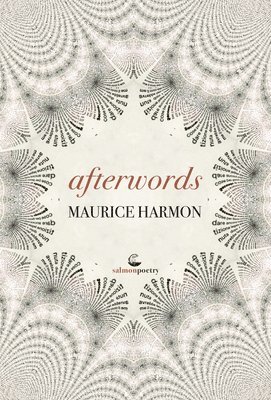
At 90 years old, Maurice Harmon is making poems out of memory and out of the experience of growing old, recognizing what is lost and the little that is gained.In this collection he gives us the present moment, then offers three, past thematic portrayals: life in academe, in small\-town Ireland, and in encroaching old age. Training his lyrical imagination and discerning eye on Irish life in the twentieth century, he forces us to examine its consequences in the twenty\-first century. Ever compassionate, he gives us a poetry of keen insight we cannot afford to ignore.