Maurizio Borghi - Böcker
Visar alla böcker från författaren Maurizio Borghi. Handla med fri frakt och snabb leverans.
4 produkter
4 produkter
1 937 kr
Skickas inom 5-8 vardagar
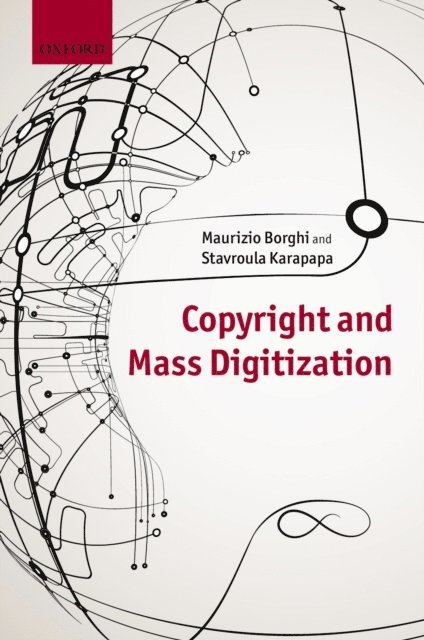
Mass digitization of texts, images, and other creative works promises to unprecedentedly enhance access to culture and knowledge. With the electronic 'library of Alexandria' having started to materialize, a number of legal and policy issues have emerged. The book develops an extended conceptual account of the ways in which mass digital projects challenge the established copyright norms through the wholesale copying of works, their storage in cloud environments, and their automated processing for purposes of data analytics and text mining. As individual licensing is not compatible with the mass scale of these activities, alternative approaches have gained momentum as effect of judicial interpretation, legislative initiative and private-ordering solutions.This book queries the normative and policy implications of this newly emerging framework in copyright law. Adopting a cross-jurisdictional perspective, it concludes that lack of clarity as to the scope of authorial consent does not only bear the risk of legal uncertainty, but can also lead to the creation of new and not readily transparent monopolies on information and knowledge. In this respect, a new regulatory framework is outlined drawing from the insights developed in areas of law where the concept of consent in the use of data has been thoroughly elaborated. Illustrating how mass digitization unveils a number of unsettled theoretical issues within copyright, the book builds a sophisticated case that digital repositories in the mass digital age should be and remain fully-fledged public goods to the benefit of future generations.
Science Under the Yoke of Value
A Phenomenological Inquiry into the Evaluation Machinery
Inbunden, Engelska, 2025
2 103 kr
Skickas inom 10-15 vardagar
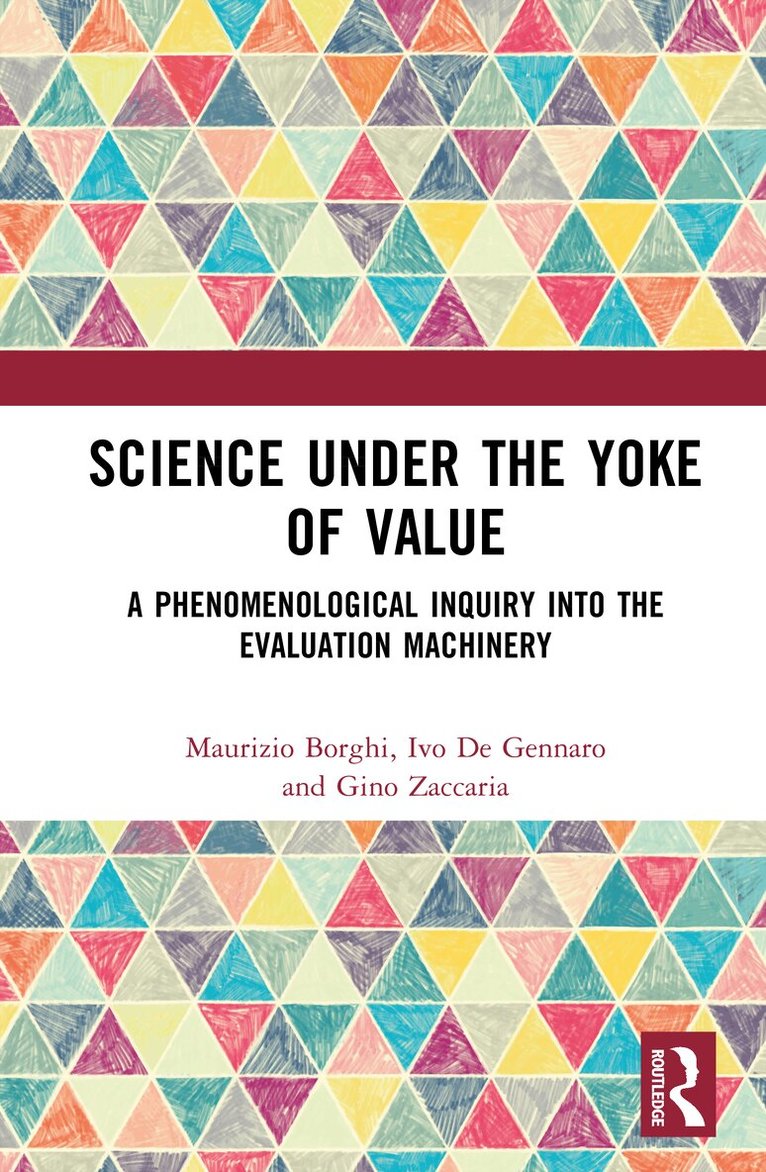
Science Under the Yoke of Value examines how science today is fundamentally governed not by an autonomous quest for knowledge and truth, or by the advancement of society, but by coercion to cater to a machinery that feeds on, and in its turn produces, self‑implicating values of “quality”, “impact”, or “productivity”, with disruptive consequences for scientific life as a whole.Drawing on phenomenological analysis and the insights of thinkers like Plato, Aristotle, Galilei, Kant, Husserl, Einstein, Heidegger, and Arendt, this book exposes how scholarly pursuits worldwide have become subjugated by non‑scientific values. It challenges the uncritical acceptance of evaluation practices that threaten to transform academia into a self‑perpetuating system where scholars labour under what the authors aptly term “the yoke of value”. Readers will gain profound insights into the philosophical underpinnings of academic evaluation, moving beyond common discussions of “bureaucratization” or “corporatization” to question the very concept of value that drives these systems. This book uniquely interrogates why enormous resources are devoted to evaluation systems without examining whether these values truly serve science or society, thereby diverting attention from the true menace to present‑day scientific enquiry. This critical analysis helps scholars understand the mechanisms that “magically” prevent questioning of the system itself, offering a framework to recognize how scientific autonomy has been compromised and what this means for the advancement of knowledge.This volume will appeal to STEM scholars, philosophers, and social scientists alike, interested in scientific integrity and the autonomy of research. University administrators, policymakers, and anyone concerned with the purposes and trajectory of scientific research in contemporary society will find this analysis essential for understanding the current crisis in scientific and academic life.The Open Access version of this book, available at http://www.taylorfrancis.com, has been made available under a Creative Commons Attribution-Non Commercial-No Derivatives (CC BY-NC-ND) 4.0 license.
Law, Regulation and Governance in the Information Society
Informational Rights and Informational Wrongs
Inbunden, Engelska, 2022
2 107 kr
Skickas inom 10-15 vardagar
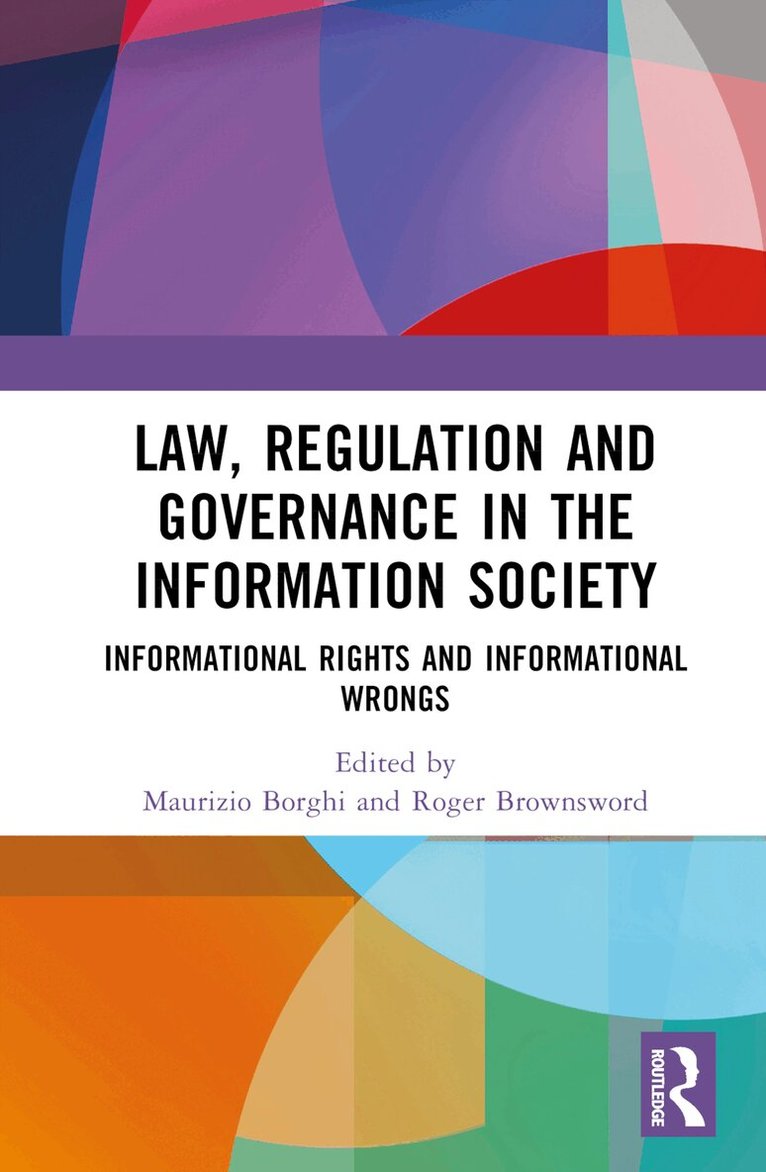
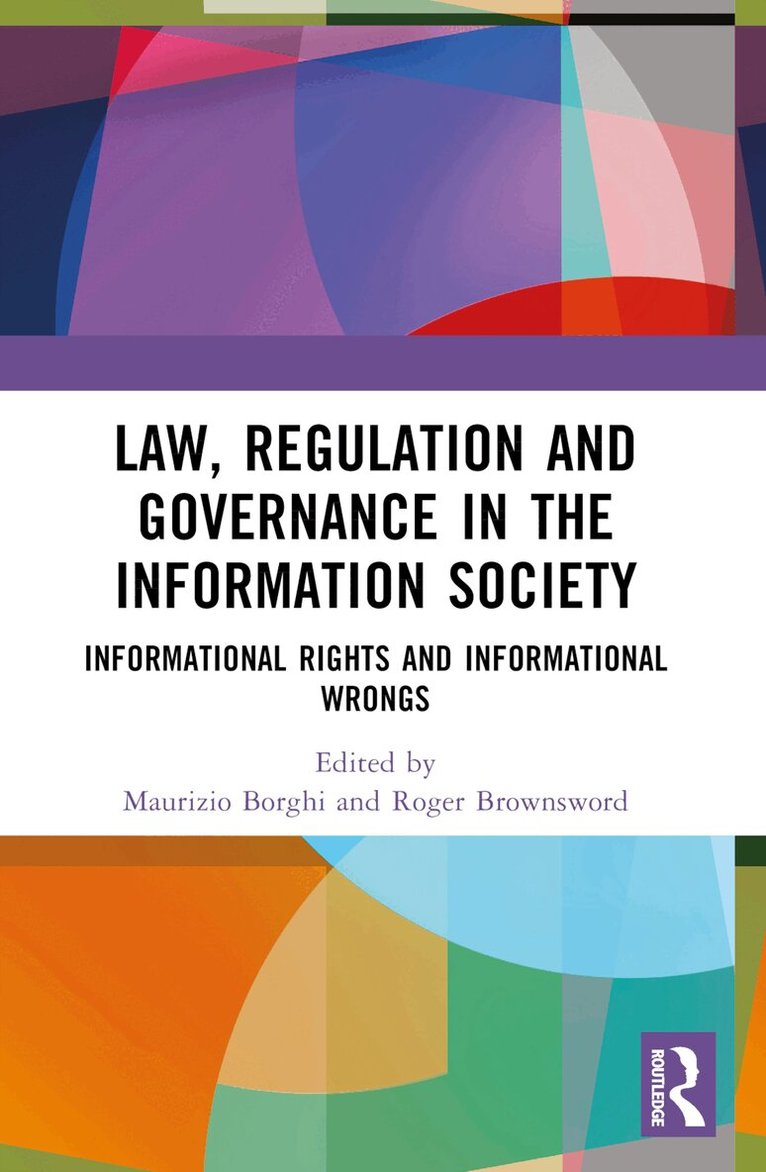
This edited collection seeks to map the landscape of contemporary informational interests, to evaluate a range of recognised and putative rights and wrongs associated with modern information societies, and to consider how law, regulation, and governance should be deployed in response.New technologies and new applications constantly disrupt our values, our framing of our world, and our sense of where we are and who we are. In our ‘information societies’, we entertain mixed hopes and expectations, as well as significant fears and concerns. At the root of these, there are a number of informational interests, on the basis of which certain rights are claimed and particular wrongs denounced. This book addresses these interests, considering them as relating primarily to the integrity of the informational ecosystem, to the accessibility, accuracy, and authenticity of public information, and to our individual ability to control the outward and inward flows of information that relates directly to ourselves. Covering a wide range of subjects, the book’s interrogation of our contemporary information society is oriented around two questions: first, whether the information society in which we live is the kind of society that we think it should be and, second, if not, what we can reasonably expect law, regulation, and governance to do in providing the basis for improving it.This book will be of considerable interest to those working at the intersection of law and technology, as well as others concerned with the legal, political, and social aspects of our information society.
Law, Regulation and Governance in the Information Society
Informational Rights and Informational Wrongs
Häftad, Engelska, 2024
518 kr
Skickas inom 10-15 vardagar
This edited collection seeks to map the landscape of contemporary informational interests, to evaluate a range of recognised and putative rights and wrongs associated with modern information societies, and to consider how law, regulation, and governance should be deployed in response.New technologies and new applications constantly disrupt our values, our framing of our world, and our sense of where we are and who we are. In our ‘information societies’, we entertain mixed hopes and expectations, as well as significant fears and concerns. At the root of these, there are a number of informational interests, on the basis of which certain rights are claimed and particular wrongs denounced. This book addresses these interests, considering them as relating primarily to the integrity of the informational ecosystem, to the accessibility, accuracy, and authenticity of public information, and to our individual ability to control the outward and inward flows of information that relates directly to ourselves. Covering a wide range of subjects, the book’s interrogation of our contemporary information society is oriented around two questions: first, whether the information society in which we live is the kind of society that we think it should be and, second, if not, what we can reasonably expect law, regulation, and governance to do in providing the basis for improving it.This book will be of considerable interest to those working at the intersection of law and technology, as well as others concerned with the legal, political, and social aspects of our information society.