Mauro Vallati – författare
Visar alla böcker från författaren Mauro Vallati. Handla med fri frakt och snabb leverans.
8 produkter
8 produkter
Inbunden, Engelska, 2020
1 904 kr
Skickas inom 10-15 vardagar
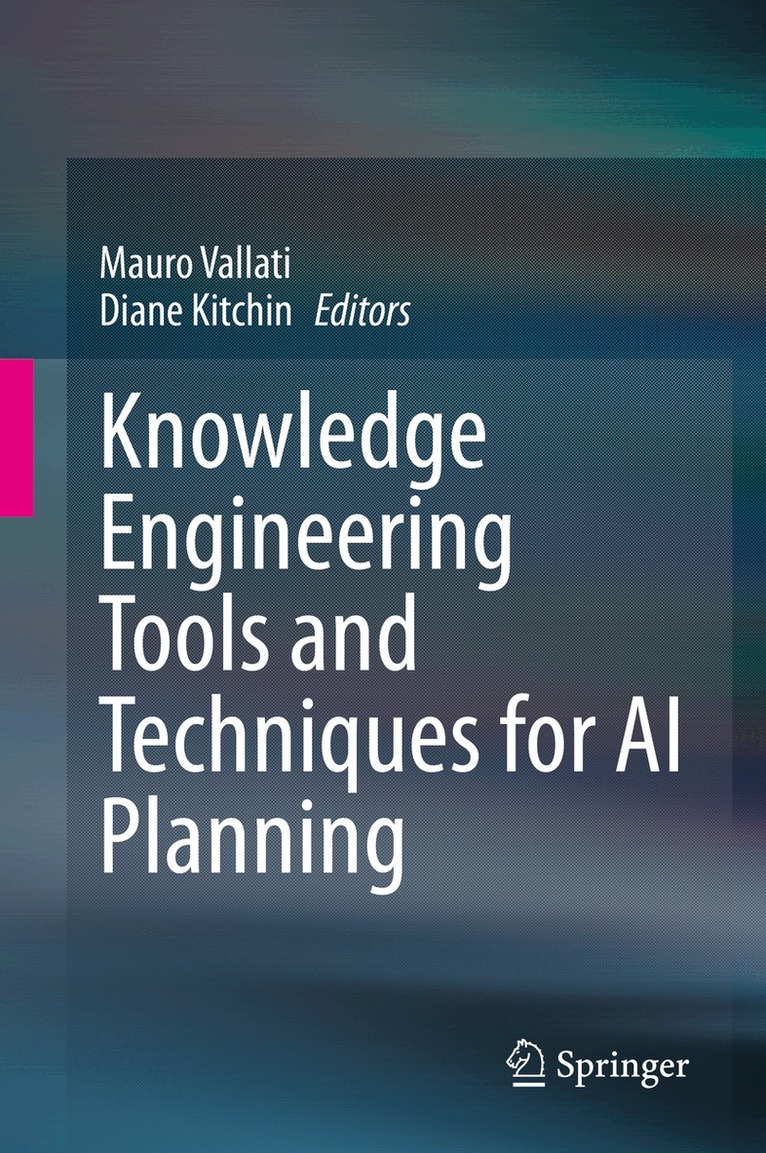
This book presents a comprehensive review for Knowledge Engineering tools and techniques that can be used in Artificial Intelligence Planning and Scheduling. KE tools can be used to aid in the acquisition of knowledge and in the construction of domain models, which this book will illustrate. AI planning engines require a domain model which captures knowledge about how a particular domain works - e.g. the objects it contains and the available actions that can be used. However, encoding a planning domain model is not a straightforward task - a domain expert may be needed for their insight into the domain but this information must then be encoded in a suitable representation language. The development of such domain models is both time-consuming and error-prone. Due to these challenges, researchers have developed a number of automated tools and techniques to aid in the capture and representation of knowledge.This booktargets researchers and professionals working in knowledge engineering, artificial intelligence and software engineering. Advanced-level students studying AI will also be interested in this book.
E-bok
Engelska, 20202 351 kr
Läs direkt efter köp
This book presents a comprehensive review for Knowledge Engineering tools and techniques that can be used in Artificial Intelligence Planning and Scheduling. KE tools can be used to aid in the acquisition of knowledge and in the construction of domain models, which this book will illustrate. AI planning engines require a domain model which captures knowledge about how a particular domain works - e.g. the objects it contains and the available actions that can be used. However, encoding a planning domain model is not a straightforward task - a domain expert may be needed for their insight into the domain but this information must then be encoded in a suitable representation language. The development of such domain models is both time-consuming and error-prone. Due to these challenges, researchers have developed a number of automated tools and techniques to aid in the capture and representation of knowledge.This booktargets researchers and professionals working in knowledge engineering, artificial intelligence and software engineering. Advanced-level students studying AI will also be interested in this book.
Häftad, Engelska, 2021
1 904 kr
Skickas inom 10-15 vardagar
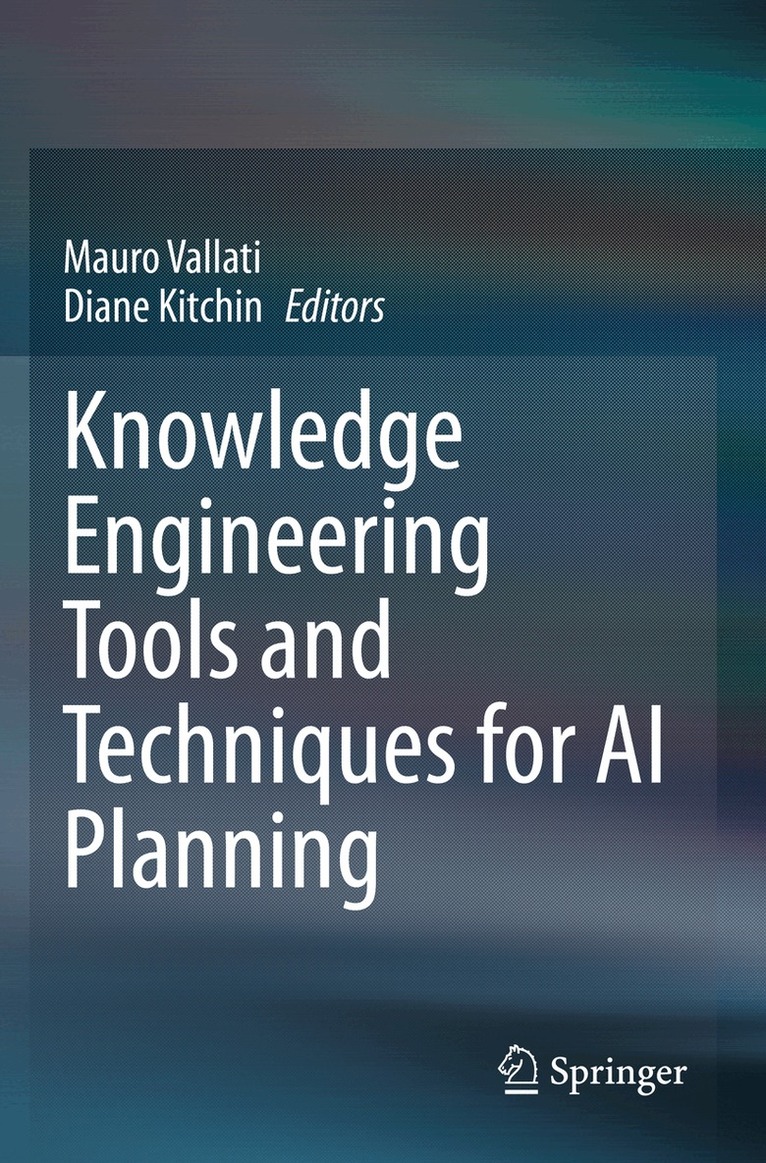
This book presents a comprehensive review for Knowledge Engineering tools and techniques that can be used in Artificial Intelligence Planning and Scheduling. KE tools can be used to aid in the acquisition of knowledge and in the construction of domain models, which this book will illustrate. AI planning engines require a domain model which captures knowledge about how a particular domain works - e.g. the objects it contains and the available actions that can be used. However, encoding a planning domain model is not a straightforward task - a domain expert may be needed for their insight into the domain but this information must then be encoded in a suitable representation language. The development of such domain models is both time-consuming and error-prone. Due to these challenges, researchers have developed a number of automated tools and techniques to aid in the capture and representation of knowledge.This booktargets researchers and professionals working in knowledge engineering, artificial intelligence and software engineering. Advanced-level students studying AI will also be interested in this book.
Del 1947 - Communications in Computer and Information Science
Artificial Intelligence. ECAI 2023 International Workshops
XAI^3, TACTIFUL, XI-ML, SEDAMI, RAAIT, AI4S, HYDRA, AI4AI, Kraków, Poland, September 30 – October 4, 2023, Proceedings, Part I
Häftad, Engelska, 2024
1 235 kr
Skickas inom 10-15 vardagar
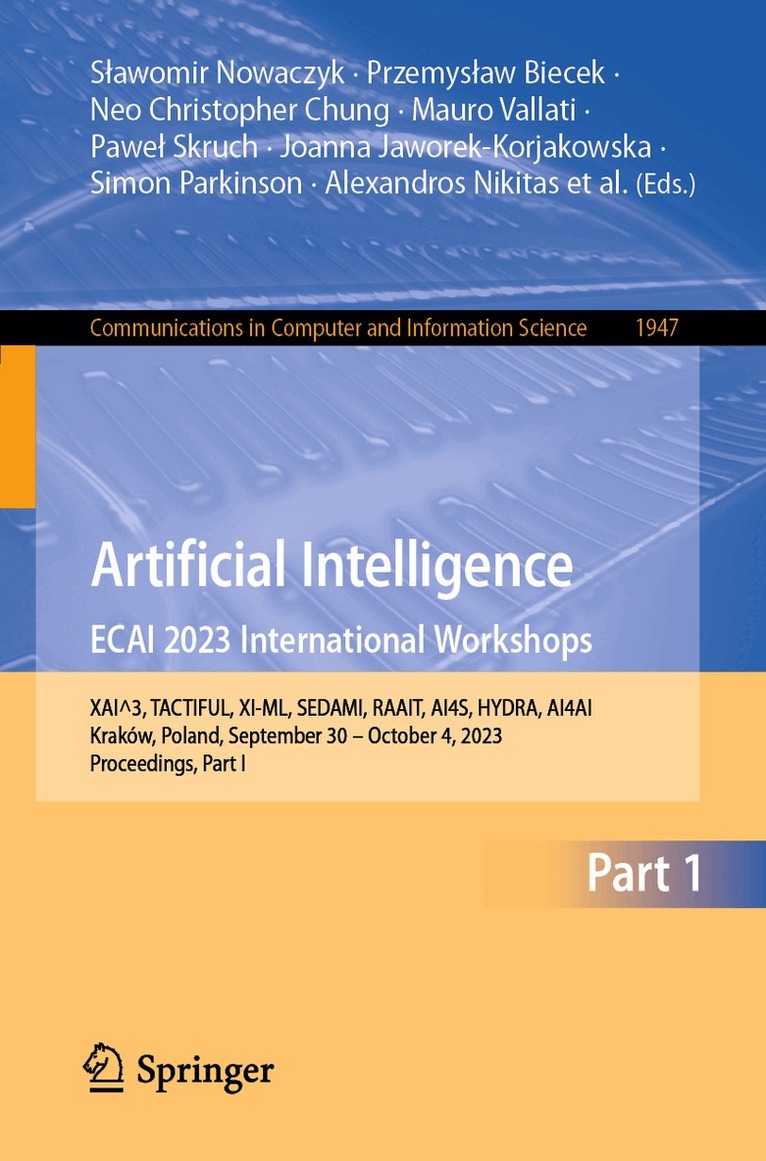
This volume constitutes the refereed proceedings presented at the international workshops of the 26th European Conference on Artificial Intelligence, ECAI 2023, which was held in Kraków, Poland, in September-October 2023. The papers in this volume were presented at the following workshops: XAI^3, TACTIFUL, XI-ML, SEDAMI, RAAIT, AI4S, HYDRA, AI4AI.
Del 1948 - Communications in Computer and Information Science
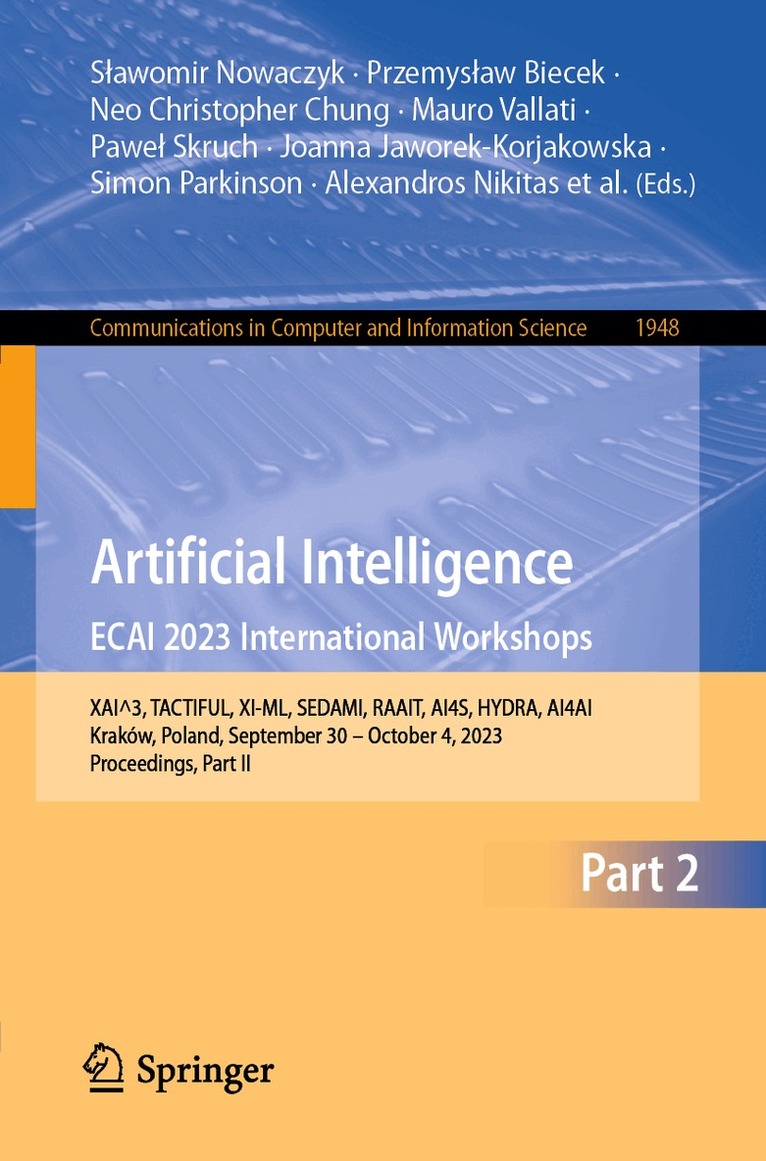
Artificial Intelligence. ECAI 2023 International Workshops
XAI^3, TACTIFUL, XI-ML, SEDAMI, RAAIT, AI4S, HYDRA, AI4AI, Kraków, Poland, September 30 – October 4, 2023, Proceedings, Part II
Häftad, Engelska, 2024
1 346 kr
Skickas inom 10-15 vardagar
This volume constitutes the refereed proceedings presented at the international workshops of the 26th European Conference on Artificial Intelligence, ECAI 2023, which was held in Kraków, Poland, in September-October 2023. The papers in this volume were presented at the following workshops: XAI^3, TACTIFUL, XI-ML, SEDAMI, RAAIT, AI4S, HYDRA, AI4AI.
Inbunden, Engelska, 2024
1 618 kr
Skickas inom 5-8 vardagar
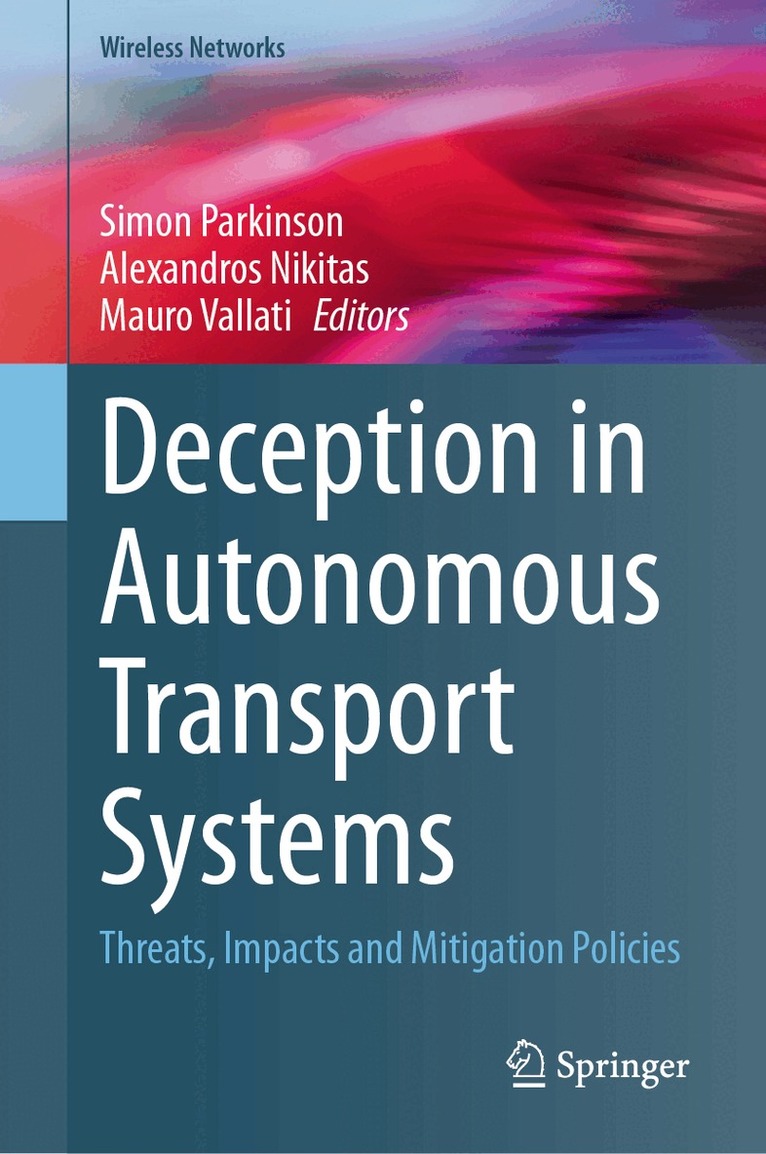
This book provides a comprehensive overview of deception in autonomous transport systems. This involves investigating the threats facing autonomous transport systems and how they can contribute towards a deceptive attack, followed by their potential impact if successful, and finally, how they can be mitigated. The work in this book is grouped into three parts. This first part focuses on the area of smart cities, policies, and ethics. This includes critically appraising the trade-off between functionality and security with connected and autonomous vehicles. The second discusses a range of AI applications in the wider field of smart transport and mobility, such as detecting anomalies in vehicle behaviour to investigating detecting disobedient vehicles. Finally, the third part presents and discusses cybersecurity-related aspects to consider when dealing with Connected and Autonomous Vehicles (CAVs) and smart urban infrastructure. This includes analysing different attacks to investigating secure communication technologies. CAVs are a game-changing technology with the potential to transform the way transport is perceived, mobility is serviced, travel ecosystems ‘behave’, and cities and societies as a whole function. There are many foreseen safety, accessibility and sustainability benefits resulting from the adoption of CAVs because of their ability, in theory, to operate error-free and collaboratively, ranging from accident prevention, congestion reduction and decreased carbon emissions to time savings, increased social inclusion, optimised routing, and better traffic control. However, no matter what the expected benefits are, CAVs are at the same time susceptible to an unprecedented number of new digital and physical threats. The severity of these threats has resulted in an increased effort to deepen our understanding of CAVs when it comes to their safety and resilience. In this complex and multi-faceted scenario, this book aims to provide an extensive overview of the risks related to the malicious exploitation of CAVs and beyond, the potential ways in which vulnerabilities can be exploited, prevention and mitigation policies and techniques, and the impact that the non-acceptance of Connected and Autonomous Mobility can have on the Smart City agenda. This book targets researchers, practitioners, and advanced-level students in computer science and transport engineering.
E-bok
Engelska, 20242 161 kr
Läs direkt efter köp
This book provides a comprehensive overview of deception in autonomous transport systems. This involves investigating the threats facing autonomous transport systems and how they can contribute towards a deceptive attack, followed by their potential impact if successful, and finally, how they can be mitigated. The work in this book is grouped into three parts. This first part focuses on the area of smart cities, policies, and ethics. This includes critically appraising the trade-off between functionality and security with connected and autonomous vehicles. The second discusses a range of AI applications in the wider field of smart transport and mobility, such as detecting anomalies in vehicle behaviour to investigating detecting disobedient vehicles. Finally, the third part presents and discusses cybersecurity-related aspects to consider when dealing with Connected and Autonomous Vehicles (CAVs) and smart urban infrastructure. This includes analysing different attacks to investigating secure communication technologies. CAVs are a game-changing technology with the potential to transform the way transport is perceived, mobility is serviced, travel ecosystems ‘behave’, and cities and societies as a whole function. There are many foreseen safety, accessibility and sustainability benefits resulting from the adoption of CAVs because of their ability, in theory, to operate error-free and collaboratively, ranging from accident prevention, congestion reduction and decreased carbon emissions to time savings, increased social inclusion, optimised routing, and better traffic control. However, no matter what the expected benefits are, CAVs are at the same time susceptible to an unprecedented number of new digital and physical threats. The severity of these threats has resulted in an increased effort to deepen our understanding of CAVs when it comes to their safety and resilience. In this complex and multi-faceted scenario, this book aims to provide an extensive overview of the risks related to the malicious exploitation of CAVs and beyond, the potential ways in which vulnerabilities can be exploited, prevention and mitigation policies and techniques, and the impact that the non-acceptance of Connected and Autonomous Mobility can have on the Smart City agenda.
This book targets researchers, practitioners, and advanced-level students in computer science and transport engineering.
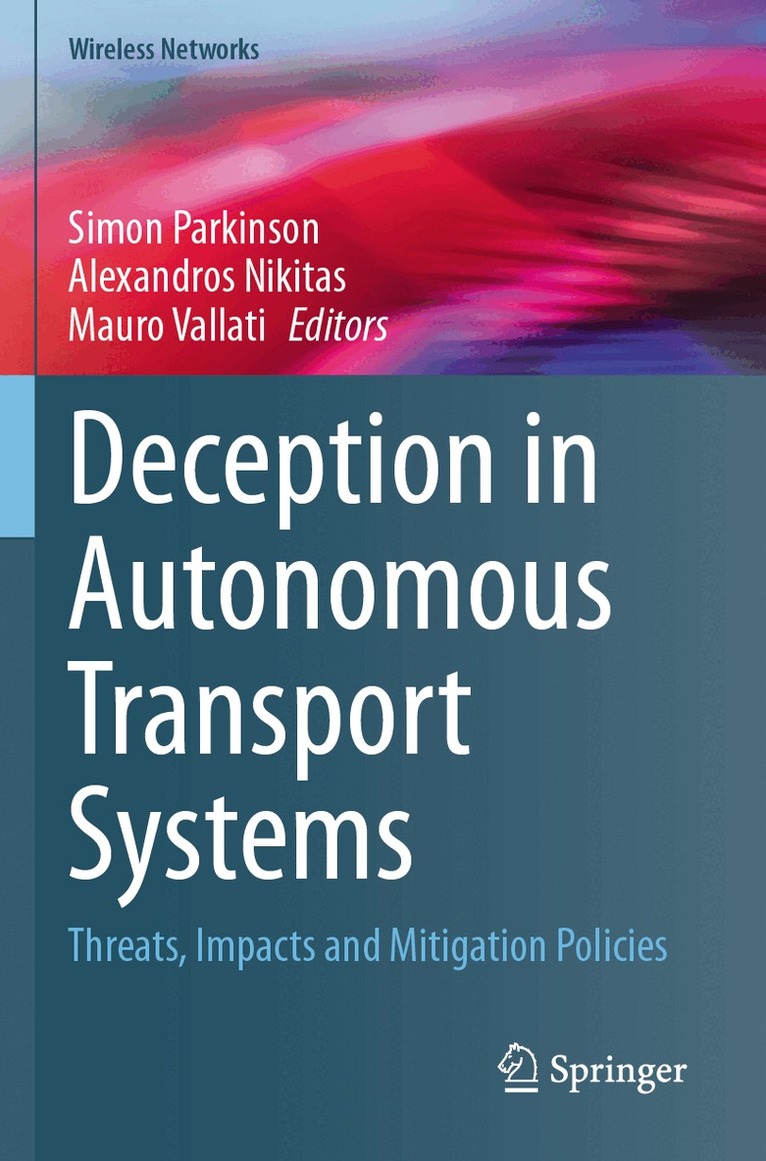
Häftad, Engelska, 2025
1 741 kr
Skickas inom 10-15 vardagar
This book provides a comprehensive overview of deception in autonomous transport systems. This involves investigating the threats facing autonomous transport systems and how they can contribute towards a deceptive attack, followed by their potential impact if successful, and finally, how they can be mitigated. The work in this book is grouped into three parts. This first part focuses on the area of smart cities, policies, and ethics. This includes critically appraising the trade-off between functionality and security with connected and autonomous vehicles. The second discusses a range of AI applications in the wider field of smart transport and mobility, such as detecting anomalies in vehicle behaviour to investigating detecting disobedient vehicles. Finally, the third part presents and discusses cybersecurity-related aspects to consider when dealing with Connected and Autonomous Vehicles (CAVs) and smart urban infrastructure. This includes analysing different attacks to investigating secure communication technologies. CAVs are a game-changing technology with the potential to transform the way transport is perceived, mobility is serviced, travel ecosystems ‘behave’, and cities and societies as a whole function. There are many foreseen safety, accessibility and sustainability benefits resulting from the adoption of CAVs because of their ability, in theory, to operate error-free and collaboratively, ranging from accident prevention, congestion reduction and decreased carbon emissions to time savings, increased social inclusion, optimised routing, and better traffic control. However, no matter what the expected benefits are, CAVs are at the same time susceptible to an unprecedented number of new digital and physical threats. The severity of these threats has resulted in an increased effort to deepen our understanding of CAVs when it comes to their safety and resilience. In this complex and multi-faceted scenario, this book aims to provide an extensive overview of the risks related to the malicious exploitation of CAVs and beyond, the potential ways in which vulnerabilities can be exploited, prevention and mitigation policies and techniques, and the impact that the non-acceptance of Connected and Autonomous Mobility can have on the Smart City agenda. This book targets researchers, practitioners, and advanced-level students in computer science and transport engineering.