Max H. Boisot - Böcker
Visar alla böcker från författaren Max H. Boisot. Handla med fri frakt och snabb leverans.
3 produkter
3 produkter
1 897 kr
Skickas inom 5-8 vardagar
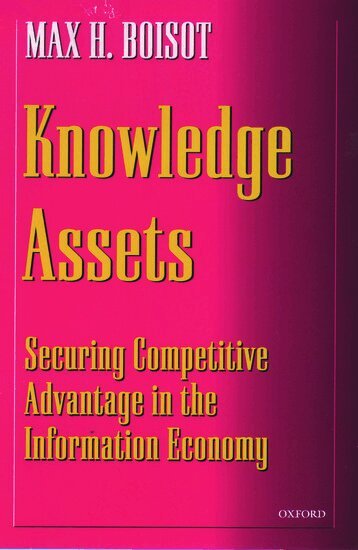
It is now widely recognized that the effective management of knowledge assets is a key requirement for securing competitive advantage in the emerging information economy. Yet the physical and institutional differences between tangible assets and knowledge assets remain poorly understood. In the case of knowledge, the ownership and control of assets are becoming ever more separate, a phenomenon that is actually exacerbated by the phenomenon of learning. If we are to meet the challenges of the information economy, then we need a new approach to property rights based on a deeper theoretical understanding of knowledge assets. Max Boisot writes clearly and in accessible language providing some of the key building blocks which are needed for a theory of knowledge assets. He develops a powerful conceptual framework, the Information-Space or I-Space, for exploring the way knowledge flows within and between organizations. This framework will enable managers and students to explore and understand how knowledge and information assets differ from physical assets, and how to deal with them at a strategic level within their organizations.
895 kr
Skickas inom 5-8 vardagar
It is now widely recognized that the effective management of knowledge assets is a key requirement for securing competitive advantage in the emerging information economy. Yet the physical and institutional differences between tangible assets and knowledge assets remain poorly understood. In the case of knowledge, the ownership and control of assets are becoming ever more separate, a phenomenon that is actually exacerbated by the phenomenon of learning. If we are to meet the challenges of the information economy, then we need a new approach to property rights based on a deeper theoretical understanding of knowledge assets. Max Boisot writes clearly and in accessible language providing some of the key building blocks which are needed for a theory of knowledge assets. He develops a powerful conceptual framework, the Information-Space or I-Space, for exploring the way knowledge flows within and between organizations. This framework will enable managers and students to explore and understand how knowledge and information assets differ from physical assets, and how to deal with them at a strategic level within their organizations.
1 008 kr
Skickas inom 5-8 vardagar
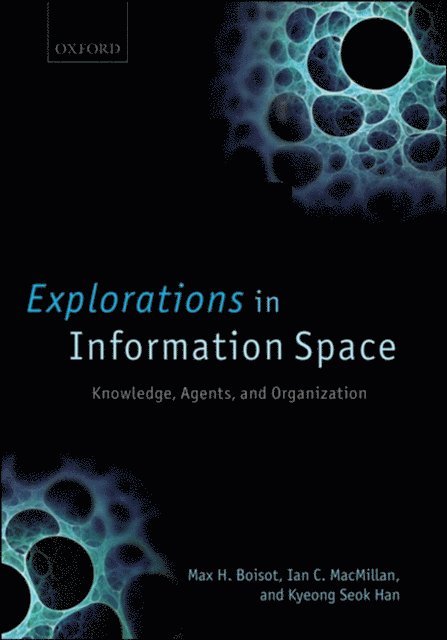
With the rise of the knowledge economy, the knowledge content of goods and services is going up just as their material content is declining. Economic value is increasingly seen to reside in the former - that is, in intangible assets - rather than in the latter. Yet we keep wanting to turn knowledge back into something tangible, something with definite boundaries which can be measured, manipulated, appropriated, and traded. In short, we want to reify knowledge. Scholars have been debating the nature of knowledge since the time of Plato. Many new insights have been gained from these debates, but little theoretical consensus has been achieved. Through six thematically linked chapters, the book articulates the theoretical approach to the production and distribution of knowledge that underpins Max Boisot's conceptual framework, the Information Space or I-Space. In this way the book looks to provide theoretical and practical underpinnings to Boisot's book Knowledge Assets (OUP, 1998).Following an introductory chapter, how knowledge relates to data and information is first examined in chapter 1, and how different economic actors - entrepreneurs, managers, etc - use knowledge as a basis for action is explored in chapter 2. Chapter 3 looks at how the heterogeneity of economic actors arises naturally from their respective data processing strategies in spite of any similarities in the data that they might share. Chapter 4 argues, contra much transaction-based economics, that an organizational order must have preceded a market order, something that should be reflected in any knowledge-based theory of the firm. Chapter 5 discusses the cultural and institutional significance of different kinds of knowledge flows. Finally, chapter 6 presents an agent-based simulation model, SimISpace, that illustrates how the I-Space might be applied to concrete problems such those of intellectual property rights. A concluding chapter proposes a research agenda based on the theorizing developed in the book.The approach the book sets out is used by a whole range of organizations to issues of knowledge management, policy, economics, and organizational and cultural change.