Max Kölbel - Böcker
Visar alla böcker från författaren Max Kölbel. Handla med fri frakt och snabb leverans.
12 produkter
12 produkter
674 kr
Skickas inom 7-10 vardagar
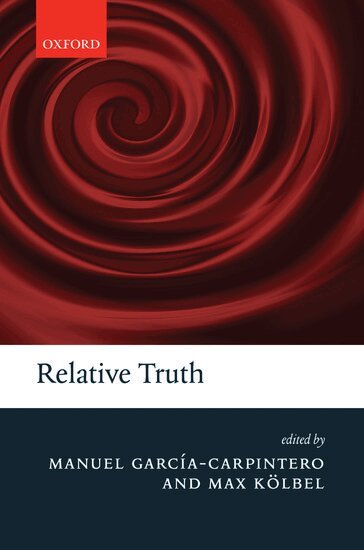
The truth of an utterance depends on various factors. Usually these factors are assumed to be: the meaning of the sentence uttered, the context in which the utterance was made, and the way things are in the world. Recently, however, a number of cases have been discussed where there seems to be reason to think that the truth of an utterance is not yet fully determined by these three factors, and that truth must therefore depend on a further factor. The most prominent examples include utterances about values, utterances attributing knowledge, utterances that state that something is probable or epistemically possible, and utterances about the contingent future. In these cases, some have argued, the standard picture needs to be modified to admit extra truth-determining factors, and there is further controversy about the exact role of any such extra factors. With contributions from some of the key figures in the contemporary debate on relativism this book is about a topic that is the focus of much traditional and current interest: whether truth is relative to standards of taste, values, or subjective informational states. It is an issue in the philosophy of language, but one with important connections to other areas of philosophy, such as meta-ethics, metaphysics, and epistemology.
928 kr
Skickas inom 3-6 vardagar
The truth of an utterance depends on various factors. Usually these factors are assumed to be: the meaning of the sentence uttered, the context in which the utterance was made, and the way things are in the world. Recently, however, a number of cases have been discussed where there seems to be reason to think that the truth of an utterance is not yet fully determined by these three factors, and that truth must therefore depend on a further factor. The most prominent examples include utterances about values, utterances attributing knowledge, utterances that state that something is probable or epistemically possible, and utterances about the contingent future. In these cases, some have argued, the standard picture needs to be modified to admit extra truth-determining factors, and there is further controversy about the exact role of any such extra factors. With contributions from some of the key figures in the contemporary debate on relativism this book is about a topic that is the focus of much traditional and current interest: whether truth is relative to standards of taste, values, or subjective informational states. It is an issue in the philosophy of language, but one with important connections to other areas of philosophy, such as meta-ethics, metaphysics, and epistemology.
2 088 kr
Skickas inom 10-15 vardagar
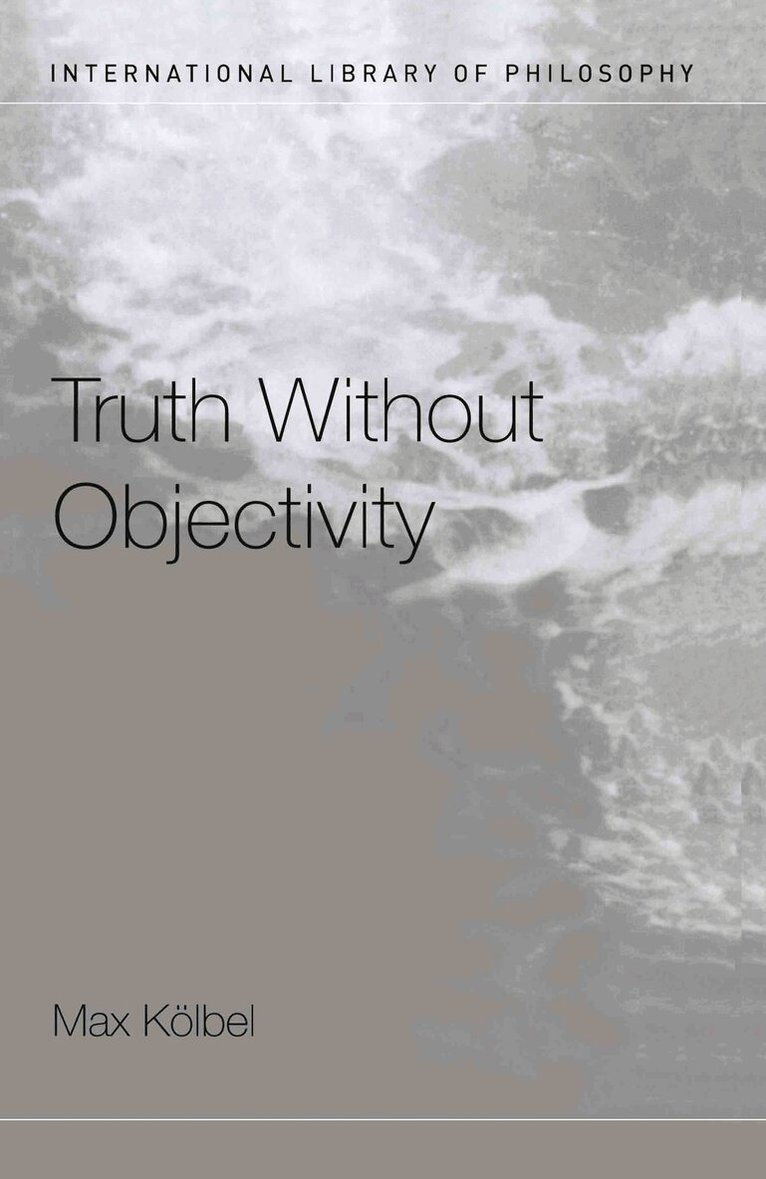
Truth without Objectivity provides a critique of the mainstream view of 'meaning'. Kölbel examines the standard solutions to the conflict implicit in this view, demonstrating their inadequacy and developing instead his own relativist theory of truth.The mainstream view of meaning assumes that understanding a sentence's meaning implies knowledge of the conditions required for it to be true. This view is challenged by taste judgements, which have meaning, but seem to be neither true nor false.
576 kr
Skickas inom 10-15 vardagar
Truth without Objectivity provides a critique of the mainstream view of 'meaning'. Kölbel examines the standard solutions to the conflict implicit in this view, demonstrating their inadequacy and developing instead his own relativist theory of truth.The mainstream view of meaning assumes that understanding a sentence's meaning implies knowledge of the conditions required for it to be true. This view is challenged by taste judgements, which have meaning, but seem to be neither true nor false.
2 088 kr
Skickas inom 10-15 vardagar
Ludwig Wittgenstein (1889-1951) has exerted a more powerful influence on contemporary philosophy than any other twentieth-century thinker. But what is the nature of this influence and why has it proved so enduring?In Wittgenstein's Lasting Significance, twelve contemporary philosophers explore the issues surrounding Wittgenstein's importance and relevance to modern thought. Their articles, all of which are published here for the first time, cover the entirety of Wittgenstein's major publications: the Tracatus Logico-Philosophicus, Philosophical Investigations, On Certainty and Remarks on the Foundations of Mathematics. They discuss how much originality and continuity can be found in Wittgenstein's thought, how he relates to current traditions and movements within philosophy, and what we can learn from his conceptions of language, knowledge, mathematics and logic.The international set of contributors are renowned for their work in both Wittgenstein studies and other fields of philosophy, making Wittgenstein's Lasting Significance an important collection for anyone interested in contemporary philosophy.
671 kr
Skickas inom 10-15 vardagar
Ludwig Wittgenstein (1889-1951) has exerted a more powerful influence on contemporary philosophy than any other twentieth-century thinker. But what is the nature of this influence and why has it proved so enduring?In Wittgenstein's Lasting Significance, twelve contemporary philosophers explore the issues surrounding Wittgenstein's importance and relevance to modern thought. Their articles, all of which are published here for the first time, cover the entirety of Wittgenstein's major publications: the Tracatus Logico-Philosophicus, Philosophical Investigations, On Certainty and Remarks on the Foundations of Mathematics. They discuss how much originality and continuity can be found in Wittgenstein's thought, how he relates to current traditions and movements within philosophy, and what we can learn from his conceptions of language, knowledge, mathematics and logic.The international set of contributors are renowned for their work in both Wittgenstein studies and other fields of philosophy, making Wittgenstein's Lasting Significance an important collection for anyone interested in contemporary philosophy.
2 694 kr
Skickas inom 10-15 vardagar
With chapters written by leading international scholars in the field, this is an authoritative reference guide for researchers working in the Philosophy of Language today. "The Continuum Companion to Philosophy of Language" offers the definitive guide to contemporary philosophy of language. The book covers all the fundamental questions asked by the philosophy of language - areas that have continued to attract interest historically as well as topics that have emerged more recently as active areas of research. Ten specially commissioned essays from an international team of experts reveal where important work continues to be done in the area and, most valuably, the exciting new directions the field is taking. The Companion explores issues pertaining to the nature of language, form semantics, theories of meaning, reference, intensional contexts, context-dependence, pragmatics, the normativity of language, analyticity, a priority and modality.Featuring a series of indispensable research tools, including an A to Z of key terms and concepts, a detailed list of resources and a fully annotated bibliography, this is the essential reference tool for anyone working in the philosophy of language. "The Continuum Companions" series is a major series of single volume companions to key research fields in the humanities aimed at postgraduate students, scholars and libraries. Each companion offers a comprehensive reference resource giving an overview of key topics, research areas, new directions and a manageable guide to beginning or developing research in the field. A distinctive feature of the series is that each companion provides practical guidance on advanced study and research in the field, including research methods and subject-specific resources.
2 088 kr
Skickas inom 10-15 vardagar
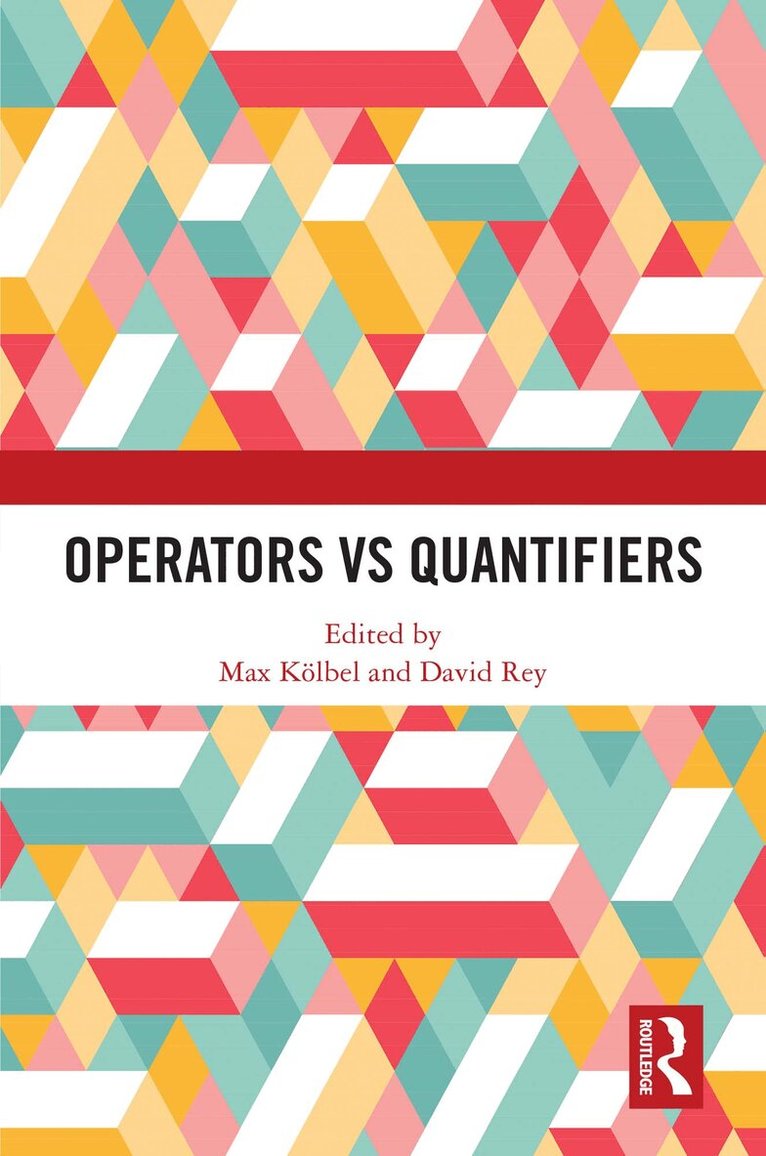
In this volume, seven experts in logic and semantics examine reasons for using the intensional operator approach over the variable binding approach and vice versa.In logic and semantics there are two alternative tools that can be applied to many types of embedding phrases (modal, temporal, etc): the intensional operator approach and the variable binding approach. A rivalry between operators and quantifiers occurs in many areas of semantics: e.g. tense, modality, locational operators, epistemic modality. There are areas where the operator approach dominates, and areas where quantifiers prevail. Sometimes, as in the case of tense, roles have switched, and where one approach used to dominate, the other has taken over. This volume features contributions from leading experts in the field that examine the following questions:what exactly is at stake in a choice between the alternatives?are there any principled reasons for deciding which approach to use in which case?should we be purists and eliminate one approach completely in favour of the other?Operators vs Quantifiers will be a key resource for academics, researchers, and advanced students of philosophy, linguistics, computer science and mathematics. This book was originally published as a special issue of Inquiry.
630 kr
Skickas inom 10-15 vardagar
In this volume, seven experts in logic and semantics examine reasons for using the intensional operator approach over the variable binding approach and vice versa.In logic and semantics there are two alternative tools that can be applied to many types of embedding phrases (modal, temporal, etc): the intensional operator approach and the variable binding approach. A rivalry between operators and quantifiers occurs in many areas of semantics: e.g. tense, modality, locational operators, epistemic modality. There are areas where the operator approach dominates, and areas where quantifiers prevail. Sometimes, as in the case of tense, roles have switched, and where one approach used to dominate, the other has taken over. This volume features contributions from leading experts in the field that examine the following questions:what exactly is at stake in a choice between the alternatives?are there any principled reasons for deciding which approach to use in which case?should we be purists and eliminate one approach completely in favour of the other?Operators vs Quantifiers will be a key resource for academics, researchers, and advanced students of philosophy, linguistics, computer science and mathematics. This book was originally published as a special issue of Inquiry.
499 kr
Kommande
Uncovering an aspect of Gottlob Frege’s linguistic theorizing that has until now received little attention, this volume offers the first detailed exposition of Frege’s pragmatics. Thorsten Sander explores his views on colouring, side-thoughts, presuppositions, indexicals and illocutionary force and closely relates these to current research in philosophy of language and linguistics.Throughout his career, Frege was concerned with various secondary aspects of meaning. He claims, for instance, that the two words ‘dog’ and ‘cur’ differ not in what he calls sense, but merely in colouring. By contrast, the difference between ‘morning star’ and ‘evening star’ is supposed to be a matter of sense. How exactly does sense differ from colouring? Frege also claims that by using a proper name one presupposes the existence of its bearer and that our utterances are frequently associated with side-thoughts. What exactly does he mean by these terms, and wherein lies the difference between these phenomena?Frege's Pragmatics answers questions such as these, providing a fresh perspective on Frege’s account of various pragmatic aspects of language. In this first book-length treatment, Sander makes the case that Frege’s groundbreaking ideas are an essential part of his overall philosophical enterprise.
468 kr
Kommande
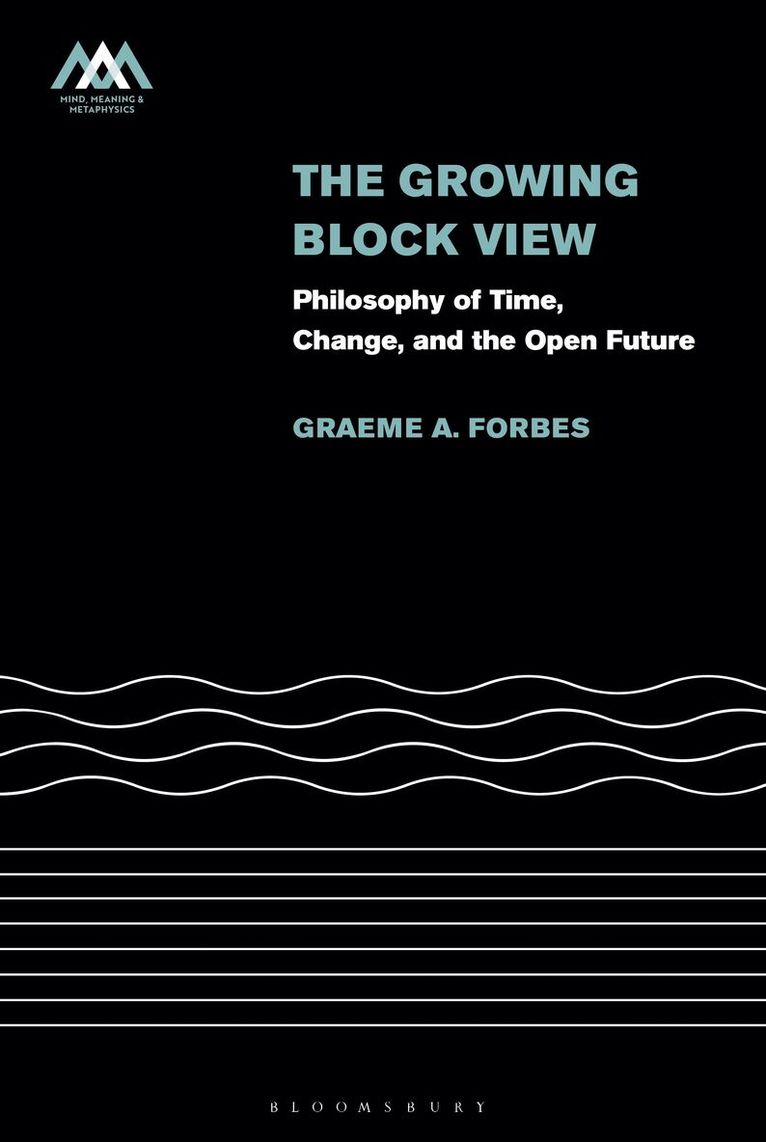
What makes time interesting and what is time? Graeme A. Forbes presents a robust defence of the metaphysical asymmetry between past and future, providing a compelling argument for the acceptance of the Growing-Block view.Taking us from the armchair to philosophy of physics, and then out to the human world Forbes considers the ontological questions that have been the focus of most of the literature on the metaphysics of time.Across three parts, he addresses questions central to the philosophy of time. Part I asks why we should think that time does something that space does not; Part II examines why we should think that the past differs in some metaphysically interesting way from the future and Part III shows why we should accept the Growing-Block view – the view on which the past exists, the future doesn’t, and the passage of time is causation bringing about events in accordance with the laws of nature. This wide-ranging and engaging exploration of persistence, experience, agency, and more, makes a radical contribution to our understanding of the philosophy of time.
515 kr
Skickas inom 10-15 vardagar
Beginning with works of Frege, Russell, and Wittgenstein, The Bloomsbury Companion to the Philosophy of Language provides a critical history of the core concepts in the area. From generative syntax and formal semantics to broader philosophical issues such as intentional contexts, theories of meaning and context dependence, a well-known team of experts offer insightful analysis into some of the fundamental questions asked by the philosophy of language. The result is a comprehensive introduction, featuring a series of research tools, including an A to Z of key terms and concepts, a detailed list of resources and a fully annotated bibliography. For students and scholars looking to better understand the questions and debates informing the subject, this is an essential study tool.