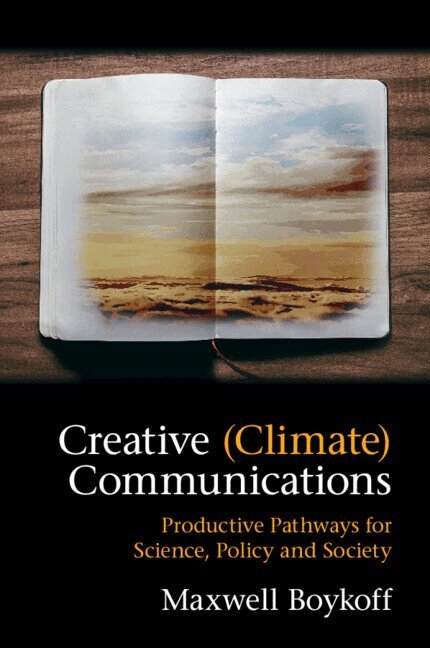
Maxwell Boykoff – författare
2 389 kr
Skickas inom 10-15 vardagar
749 kr
Skickas inom 10-15 vardagar
707 kr
Skickas inom 10-15 vardagar
2 179 kr
Skickas inom 10-15 vardagar
749 kr
Skickas inom 10-15 vardagar
967 kr
Skickas inom 7-10 vardagar
611 kr
Läs direkt efter köp
611 kr
Läs direkt efter köp
860 kr
Läs direkt efter köp
What does successful adaptation look like? This is a question we are frequently asked by planners, policy makers and other professionals charged with the task of developing and implementing adaptation strategies. While adaptation is increasingly recognized as an important climate risk management strategy, and on-the-ground adaptation planning activity is becoming more common-place, there is no clear guidance as to what success would look like, what to aim for and how to judge progress.
This edited volume makes significant progress toward unpacking the question of successful adaptation, offering both scientifically informed and practice-relevant answers from various sectors and regions of the world. It brings together 18 chapters from leading experts within the field to present careful analyses of different cases and situations, questioning throughout commonly avowed truisms and unspoken assumptions that have pervaded climate adaptation science and practice to date. This book offers not one answer but demonstrates how the question of success in important ways is normative and context specific. It identifies the various dimensions of success, such as economic, political, institutional, ecological, and social, explores the tensions between them, and compiles encouraging evidence that resolutions can be found. The book appraises how climatic and non-climatic stressors play a role, what role science does and can play in adaptation decision making, and how trade-offs and other concerns and priorities shape adaptation planning and implementation on the ground.
This is timely interdisciplinary text sheds light on key issues that arise in on-the-ground adaptation to climate change. It bridges the gap between science and practical application of successful adaptation strategies and will be of interest to both students, academics and practitioners.
860 kr
Läs direkt efter köp
What does successful adaptation look like? This is a question we are frequently asked by planners, policy makers and other professionals charged with the task of developing and implementing adaptation strategies. While adaptation is increasingly recognized as an important climate risk management strategy, and on-the-ground adaptation planning activity is becoming more common-place, there is no clear guidance as to what success would look like, what to aim for and how to judge progress.
This edited volume makes significant progress toward unpacking the question of successful adaptation, offering both scientifically informed and practice-relevant answers from various sectors and regions of the world. It brings together 18 chapters from leading experts within the field to present careful analyses of different cases and situations, questioning throughout commonly avowed truisms and unspoken assumptions that have pervaded climate adaptation science and practice to date. This book offers not one answer but demonstrates how the question of success in important ways is normative and context specific. It identifies the various dimensions of success, such as economic, political, institutional, ecological, and social, explores the tensions between them, and compiles encouraging evidence that resolutions can be found. The book appraises how climatic and non-climatic stressors play a role, what role science does and can play in adaptation decision making, and how trade-offs and other concerns and priorities shape adaptation planning and implementation on the ground.
This is timely interdisciplinary text sheds light on key issues that arise in on-the-ground adaptation to climate change. It bridges the gap between science and practical application of successful adaptation strategies and will be of interest to both students, academics and practitioners.
860 kr
Läs direkt efter köp
Focusing on cultural values and norms as they are translated into politics and policy outcomes, this book presents a unique contribution in combining research from varied disciplines and from both the developed and developing world.
This collection draws from multiple perspectives to present an overview of the knowledge related to our current understanding of climate change politics and culture. It is divided into four sections – Culture and Values, Communication and Media, Politics and Policy, and Future Directions in Climate Politics Scholarship – each followed by a commentary from a key expert in the field. The book includes analysis of the challenges and opportunities for establishing successful communication on climate change among scientists, the media, policy-makers, and activists.
With an emphasis on the interrelation between social, cultural, and political aspects of climate change communication, this volume should be of interest to students and scholars of climate change, environment studies, environmental policy, communication, cultural studies, media studies, politics, sociology.
860 kr
Läs direkt efter köp
Focusing on cultural values and norms as they are translated into politics and policy outcomes, this book presents a unique contribution in combining research from varied disciplines and from both the developed and developing world.
This collection draws from multiple perspectives to present an overview of the knowledge related to our current understanding of climate change politics and culture. It is divided into four sections – Culture and Values, Communication and Media, Politics and Policy, and Future Directions in Climate Politics Scholarship – each followed by a commentary from a key expert in the field. The book includes analysis of the challenges and opportunities for establishing successful communication on climate change among scientists, the media, policy-makers, and activists.
With an emphasis on the interrelation between social, cultural, and political aspects of climate change communication, this volume should be of interest to students and scholars of climate change, environment studies, environmental policy, communication, cultural studies, media studies, politics, sociology.
811 kr
Läs direkt efter köp
Climate change is a defining issue in contemporary life. Since the Industrial Revolution, heavy reliance on carbon-based sources for energy in industry and society has contributed to substantial changes in the climate, indicated by increases in temperature and sea level rise.
In the last three decades, concerns regarding human contributions to climate change have moved from obscure scientific inquiries to the fore of science, politics, policy and practices at many levels. From local adaptation strategies to international treaty negotiation, ‘the politics of climate change’ is as pervasive, vital and contested as it has ever been.
On the cusp of a new commitment to international co-operation to rein in greenhouse gas emissions, this essential book intervenes to help understand and engage with the dynamic and compelling ‘Politics of Climate Change’.
This edited collection draws on a vast array of experience, expertise and perspectives, with authors with backgrounds in climate science, geography, environmental studies, biology, sociology, political science, psychology and philosophy. This reflects the contemporary conditions where the politics of climate change permeates and penetrates all facets of our shared lives and livelihoods.
Chapters include the Politics of Climate Science, History of Climate Policy, the Cultural Politics of Climate Change: Interactions in the Spaces of Everyday, the Politics of Interstate Climate Negotiations, the Politics of the Carbon Economy, and Addressing Inequality.
An A – Z glossary of key terms offers additional information in dictionary format, with entries on topics including Carbon tax, Stabilization, Renewable technologies and the World Meteorological Organization.
A section of Maps offers a visual overview of the effects of environmental change.
811 kr
Läs direkt efter köp
Climate change is a defining issue in contemporary life. Since the Industrial Revolution, heavy reliance on carbon-based sources for energy in industry and society has contributed to substantial changes in the climate, indicated by increases in temperature and sea level rise.
In the last three decades, concerns regarding human contributions to climate change have moved from obscure scientific inquiries to the fore of science, politics, policy and practices at many levels. From local adaptation strategies to international treaty negotiation, ‘the politics of climate change’ is as pervasive, vital and contested as it has ever been.
On the cusp of a new commitment to international co-operation to rein in greenhouse gas emissions, this essential book intervenes to help understand and engage with the dynamic and compelling ‘Politics of Climate Change’.
This edited collection draws on a vast array of experience, expertise and perspectives, with authors with backgrounds in climate science, geography, environmental studies, biology, sociology, political science, psychology and philosophy. This reflects the contemporary conditions where the politics of climate change permeates and penetrates all facets of our shared lives and livelihoods.
Chapters include the Politics of Climate Science, History of Climate Policy, the Cultural Politics of Climate Change: Interactions in the Spaces of Everyday, the Politics of Interstate Climate Negotiations, the Politics of the Carbon Economy, and Addressing Inequality.
An A – Z glossary of key terms offers additional information in dictionary format, with entries on topics including Carbon tax, Stabilization, Renewable technologies and the World Meteorological Organization.
A section of Maps offers a visual overview of the effects of environmental change.
503 kr
Skickas inom 7-10 vardagar
3 159 kr
Skickas inom 10-15 vardagar