M.E. Gershwin – författare
Visar alla böcker från författaren M.E. Gershwin. Handla med fri frakt och snabb leverans.
3 produkter
3 produkter
E-bok
Engelska, 20112 119 kr
Läs direkt efter köp
Autoantibodies was published and presented in November 2006 at the International Congress of Autoimmunity in Sorrento, a small town in Campania, Italy. The Congress also celebrated the 100th anniversary of the first routine test for autoantibodies. An autoantibody is a type of antibody that is produced by the immune system and that fights one or more of a person''s own proteins. These autoantibodies cause autoimmune diseases such as lupus erythematosus. The authors and editors of this book provide a critical review of autoantibodies and their primary functions. They cite a number of major developments in the field of autoantibodies, including the detection of autoantibodies in which a healthy person is a carrier; the discovery that autoantibodies can be both pathogenic and protective in some cases; and the development of a device that will help monitor and detect a specific autoantibody using a small amount of serum and proteomic arrays. Aside from the pathogenic and protective autoantibodies, the book also discusses irrelevant autoantibodies, as these may be relevant for future research. It also addresses the importance of the autoantibodies in a person''s body. Clinical physicians, as well as scientists interested in the significance of autoantibodies in the human body, will find this book relevant. It will also be of interest to those who suffer from an autoimmune disease.- Incudes and exhaustive list of autoantibodies not covered by other publications- Short reviews can easily be checked for quick reference information- Both basic and clinical aspects are covered
E-bok
PDF, Engelska, 20003 096 kr
Läs direkt efter köp
Of the two disciplines in parallel development for two decades, tumor immunology and transplantation immunology, the latter has thrived and has led to some of the most critical discoveries in immunobiology. The former continues to thwart both scientists and clinicians alike.The goal of immunologists in modern day research is to develop a simple and effective means to manipulate cancer in vivo, possibly encompassing several venues: identifying a phenotypic marker and the use of either active or passive immunization; include the use of passive reagents carrying "warheads" to selectively destroy cancer cells; or altering the basic process of cell survival.This excellent multidiscipline-authored volume presents a theme which has not been well described before. The papers include both basic and clinical science and range from sophisticated molecular biology to little more than phenomenology (e.g. the increased association of cancer in some autoimmune diseases and increased presentation of autoimmune phenomena in malignant condition). This, however, is state-of-the-art.This collection of themes will be of use not only to bench scientists, but also to clinicians who treat patients. The book represents progress at the cutting edge of this discipline, and points the way to further developments in the "black box" of immunology.
Inbunden, Engelska, 2000
2 574 kr
Skickas inom 10-15 vardagar
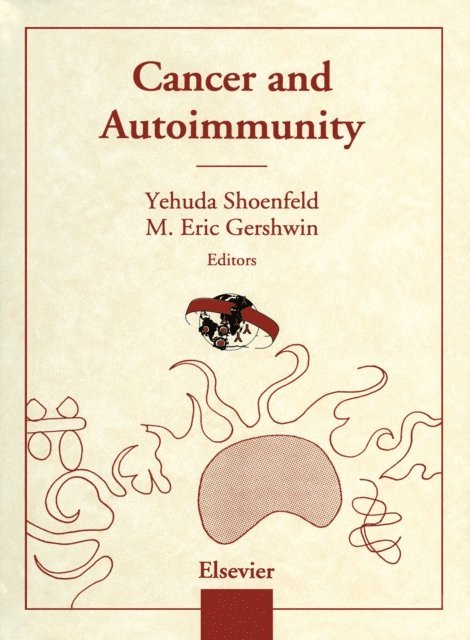
Of the two disciplines in parallel development for two decades, tumor immunology and transplantation immunology, the latter has thrived and has led to some of the most critical discoveries in immunobiology. The former continues to thwart both scientists and clinicians alike.The goal of immunologists in modern day research is to develop a simple and effective means to manipulate cancer in vivo, possibly encompassing several venues: identifying a phenotypic marker and the use of either active or passive immunization; include the use of passive reagents carrying "warheads" to selectively destroy cancer cells; or altering the basic process of cell survival.This excellent multidiscipline-authored volume presents a theme which has not been well described before. The papers include both basic and clinical science and range from sophisticated molecular biology to little more than phenomenology (e.g. the increased association of cancer in some autoimmune diseases and increased presentation of autoimmune phenomena in malignant condition). This, however, is state-of-the-art.This collection of themes will be of use not only to bench scientists, but also to clinicians who treat patients. The book represents progress at the cutting edge of this discipline, and points the way to further developments in the "black box" of immunology.