Now in its third edition, this book is the authoritative text on one of the world''s most important human rights treaties, the International Covenant on Civil and Political Rights. The Covenant is of universal relevance. Adopted by the UN General Assembly in 1966 and in force from 1976, it commits the signatories and parties to respect the civil and political freedoms and rights of individuals. Monitored by the UN Human Rights Committee, the Covenant ratified by the majority of UN member states.The book meticulously extracts and analyzes the jurisprudence over nearly forty years of the UN Human Rights Committee, on each of the various ICCPR rights, including the right to life, the right to freedom from torture, the right of freedom of religion, the right of freedom of expression, and the right to privacy, as well as admissibility criteria under the First Optional Protocol. Key miscellaneous issues, such as reservations, derogations, and denunciations, are also thoroughly assessed.Comprehensively indexed and cross-referenced, this book offers elegant and straight-forward access to the jurisprudence of the Human Rights Committee and other UN human rights treaty bodies. Presented in a clear and illuminating manner, it will be of use to the judiciary, human rights practitioners, human rights activists, government institutions, academics, and students alike.
Now in its third edition, this book is the authoritative text on one of the world's most important human rights treaties, the International Covenant on Civil and Political Rights. The Covenant is of universal relevance. Adopted by the UN General Assembly in 1966 and in force from 1976, it commits the signatories and parties to respect the civil and political freedoms and rights of individuals. Monitored by the UN Human Rights Committee, the Covenant ratified by the majority of UN member states.The book meticulously extracts and analyzes the jurisprudence over nearly forty years of the UN Human Rights Committee, on each of the various ICCPR rights, including the right to life, the right to freedom from torture, the right of freedom of religion, the right of freedom of expression, and the right to privacy, as well as admissibility criteria under the First Optional Protocol. Key miscellaneous issues, such as reservations, derogations, and denunciations, are also thoroughly assessed.Comprehensively indexed and cross-referenced, this book offers elegant and straight-forward access to the jurisprudence of the Human Rights Committee and other UN human rights treaty bodies. Presented in a clear and illuminating manner, it will be of use to the judiciary, human rights practitioners, human rights activists, government institutions, academics, and students alike.
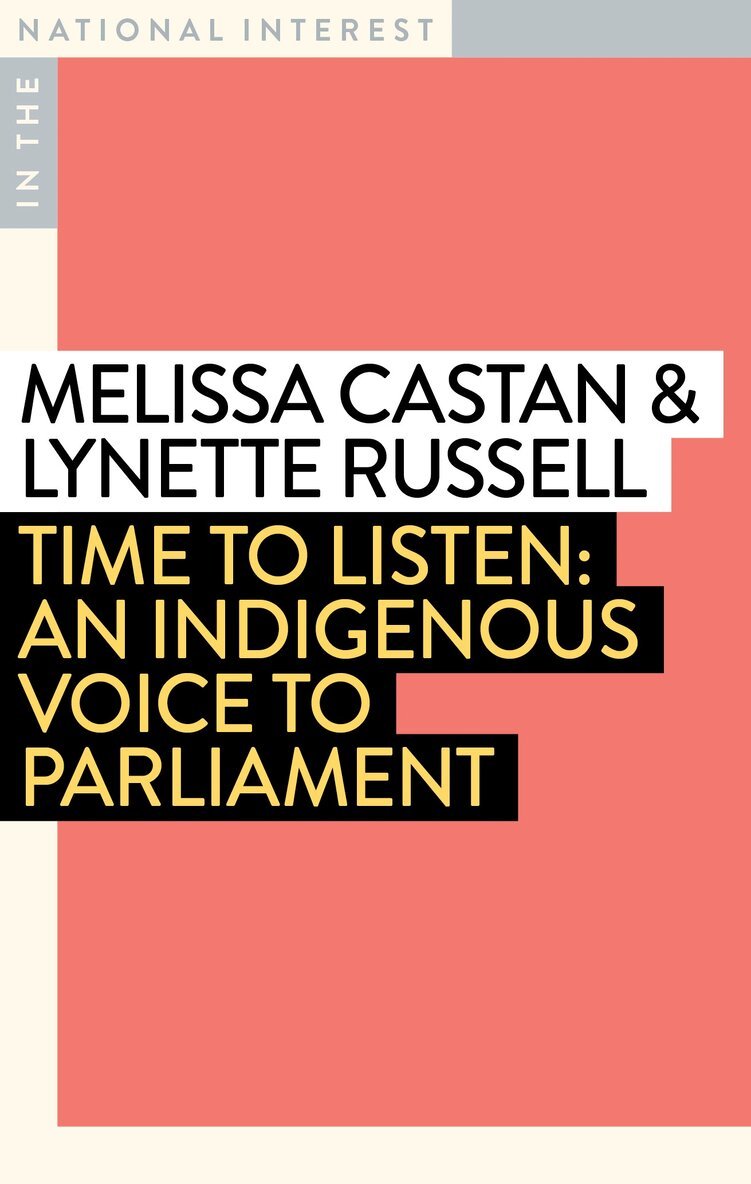
In 2023, debate about an Indigenous Voice to Parliament swirls around us as Australia heads towards a referendum on amending the Constitution to make this Voice a reality. The idea of a ‘First Nations Voice’ was famously raised in 2017, when Indigenous leaders drafted the Uluru Statement from the Heart. It was envisioned as a representative body, enshrined in the Constitution, that would advise federal parliament and the executive government on laws and policies of significance to Aboriginal and Torres Strait Islander people. But while Indigenous people may finally get their Voice, will it be heard? In Time to Listen, Melissa Castan and Lynette Russell explore how the need for a Voice has its roots in what anthropologist WEH Stanner in the late 1960s called the ‘Great Australian Silence’, whereby the history and culture of Indigenous Australians have been largely ignored by the wider society. This ‘forgetting’ has not been incidental but rather an intentional, initially colonial policy of erasement. So have times now changed? Is the tragedy of that national silence—a refusal to acknowledge Indigenous agency and cultural achievements—finally coming to an end? The Voice to Parliament can be a transformational legal and political institutional reform, but only if we really listen to Indigenous people, and they are clearly heard when they speak.